Phone:
(701)814-6992
Physical address:
6296 Donnelly Plaza
Ratkeville, Bahamas.

Phone:
(701)814-6992
Physical address:
6296 Donnelly Plaza
Ratkeville, Bahamas.

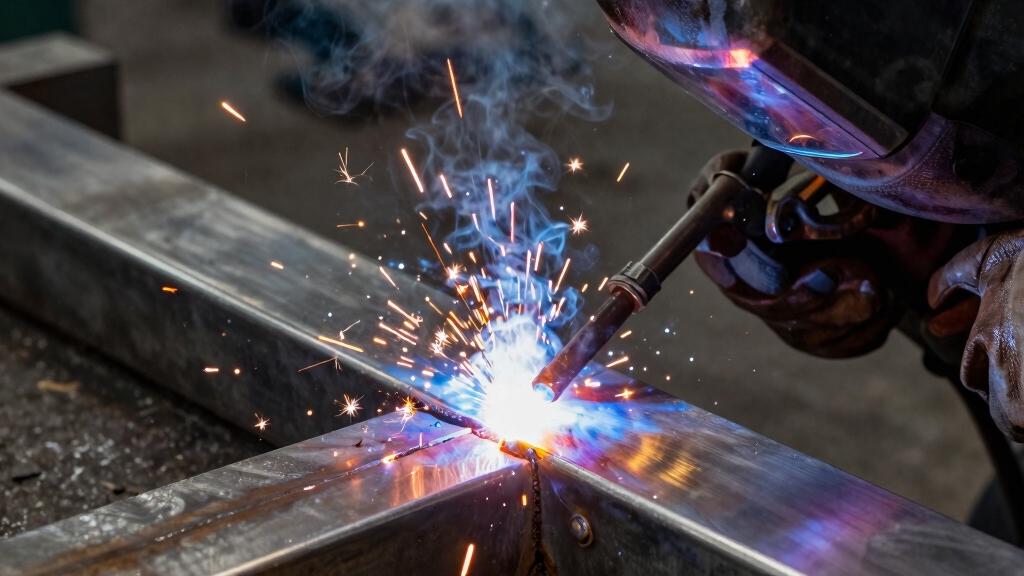
Yes, you can weld on stainless steel by carefully controlling heat input to prevent warping and cracks.
Use low-heat methods like TIG welding with precise amperage, about one amp per 0.001-inch thickness.
Match filler metal to the base grade to maintain corrosion resistance.
Keep your work area clean, guarantee proper ventilation, and use the correct shielding gas for defect-free welds.
Mastering these details lets you optimize weld quality and durability for stainless applications.
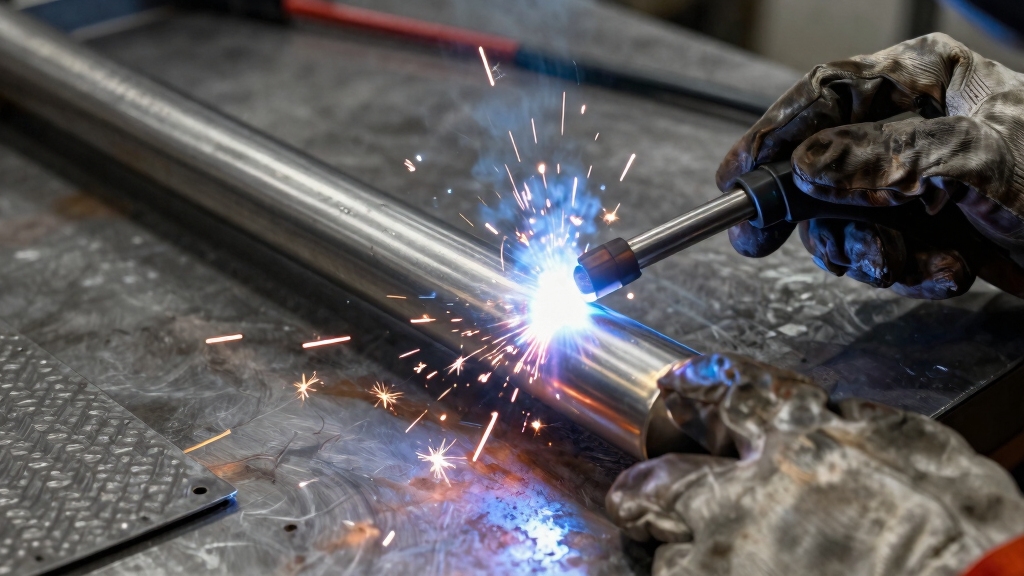
Although stainless steel can be welded, you should expect several challenges due to its unique thermal properties. This metal retains heat efficiently, which increases the risk of warping when exposed to high welding temperatures.
You must carefully control heat input to avoid distortions and cracks during the cooling phase. Additionally, stainless steel’s surface is highly sensitive; even failed welds typically leave visible scratches and blemishes, compromising aesthetics.
To produce strong, durable welds, you need proper equipment, precise temperature management, and the correct filler material. Failure to manage these factors can result in weakened joints or structural defects.
Understanding these challenges is essential for preparing your welding strategy and ensuring the integrity of your stainless steel components. Using low heat input welding methods like TIG or pulsed MIG can minimize distortion and residual stress in stainless steel welds.
Choosing the right welding method is essential for achieving strong, precise welds on stainless steel.
You’ll find that TIG, MIG, and stick welding each offer distinct advantages depending on your project’s requirements.
TIG welding provides exceptional control and minimizes heat input, reducing warping risks, but demands skill and slower operation.
MIG welding excels in speed and penetration, making it suitable for thicker sections, though it requires careful torch angle and travel speed management to avoid defects.
Stick welding offers cost-effective versatility, especially outdoors or in adverse conditions, but may produce more spatter and requires post-weld cleanup.
Additionally, spot and resistance welding serve well for economical, repetitive tasks.
Your selection should consider material thickness, environmental factors, and desired weld quality to optimize performance and durability.
Proper shielding gas setup is critical to preventing oxidation and maintaining corrosion resistance in stainless steel welds.
TIG welding stands out as the top choice for stainless steel due to its precise heat control and superior weld quality.
You can apply low heat output with TIG, minimizing the risk of warping and distortion common in stainless steel.
The tungsten electrode paired with inert shielding gas creates clean, oxidation-free welds, preserving corrosion resistance.
You’ll appreciate the control TIG offers over the weld pool, allowing you to produce narrow, uniform beads with excellent penetration.
Although TIG welding requires skill and is slower than other methods, its ability to tailor current—typically one amp per 0.001-inch thickness—ensures peak fusion without compromising the metal’s integrity.
This precision makes TIG ideal for thin gauges and aesthetic applications where weld appearance and durability are critical.
Using DCEN polarity for TIG welding helps concentrate heat on the workpiece and reduces electrode wear, enhancing weld quality.
Frequently, MIG welding serves as the preferred method when you need fast, strong stainless steel joints, especially on thicker materials.
You’ll find MIG welding excels by depositing filler metal rapidly with minimal spatter, reducing clean-up time.
It’s ideal when you require robust penetration and consistent bead profiles on sections too thick for TIG to handle efficiently.
Use the push technique for better visibility and controlled bead shape. Reserve the pull technique only when deeper penetration is essential.
Keep the welding gun at a 90-degree angle with a slight travel angle of 5-15 degrees to optimize weld quality.
MIG welding’s high deposition rate and straightforward operation make it your best option for structural stainless steel applications demanding strength and speed.
Selecting the appropriate shielding gas is crucial to optimize weld quality and minimize spatter when MIG welding stainless steel.
Mastering the correct torch angle and travel speed is essential for producing high-quality stainless steel welds.
Position your torch at 90 degrees perpendicular to the workpiece, then tilt it back 10-15 degrees to optimize penetration and control the weld pool.
If you hold the torch too flat or steep, you risk incomplete fusion or excessive heat buildup, increasing warping chances.
Travel speed directly influences bead shape and weld integrity.
Move too slowly, and you’ll cause excessive heat input, resulting in wide, high beads and potential crystallization on the weld backside.
Move too fast, and your weld will be narrow, thin, and lack sufficient root penetration.
Balancing these parameters guarantees consistent weld quality, minimizes defects, and controls heat distortion in stainless steel welding.
Additionally, maintaining a consistent arc length is crucial to ensure proper fusion and bead control during the welding process.
When you’re selecting filler metals for stainless steel welding, it’s essential to choose ones that either match or complement your base stainless steel. This isn’t just a technical detail; it really affects the structural integrity and corrosion resistance of your welds.
Using filler materials that aren’t compatible can lead to some serious issues, like cracking or diminished durability when the weld is under stress. So, it’s a good idea to prioritize compatibility. Trust me, this choice can make a big difference in the longevity and overall performance of your welds. For example, using 308L wire for 304 base metals or 316L wire for 316 stainless steel ensures proper corrosion resistance and mechanical properties.
Selecting the right filler metal is essential for guaranteeing strong, corrosion-resistant welds when working with stainless steel.
You need to match the filler metal to the base metal’s grade to maintain chemical compatibility and mechanical integrity.
For example, 308L filler is commonly used with 304 stainless steel, as it balances chromium and nickel content to avoid sensitization and corrosion.
If you weld duplex stainless steel, choose a filler that supports its dual-phase microstructure, often a duplex-grade filler metal.
Avoid mixing fillers with markedly different compositions, which can cause cracking or reduced corrosion resistance.
Always verify the base metal’s grade before selecting filler metals.
Consult technical datasheets to confirm the filler’s melting point and thermal expansion properties align with your welding parameters.
Additionally, controlling heat input by matching amperage and travel speed to the material thickness helps preserve the corrosion resistance of the welded joint.
Choosing the right filler metal directly influences the strength and longevity of your stainless steel welds. Selecting a filler that matches the base metal’s composition minimizes corrosion risk and mechanical failure. Using an incompatible filler can cause brittleness or cracking under stress, undermining weld durability.
Consider these factors to maximize weld lifespan:
Additionally, using appropriate shielding gas mixtures is critical, as improper gases like 75/25 argon-CO2 can promote carbide precipitation and reduce corrosion resistance.
When you’re welding thin stainless steel sheets, it’s super important to pick the right equipment. A TIG welder with a fine tungsten electrode is a great choice because it gives you precise heat control. You want to make sure you set the right parameters too—think low amperage that matches the thickness of the material. This helps prevent any warping or burn-through, which can be a real headache.
And don’t forget about safety! It’s crucial to stick to strict safety protocols. Make sure you have adequate ventilation; it’s not just for your comfort, but also to protect you from hazardous fumes. Taking these precautions will help you maintain the quality of your welds, too. So, stay safe and happy welding! Make sure to use separate tungsten electrodes for stainless steel to avoid contamination and ensure weld integrity.
Although welding thin stainless steel sheets demands careful attention, using the right equipment guarantees both safety and weld quality. You need tools that minimize heat input while providing precise control to prevent warping or burn-through.
Here are three key equipment considerations:
1. TIG Welder with Adjustable Amperage
Choose a TIG machine capable of fine current control, ideally set at one amp per 0.001-inch thickness for thin sheets. This precision helps avoid overheating.
2. Sharp Tungsten Electrodes
Use a 1/16-inch diameter electrode, preferably 2% lanthanated or thoriated tungsten, ground to a needlepoint for stable arc and clean weld pools.
3. High-Quality Shielding Gas Supply
Maintain an inert gas flow, typically pure argon, to protect the weld area from oxidation and contamination. This ensures a smooth, defect-free finish.
For enhanced weld quality, consider using inverter technology TIG welders that offer precise arc control and reduce distortion during the welding process.
To weld thin stainless steel sheets safely, you must carefully control key parameters such as current, travel speed, and torch angle to prevent warping and assure proper penetration.
Set the current at approximately one amp per 0.001-inch thickness; for example, 20 amps for 0.020-inch metal.
Maintain a travel speed that avoids excessive heat buildup yet assures full fusion. Too slow causes warping, and too fast results in insufficient penetration.
Position the torch perpendicular to the workpiece, then tilt it back 10-15 degrees to direct the arc effectively.
Use a fine-point tungsten electrode, ideally 1/16-inch diameter, to concentrate heat precisely.
Always verify the stainless steel grade before welding, as it influences parameter adjustments.
These controls optimize weld quality and minimize distortion in thin sheet applications.
Since welding thin stainless steel generates intense heat and potentially hazardous fumes, you must prioritize safety measures and guarantee proper ventilation throughout the process.
Without adequate airflow, toxic fumes from chromium and nickel compounds can accumulate, posing health risks. To weld safely, follow these essential steps:
When welding stainless steel, controlling heat input is critical to prevent warping and cracking. The metal retains heat more than carbon steel.
You should use lower amperage settings appropriate for the material thickness and employ welding methods like TIG. These methods offer superior heat control.
Maintain a consistent travel speed to avoid localized overheating or insufficient penetration. Both can cause structural defects.
Intermittent welding or using intermittent cooling techniques helps dissipate heat evenly. Additionally, minimize the weld bead size and avoid excessive filler material to reduce residual stress.
Proper joint design, such as using balanced weld sequences, also distributes heat symmetrically. This prevents distortion.
Managing heat effectively during stainless steel welding reduces warping and cracking.
Maintaining a clean work area also plays a vital role in weld integrity. Contaminants like oil, grease, and dirt can introduce defects, weakening the weld.
You need to guarantee the workspace is free from debris and chemical residues before starting.
Follow these steps to prepare your area:
A disciplined clean environment directly contributes to consistent, defect-free welds.
You shouldn’t weld stainless steel without specialized protective gear.
The process emits intense ultraviolet radiation, sparks, and hot metal fragments that can cause severe burns and eye damage.
Proper gear, including a welding helmet with a suitable filter, flame-resistant clothing, gloves, and respiratory protection, is essential to shield you from harmful fumes and heat.
Skipping these precautions increases the risk of injury and long-term health issues. Always prioritize safety when welding stainless steel.
Welding stainless steel can compromise its corrosion resistance if not done correctly. You need to control heat input and use appropriate filler materials to avoid sensitization.
Sensitization causes chromium carbide precipitation along grain boundaries. This weakens the passive oxide layer, increasing susceptibility to corrosion. Proper post-weld cleaning and passivation restore resistance.
Precise temperature management and correct techniques guarantee your weld maintains stainless steel’s inherent corrosion protection.
Think of post-weld heat treatment (PWHT) as a spotlight, not a spotlight for every show.
You don’t need PWHT for all stainless steel welds. Only certain grades like martensitic or precipitation-hardening stainless steels require it to relieve stresses and restore corrosion resistance.
Austenitic stainless steels usually skip this step, as they maintain their properties without it.
Tailor your approach based on the stainless steel grade and service conditions to guarantee weld integrity.
When you weld stainless steel, you face unique hazards like chromium oxide fumes, which pose respiratory risks.
The metal’s heat retention increases burn and warping dangers, requiring careful temperature control.
You must also manage exposure to nickel compounds and hexavalent chromium, both carcinogenic.
Proper ventilation, respiratory protection, and skin shielding become essential.
Additionally, stainless steel’s reflective surface can intensify UV radiation, so eye protection is critical to prevent arc eye injuries.
You absolutely can weld stainless steel underwater or in extreme environments, but it’s a high-stakes challenge that pushes your skills to the limit.
You’ll need specialized equipment like hyperbaric chambers or dry hyperbaric welding setups to control pressure and prevent contamination.
Maintaining precise heat input and shielding gas flow is critical to avoid cracking and corrosion.
Your technique must be flawless, ensuring safety and structural integrity under these punishing conditions.
Welding stainless steel demands precision, like conducting a symphony where each note—torch angle, filler material, travel speed—must harmonize perfectly.
You’ll navigate challenges such as warping and cracking by selecting the right techniques, especially TIG welding’s finesse.
With a clean work area and careful preparation, you transform stainless steel’s toughness into seamless joints.
This ensures structural integrity that’s as resilient as the metal itself. Master these elements, and you’ll weld with both art and science.