Phone:
(701)814-6992
Physical address:
6296 Donnelly Plaza
Ratkeville, Bahamas.

Phone:
(701)814-6992
Physical address:
6296 Donnelly Plaza
Ratkeville, Bahamas.

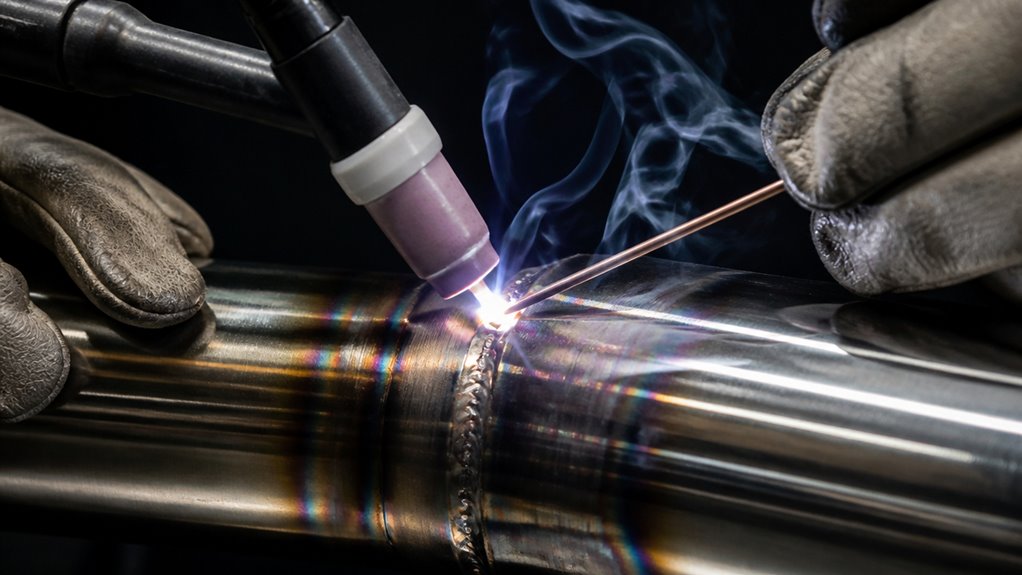
Welding stainless steel is difficult because its tough oxide layer hinders proper fusion. Low thermal conductivity traps heat near the weld, causing warping and distortion.
You must precisely control heat input to avoid sensitization, cracking in the heat-affected zone, and loss of corrosion resistance. Inadequate shielding gas or wrong filler metals worsen oxidation and mechanical weaknesses.
Your choice of welding method and parameters critically affects weld quality and durability. Understanding these factors reveals how to optimize your stainless steel welds effectively.
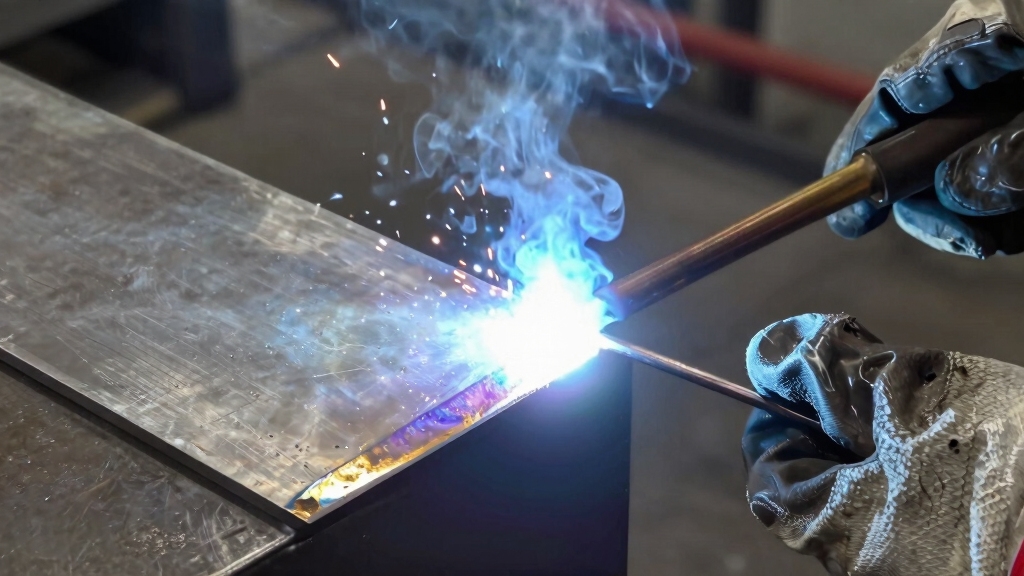
Because stainless steel forms a tenacious oxide film at high temperatures, welding it presents unique challenges that directly affect weld quality.
This oxide buildup disrupts wetting and fusion within the weld pool, making it harder to achieve a smooth, defect-free joint.
Additionally, when the metal is exposed to the atmosphere during welding, rapid oxidation occurs on the hot surfaces, complicating the process.
To counteract this, you must use shielding gases, typically inert gases like argon or helium, to protect the weld pool from oxygen and nitrogen contamination.
TIG welding commonly employs these gases to guarantee cleaner welds.
Without adequate shielding, you risk compromised fusion, porosity, and weakened mechanical properties due to contamination and oxide interference.
Using a tungsten electrode with inert shielding gas creates clean, oxidation-free welds preserving corrosion resistance, which is essential for stainless steel welding technique.
You might’ve noticed that stainless steel has low thermal conductivity, right? This characteristic means that heat tends to stay concentrated around the weld zone.
As a result, you get this intense localized expansion.
Now, here’s where it gets tricky. That focused heat causes uneven thermal expansion, which can lead to warping and distortion as the metal cools down.
This effect is compounded by the differing thermal expansion rates between stainless steel and carbon steel, which increases the risk of distortion and residual stress.
Managing heat retention plays a critical role in stainless steel welding due to the material’s low thermal conductivity.
Because stainless steel doesn’t dissipate heat efficiently, the weld zone experiences prolonged high temperatures, concentrating thermal energy locally.
This heat accumulation leads to uneven expansion and contraction, which you must anticipate to prevent warping.
As the heat lingers, residual stresses build up, increasing distortion risk and compromising dimensional accuracy.
You’ll notice that thin stainless sections are especially vulnerable because they retain heat longer, intensifying deformation.
To minimize these effects, control heat input precisely by adjusting welding parameters like current and travel speed.
Effective heat management reduces thermal gradients, helping you maintain structural integrity and avoid costly rework caused by warping or distortion during the welding process.
Using shielding gases such as argon with small amounts of hydrogen can help increase penetration and welding speed while controlling heat input for better weld quality in stainless steel. argon with small amounts of hydrogen
Local heat buildup not only prolongs high temperatures near the weld but also triggers significant thermal expansion in stainless steel.
Because stainless steel expands more than carbon steel when heated, you’ll notice substantial dimensional changes during welding.
This expansion induces internal stresses that, upon cooling, contract unevenly and cause warping or distortion.
Since stainless steel has low thermal conductivity, heat remains localized, intensifying expansion effects and increasing the risk of residual stresses.
When you weld thin sections, these distortions become more pronounced, compromising dimensional accuracy.
To mitigate warping, you must carefully control heat input, use appropriate welding sequences, and employ clamps or fixtures to restrain movement.
Understanding thermal expansion behavior lets you predict deformation patterns and adopt strategies to minimize distortion in your stainless steel weldments.
Using DCEN polarity helps concentrate heat on the workpiece, providing deeper penetration while reducing electrode heating, which aids in controlling heat input during stainless steel welding.
You know, cracking in the heat-affected zone is something you really have to watch out for. It mainly happens because of thermal stresses that arise from quick temperature changes and the way materials expand when heated.
Choosing the right filler metal is super important, too. If you pick the wrong alloy, you might end up making the material more prone to hot cracking.
Using specialized wires like 309L for dissimilar joints can help balance expansion and resist cracking in these critical areas.
Although stainless steel’s excellent mechanical properties make it a preferred material, its susceptibility to thermal stress in the heat-affected zone (HAZ) poses a significant challenge during welding.
You must manage rapid temperature gradients that generate high localized stresses due to stainless steel’s low thermal conductivity and high thermal expansion.
These stresses concentrate in the HAZ, increasing the risk of microcracking and fissures as the metal cools unevenly.
The constrained contraction during cooling induces tensile residual stresses, often exceeding the material’s fracture toughness.
If you don’t control heat input and cooling rates precisely, you’ll exacerbate distortion and crack formation.
Understanding and mitigating these thermal stresses through optimized welding parameters and pre/post-weld treatments is essential to maintain structural integrity and prevent failure in welded stainless components.
Using chill bars and backing bars can help absorb excess heat and limit distortion, thereby reducing the risk of cracking in the HAZ.
Managing thermal stresses in the heat-affected zone (HAZ) is only part of preventing weld defects. Selecting the appropriate filler metal plays a defining role in controlling cracking susceptibility.
If you choose a filler alloy mismatched to the base stainless steel, you risk hot cracking from incompatible thermal expansion or improper microstructure formation. You must also consider alloy chemistry, especially chromium and nickel content, to maintain corrosion resistance and avoid sensitization.
| Filler Metal Type | Key Property | Effect on HAZ Cracking |
|---|---|---|
| Austenitic | High ductility | Reduces hot cracking risk |
| Ferritic | Low ductility | Higher cracking susceptibility |
| Duplex | Balanced microstructure | Controls thermal stress well |
Select fillers optimized for your stainless grade to minimize HAZ cracking and preserve weld integrity. Additionally, ensuring the use of adequate shielding gas flow during welding helps prevent oxidation and maintain corrosion resistance in the HAZ.
When welding stainless steel, poor technique directly compromises its corrosion resistance by disrupting the critical chromium-rich surface layer.
Excessive heat input can cause sensitization, leading to chromium carbide precipitation along grain boundaries. This depletes chromium and reduces localized corrosion resistance.
Excessive heat causes chromium carbide buildup, depleting chromium and weakening corrosion resistance at grain boundaries.
Inadequate shielding gas coverage exposes the weld pool to oxygen and nitrogen, resulting in oxidation and discoloration that weaken the passive film.
Contamination from carbonaceous materials further promotes rust formation, undermining the metal’s integrity.
Additionally, improper filler metal selection fails to restore or maintain the protective chromium content.
These factors combine to create susceptible zones prone to corrosion attack, especially in the heat-affected zone.
To preserve corrosion resistance, you must avoid overheating, guarantee effective shielding, maintain cleanliness, and choose appropriate filler alloys during welding.
Use of 75/25 argon-CO2 gas can exacerbate these issues by increasing oxidation and carbide precipitation, further compromising the weld’s corrosion resistance.
Because stainless steel’s welding characteristics are less forgiving than other metals, you must control parameters like current, travel speed, and heat input with exact precision.
Excessive heat input can cause warping, residual stress, and reduced corrosion resistance. Insufficient heat leads to lack of fusion and poor penetration.
You need to balance the heat carefully to avoid sensitization in the heat-affected zone and to prevent oxide formation, which compromises weld integrity.
Even minor deviations in travel speed or current can result in visible defects or cracking due to stainless steel’s low thermal conductivity and high thermal expansion.
Maintaining strict process control also minimizes contamination risks and guarantees filler metal melts properly without damaging the base metal.
Precise parameter management is essential to achieve sound, corrosion-resistant welds consistently.
Using a sharp tungsten electrode helps maintain arc stability and consistent heat input during welding.
Choosing the right welding methods and equipment plays a critical role in overcoming stainless steel’s unique challenges.
You’ll find TIG welding with inert gases like argon or helium is ideal for precise heat control and excellent shielding. This minimizes oxidation and contamination.
MIG welding suits thicker sections but demands strict parameter control to avoid excessive heat input and distortion.
For spot or seam welds, resistance welding leverages stainless steel’s high electrical resistance to produce clean, consistent joints.
Selecting appropriate filler metals and ensuring optimal shielding gas flow are pivotal regardless of method.
Avoiding excessive heat and maintaining cleanliness directly influence weld integrity and corrosion resistance.
Ultimately, your equipment setup and welding technique must align precisely with stainless steel’s thermal and chemical sensitivities to achieve reliable, high-quality welds.
Additionally, using inert shielding gases such as 100% argon helps maintain arc stability and prevents contamination during welding.
Beyond selecting appropriate welding methods and equipment, the materials involved directly influence stainless steel weld quality. You must consider base metal grade, filler alloy, and shielding gas carefully.
Different stainless grades exhibit variable melting points and thermal expansion, affecting fusion and crack susceptibility. Choosing incompatible filler metals can worsen hot cracking and reduce corrosion resistance through sensitization or contamination.
Stainless steel grades vary in melting points and expansion, influencing fusion quality and crack risks.
Maintaining a chromium-rich weld zone is critical to preserving corrosion resistance. Avoid carbon contamination and overheating to achieve this.
Shielding gas composition also impacts oxide formation. Inert gases like argon or helium protect the weld pool from atmospheric oxygen and nitrogen, preventing oxide buildup that disrupts fusion.
Finally, thin sections demand precise heat input control to minimize distortion and residual stresses. Your material choices directly affect weld integrity, corrosion resistance, and dimensional stability.
Cleaning stainless steel before welding removes contaminants like oils, dirt, and oxides that disrupt fusion and cause defects.
By eliminating these impurities, you guarantee better wetting and consistent weld bead formation.
Clean surfaces reduce the risk of porosity, cracking, and corrosion at the weld zone.
Proper cleaning also helps maintain corrosion resistance and prevents contamination from carbon-bearing materials.
This ultimately produces stronger, more reliable, and visually sound welds.
Preheating plays a pivotal part in preventing premature cracking and controlling cooling rates during stainless steel welding.
You’ll reduce thermal shock and residual stress by warming the metal, which helps maintain dimensional stability and limits heat-affected zone damage.
However, you must balance preheat temperature carefully. Too much heat risks sensitization and corrosion issues, while too little won’t sufficiently mitigate cracking.
Precision in preheating guarantees more predictable, polished, and professional weld outcomes.
Different shielding gases directly impact your weld’s appearance and strength.
Using pure argon provides a stable arc and clean weld bead but may reduce penetration.
Adding helium increases heat input, improving fusion and bead shape but can cause more spatter.
Mixed gases like argon with small oxygen or nitrogen additions enhance arc stability and wetting, improving strength without excessive oxidation.
Choosing the correct gas balances protection, appearance, and mechanical properties precisely.
Yes, you can use post-weld heat treatment (PWHT) to reduce cracking in stainless steel by relieving residual stresses and homogenizing microstructure.
However, its effectiveness depends on the alloy type and weld parameters. For austenitic stainless steels, PWHT often isn’t recommended due to sensitization risks.
For martensitic or duplex grades, controlled PWHT can minimize cracking susceptibility. You must carefully control temperature and time to avoid corrosion resistance degradation.
Wondering how to stay safe while welding stainless steel?
You need proper ventilation to avoid inhaling harmful fumes, plus respiratory protection like a mask or respirator.
Always wear flame-resistant clothing, gloves, and a welding helmet with correct shade to protect against UV radiation and sparks.
Also, guarantee your workspace is free of flammable materials.
Following these precautions minimizes health risks and keeps you safe during precise welding operations.
You might think welding stainless steel is just about applying heat, but it’s far more complex due to its oxide layer, heat retention, and material sensitivity.
Ignoring these factors leads to warping, cracking, and compromised corrosion resistance.
By mastering precise welding parameters and choosing the right methods and materials, you can overcome these challenges effectively.
Don’t underestimate the technical demands. Success hinges on understanding and controlling every detail in the process.
[…] cleaning and maintenance are essential to prevent crevice corrosion and preserve the integrity of the […]
[…] ensuring the use of inert shielding gases during welding is crucial to prevent oxidation and maintain corrosion […]