Phone:
(701)814-6992
Physical address:
6296 Donnelly Plaza
Ratkeville, Bahamas.

Phone:
(701)814-6992
Physical address:
6296 Donnelly Plaza
Ratkeville, Bahamas.

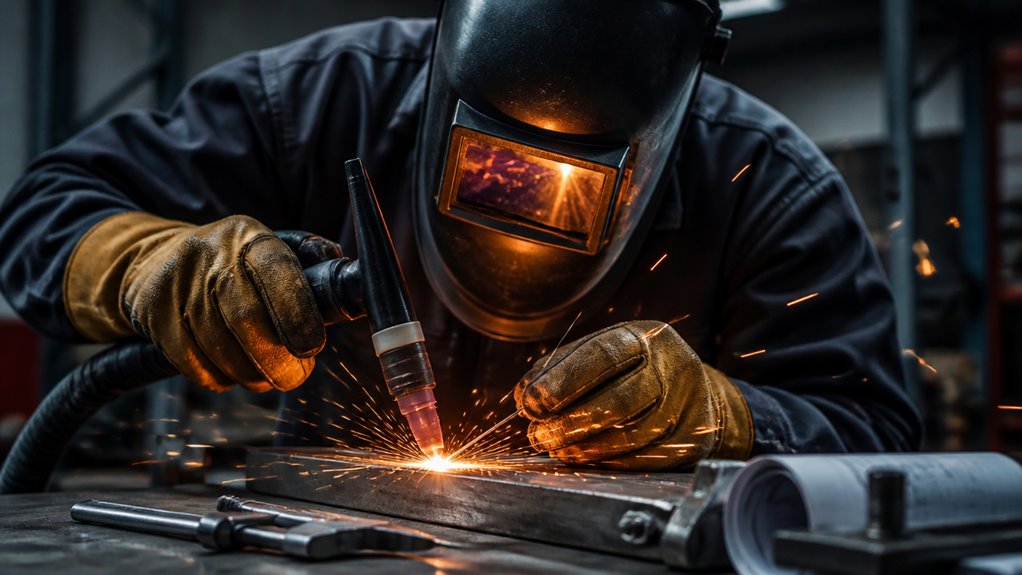
You manage welding processes by analyzing designs to select the best materials, methods, and parameters. This ensures structural integrity and minimizes defects.
You develop and qualify detailed Welding Procedure Specifications to maintain consistency and comply with industry codes like AWS and ASME.
You oversee inspections and non-destructive testing to verify quality and troubleshoot issues through root-cause analysis.
You also coordinate documentation and train teams to uphold standards, all to enhance manufacturing efficiency and safety.
Discover how these roles interconnect for effective welding engineering.
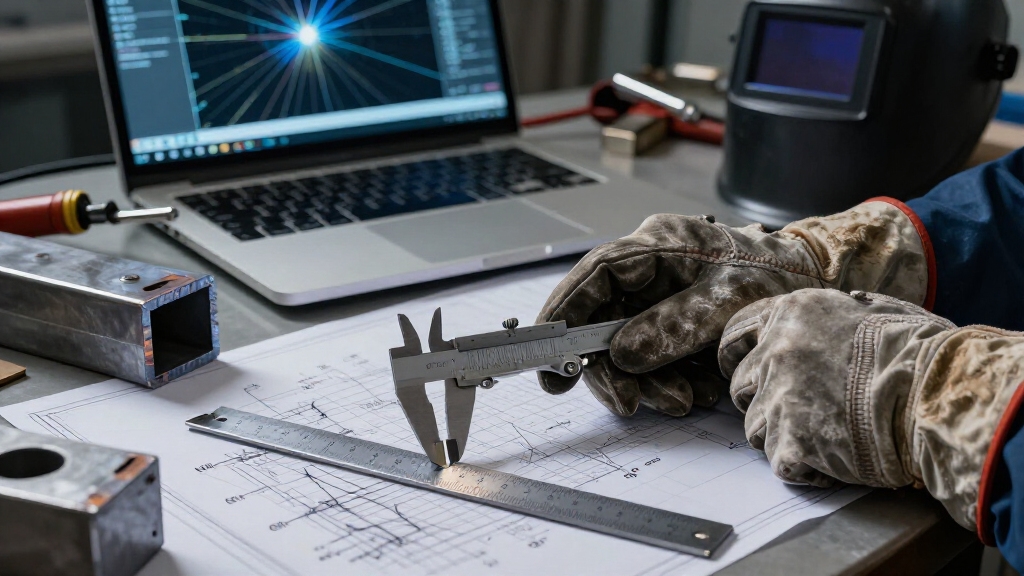
When you plunge into the design and planning phase, welding engineers analyze engineering drawings and specifications to determine precise welding requirements.
You select appropriate welding processes, materials, electrodes, and joint designs based on mechanical properties, thermal effects, and compatibility.
You develop and qualify welding procedure specifications (WPS) to standardize process parameters such as voltage, current, travel speed, and preheat conditions.
Documentation ensures repeatability and compliance with project criteria.
You also anticipate potential issues by evaluating joint accessibility, distortion risks, and thermal stresses.
Your role includes troubleshooting design-related welding challenges early, optimizing parameters to enhance efficiency and minimize defects.
You proactively resolve welding design challenges, refining parameters to boost efficiency and reduce defects.
By integrating metallurgical principles and process controls, you guarantee the welding plan aligns with structural integrity and performance expectations.
This lays a solid foundation for subsequent fabrication and assembly stages.
Controlling heat input is crucial to managing the heat-affected zone and preventing microstructure alterations that could weaken the joint.
Welding engineers consistently inspect welds to verify defect absence, structural integrity, and adherence to design specifications. You’ll employ non-destructive evaluation techniques such as ultrasonic testing, X-rays, magnetic particle inspection, and dye-penetrant methods to detect subsurface and surface flaws.
Maintaining traceability through detailed documentation and testing records is vital for quality assurance. You’ll analyze failure modes using root-cause analysis to prevent recurrence and implement corrective actions promptly.
By overseeing procedure qualification records and inspection reports, you confirm every weld meets performance and safety requirements. Your role demands rigorous attention to detail, enabling you to identify deviations early and mitigate risks associated with structural failures.
This systematic approach safeguards both product reliability and personnel safety throughout welding operations. Additionally, controlling heat input and cooling rates is essential to maintain weld quality and prevent defects related to the heat-affected zone.
When it comes to welding operations, it’s essential to stick closely to industry codes like AWS, ASME, and ISO. This means you really have to dive into all the relevant standards and review them thoroughly.
Managing compliance documentation is super important, too. Keeping detailed records helps show that everything is in line throughout the project’s lifecycle. This organized approach not only supports audits and regulatory requirements but also ensures you meet contract specifications with precision and accountability. Welding engineers rely on a validated Welding Procedure Specification to ensure consistent quality and compliance throughout production.
Although ensuring compliance can be complex, welding engineers meticulously align their work with industry codes such as AWS, ASME, API, and ISO to guarantee safety and quality.
You rigorously interpret these standards to define welding procedure specifications, ensuring each weld meets structural and performance criteria.
You evaluate contractor and supplier documentation against code requirements, identifying discrepancies before fabrication begins.
During project execution, you continuously monitor welding activities, verifying adherence to specified codes and regulatory mandates.
Your technical expertise allows you to integrate code guidelines with design intents and contract terms, minimizing risk of failure or nonconformance.
You also rely heavily on AWS-developed welding codes and classifications to maintain consistency and uphold industry best practices.
Every piece of welding documentation plays a crucial role in demonstrating compliance with industry standards and project specifications.
You manage these records meticulously to guarantee traceability and regulatory adherence. Your task includes reviewing welding procedure specifications (WPS), procedure qualification records (PQRs), and inspection reports to verify alignment with codes such as AWS, ASME, and ISO.
Proper documentation supports audits and regulatory checks, making certain welding activities meet contractual and safety requirements. You also coordinate with contractors and suppliers to confirm their compliance documentation is complete and accurate.
Key documentation responsibilities include:
Maintaining all-encompassing records of welding procedures, materials, and inspections.
Guaranteeing documentation aligns with applicable codes and contract specifications.
Supporting audit processes with accurate, up-to-date compliance reports.
This structured approach safeguards quality and regulatory conformity throughout the welding lifecycle. Additionally, the WPS serves as a technical blueprint that guides welders to meet code requirements and ensures uniformity in welding processes.
When troubleshooting welding problems, the first thing you’ll want to do is identify any defects. This often involves using inspection and testing methods like ultrasonic or X-ray evaluations. It’s really important to catch these issues early on.
Once you’ve spotted the defects, the next step is to dive into root cause analysis. This is where you figure out what’s really going on underneath the surface. Are the problems coming from the materials, the process parameters, or perhaps the equipment itself?
Taking this systematic approach ensures that when you implement corrective actions, they’re targeted and effective. This not only helps in fixing the current issue but also prevents similar problems from cropping up in the future. Plus, it keeps the integrity of your welds intact!
Regular inspection routines are essential to maintain weld quality and reduce defects over time.
Detecting welding defects requires a thorough understanding of common flaw types and their causes. You must inspect welds meticulously, using both visual and non-destructive testing methods to identify issues before they compromise integrity.
Key defect types you’ll encounter include:
Effective non-destructive inspection ensures welds meet design specifications and safety standards.
Identifying welding defects is only the first step in ensuring joint integrity. Understanding why those defects occur allows you to correct and prevent them effectively.
When you perform root cause analysis, you systematically investigate welding variables such as materials, welding parameters, equipment condition, and environmental factors to pinpoint the origin of failures.
You analyze procedure specifications, review process controls, and examine inspection data to isolate deviations from standards. Using techniques like failure mode analysis and metallurgical examination, you correlate defect types with causal factors.
This rigorous approach enables you to implement targeted corrective actions, refine welding processes, and update procedure qualifications. By addressing root causes rather than symptoms, you enhance weld quality, reduce rework, and safeguard compliance with codes and project requirements.
Ultimately, this improves overall structural integrity. Maintaining detailed records and procedure continuity is essential to ensure ongoing compliance and certification validity during this process.
Because manufacturing efficiency hinges on precise welding processes, welding engineers play a critical role in optimizing these operations.
You analyze welding parameters and select the best methods to reduce defects and increase throughput. Your expertise guarantees equipment and procedures align with product specifications, cutting costs and downtime.
You also implement continuous improvements by:
Designing optimized fixtures, jigs, and welding setups to enhance consistency and speed.
Developing and qualifying welding procedure specifications (WPS) that minimize variability.
Collaborating with multidisciplinary teams to integrate welding seamlessly into manufacturing workflows.
Ensuring proper welding system connections and maintenance is crucial to prevent downtime and maintain weld quality.
Optimizing welding processes involves more than just technical adjustments. It requires equipping your team with the right skills and knowledge to execute procedures accurately and safely.
Effective welding optimization starts with empowering your team through proper skills and knowledge.
You train welders and production staff on updated techniques, welding procedure specifications, and critical safety protocols. Your role includes supervising welding activities, evaluating welder qualifications, and ensuring adherence to documented quality standards.
You provide hands-on technical support during fabrication, repairs, and manufacturing. This includes clarifying welding requirements and troubleshooting process issues.
By mentoring your team on documentation practices and quality expectations, you foster consistency and compliance with relevant codes. This targeted training and support directly enhance weld integrity, reduce defects, and improve overall production efficiency.
Ultimately, this aligns with project specifications and regulatory demands. Emphasizing safety protocols and protective equipment is essential to maintain a hazard-free work environment and protect the welding team.
Mastering welding engineering demands a strong foundation in metallurgy, materials science, physics, and engineering principles. To excel, you must integrate analytical thinking with practical application, ensuring weld integrity and compliance with standards like AWS and ASME.
Your technical acumen will drive process optimization, failure analysis, and quality assurance. Key skills and knowledge include:
These competencies enable you to lead projects, improve manufacturing efficiency, and uphold rigorous quality standards.
You’ll generally need certifications like Certified Welding Engineer (CWEng) from the American Welding Society (AWS) or equivalent credentials recognized by bodies such as ASME or ISO.
Additionally, welding procedure and welder performance qualifications per AWS D1.1 or ASME Section IX are essential.
These certifications validate your expertise in welding processes, standards, and quality control.
They enable you to analyze designs, develop procedures, and guarantee compliance confidently.
You stay updated on new welding technologies by constantly diving into technical journals, attending industry conferences, and participating in specialized training sessions.
You also engage with professional networks like AWS and ASME, where groundbreaking innovations are discussed daily.
Subscribing to cutting-edge research and standards updates guarantees your methods stay precise and compliant.
This continuous learning process is your lifeline, keeping you sharp and ahead in a rapidly evolving field.
You commonly use CAD software like AutoCAD and SolidWorks to design weld joints and fixtures precisely.
Simulation tools such as ANSYS or Simufact Welding help analyze thermal and structural effects.
Welding procedure management software like WeldOffice streamlines documentation and compliance.
For inspection, you might employ NDT data analysis tools. These applications enable you to optimize processes, guarantee quality, and maintain standards efficiently throughout welding projects.
Like “many hands make light work,” you collaborate closely with mechanical, materials, and manufacturing engineers to align welding processes with design requirements.
You analyze joint designs, share metallurgical insights, and coordinate on quality standards.
By integrating your welding expertise with their disciplines, you optimize process parameters, troubleshoot defects jointly, and guarantee compliance with codes.
This cross-functional teamwork enhances product integrity, safety, and manufacturing efficiency throughout the project lifecycle.
You face constant challenges balancing strict adherence to welding codes with real-world production constraints.
Troubleshooting weld defects and equipment failures demands swift, accurate root-cause analysis to avoid costly delays.
Maintaining weld quality under variable materials and environmental conditions tests your expertise daily.
You must also guarantee seamless coordination across teams while driving process improvements, all under tight deadlines and safety regulations.
Managing documentation and compliance adds another layer of complexity to your role.
As a welding engineer, you play a vital role in design, safety, and process optimization.
Did you know that improving welding efficiency by just 10% can reduce production costs by up to 15%?
Your expertise in troubleshooting and compliance guarantees high-quality outcomes while minimizing risks.
By continually refining manufacturing processes and training teams, you not only enhance performance but also drive innovation and reliability across industries.
Your technical mastery is key to sustainable success.