Phone:
(701)814-6992
Physical address:
6296 Donnelly Plaza
Ratkeville, Bahamas.

Phone:
(701)814-6992
Physical address:
6296 Donnelly Plaza
Ratkeville, Bahamas.

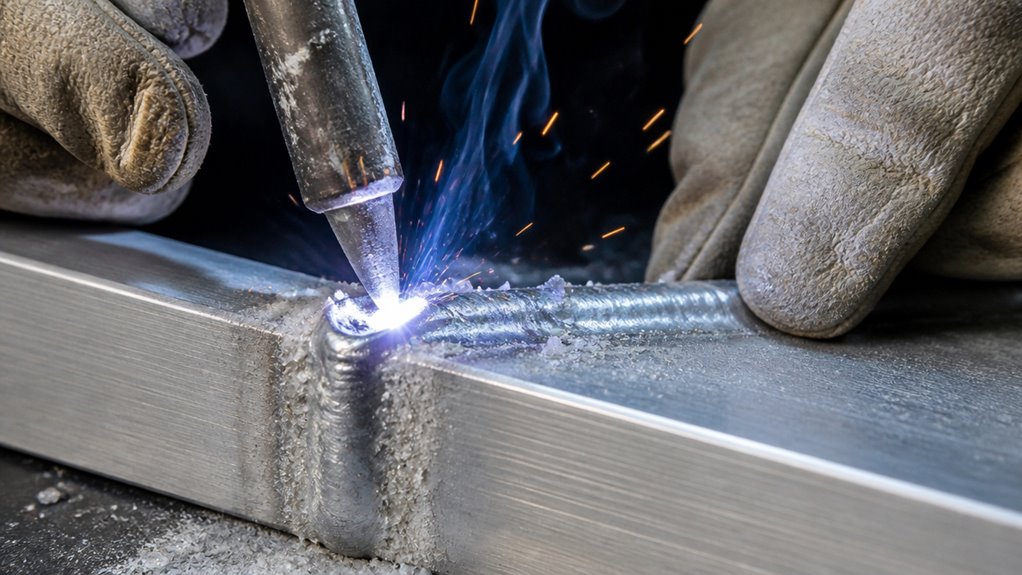
When welding aluminum, you use flux to dissolve its tough oxide layer, enabling proper wetting and strong metallurgical bonding. Flux also protects the molten pool by preventing oxide reformation and shielding against atmospheric gases like oxygen and moisture.
These gases can cause porosity and weak joints. It stabilizes the weld pool’s surface tension and improves filler metal flow for consistent fusion. Without flux, welds risk contamination and defects.
Understanding flux’s role helps you optimize weld quality and durability.
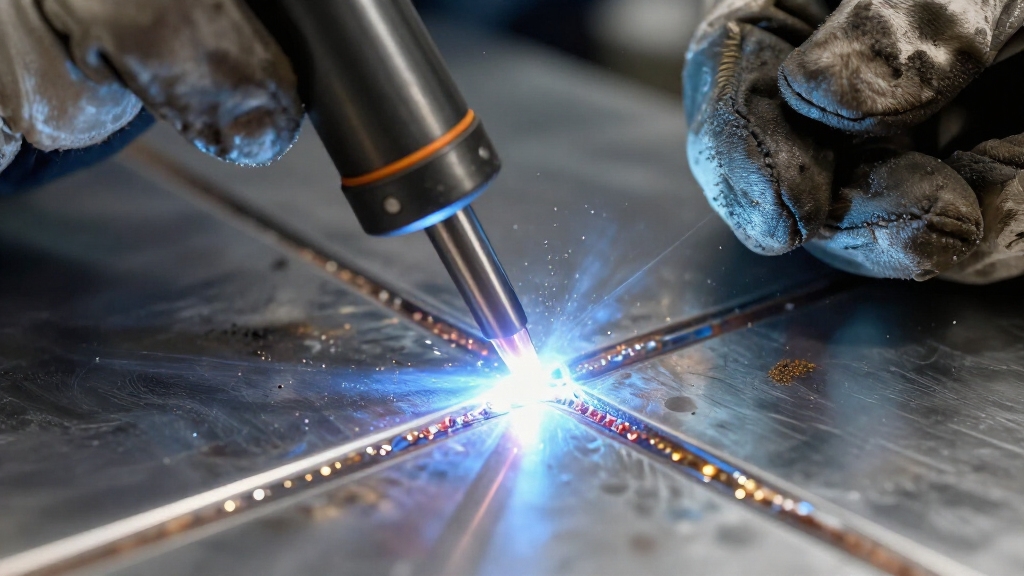
Because aluminum rapidly forms a tough oxide layer that hinders proper bonding, you need flux to achieve strong welds. This oxide layer melts at a much higher temperature than aluminum itself, preventing the filler metal from properly wetting and fusing with the base metal.
Aluminum’s tough oxide layer requires flux to ensure proper wetting and strong weld fusion.
Flux chemically dissolves this tenacious oxide, exposing clean aluminum surfaces critical for metallurgical bonding. By removing oxide films, flux guarantees enhanced wetting and capillary action, which promotes uniform filler metal flow and joint integrity.
Additionally, flux acts as a protective barrier against atmospheric contaminants like oxygen and moisture, reducing hydrogen absorption that can weaken the weld. Without flux, trapped oxides and contaminants lead to weak joints and inclusions.
Therefore, flux is indispensable for producing consistent, high-quality aluminum welds with peak mechanical properties. However, standard flux formulations fail to penetrate the aluminum oxide effectively, making specialized flux chemistries essential for reliable welding results.
Understanding when and where to apply flux in aluminum welding depends on the specific joining method you’re using.
Flux is essential in brazing, soldering, and gas welding of aluminum, where it dissolves the oxide layer and shields the molten pool from atmospheric contamination.
You’ll also need flux in flux-cored arc welding (FCAW) processes that use aluminum flux-coated electrodes, though these require precise amperage settings for optimal results.
Conversely, in gas tungsten arc welding (GTAW) and gas metal arc welding (GMAW) of aluminum, flux is typically unnecessary because the inert gas shield protects the weld pool effectively.
You should select flux formulations tailored to your process and aluminum alloy to guarantee oxide removal and contamination control.
These are critical for weld integrity and strength in flux-dependent methods.
Proper pre-weld cleaning is crucial since contaminants and aluminum oxide can cause weld defects even when flux is used, emphasizing the importance of mechanical oxide removal before welding.
When you apply flux to aluminum during welding, it actively dissolves the stubborn oxide layer that forms almost instantly on the metal’s surface.
This oxide, aluminum oxide, has a melting point considerably higher than aluminum itself, preventing proper fusion if not removed.
The flux contains chemical agents that act as strong solvents, breaking down the oxide film and exposing clean aluminum beneath.
Removing this layer is essential because it improves wetting, allowing the molten filler metal to bond effectively with the base metal.
Without flux, the oxide acts as a barrier, causing weak joints and inclusions.
Flux also helps inhibit oxide reformation in the puddle during welding, but it does not replace proper surface preparation.
You know, when you’re working with molten aluminum, flux plays a crucial role. It forms a protective barrier that keeps atmospheric gases like oxygen and nitrogen at bay. This is super important because it helps prevent oxidation during welding.
But that’s not all! This barrier also helps limit hydrogen uptake from moisture, which could lead to porosity and ultimately weaken the weld. By controlling these contaminants, flux really ensures you get a cleaner weld pool and stronger joint integrity. So, next time you’re welding, remember how essential flux is in keeping everything in check! Using the right filler wires like ER4043 or ER5356 also complements flux’s protective effects for optimal weld quality.
Although molten aluminum is highly reactive with atmospheric gases, flux forms a protective barrier that prevents contamination during welding.
When you apply flux, it creates a viscous layer atop the weld pool, isolating molten aluminum from oxygen, nitrogen, and moisture.
This atmospheric barrier inhibits oxidation and gas absorption, which could otherwise introduce defects and weaken the weld.
By blocking direct exposure to air, flux maintains a chemically stable environment around the molten metal throughout heating and solidification.
This barrier also aids in controlling thermal gradients and surface tension, promoting smoother metal flow and better fusion.
Without this protective layer, atmospheric contaminants readily interact with molten aluminum, causing porosity and brittleness.
Utilizing flux secures the weld’s integrity by preserving a clean, uncontaminated molten state essential for strong, defect-free joints.
Proper shielding gas flow, such as 100% argon, is also critical to complement flux by preventing oxidation and porosity during MIG welding of aluminum.
The protective barrier formed by flux not only blocks oxygen and nitrogen but also markedly reduces hydrogen pickup from moisture in the air.
When molten aluminum interacts with moisture, hydrogen dissolves into the weld pool, causing porosity and weakening weld integrity.
Flux creates a protective film that limits exposure to moisture, therefore minimizing hydrogen absorption.
You can use flux to control this contamination, improving weld quality and mechanical properties.
It is important to note that flux-core aluminum wires, while providing some shielding, often result in inconsistent weld quality compared to 100% argon-shielded MIG welding.
| Contaminant | Source | Effect on Weld |
|---|---|---|
| Hydrogen | Moisture in air | Porosity, reduced strength |
| Oxygen | Atmospheric air | Oxidation, poor fusion |
| Nitrogen | Atmospheric air | Nitride formation, brittleness |
When welding aluminum, flux plays a crucial role in enhancing the wetting and flow of molten filler metal. It dissolves the persistent aluminum oxide layer, which inhibits filler metal from spreading smoothly on the base metal.
By removing this high-melting oxide barrier, flux allows the molten filler to flow freely, improving capillary action and ensuring uniform coverage across the joint. This enhanced wetting prevents the filler metal from beading up, promoting better fusion and reducing voids.
Additionally, the flux maintains a protective barrier that stabilizes the molten pool’s surface tension, facilitating consistent flow. Without flux, the oxide film would cause irregular spreading, compromising joint integrity.
Hence, flux’s chemical action directly improves filler metal distribution and joint uniformity in aluminum welding. Similar to how cellulose-based flux in 6010 rods provides chemical cleaning to remove rust and contaminants, aluminum flux chemically cleans the surface to improve weld quality.
By reducing oxide and contaminant levels, flux directly enhances the strength and quality of aluminum welds. Flux supports cleaner fusion by dissolving aluminum oxide, which has a much higher melting point than aluminum. This prevents weak inclusions and forms a protective barrier against atmospheric gases.
This leads to reduced oxidation and hydrogen-induced porosity, resulting in more consistent mechanical properties and fewer defects.
Key benefits include:
Additionally, using flux in combination with proper surface cleaning significantly minimizes defects caused by oxide films, ensuring better fusion and weld quality.
Understanding how flux influences weld strength and quality helps you appreciate why selecting the appropriate flux is essential for successful aluminum welding.
You need to take into account the specific aluminum alloy and welding method to match flux chemistry accordingly.
Choose fluxes formulated to effectively dissolve aluminum oxide, guaranteeing clean surfaces for peak wetting and fusion.
Evaluate flux’s ability to protect the molten pool from atmospheric contamination, particularly oxygen and moisture, which can cause porosity and weak joints.
Also, select fluxes compatible with your process, whether brazing, soldering, or flux-coated arc welding, to ensure proper flow and arc stability.
Finally, weigh post-weld cleanup requirements; some fluxes are corrosive and demand thorough removal to prevent long-term damage.
Your choice directly impacts weld integrity, strength, and appearance.
Note that flux-cored arc welding with self-shielded flux-cored wire is not suitable for aluminum, which requires other flux approaches.
Skipping flux in aluminum welding markedly increases the risk of oxide contamination, which can severely compromise joint strength and durability.
Without flux, the tenacious aluminum oxide layer remains intact, preventing proper wetting and bonding of the filler metal to the base aluminum.
This leads to weak joints prone to cracking and failure. Additionally, skipping flux exposes the molten weld pool to atmospheric contaminants, risking oxidation and hydrogen pickup that degrade weld quality.
You face these critical risks when omitting flux:
In short, skipping flux undermines weld reliability by allowing oxide and contaminants to persist unchecked. Proper surface preparation, including the use of a dedicated stainless steel wire brush to remove oxide layers, is essential to minimize these risks.
After using flux, it’s really important to clean the aluminum right away. If you don’t, you could end up with ongoing corrosion and metal degradation, which nobody wants.
Using neutralizing agents is a great way to counteract the corrosive effects of the flux. This helps keep the aluminum surface stable.
Once you’ve neutralized the flux, make sure to wash the area thoroughly. You can use appropriate solvents or water-based solutions for this.
It’s all about maintaining the integrity and longevity of your joints. Taking these steps will ensure your aluminum stays in good shape!
Because many aluminum fluxes are corrosive, removing flux residue promptly and thoroughly is essential to prevent ongoing metal degradation.
You should target complete residue elimination immediately after welding to preserve the joint’s integrity. Use effective cleaning methods tailored to the flux type and aluminum alloy.
Key steps include:
Rinse with warm water or specialized flux removers to dissolve and wash away residues.
Employ soft brushes or non-abrasive pads to avoid damaging the aluminum surface while scrubbing off stubborn deposits.
Dry the surface quickly to prevent moisture-induced corrosion and prepare the joint for any subsequent finishing.
Consistent adherence to these steps mitigates the risk of corrosion, guarantees dimensional stability, and maintains optimal weld quality over time.
Proper residue removal is a critical post-weld operation you can’t overlook.
After thoroughly removing flux residues, neutralizing any remaining corrosive elements becomes the next vital step to safeguard the aluminum joint.
You need to apply an appropriate neutralizing agent, often a mild alkaline solution, to chemically counteract acidic flux residues that can otherwise continue to corrode the metal surface.
This step halts ongoing chemical attack, preventing pitting and weakening of the weld zone.
Precise control of neutralizer concentration and exposure time is essential to avoid surface damage or residue entrapment.
Rinsing with deionized water afterward guarantees removal of neutralized byproducts and residual salts.
When dealing with aluminum welding, effective post-weld cleaning is crucial to remove flux residues that can compromise joint integrity.
Leftover flux can continue corroding the weld, degrade mechanical properties, and promote contamination.
To properly clean aluminum after using flux, follow these key methods:
Mechanical removal: Use brushing or scraping to eliminate crusted flux deposits without damaging the weld surface.
Chemical neutralization: Apply appropriate neutralizing agents or alkaline solutions to counteract corrosive flux residues, preventing further metal attack.
Thorough rinsing: Wash the weld area with clean water to remove dissolved flux and neutralizers, guaranteeing no harmful residues remain.
Adhering to these precise cleaning steps guarantees peak weld strength, corrosion resistance, and longevity in aluminum assemblies.
In handling aluminum flux, you must prioritize safety due to its often corrosive and reactive nature. Always wear protective gloves and eye protection to prevent chemical burns or irritation.
Use flux in well-ventilated areas to avoid inhaling fumes generated during application or welding. Apply flux sparingly and precisely to minimize excess residue, which can cause post-weld corrosion if not properly removed.
Store flux in tightly sealed containers to prevent moisture absorption and chemical degradation. After welding, thoroughly clean the joint to neutralize and remove residual flux, avoiding prolonged metal exposure to corrosive agents.
Follow manufacturer guidelines closely for specific alloy compatibility and flux type. By adhering to these practices, you guarantee both operator safety and peak weld integrity while minimizing contamination and damage risks.
You generally shouldn’t reuse flux after welding aluminum.
Once flux has been exposed to high temperatures and molten metal, its chemical properties degrade.
This reduces its ability to remove oxides and protect against contamination.
Reusing flux can compromise weld quality by allowing oxidation or contamination to occur.
To guarantee consistent results and avoid weak joints or inclusions, always use fresh flux.
Make sure to properly clean surfaces before each welding operation.
Flux boosts your welding speed and efficiency by improving wetting and flow of molten filler metal, allowing faster, smoother bead formation.
It dissolves oxide layers quickly, which prevents disruptions and reduces rework.
By stabilizing the arc and minimizing contamination, flux cuts downtime from defects and cleaning.
You’ll experience more consistent welds and reduced cycle times, ultimately enhancing productivity while maintaining strong, reliable aluminum joints.
Are you concerned about the environmental impact of aluminum flux?
Yes, there are environmentally friendly flux options available that reduce harmful emissions and waste.
These fluxes use less corrosive, biodegradable components, minimizing toxic residues and easing cleanup.
You can choose water-based or low-residue fluxes designed specifically for aluminum alloys.
These options maintain weld quality without sacrificing eco-safety.
Selecting the right flux balances performance with responsible environmental stewardship in your welding process.
You should store aluminum flux in a cool, dry place away from moisture and humidity to prevent premature activation or degradation.
Keep the container tightly sealed to avoid contamination from air and dust, which can reduce flux effectiveness.
Avoid exposure to temperature extremes or direct sunlight, as these can alter chemical properties.
Proper storage maintains flux stability, ensuring consistent performance and minimizing corrosion risks during and after welding.
Yes, flux can cause allergic reactions during welding. When you handle or inhale flux fumes, you risk skin irritation, respiratory issues, or allergic responses.
This is especially true for corrosive or chemical-heavy formulations. You should always use proper personal protective equipment, including gloves and adequate ventilation, to minimize exposure.
Being cautious with flux choice and cleanup reduces your chances of adverse health effects and guarantees safer welding conditions.
When welding aluminum, skipping flux is like flying blind. You risk weak joints and contamination.
Flux removes stubborn oxide layers and shields molten metal, ensuring smooth filler flow and strong bonds.
Choosing the right flux and handling it properly is vital for best results and safety.
If you want your welds to stand the test of time, never underestimate flux’s role. It’s the linchpin that guarantees both strength and reliability in aluminum welding.