Phone:
(701)814-6992
Physical address:
6296 Donnelly Plaza
Ratkeville, Bahamas.

Phone:
(701)814-6992
Physical address:
6296 Donnelly Plaza
Ratkeville, Bahamas.

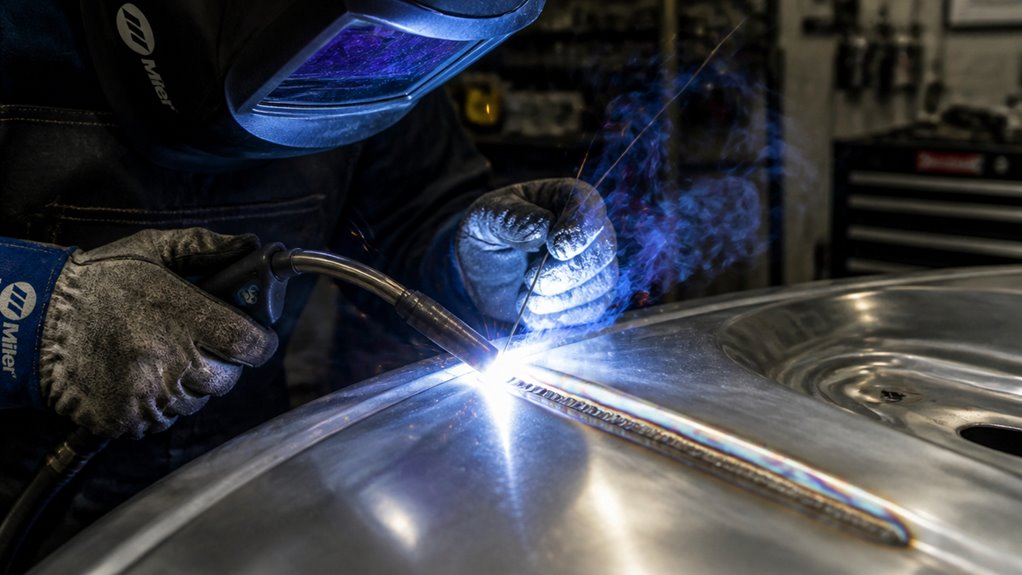
You can MIG weld aluminum without gas using flux-cored wire, but expect inconsistent arc stability, high porosity, and weaker weld strength due to atmospheric contamination.
Gasless flux-core methods produce erratic metal transfer, spatter, and insufficient fusion, making them unsuitable for critical or structural applications.
Lack of 100% argon shielding compromises weld integrity and mechanical properties. If you want consistent, high-quality aluminum welds, understanding proper gas use and setup adjustments is essential before proceeding further.
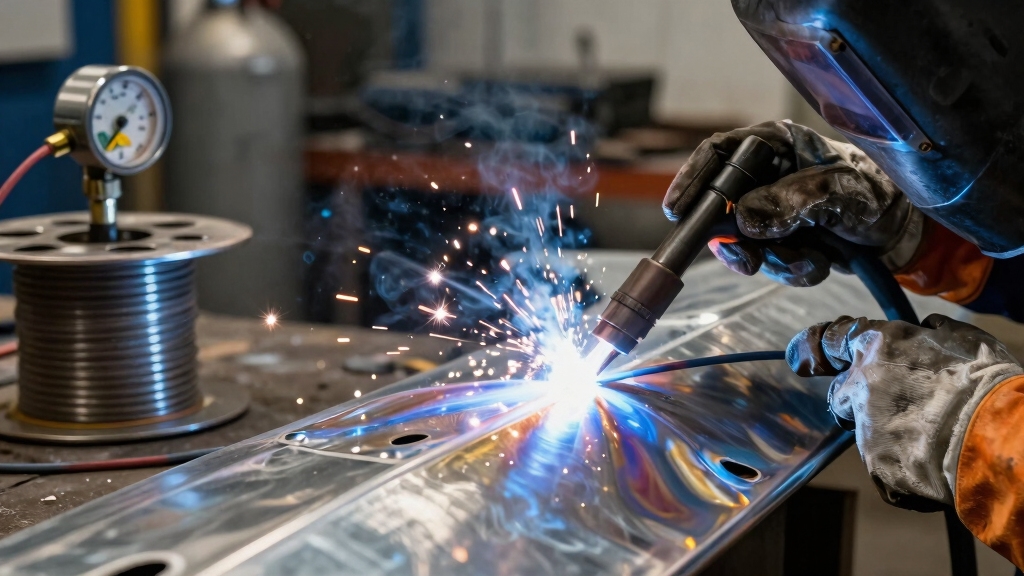
While MIG welding aluminum traditionally requires 100% argon shielding gas to prevent oxidation and porosity, welding without gas presents significant challenges that impact weld quality and integrity.
You’ll face immediate issues like atmospheric contamination leading to porosity and weak welds. Although flux core aluminum wire exists as a gasless option, it doesn’t reliably replace inert gas shielding due to inconsistent protection and weld defects.
Modifications like threading aluminum tubing through the contact tip can help bypass spool gun needs but don’t eliminate shielding issues. High wire speed and precise settings partially mitigate problems but won’t fully prevent oxidation or lack of fusion.
Ultimately, welding aluminum without gas compromises weld strength and consistency, making it unsuitable for critical applications despite budget-friendly appeals. This is largely due to the persistent aluminum oxide layer which standard fluxes and gasless methods cannot adequately disrupt.
You really need 100% argon for aluminum MIG welding. Why? Well, it shields the aluminum from oxidation, which can seriously weaken your weld.
Argon helps create a stable arc environment. This means you get consistent heat input, and it keeps the atmosphere around the weld free from contamination.
If you skip the argon, you’re looking at a higher risk of porosity and unstable arc conditions, which can hurt the integrity of your weld.
Using 100% argon also provides excellent arc stability and minimal spatter, ensuring a clean weld puddle.
Because aluminum oxidizes rapidly when exposed to air during welding, using 100% argon shielding gas is essential to prevent oxidation damage.
Argon, an inert gas, creates a protective envelope around the weld pool, displacing atmospheric oxygen and moisture that cause aluminum oxide formation.
This oxide layer is hard and refractory, impeding proper fusion and weakening the weld.
Using mixed gases like argon/CO2 introduces reactive elements, increasing oxidation and porosity.
Pure argon also stabilizes the arc, guaranteeing consistent heat input and preventing surface contamination.
Without this shielding, you risk weld defects such as inclusions and reduced mechanical properties.
Consequently, maintaining a continuous, adequate argon flow is critical to safeguard the molten aluminum and ensure a clean, uncontaminated weld surface during MIG welding.
For thicker aluminum sections, blends with helium are often added to increase heat input and penetration for stronger welds.
Weld integrity hinges on maintaining an inert atmosphere to protect molten aluminum from oxidation and contamination.
When you use 100% argon as the shielding gas, you effectively displace oxygen and nitrogen around the weld pool, preventing oxide formation and porosity.
Argon’s density and inertness provide a stable, uncontaminated arc environment critical for aluminum’s reactive surface.
Using mixed gases like argon with CO2 compromises this protection, promoting oxidation and resulting in weak, porous welds.
Without pure argon, weld defects increase, reducing mechanical strength and corrosion resistance.
To achieve consistent, defect-free aluminum MIG welds, you must maintain a continuous flow of 100% argon shielding.
This practice guarantees metallurgical soundness and optimal fusion, essential for structural applications where weld integrity is non-negotiable.
Proper argon purity at 99.99% or better is crucial to prevent oxidation, porosity, and degraded weld integrity during aluminum welding.
Maintaining a stable arc during aluminum MIG welding depends heavily on the shielding gas composition.
100% argon provides an ideal environment. Argon’s inert nature prevents oxidation and stabilizes the arc, allowing smooth metal transfer and consistent bead formation.
Using mixed gases like argon/CO2 causes arc instability and porosity due to reactive CO2 content.
Consider the gas effects below:
| Gas Type | Arc Stability | Weld Quality |
|---|---|---|
| 100% Argon | Stable, smooth | Clean, strong |
| Argon/CO2 Mix | Erratic, spatter | Porous, weak |
| No Gas | Unstable, erratic | High defects |
| Helium | Hotter, stable | Deep penetration |
| Flux Core Wire | Inconsistent | Variable results |
You must use 100% argon to guarantee a stable arc and high-quality aluminum welds. For thicker aluminum sections, using argon-helium blends can provide additional heat and deeper penetration essential for proper fusion.
When you use gasless MIG welding or a mixed gas blend like 75/25 argon/CO2 on aluminum, you compromise the weld quality markedly due to inadequate shielding.
Using gasless MIG or argon/CO2 blends on aluminum significantly reduces weld quality due to poor shielding.
Aluminum’s high affinity for oxygen demands 100% inert argon to prevent oxidation and porosity. Mixed gases introduce CO2, an active gas causing oxidation, resulting in brittle, porous welds with poor mechanical properties.
Gasless flux core wires lack consistent shielding, leading to atmospheric contamination and spatter. Without proper shielding, welds suffer from inclusions and weak fusion zones, reducing structural integrity.
Additionally, gasless setups often cause unstable arcs and erratic metal transfer, further degrading bead appearance and strength.
Using 75/25 gas in MIG welding on aluminum is unsuitable because the CO2 component causes oxidation and weld defects, making pure argon the preferred choice.
If you want to weld aluminum without using gas, here’s a neat trick: you can modify your MIG gun. Just thread an aluminum tube through the contact tip, and you can skip the hassle of a spool gun!
Now, using flux core aluminum wire is a game-changer since it lets you avoid shielding gas altogether. But, just a heads up: you might encounter some inconsistent results. This is mainly due to oxidation and the risk of porosity. So, keep that in mind as you work.
One thing to really focus on is adjusting your wire speed and gun setup. It’s super important to optimize the wire feed and minimize any defects during your gasless welding. With a little practice, you can get the hang of it!
Keep in mind that flux-cored wires have a flux-filled tubular core which provides arc stability and reduces spatter even without shielding gas.
Modifying your MIG setup to bypass the need for a spool gun offers a practical alternative for welding aluminum on a budget.
One effective method involves threading a smooth aluminum tube through the contact tip to guide the soft aluminum wire directly. This prevents liner jams common with standard setups.
This approach requires precise alignment to maintain consistent wire feed and reduce burn-back. Additionally, increasing wire speed compensates for aluminum’s thermal conductivity, enabling faster travel and minimizing porosity.
While flux core aluminum wire is marketed as a gasless option, it still demands careful calibration to mitigate inconsistent weld quality.
These spool gun alternatives lower equipment costs but require meticulous setup and practice to achieve acceptable weld integrity without the smooth feed and shielding gas advantages a spool gun provides.
However, maintaining precise current control is critical to overcoming aluminum’s high thermal and electrical conductivity challenges when welding without gas.
Explore using flux core aluminum wire as a budget-friendly alternative for MIG welding without shielding gas. This wire contains a flux coating that generates a protective gas shield during welding, reducing atmospheric contamination.
However, flux core aluminum wire is inconsistent compared to standard bare aluminum wire with argon shielding. It often produces porous welds and weaker mechanical properties.
To use it, you don’t need to modify your MIG gun extensively; just load the flux core wire and increase wire feed speed to compensate for the flux burn-off.
Make sure your contact tip is appropriately sized to avoid feeding issues since aluminum’s softness can cause jams.
Keep in mind, flux core wire suits minor repairs or thin materials where weld integrity isn’t critical. It can’t match the quality of gas-shielded MIG aluminum welds.
Due to flux core welding’s typical use for ferrous metals, it is generally not recommended for aluminum, as the flux chemistry is not tailored for non-ferrous metals.
When working with flux core aluminum wire, your typical MIG setup requires adjustments to handle the softer wire and its unique feed demands.
Standard liners often cause jams, so you’ll need to replace them with Teflon or specialized low-friction liners designed for aluminum.
Increasing wire feed speed is essential to maintain consistent arc stability and minimize burn-back.
A larger contact tip diameter than the wire, such as 0.035″ for 0.030″ wire, helps prevent feeding issues.
Additionally, some welders modify their guns by threading an aluminum tube through the contact tip to mimic spool gun benefits, improving wire straightness and feed reliability.
These modifications allow you to use flux core wire efficiently without a spool gun.
However, the absence of shielding gas still risks porosity and weaker welds.
Practice and fine-tuning are critical for acceptable results.
Flux-cored wires are preferred for outdoor use because their self-shielding capabilities eliminate the need for external gas protection.
You can turn to several gasless alternatives for welding aluminum that bypass the need for expensive shielding gases like argon. These methods provide options when conventional MIG setups with gas aren’t feasible or economical.
1. Flux-Core Aluminum Wire
Designed for minor repairs, it contains flux to shield the weld pool. However, results vary due to inconsistent flux coverage and porosity risks.
Ideal for small fixes, but may suffer from uneven flux protection and potential porosity issues.
2. Aluminum Soldering with Low-Temperature Wire
Using a gas burner reaching ~1300°C, this technique relies on solder bars that bond without melting base metal. It’s ideal for thin sections like radiators or bike frames.
3. Flux-Coated SMAW Rods with TIG or Oxy-Acetylene
This approach penetrates oxide layers without inert gas. It allows welds in field conditions but demands skill to control heat and flux residue.
Each alternative requires precise control to mitigate contamination and achieve structural integrity.
Although it might seem tempting to skip shielding gas in MIG welding aluminum to cut costs or simplify setup, doing so introduces significant challenges that compromise weld quality.
Without an inert gas shield, atmospheric contamination causes porosity, oxidation, and weak fusion zones. You’ll notice excessive spatter and unstable arcs, as aluminum’s oxide layer resists proper melting without argon protection.
Flux core wires marketed as gasless alternatives often yield inconsistent results due to inadequate shielding and improper wire feed. Additionally, the absence of gas flow disrupts spray transfer, leading to undercut and lack of penetration, especially on thin sections.
Turbulence can draw in air, worsening defects. Ultimately, these problems reduce mechanical strength and compromise the integrity of your welds, making pure argon shielding essential for reliable aluminum MIG welding.
Mastering aluminum welding without shielding gas demands careful control of heat input and wire speed to minimize oxidation and porosity.
You’ll need to balance fast wire feed with reduced arc time to limit heat-affected zones. Cleanliness is critical; remove all oxides and contaminants before welding.
Follow these tips for better results:
Applying these techniques improves weld integrity despite the absence of inert gas. Shielding remains ideal for consistent aluminum weld quality.
Achieving satisfactory aluminum welds without shielding gas depends heavily on selecting equipment that compensates for the inherent challenges of atmospheric exposure.
You’ll need a MIG welder capable of high wire feed speeds to reduce heat input and porosity. A spool gun is essential for smooth feeding of soft aluminum wire, as standard liners tend to jam.
Use a contact tip slightly larger than the wire diameter. For instance, a 0.035″ tip works well for 0.030″ wire to prevent wire sticking.
While traditional setups demand 100% argon, you can experiment with flux-cored aluminum wire for limited gasless applications, keeping in mind inconsistent results.
Modifying the MIG gun with an aluminum tube through the contact tip can bypass spool gun needs but requires practice.
Ultimately, precision equipment matching aluminum’s characteristics is vital for acceptable weld integrity without gas.
Yes, aluminum MIG welding fumes can be harmful without proper ventilation.
You’ll inhale fine metal oxides and gases like ozone and nitrogen oxides, which irritate your respiratory system and may cause long-term lung damage.
Without adequate airflow or extraction, toxic particulates accumulate quickly, increasing health risks.
Always make certain you use local exhaust ventilation or wear a suitable respirator to minimize exposure and protect your lungs during aluminum welding tasks.
You might think thicker aluminum always demands more gas, but it’s more nuanced.
As thickness increases, you’ll need higher heat input and consistent 100% argon shielding to prevent porosity and oxidation.
Thinner aluminum (<3mm) requires fast travel speeds and precise gas flow to avoid burn-through and poor weld quality.
You need to regularly clean the spool gun’s liner to prevent aluminum wire jams, as soft wire easily kinks inside.
Inspect the contact tip for wear or buildup, replacing it when eroded to maintain consistent arc stability.
Check the drive rolls for proper tension and cleanliness to avoid feeding issues.
Make sure the gun’s cable and connections are intact, free from damage or corrosion, to guarantee reliable electrical conductivity and smooth wire delivery.
Yes, you must wear appropriate PPE since aluminum welding produces intense UV radiation and bright arcs.
Aluminum’s high thermal conductivity demands you control heat input carefully to avoid warping or burn-through.
Ensure proper ventilation because aluminum fumes can be hazardous.
Be cautious with wire feeding; soft aluminum wire tends to jam, so maintain equipment regularly.
Finally, avoid direct contact with hot aluminum to prevent burns and always ground your workpiece securely.
Think of aluminum alloys as unique musical instruments, each demanding its own tuning. You’ll adjust voltage, wire feed speed, and travel speed based on alloy composition and thickness.
For 6061, slower travel and moderate heat prevent cracking. In contrast, 3003 needs higher speeds to avoid burn-through.
Heat input varies; you must balance it carefully. Fine-tune parameters analytically to achieve clean, strong welds tailored to each alloy’s thermal and mechanical traits.
You can’t cut corners when MIG welding aluminum without gas. Gasless welding gambles with great risks like poor penetration and porosity.
Precision and protection provided by 100% argon are paramount for pristine, professional results. While flux core alternatives exist, they require rigorous rigging and refinement.
Remember, mastering MIG welding means matching meticulous methods with the right machinery. Choose carefully, calibrate consistently, and commit to thorough control for consistent, clean connections.