Phone:
(701)814-6992
Physical address:
6296 Donnelly Plaza
Ratkeville, Bahamas.

Phone:
(701)814-6992
Physical address:
6296 Donnelly Plaza
Ratkeville, Bahamas.

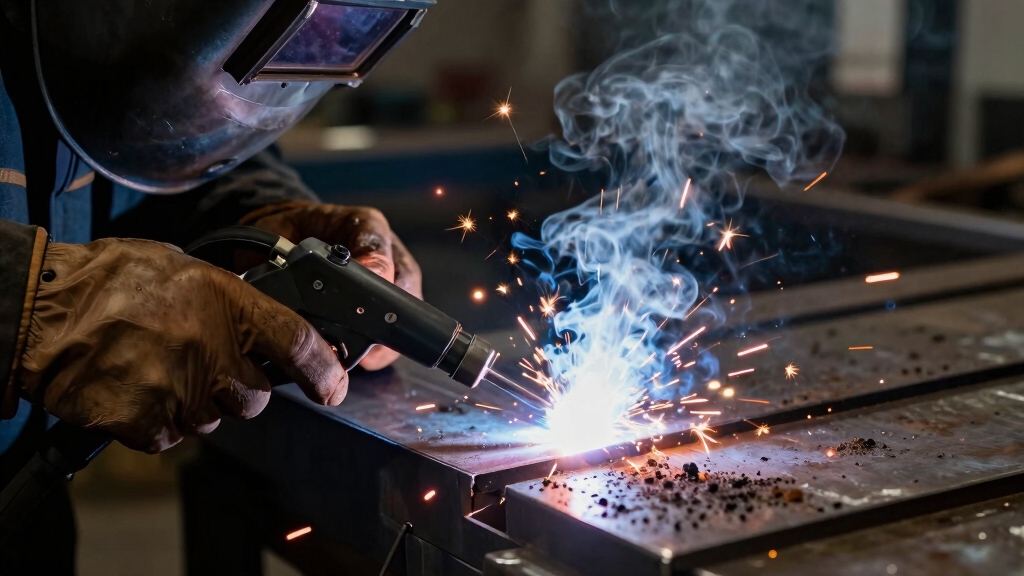
You don’t always need external shielding gas for flux core welding because self-shielded wires produce their own protective gas from the flux inside the wire.
This makes them ideal for outdoor or windy conditions where gas shielding would be impractical.
However, gas-shielded flux core wires require external gas to improve arc stability, reduce spatter, and deliver cleaner welds, especially on thinner materials.
Understanding these distinctions helps you select the best method for your specific welding needs.
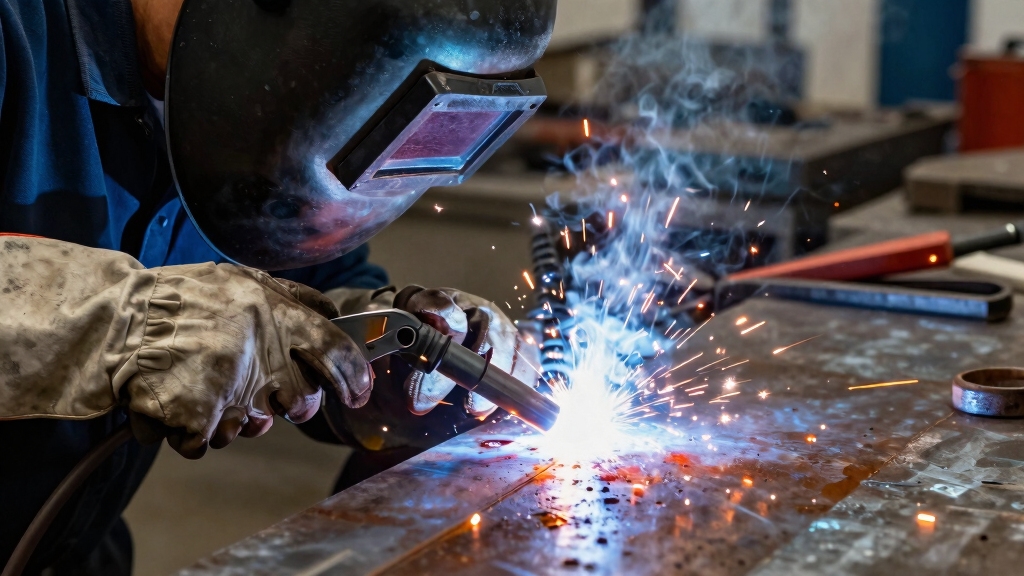
Understanding flux core welding starts with recognizing how the self-shielded wire functions. You use a tubular wire filled with flux that, when heated by the arc, decomposes and generates a protective gas shield around the weld pool.
This internal gas shield obviates the need for external shielding gas, making the process suitable for outdoor and windy conditions. As you weld, the flux also forms a slag layer on top of the molten metal, which you must chip away after cooling.
Flux core welding excels on thicker materials without requiring complex gas setups. Your welder feeds the flux-filled wire continuously, maintaining arc stability and penetration. The slag ensures weld integrity despite exposure to environmental contaminants during the process.
The self-shielded welding method is especially advantageous in environments where wind would disrupt traditional gas shielding.
When you choose flux core wire, you’ll encounter two main types: self-shielded and gas-shielded. Each serves distinct welding needs based on shielding requirements and environmental conditions.
Understanding these distinctions helps you select the right wire for your welding task.
You’ll need shielding gas when using gas-shielded flux core wires. Why? Well, it helps ensure arc stability and gives you cleaner welds with less spatter. Pretty handy, right?
On the other hand, self-shielded flux core wires are a bit different. They generate their own protective gas internally, so you don’t have to worry about using external shielding.
This is especially useful when you’re working outdoors or in windy conditions.
However, keep in mind that flux-cored wires produce more fumes and slag, requiring additional post-weld cleanup and proper ventilation.
Although standard flux core welding relies on the wire’s internal flux to generate shielding gas, certain applications demand the enhanced protection offered by external shielding gas.
Gas-shielded flux core welding (FCAW-G) uses a mix of CO2 or argon/CO2 to improve weld quality. You’ll notice better arc stability, reduced spatter, and cleaner welds compared to self-shielded wires.
Here’s when you need gas-shielded flux core:
Using shielding gas enhances weldability but needs additional equipment like regulators and solenoids for gas flow control. Combining FCAW with EGW can significantly reduce welding time while maintaining high deposition rates and weld quality.
Don’t assume flux core welding always requires an external shielding gas. Self-shielded flux core wires generate their own protective gas through the flux core within the wire.
This internal gas shields the molten weld pool from atmospheric contamination, eliminating the need for external gas cylinders. You’ll find self-shielded flux core ideal for outdoor or windy conditions where gas shielding would be compromised.
It’s particularly effective on thicker materials, providing deep penetration and robust welds without additional equipment. However, this process produces slag that must be chipped post-weld.
While self-shielded flux core welding simplifies setup and reduces costs, it sacrifices some arc stability and weld cleanliness compared to gas-shielded variants. Understanding this trade-off helps you choose the right process based on welding environment, material thickness, and quality requirements.
Flux core welding’s continuous wire feed also enhances productivity by allowing faster material deposition and reducing downtime.
Frequently, self-shielded flux core welding proves to be the best choice for outdoor applications due to its inherent ability to generate protective shielding gas internally.
This eliminates the need for external gas cylinders, making it highly adaptable in windy or remote environments. When you opt for self-shielded flux core welding outdoors, you benefit from:
Additionally, maintaining proper equipment condition and welding technique can significantly reduce spatter and improve weld quality when using self-shielded flux core welding, highlighting the importance of equipment maintenance.
When you switch to gas-shielded flux core welding, you gain access to externally supplied shielding gases like 100% CO2 or argon/CO2 blends. These gases markedly enhance arc stability and weld quality.
They protect the molten weld pool from atmospheric contamination more effectively than self-generated flux gases. This reduces porosity and improves bead appearance.
The controlled gas environment stabilizes the arc, producing a consistent, smooth weld with less spatter and cleaner slag removal.
You’ll notice improved penetration and mechanical properties due to more uniform heat input and reduced oxidation.
This precision is critical when working on thinner materials or projects demanding high-quality finishes.
Using a 75% Argon / 25% CO2 mix is common for achieving deep penetration and a stable arc on mild steel during flux core welding.
Although flux core welding simplifies shielding requirements compared to traditional MIG welding, you still need specific equipment tailored to whether you’re using self-shielded (no-gas) or gas-shielded flux core wire.
Flux core welding eases shielding but requires gear suited for self-shielded or gas-shielded wire types.
For no-gas flux core welding, your setup must include a compatible flux core wire feeder and a welder configured for DCEN polarity without gas fittings.
Gas-shielded flux core welding demands additional components for gas delivery and control.
Key equipment differences are:
Selecting equipment precisely guarantees peak weld quality and operational efficiency. Flux-cored wires are preferred for outdoor and heavy-duty applications due to their self-shielding capabilities that eliminate reliance on external gas.
If your current flux core welder lacks gas capabilities but you need cleaner welds or improved arc stability indoors, converting it to use shielding gas is a practical option.
First, check your welder’s circuit board for labeled terminals like “Optional Gas Valve” to confirm gas solenoid compatibility.
Install a 115V AC gas solenoid and connect it via 1/4″ NPT barb fittings to a shielding gas supply, typically a 75% argon/25% CO2 mix.
Modify the gun wiring to include solenoid control and ensure the gas line exits through a designated plastic plug removal point.
Adjust polarity if switching to gas-shielded flux core wire (FCAW-G).
This conversion enhances weld quality by stabilizing the arc and reducing spatter, making it suitable for indoor applications requiring precision.
Ensure proper shielding gas flow rates to optimize gas shielding effectiveness and prevent weld defects.
Selecting the appropriate flux core welding method hinges on your project’s specific requirements, including material type, environmental conditions, and desired weld quality. To make an informed choice, consider these factors:
Additionally, understanding the role of shielding gas in protecting the weld from oxidation can help optimize your welding results.
You need to manage slag removal carefully after flux core welding to avoid burns or eye injury.
Since flux core generates more smoke and fumes, use local exhaust ventilation or respiratory protection to limit inhalation.
Be aware of spatter risks; wear flame-resistant clothing and gloves.
Also, maintain good grounding and polarity settings to prevent electrical hazards.
These precautions differ slightly from MIG welding due to flux-generated slag and increased fume production.
Flux core welding can slightly reduce corrosion resistance compared to some other methods due to slag inclusions and potential porosity if not cleaned properly.
You’ll need to chip away slag thoroughly to avoid trapping corrosive elements.
Using gas-shielded flux core wires improves weld cleanliness and reduces oxidation, enhancing corrosion resistance.
Proper post-weld treatment like grinding and coating is essential to maintain metal integrity and prevent corrosion in your welded joints.
Flux core welding’s fundamental function favors ferrous fabrics, so it’s fundamentally flawed for non-ferrous metals.
You won’t achieve best outcomes welding aluminum, copper, or magnesium with flux core because its flux chemistry and arc characteristics aren’t tailored for these materials.
Instead, you should select specialized processes like TIG or MIG with appropriate shielding gases and filler metals.
Using flux core on non-ferrous metals risks weak welds, contamination, and compromised structural integrity.
You should first check your wire feed speed. Too slow causes poor fusion, while too fast leads to excessive spatter.
Verify correct polarity; flux core typically uses DCEN. Inspect contact tips for wear or clogging, which disrupts arc stability.
Adjust voltage to stabilize the arc and reduce porosity. Make certain clean base metal to prevent contamination.
Finally, maintain proper stick-out length, typically 3/4 to 1 inch, to avoid inconsistent weld beads and slag inclusions.
Imagine welding on a chilly morning where cold metal bites your gloves.
Ambient temperature affects flux core welding by altering wire feed consistency and arc stability.
Low temperatures slow flux activation, causing weak shielding gas generation, leading to porous welds.
High heat can cause excessive spatter and faster wire burn-off.
You’ll need to adjust voltage, wire feed speed, and preheat thicker metals in cold environments to maintain weld quality and penetration.
Whether you choose self-shielded or gas-shielded flux core welding depends on your project’s demands.
Don’t underestimate the power of shielding gas. It can dramatically improve weld quality, especially indoors or on critical work.
Yet, self-shielded flux core welding thrives outdoors, where wind might ruin gas protection.
Like a key revealing potential, the right choice transforms your welds from average to exceptional. So, weigh your options carefully and weld smarter, not harder.