Phone:
(701)814-6992
Physical address:
6296 Donnelly Plaza
Ratkeville, Bahamas.

Phone:
(701)814-6992
Physical address:
6296 Donnelly Plaza
Ratkeville, Bahamas.

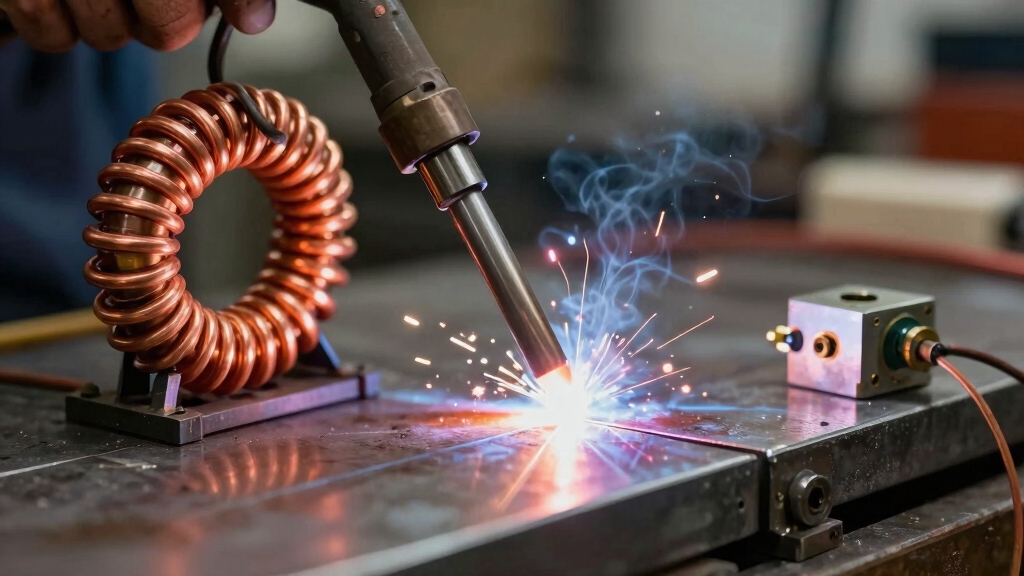
Inductance in welding controls how quickly the welding current rises during a short circuit by generating a magnetic field that opposes sudden current changes.
This slows the current ramp-up, stabilizing the arc and improving metal transfer while reducing spatter.
Adjusting inductance affects arc time, short circuit frequency, and weld bead characteristics. This allows you to fine-tune performance based on material thickness and welding conditions.
Understanding its role helps optimize weld quality and process stability.
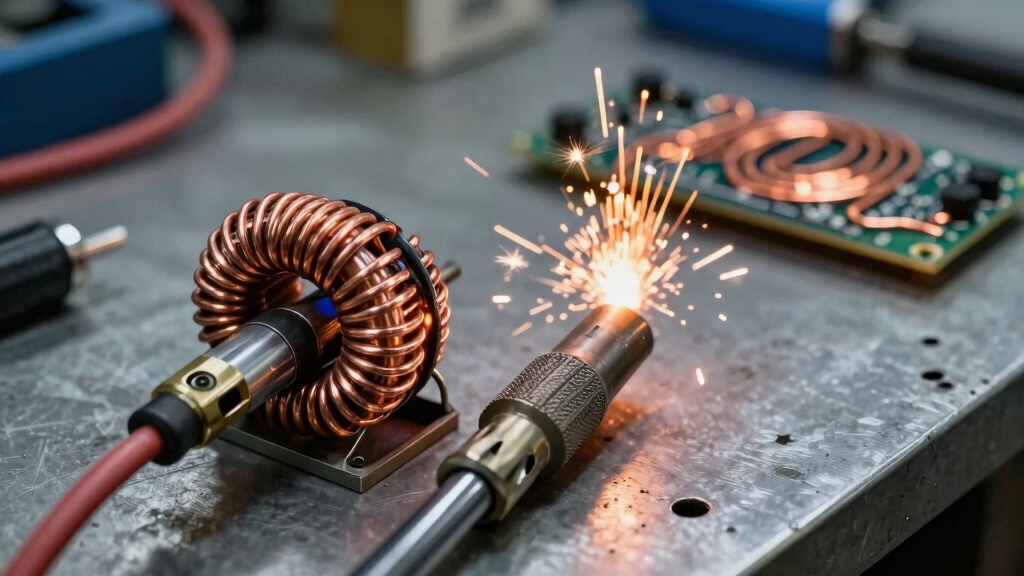
Although often overlooked, inductance plays a crucial role in welding circuits by controlling how quickly the welding current rises during a short circuit.
Inductance is a circuit property that slows the rate of current increase by generating a magnetic field opposing the welding current.
Inductance delays current rise by creating a magnetic field that opposes welding current flow.
When the welding wire contacts the workpiece, causing a short, the arc voltage drops near zero, triggering a current surge.
Inductance counters this surge by inducing an electromotive force that resists rapid current changes.
This controls the speed at which current reaches your selected amperage.
This mechanism prevents abrupt current spikes and violent wire feed, influencing the short circuit cycle’s timing.
Modern MIG welders incorporate adjustable inductance to fine-tune metal transfer characteristics.
This optimization enhances weld quality based on material and parameters.
Adjusting inductance works alongside wire feed speed and voltage settings to achieve stable arc and consistent bead profiles.
Understanding how inductance controls current during short circuits requires examining the interaction between the welding wire and the workpiece.
When the wire contacts the workpiece, the arc voltage drops near zero, causing current to rise rapidly. Inductance generates a magnetic field opposing this sudden increase, thereby slowing the current’s rise.
This delay prevents violent wire feed and controls the short circuit cycle by modifying arc time and frequency.
Proper balance of amperage and voltage ensures stable arc conditions during the short circuit phase.
| Effect | Low Inductance |
|---|---|
| Current Rise | Rapid, causing spatter |
| Arc Sound | Sharp, crispy |
| Weld Pool | Hard, pinpoint narrow bead |
| Effect | High Inductance |
| Current Rise | Slower, reducing spatter |
| Arc Sound | Smooth, buttery |
| Weld Pool | Fluid, improved penetration |
When welding current changes abruptly, it generates a magnetic field because the conductor’s changing current induces electromagnetic effects in the surrounding coil.
Abrupt changes in welding current create magnetic fields through electromagnetic induction in the surrounding coil.
Inductance arises from the coil’s opposition to sudden current shifts. This opposition manifests as a magnetic field.
As current flows through the welding circuit, any rapid increase or decrease alters the magnetic flux within the inductive coil.
According to Faraday’s Law, this changing flux induces an electromotive force that opposes the current change, creating a self-regulating effect.
This magnetic field isn’t static; it dynamically resists abrupt current surges during short circuits, smoothing the current rise.
Understanding this principle helps you control arc stability and metal transfer characteristics. The magnetic field generated by inductance directly impacts the welding process’s electrical behavior.
In welding transformers, the magnetic shunt is often used to regulate the magnetic flux and fine-tune current flow, enhancing control over the welding arc.
Controlling inductance directly influences arc time and short circuit frequency by regulating how quickly welding current rises during a short circuit.
When inductance is high, it slows the current rise, extending arc time and lowering the short circuit frequency. This delay prevents abrupt current peaks, producing a smoother arc and more fluid weld pool.
Conversely, low inductance allows rapid current increases, shortening arc time and raising short circuit frequency. This generates a crisp, high-frequency arc but can cause harsher arc sounds and increased spatter.
By adjusting inductance, you control the electromagnetic opposition to current changes, effectively tuning the cycle duration of each short circuit.
Understanding this relationship helps you optimize weld quality and stability, especially when balancing penetration and bead appearance in various metal thicknesses.
Choosing the correct polarity is also crucial, as it directly affects heat distribution and arc stability, which interact with inductance settings to determine overall weld quality.
When you use low inductance, the current jumps up quickly during short circuits. This can lead to increased spatter levels because of something called wire explosion. It sounds intense, right?
That sudden surge of current also produces a hard, narrow bead in your weld, which means less fluidity in the weld pool. So, if you’re working with thin metals that need precise control, understanding these effects is key.
Adjusting parameters like voltage and wire feed speed can help mitigate spatter caused by low inductance and improve overall weld quality through parameter optimization.
Although low inductance settings allow the welding current to rise rapidly during a short circuit, they can cause excessive spatter due to the abrupt energy transfer that leads to wire explosion.
This rapid current rise means the magnetic field opposing the current is minimal, allowing the amperage to spike almost instantly. As a result, you’ll notice:
Such rapid changes in current are precisely controlled in inverter welding machines through microsecond output regulation to maintain arc stability and weld quality.
The rapid current rise enabled by low inductance settings directly contributes to increased spatter levels during welding. When inductance is low, the current quickly surges to its peak as the wire short circuits, causing a violent metal transfer.
This abrupt energy transfer leads to wire tip explosions and molten droplets being forcefully ejected from the weld pool. As a result, you’ll notice excessive spatter around the bead, requiring more cleanup and potentially compromising weld quality.
The sharp, crispy arc sound you hear correlates with these rapid current shifts and spatter events. While low inductance is suitable for thin metals demanding precise control, you must carefully balance it to avoid excessive spatter, which can reduce productivity and weld appearance.
Adjusting inductance settings helps you manage spatter by controlling current rise speed during short circuits. Additionally, maintaining the correct wire feed speed is crucial, as too fast wire feed combined with low inductance can further increase spatter and overheating.
Achieving a narrow bead during welding requires controlling the current rise speed, which low inductance settings excel at. When you set low inductance, the current reaches its peak rapidly, producing a hard weld pool with pinpoint precision. This precise control benefits thin metals or applications demanding narrow, well-defined beads.
Consider these effects of low inductance on bead formation:
Using low inductance, you enhance bead definition but may encounter increased spatter, which requires balancing settings accordingly. Low inductance also interacts closely with arc stability characteristics, influencing the overall weld quality and operator control.
When you increase inductance during welding, you slow the rate of current rise in short circuits. This directly improves arc stability and weld quality.
This slower current ramp reduces spatter by preventing abrupt wire feed explosions, resulting in a smoother, more controlled arc. You’ll notice a buttery arc sound and a fluid weld pool, enhancing wetting at the weld toes for superior penetration.
High inductance also extends arc time and lowers short circuit frequency, producing a hotter weld pool ideal for thicker metals or open root welds.
By controlling the electromagnetic forces opposing current spikes, high inductance stabilizes the short circuit cycle. This enables better metal transfer and a more uniform bead profile.
This precision ultimately leads to stronger, cleaner welds with improved mechanical properties. Pulse MIG welding’s precise current modulation further enhances droplet control and arc stability in this process.
For different metal thicknesses, selecting the appropriate inductance setting directly influences weld quality and control. You’ll want to adjust inductance to match the thermal mass and welding conditions of your workpiece.
Fine-tuning inductance based on thickness guarantees efficient energy delivery and consistent weld integrity across your projects. Adjusting inductance also helps manage spatter and penetration, which are directly affected by the amperage settings matched to metal thickness.
Because inductance controls the rate at which welding current rises during a short circuit, it directly influences spatter levels and weld pool behavior.
When you set low inductance, current rises rapidly, causing abrupt wire melting and increased spatter due to explosive short circuits. This results in a hard, narrow weld pool with lower fluidity, ideal for thin metals requiring precise control but producing harsher arc sounds.
Conversely, increasing inductance slows current ramp-up, reducing spatter by allowing a smoother, more controlled metal transfer. This creates a fluid weld pool with better wetting and penetration, especially beneficial for thicker materials or open root joints.
You know, one of the cool things about MIG welding is how you can actually tweak the metal transfer characteristics by adjusting the inductance settings. These settings play a key role in how the current rises during short circuits. When you increase the inductance, it slows down that current ramp-up. This results in a smoother arc and can really help reduce spatter. Pretty neat, right?
On the flip side, if you decrease the inductance, you get a sharper arc with more frequent transfer. This can be useful too, depending on what you’re working on. So, by fine-tuning these settings, you can optimize the weld quality based on different material thicknesses and joint configurations. It’s all about finding that perfect balance to get the best results!
Mastering inductance lets you precisely control metal transfer in MIG welding by regulating the current rise during short circuits. By adjusting inductance, you influence the magnetic field that opposes rapid current changes. This directly affects the stability and quality of the weld.
Here’s how inductance impacts transfer:
Understanding these effects helps you optimize metal transfer dynamics for improved weld quality and process stability.
When adjusting inductance settings on your MIG welder, understanding how these changes influence current rise and arc stability is crucial for achieving ideal metal transfer.
Increasing inductance slows the current rise during short circuits, extending arc time and reducing spatter. This produces a stable, fluid weld pool with improved penetration, ideal for thicker metals or open-root welds.
Conversely, lowering inductance accelerates current rise, causing a crisp, high-frequency arc suitable for thin materials requiring precise bead control.
You’ll find factory defaults around 30-50% inductance provide balanced performance, but fine-tuning is essential.
Adjust inductance incrementally, observe arc behavior, spatter levels, and bead profile, then refine settings accordingly.
This analytical approach guarantees you optimize weld quality by controlling electromagnetic effects that govern dip transfer characteristics in MIG welding.
Adjusting inductance on modern MIG welders involves fine-tuning the current rise rate to optimize weld quality and minimize spatter. To do this effectively, you need to understand how changes affect arc stability and metal transfer.
Yes, inductance settings can influence welding power consumption indirectly.
When you increase inductance, the current rise slows, leading to longer arc times with smoother, more controlled metal transfer. This can reduce spatter and energy waste, potentially improving efficiency.
Conversely, low inductance causes rapid current spikes and more spatter, which wastes energy.
While inductance doesn’t directly change voltage or current levels, it affects how power is delivered and used during short circuit cycles.
When it comes to electrode wear rate, inductance definitely plays a role. You can’t judge a book by its cover.
Higher inductance slows current rise during short circuits. This reduces spatter and electrode tip melting, which prolongs electrode life.
Conversely, low inductance means rapid current spikes that increase electrode erosion.
Adjusting inductance fine-tunes arc stability and metal transfer. This lets you manage electrode consumption more precisely for better efficiency and weld quality.
You’ll find that inductance interacts with shielding gases by influencing arc stability and metal transfer modes.
With CO2-rich gases, higher inductance smooths the arc, reducing spatter and improving puddle fluidity.
For mixed gases like C25, adjusting inductance helps replicate stable dip transfer characteristics.
You’ll need to fine-tune inductance settings based on gas composition to optimize short circuit frequency, arc sound, and weld bead profile for consistent, quality welds.
Think of inductance adjustment in pulse welding like tuning a guitar string. It’s essential for hitting the right note.
While pulse welding primarily controls current pulses, adjusting inductance fine-tunes the current rise within each pulse. This reduces spatter and stabilizes the arc, improving weld quality.
Yes, adjusting inductance settings can help prevent wire feed jams. By controlling the rate of current rise during short circuits, higher inductance slows the current increase.
This reduces violent wire feeding that often causes jams. This smoother current shift stabilizes the arc and wire movement, minimizing abrupt stops.
However, you’ll need to fine-tune inductance based on your specific welding parameters to optimize wire feed consistency and avoid jams effectively.
Understanding inductance in welding is like mastering the pulse of your weld’s heartbeat. It controls current flow during short circuits, shapes magnetic fields, and fine-tunes arc time and frequency.
By adjusting inductance, you can minimize spatter, optimize metal transfer, and adapt to different metal thicknesses with precision.
So, take control of your inductance settings. It’s the key to achieving smoother, more consistent welds every time.