Phone:
(701)814-6992
Physical address:
6296 Donnelly Plaza
Ratkeville, Bahamas.

Phone:
(701)814-6992
Physical address:
6296 Donnelly Plaza
Ratkeville, Bahamas.

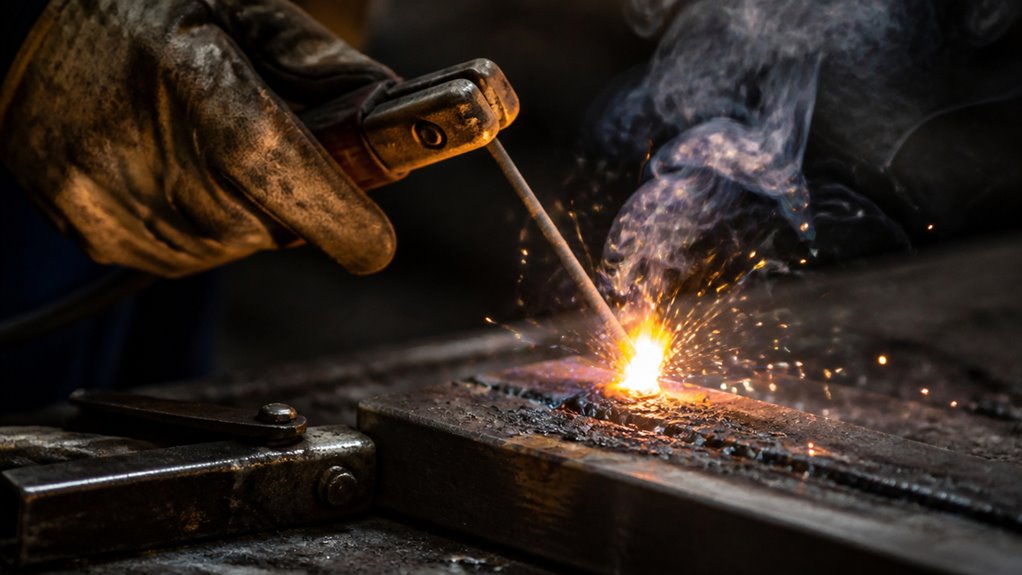
Your welding rods keep sticking because your amperage might be too low or doesn’t match the electrode size, causing an unstable arc.
Using damp, aged, or improperly stored rods also disrupts the arc, increasing sticking.
Poor grounding or contaminated base metals lead to weak current flow and inconsistent heat, making fusion harder to control.
Incorrect arc length and strike technique further destabilize the process.
Addressing these precise issues can help you understand the full solution.
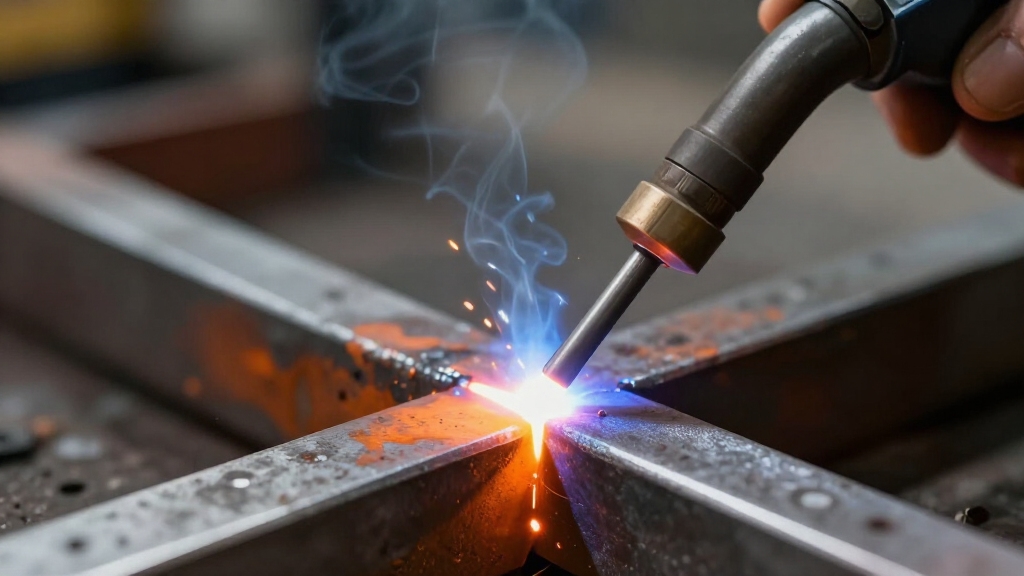
When your welding rods stick, it’s often because the amperage is set too low to keep the arc stable.
Low amperage means the arc heat doesn’t reach the level needed to prevent the rod tip from fusing to the weld puddle.
You’ll notice sticking especially when the current falls below the electrode’s recommended operating range.
To fix this, increase amperage incrementally, typically by 10 to 15 amps, until the arc stabilizes.
Remember, rod diameter and electrode type directly influence the required current.
Thinner rods need less amperage, while thicker rods need more.
If you don’t adjust amperage properly, the arc’s heat won’t sustain itself, causing frequent sticking.
Precision in setting amperage is essential for consistent arc maintenance and minimizing rod fusion to the workpiece.
Always verify that the amperage settings align with the electrode’s core wire diameter and operating current to optimize performance.
Adjusting amperage correctly sets the foundation, but maintaining proper arc length and mastering your strike technique directly impact rod sticking as well.
If your arc length is too short, the rod tip will fuse instantly to the workpiece because the arc heat can’t sustain itself. You need to avoid pressing the rod into the puddle; instead, maintain a gap roughly equal to the electrode’s core wire diameter.
When striking the arc, use a quick, confident motion rather than a slow tap to ignite the arc efficiently. Inadequate striking technique often leads to unstable arcs and frequent sticking.
Maintaining a short arc length also stabilizes heat input and improves puddle control, reducing the chance of the rod sticking.
You know, if you’ve ever noticed that welding rods tend to stick more often, it might be because the ground connection is loose or even corroded. When that happens, the current flow becomes unstable, leading to lower arc heat.
To avoid this issue, it’s really important to ensure that you have clean and tight contact points at both the ground clamp and the electrode holder. This stabilizes the circuit and helps maintain the proper arc energy.
Otherwise, what can happen is that the rod tip fuses to the puddle. That’s because the arc just can’t sustain the adequate temperature needed to keep everything moving smoothly. So, keeping that ground connection in good shape is key!
Regularly inspecting clamps, cables, and contact surfaces for wear or corrosion helps maintain reliable conductivity and prevents grounding issues.
Although you might have the correct amperage and technique, loose or dirty ground connections can still cause welding rods to stick. This happens by disrupting stable current flow.
When grounding is poor, arc stability suffers, reducing heat concentration at the weld zone. This increases the likelihood of rod tip fusion.
The inconsistent electrical circuit leads to weak arcs, forcing you to re-strike frequently.
| Issue | Effect on Welding |
|---|---|
| Loose Ground Clamp | Unstable arc, frequent sticking |
| Dirty Contact Points | Increased resistance, weak arc |
| Worn Electrode Holder | Reduced grip, inconsistent current |
Ensuring tight, clean, and secure ground connections minimizes sticking. This is crucial for maintaining steady current flow and ideal arc conditions.
Poor grounding can also increase the risk of electric shock by allowing unintended current paths through the welder’s body, especially in damp environments.
A clean and secure electrical contact is essential for stable arc welding. Poor grounding leads to unstable current flow, which lowers arc heat and increases the chance of your welding rod sticking.
When the circuit isn’t solid, the arc becomes weak and inconsistent, causing fusion at the rod tip and interrupting the weld. To minimize these issues, focus on:
Additionally, selecting the proper cable gauge and maintaining good connections help ensure consistent current flow and prevent voltage drops that can contribute to rod sticking.
Contaminants like rust, paint, and grease on base metal markedly disrupt electrical contact during welding.
These impurities increase resistance at the weld zone, which reduces effective heat generation and destabilizes the arc.
When you attempt to strike the arc on dirty surfaces, you’ll notice it’s harder to initiate and maintain because the contaminated layer impedes consistent current flow.
This causes insufficient melting of the electrode tip, leading it to fuse prematurely with the base metal.
Additionally, the irregular surface caused by corrosion or mill scale prevents uniform arc length control, increasing the likelihood of sticking.
To prevent this, you need to thoroughly clean the workpiece before welding.
Remove all contaminants to guarantee stable electrical contact and proper heat concentration at the weld puddle.
Welding over rust without proper surface preparation increases the risk of porosity and weak fusion, compromising weld quality and causing rods to stick.
Moisture in the flux can really mess with your welding process. It destabilizes the arc, which means your rod is more likely to stick.
And it’s not just moisture; old electrodes can be a problem, too. When they lose their coating integrity, it disrupts the arc formation and can lead to more fusion at the tip.
Improper storage conditions, such as high humidity and temperatures above 90°F, significantly increase moisture absorption and flux deterioration, worsening sticking issues.
Understanding how moisture affects flux is essential for preventing welding rod sticking. When flux absorbs moisture, it alters the electrode’s chemical composition, impairing arc stability and increasing the likelihood of the rod fusing to the puddle.
Moisture causes hydrogen pickup, which destabilizes ignition and disrupts the protective slag formation, leading to inconsistent arc behavior. You’ll notice sticking especially with low-hydrogen electrodes like E7018, which are highly sensitive to dampness.
Key moisture effects on flux include:
To avoid sticking, store electrodes in a dry environment and use freshly dried rods whenever possible. Proper storage and handling of 7018 rods, including maintaining temperatures between 225–300°F, is critical to preserving the low-hydrogen flux and preventing moisture absorption.
Although moisture is the primary culprit, old or improperly stored electrodes also contribute markedly to rod sticking by degrading the flux coating. When flux absorbs moisture or ages, it loses its protective and stabilizing properties, leading to inconsistent arc ignition and unstable molten metal transfer.
You’ll notice that damp or aged rods often produce erratic arcs, increasing the chance the electrode tip fuses to the weld pool. Low-hydrogen rods like E7018 are especially vulnerable; moisture uptake alters their chemical balance, causing hydrogen-induced cracking and arc instability.
Moreover, damaged or cracked flux coatings from aging expose the core wire, disrupting electrical conductivity. This degradation forces you to expend more effort maintaining arc stability, often requiring amperage adjustments.
Ultimately, using old rods compromises weld quality and heightens sticking risk, emphasizing the need for fresh, intact electrodes during welding. Proper rod storage and controlled drying environments are essential to preserve flux coating integrity and prevent moisture absorption.
Maintaining electrodes in a dry, controlled environment prevents moisture absorption that leads to sticking.
When electrodes absorb moisture, the flux coating destabilizes, resulting in inconsistent arc ignition and increased rod tip fusion with the weld puddle. This is especially critical for low-hydrogen rods like E7018, which are highly sensitive to dampness.
To guarantee proper electrode storage, you should:
Store rods in sealed containers or rod ovens at manufacturer-recommended temperatures.
Avoid exposure to humidity or temperature fluctuations that cause condensation.
Inspect rods for damaged or cracked flux coatings before use.
Using correct amperage matching also helps reduce sticking by ensuring stable arc conditions.
When you use the wrong electrode type or size for your welding machine, the arc can become unstable and cause the rod to stick frequently.
Using an incorrect electrode type or size leads to unstable arcs and frequent rod sticking during welding.
For example, selecting a rod incompatible with your machine’s output, whether AC, DC+, or DC−, disrupts arc initiation and maintenance.
Using an electrode size exceeding your welder’s amperage capacity also leads to insufficient heat generation, increasing sticking risk.
Additionally, incorrect electrode angle or travel speed can force the rod tip into the molten puddle, killing the arc.
Cold base metals or improper setup conditions further complicate striking the arc, promoting fusion of the rod to the workpiece.
Each of these factors independently or combined disturbs the steady arc required for smooth welding.
This makes careful rod selection and setup essential to prevent sticking.
Correct rod selection and machine setup lay the groundwork for avoiding rod sticking. You also need to address factors like amperage, technique, and equipment condition.
Start by adjusting amperage within the electrode’s recommended range. Increase it by 10–15 amps if you notice sticking.
Next, refine your arc strike technique. Maintain an arc length approximately equal to the electrode core diameter and avoid pressing the rod tip into the workpiece.
Finally, ensure all electrical contacts are clean and secure, including the ground clamp and electrode holder jaws. This helps maintain stable current flow and arc heat.
Increase amperage incrementally to stabilize the arc.
Use a quick, confident strike with proper arc length.
Keep grounding and contact surfaces clean and tight.
These steps systematically reduce fusion at the rod tip and promote consistent arc ignition.
Yes, electrode coating type directly affects rod sticking. Different coatings influence arc stability, ignition, and slag formation.
For example, low-hydrogen electrodes like E7018 have flux coatings sensitive to moisture, increasing sticking risk if damp. Rutile coatings promote easier arc starts and smoother runs, reducing sticking.
Choosing the correct coating for your power source and welding conditions helps maintain stable arcs and minimizes fusion of the rod tip to the puddle.
Yes, welding position influences rod sticking frequency because it affects how you control the arc length, angle, and travel speed.
When you weld in challenging positions like overhead or vertical, maintaining a consistent arc can be harder, increasing the chance of the rod tip fusing to the puddle.
You need precise technique adjustments and steady hand control to prevent sticking.
Gravity and access limitations can disrupt your welding rhythm.
Cold ambient temperatures slow electrode flux drying, increasing moisture absorption and causing unstable arcs.
This leads to more sticking and poor arc starts.
Conversely, hot, dry conditions help maintain flux integrity, enhancing arc stability and consistency.
However, extreme heat might accelerate rod degradation.
To maintain peak performance and minimize sticking during welding, you need to store rods properly and adjust amperage for temperature-related changes in rod behavior.
Yes, proper welding rod storage methods can prevent sticking. You should store rods in a dry, controlled environment to avoid moisture absorption, which destabilizes the arc and increases sticking.
Using rod ovens or sealed containers with desiccants preserves flux integrity, especially for sensitive types like E7018. Consistent storage prevents flux damage and moisture pickup, ensuring stable arc starts and reducing fusion issues at the rod tip during welding.
Think of power sources as the heartbeat of your weld. Yes, different power sources can cause varying sticking issues.
For example, DC+ generally offers stable arcs, while AC or DC– may cause inconsistent arcs with certain rods, increasing sticking risk.
Using an electrode incompatible with your machine’s polarity or power type disrupts current flow, leading to poor arc stability and fusion at the rod tip.
Match your rod and power source carefully for best results.
When your welding rods stick, it’s like fighting a stubborn spark that refuses to dance smoothly across metal.
By ensuring proper amperage, maintaining a consistent arc length, grounding securely, cleaning your base metal, and using dry, correct electrodes, you’ll master this electric ballet.
Precision in setup transforms frustrating sticking into seamless welding, letting you control every bead with confidence and efficiency.
Keep these factors in check, and your rods will glide flawlessly, not cling.