Phone:
(701)814-6992
Physical address:
6296 Donnelly Plaza
Ratkeville, Bahamas.

Phone:
(701)814-6992
Physical address:
6296 Donnelly Plaza
Ratkeville, Bahamas.

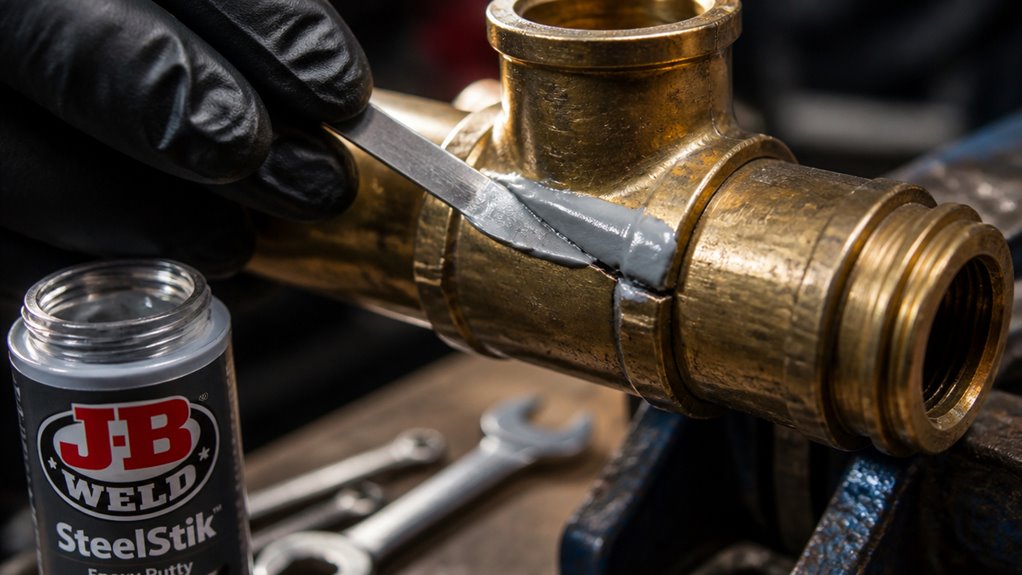
You can trust J-B Weld to bond brass effectively if you prepare the surface carefully. Clean, degrease, and roughen to guarantee strong mechanical adhesion.
Using original or heat-resistant formulas and allowing a full 24-hour cure maximizes strength. However, J-B Weld’s rigidity and moisture sensitivity limit its use for high-stress, flexible, or wet environments.
Understanding these factors helps you decide when J-B Weld suits your brass repair and when alternative adhesives might be necessary.
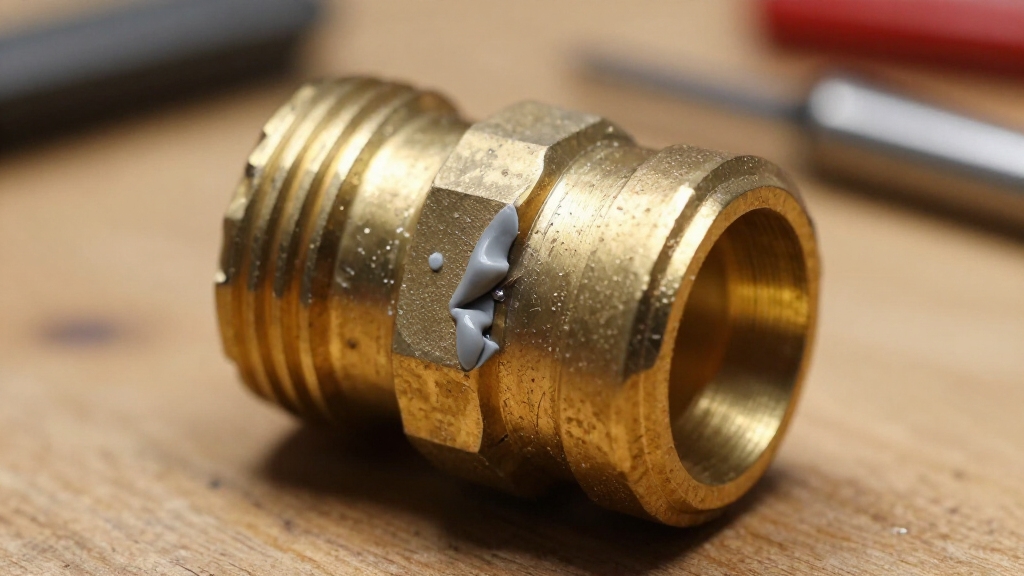
Although J-B Weld is marketed as a versatile epoxy suitable for bonding most metals, its effectiveness on brass specifically can vary.
J-B Weld is promoted for bonding many metals, but its success with brass may differ.
The manufacturer lists J-B Weld as compatible with all metals, including brass, but an older datasheet advises against using it on brass and similar alloys.
This inconsistency suggests you need to consider the specific epoxy formula and application context.
In practice, many users report successful brass bonding, provided you follow proper procedures like surface cleaning and full curing.
However, for structural or load-bearing brass repairs, the product’s performance can be less predictable.
Ultimately, J-B Weld can work on brass, but you must evaluate the repair requirements carefully and not rely solely on general brand claims for assured results.
Proper surface preparation is critical to achieving the strongest bond possible with brass surfaces.
Because brass is a non-porous metal prone to surface oxidation and contamination, you must thoroughly clean and roughen it before applying J-B Weld to guarantee a strong bond.
The epoxy relies on mechanical interlocking rather than chemical absorption, so a smooth, contaminated surface compromises adhesion strength.
Removing oils, oxidation, and dust with solvents like acetone secures no barriers weaken the interface.
Roughening the brass enhances surface area and promotes epoxy grip, preventing premature bond failure.
Skipping proper preparation risks poor cure and decreased durability.
Given J-B Weld’s inconsistent brass-specific datasheet guidance, your best assurance for a reliable repair is meticulous surface prep that maximizes mechanical bonding potential and minimizes contamination-related weak points.
Proper prep directly correlates with the epoxy’s ultimate performance on brass substrates.
Using acetone to wipe the surface after roughening ensures removal of fine dust and oils, creating the essential surface profile for optimum adhesion.
To ensure a strong bond with J-B Weld, it’s really important to start by cleaning the brass surface thoroughly.
You can use acetone, or a degreaser to wipe away any oils and oxidation.
This step is crucial because any leftover contaminants can weaken the bond.
Once you’ve cleaned the surface, it’s time to roughen it up a bit.
Grab some fine-grit sandpaper or a wire brush and give the brass a good scuffing.
This creates a bit of texture, which helps the epoxy stick better.
By following these steps, you not only remove anything that might interfere with the bond but also increase the surface area for the J-B Weld to grab onto.
That’s key for making sure your bond is reliable!
Proper surface preparation, including cleaning and roughening, is critical for the epoxy’s peak adhesion and long-lasting durability.
When preparing brass for J-B Weld application, you must first remove oils, oxidation, and contaminants to guarantee peak adhesion. Start by degreasing the surface with isopropyl acetone to eliminate oils and dust.
Follow with light abrasion using fine sandpaper or a wire brush to expose fresh metal. Finally, clean again to remove residual particles and ensure a dry, dust-free surface. Proper cleaning maximizes mechanical bonding and epoxy effectiveness. For the strongest bond, ensure the surface is dry and prepped before applying J-B Weld, as it performs best on dry, prepped surfaces.
| Cleaning Agent | Purpose | Application Tip |
|---|---|---|
| Isopropyl | Degreasing | Apply with lint-free cloth |
| Acetone | Oxidation removal | Use in well-ventilated area |
| Fine Sandpaper (400-600 grit) | Surface abrasion | Sand gently to avoid damage |
| Wire Brush | Oxide layer removal | Use moderate pressure |
| Compressed Air | Dust removal | Blow off particles before epoxy application |
Enhancing adhesion on brass starts with creating a roughened surface that offers better mechanical grip for J-B Weld epoxy.
You should use fine-grit sandpaper (around 220-400 grit) or a small wire brush to abrade the brass, focusing on the exact bonding area.
This process removes oxidation and introduces micro-abrasions, increasing surface area for the epoxy to interlock.
Avoid overly aggressive sanding that might deform the brass or embed contaminants.
After roughening, thoroughly clean the surface with isopropyl acetone to eliminate residual dust and oils.
For intricate or recessed areas, a rotary tool with a nylon or brass brush attachment can provide controlled abrasion.
Ensure the surface is completely dry before application to allow effective adhesion and proper curing with acetone or lacquer thinner.
Selecting the right J-B Weld formula is crucial for effective brass repairs, as not all epoxy variants perform equally on this metal. The Original J-B Weld is often preferred due to its strong metal bonding properties and high heat resistance, making it suitable for general brass applications.
However, for repairs exposed to moisture or heat fluctuations, you might consider the J-B Weld WaterWeld or J-B Weld HighHeat formulas, which offer specialized resistance. Avoid formulas designed primarily for plastics or flexible materials, as their adhesion to brass is inconsistent.
Always consult the manufacturer’s specifications for each product, matching formula characteristics to your repair’s environmental and mechanical demands. Your choice should balance bond strength, cure time, and environmental exposure to guarantee a durable brass repair. Proper surface preparation, including cleaning and abrasion, is essential to achieve maximum adhesion and ensure a strong, lasting bond.
You can generally expect J-B Weld to take at least 24 hours to fully cure on brass if you want it to reach its peak strength.
But keep in mind, things like the temperature in your space, humidity levels, and how well you’ve prepared the surface can really influence that cure time and how strong the bond ends up being.
So, it’s a good idea to avoid handling the joint until the epoxy has set completely.
This way, you won’t risk weakening the repair. Patience is key here!
Applying surface preparation techniques can help improve adhesion and ensure a stronger bond.
Although J-B Weld sets in as little as 4 to 6 hours on brass, it requires a full 24 hours to cure completely and achieve maximum bond strength.
During this period, the epoxy undergoes a chemical cross-linking process that solidifies the bond. You should avoid disturbing or stressing the joint before the full cure time elapses, as premature handling can compromise adhesion and reduce durability.
Clamping or securing the parts guarantees consistent contact and enhances mechanical interlocking. Note that ambient temperature influences cure rate, but you must respect the 24-hour benchmark for peak performance.
For best results, apply thinner layers under 1/8 inch to accelerate drying and ensure uniform curing of the epoxy thickness effect.
When bonding brass with J-B Weld, several factors influence the epoxy’s cure time and final strength. Surface preparation, ambient temperature, and humidity primarily affect how long it takes for J-B Weld to fully cure on brass.
Properly cleaned and roughened brass accelerates adhesion and reduces cure time variability. Cooler temperatures slow the chemical reaction, extending cure duration. You should avoid disturbing the joint before the epoxy sets to guarantee maximum bond strength. The 1:1 mix ratio of J-B Weld ensures consistent chemical composition and uniform curing for optimal bond strength.
| Factor | Effect on Cure Time |
|---|---|
| Surface Preparation | Well-prepared surfaces cure faster |
| Temperature | Higher temps reduce cure time |
| Humidity | Excess moisture can inhibit curing |
Understanding these variables helps you predict when J-B Weld reaches full strength on brass, typically 24 hours under ideal conditions.
Hold the brass pieces firmly in place throughout the curing process to guarantee a strong, consistent bond with J-B Weld. Use clamps or tape to maintain steady pressure and alignment, preventing any movement or gaps that could weaken the adhesive interface.
Secure brass pieces firmly during curing with clamps or tape to ensure a strong, gap-free bond.
Avoid disturbing the joint during the initial 4 to 6-hour set period, as premature handling disrupts curing and compromises bond integrity. Make sure clamping force is sufficient but not excessive to prevent deformation of the brass components.
Maintain a clean, dust-free environment to avoid contamination. After securing the pieces, allow a full 24 hours for complete curing at room temperature, adjusting for cooler conditions as needed.
Proper clamping and handling optimize mechanical interlocking and chemical adhesion, critical for maximizing J-B Weld’s performance on brass surfaces. Additionally, ensuring proper surface preparation before application significantly enhances bond strength and pressure resistance.
When it comes to bonding brass joints with J-B Weld, the bond strength really hinges on how well you prepare the surfaces. So, it’s super important to clean and roughen the brass properly to boost adhesion.
Give it enough time to cure, too—usually around 24 hours or so. This is key for achieving maximum strength and durability. If you skip these steps, you might find that the joint doesn’t hold up as well, especially when it’s under mechanical stress.
Although J-B Weld is marketed as a versatile epoxy for metals, its bond strength on brass joints depends heavily on factors such as surface preparation, curing time, and the specific product formulation.
You need to take into account these critical elements to optimize adhesion and joint durability:
1. Curing Time
Allow at least 24 hours for full cure. Premature handling weakens the bond.
2. Product Formulation
Different J-B Weld variants exhibit varying gap-filling and heat resistance. This impacts bond integrity on brass.
3. Joint Stress and Geometry
The epoxy’s filler versus adhesive qualities influence performance. This is especially true under load or stress in brass-to-brass repairs.
Understanding these factors helps you evaluate if J-B Weld meets your brass bonding requirements or if an alternative adhesive is necessary.
Because J-B Weld relies on mechanical adhesion as well as chemical bonding, the strength of its bond on brass hinges markedly depends on thorough surface preparation.
You need to remove oils, oxidation, and contaminants using solvents like acetone.
After cleaning, roughen the brass surface with fine sandpaper or abrasive pads to create micro-textures that enhance mechanical interlocking.
A smooth or greasy surface drastically reduces bond strength and risks adhesive failure.
Additionally, make certain the surface is dry and dust-free before application; moisture or debris interfere with curing and adhesion.
Neglecting these steps compromises the joint’s integrity regardless of cure time or epoxy quality.
Fundamentally, your preparation directly defines J-B Weld’s performance on brass, making it a critical factor for achieving a durable, strong bond.
When bonding brass with J-B Weld, allowing adequate cure time is essential for achieving maximum strength. The epoxy needs a minimum of 24 hours to fully cure, with longer times required in cooler conditions.
Disturbing the joint prematurely compromises bond integrity and reduces overall strength.
To optimize your brass repair:
Following these steps guarantees the epoxy attains its designed mechanical properties on brass surfaces. Incomplete curing results in weaker adhesion and potential joint failure, so patience is critical for durable, high-strength brass repairs using J-B Weld.
If you plan to use J-B Weld on brass in environments subject to heat, moisture, or mechanical stress, you need to take into account how these factors influence the epoxy’s performance.
Elevated temperatures can soften the cured epoxy, reducing bond strength and potentially causing joint failure.
Moisture exposure, especially prolonged, may degrade the adhesive interface or lead to corrosion under the bond, compromising adhesion.
Mechanical stress, including vibration or flexing, challenges the epoxy’s brittle nature, increasing the risk of cracking or delamination if the joint isn’t fully cured or properly prepared.
To optimize durability, guarantee thorough surface cleaning and roughening, and allow complete curing.
For demanding conditions, consider J-B Weld formulations rated for heat and moisture resistance, as general-purpose epoxies may not maintain integrity under such environmental stresses.
Although J-B Weld is versatile, you should avoid using it for brass repairs that involve significant structural loads, prolonged exposure to heat or moisture, or where flexibility and impact resistance are critical.
Avoid J-B Weld for brass repairs needing high strength, heat resistance, or flexibility.
Its epoxy formulation may fail under these demanding conditions due to limited heat tolerance and brittleness once cured. Specifically, avoid J-B Weld in these cases:
For reliable, durable brass repairs, assess these factors carefully before choosing J-B Weld to make certain the epoxy’s limitations won’t compromise your project.
J-B Weld’s limitations in handling high stress, heat, and flexibility mean you might need to contemplate alternative adhesives for demanding brass repairs. For structural or high-heat applications, consider options like silver solder, specialized metal epoxies, or anaerobic adhesives designed for metals.
These products offer superior mechanical strength, heat resistance, and durability compared to generic two-part epoxies like J-B Weld.
| Adhesive Type | Key Benefit |
|---|---|
| Silver Solder | High heat tolerance |
| Metal Epoxy (special) | Enhanced strength |
| Anaerobic Adhesive | Gap filling, bonding |
| Polyurethane Glue | Flexibility |
| Epoxy Putty | Moldable, quick set |
Selecting the right adhesive depends on repair demands. Mechanical stress, thermal exposure, and environmental conditions all matter.
Yes, you can use J-B Weld to fill gaps in brass casting defects, but success hinges on thorough surface prep.
You’ll need to clean, degrease, and roughen the brass to guarantee proper adhesion. Keep in mind J-B Weld acts more as a filler than a structural adhesive for brass.
Allow full cure time, typically 24 hours, to achieve maximum strength. For critical or load-bearing repairs, consider specialized products or mechanical solutions instead.
You shouldn’t use J-B Weld on brass items meant for food contact. The epoxy isn’t certified food-safe by regulatory agencies, and its chemical components can leach contaminants.
Even if fully cured, it may not meet FDA or NSF standards for direct food exposure. For food-contact brass, you need adhesives specifically rated for such use to guarantee safety and compliance with health regulations.
J-B Weld is better suited for non-food applications.
Humidity can degrade J-B Weld’s performance before use by accelerating hardening or causing premature curing inside the container.
You should store it in a cool, dry place with low humidity to maintain product integrity.
High moisture levels may thicken the epoxy or reduce its bonding strength, leading to inconsistent results.
Always tightly seal the container after use to minimize moisture exposure and extend shelf life.
This ensures peak performance when you apply it.
You can paint over J-B Weld on brass after it fully cures.
For example, a hobbyist fixed a brass lamp base with J-B Weld, waited 24 hours, then primed and painted it smoothly.
Make certain the epoxy is completely hardened and lightly sanded to improve paint adhesion.
Use a compatible primer and paint suited for metal to guarantee durability and avoid peeling or chipping on the brass surface.
When applying J-B Weld on brass, you should work in a well-ventilated area to avoid inhaling fumes.
Wear nitrile gloves to prevent skin contact with the epoxy, which can cause irritation.
Protect your eyes with safety goggles.
Avoid ingestion and prolonged exposure by washing hands thoroughly after use.
Make certain the brass surface is dry and dust-free to optimize bonding and reduce risk of contamination during curing.
You’ll find J-B Weld bonds brass effectively when you prepare the surface properly. Roughening and cleaning boost adhesion markedly.
Studies show J-B Weld achieves up to 3,960 PSI on brass joints, rivaling many mechanical fasteners. However, curing time and environmental factors like heat and moisture can impact strength.
For high-stress or critical repairs, consider specialized adhesives. Understanding these nuances guarantees your brass repairs hold strong and last longer.