Phone:
(701)814-6992
Physical address:
6296 Donnelly Plaza
Ratkeville, Bahamas.

Phone:
(701)814-6992
Physical address:
6296 Donnelly Plaza
Ratkeville, Bahamas.

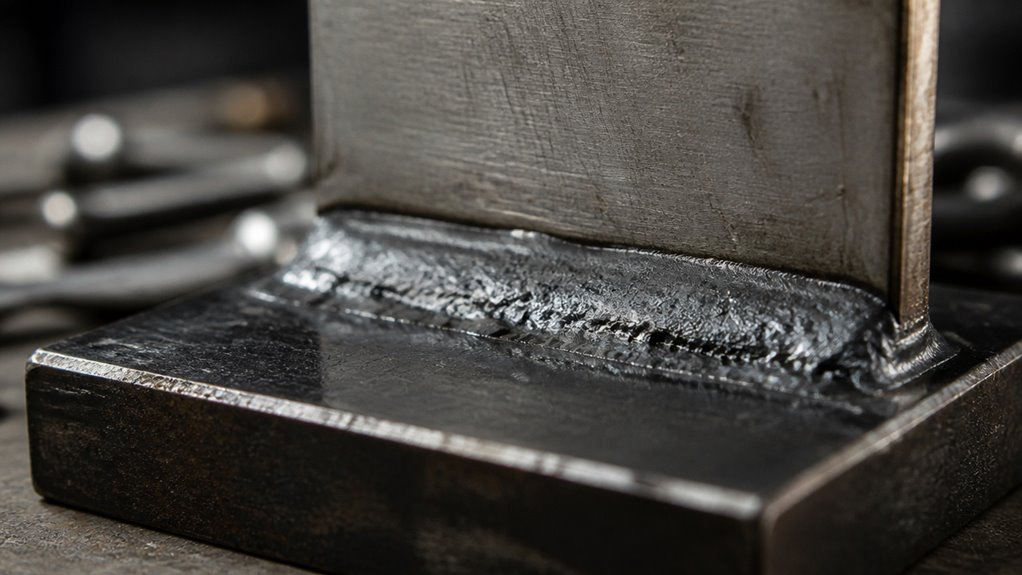
You can expect JB Weld to hold between 800 and 2,000 pounds under prime conditions, though exact strength depends on surface preparation, joint type, and curing quality.
Its tensile strength varies by variant. Original and Extreme Heat offer the strongest bonds, while Quick Set trades strength for speed.
Keep in mind, load capacity increases with bonded surface area. Failure risks rise under dynamic or long-term loads.
Understanding these factors helps guarantee you use JB Weld effectively for your repair needs.
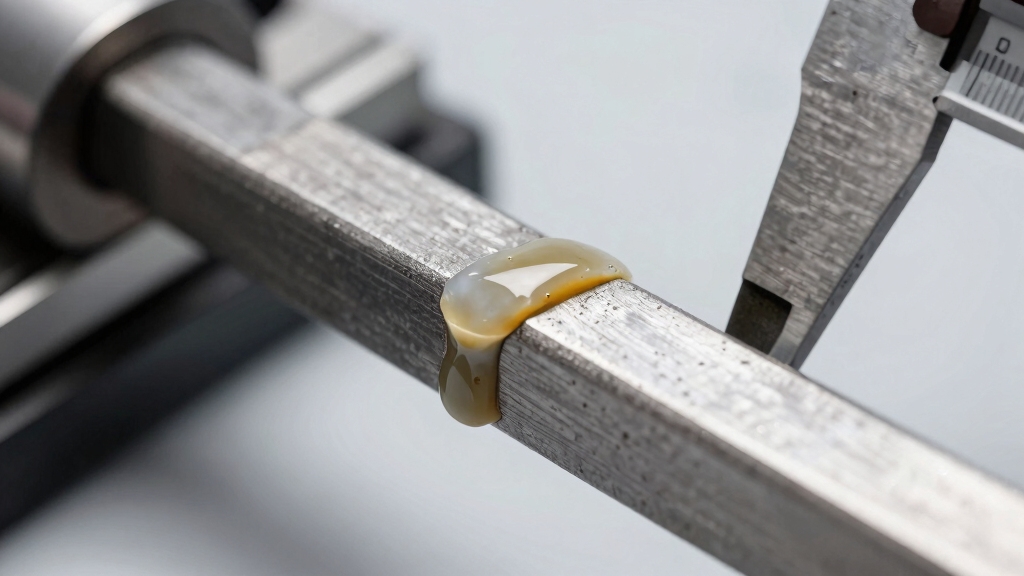
Although JB Weld’s tensile strength varies across formulations, you can generally expect a standard strength of about 3,960 psi (27.3 MPa) once fully cured.
Some specialized versions, like Extreme Rated, claim tensile strengths near 5,000 psi. Quick Set and Clear formulas measure lower, around 2,300 to 2,420 psi.
Tensile strength depends heavily on the substrate; steel-to-steel bonds typically reach approximately 2,460 psi.
You should note that these values are ideal, assuming proper curing and surface preparation.
Variations in mixing, application thickness, and environmental conditions directly affect tensile outcomes.
Understanding these specifications helps you predict JB Weld’s performance accurately.
However, remember that tensile strength alone doesn’t determine real-world load capacity or failure points under practical stresses.
For the strongest bond, J-B Weld Original offers a steel-reinforced formula with a tensile strength of 6,220 PSI.
Understanding the actual weight JB Weld can hold in real-life applications requires analyzing factors beyond its rated tensile strength.
Real-world JB Weld strength depends on more than just its rated tensile strength.
While datasheets specify tensile strengths up to 3,960 psi, practical tests reveal varied results depending on application context.
You can expect JB Weld to support between 800 and 2,000 pounds under optimal conditions.
Some stress tests have reached approximately 4,400 pounds when bonding steel beams or lifting car components.
However, these values depend on consistent mixing, full curing (typically 24 hours), and ideal environmental conditions.
In everyday use, expect a safe load capacity near 1,000 to 1,200 pounds, especially for thin or vertical applications.
Keep in mind, JB Weld isn’t designed for dynamic loads or long-term weight-bearing structures like furniture.
Proper surface preparation, including cleaning and roughening, is crucial to ensure the maximum bond strength and durability of the repair.
When you increase the bonded surface area, JB Weld distributes stress more effectively. This directly enhances its load-bearing capacity.
This means the total weight the adhesive can hold rises proportionally with the contact zone size, rather than hitting a fixed limit.
Additionally, joint type critically influences strength:
Optimizing surface area and selecting appropriate joint designs enable you to maximize JB Weld’s effective tensile strength. This can range from roughly 2,000 to over 4,000 psi depending on these factors.
To achieve the best results, it is crucial to maintain an exact 1:1 resin-to-hardener ratio during mixing to ensure proper curing and maximum bond strength.
This approach is essential for engineering reliable, high-strength repairs or fabrications.
Because JB Weld’s bonding strength depends heavily on chemical and mechanical adhesion, preparing the surface meticulously is essential to achieving maximum load capacity. You need to remove all contaminants—oil, grease, rust, and dirt—using appropriate solvents or abrasion to expose a clean, rough substrate.
Meticulous surface preparation, including thorough cleaning and abrasion, is key to maximizing JB Weld’s bonding strength.
This roughness increases mechanical interlocking, boosting tensile strength markedly. Additionally, you must mix the epoxy and hardener thoroughly and in the correct ratio to guarantee a consistent chemical reaction.
Inconsistent mixing leads to weak spots, drastically reducing bond integrity and load capacity. Neglecting either prep or mixing compromises adhesion, limiting practical weight support well below JB Weld’s rated tensile strength.
Consequently, precise surface prep and homogeneous mixing are critical to optimize JB Weld’s performance and reliably handle the expected mechanical stresses.
For best results, apply the mixed putty within the 3–5 minute working window to ensure full activation and peak bonding strength.
Although JB Weld sets within 20 to 25 minutes, it doesn’t reach full strength until it cures completely over 15 to 24 hours, depending on temperature and humidity.
You need to take into account these factors carefully to maximize bond strength. The curing environment influences the adhesive’s final tensile strength, which peaks after a full 24-hour cure under best conditions.
Higher temperatures speed curing but risk compromising strength if uncontrolled. Humidity and surface contamination can reduce adhesion.
Key factors impacting JB Weld curing and strength include:
You should allow complete curing before subjecting the bond to significant loads. Proper surface preparation and achieving full curing are essential for peak bond integrity and long-term durability.
Understand that JB Weld has clear limitations and failure risks that you must consider before relying on it for structural repairs.
It can’t reliably support static loads exceeding 1,000 pounds without reinforcement.
Its strength decreases under continuous heavy pressure or shock loads.
Vertical applications often reduce bond effectiveness due to viscosity-related sagging.
You shouldn’t use JB Weld to hold human weight on furniture or repair critical structural welds, as it fails under such stress.
Proper surface preparation and full curing are essential.
Incomplete curing or contaminated surfaces substantially lower bond strength.
Although it can hold several hundred pounds in controlled tests, real-world stress tests show failure between 800 and 1,800 pounds depending on application conditions.
Always account for these limitations to avoid unexpected adhesive failure.
Applying moderate heat during curing can improve bond strength and reduce drying time.
Knowing JB Weld’s limitations helps you choose the right product for your repair needs, especially when strength matters most.
Among the variants, strength varies markedly. You should consider these three primary options:
Choosing the appropriate variant depends on your load requirements and environmental conditions.
The Original and Extreme Heat versions deliver the highest strength for demanding repairs. Quick Set prioritizes speed over maximum load capacity.
For optimal performance, ensure proper curing and surface preparation to achieve maximum strength and durability.
You can use JB Weld in wet conditions, but it’s not designed for fully underwater applications. Moisture drastically reduces its adhesive strength and curing effectiveness.
For best results, you should dry and clean the surface thoroughly before applying it. If the area remains damp, expect compromised bond integrity and longer curing times.
Specialized underwater epoxies outperform JB Weld when you need reliable adhesion in submerged or persistently wet environments.
JB Weld isn’t considered food-safe or non-toxic after curing. You shouldn’t use it on surfaces that come into direct contact with food or drink because it can leach chemicals.
The manufacturer doesn’t certify it for potable water or food-grade applications. If you need a safe adhesive for food contact, choose products specifically labeled FDA-compliant or food-safe to avoid health risks.
You might think JB Weld can’t handle harsh chemicals, but it actually resists many solvents and chemicals well once fully cured.
It withstands fuels, oils, and mild acids without degrading, making it suitable for automotive and industrial repairs.
However, strong acids, bases, or prolonged exposure to aggressive solvents can weaken the bond over time.
Always consider the specific chemical environment to guarantee peak durability and longevity of the repair.
Yes, you can fill large gaps with JB Weld, but you need to apply it properly.
It’s a two-part epoxy that bonds well and cures hard. For large gaps, you should build up layers gradually to avoid sagging or weak spots.
Make certain surfaces are clean and roughened for better adhesion. Keep in mind, while it fills gaps effectively, the strength depends on proper mixing, curing time, and joint design for lasting results.
You’d think a metal epoxy like JB Weld would conduct electricity, but it doesn’t. It’s actually an insulator.
JB Weld’s chemical composition creates a non-conductive bond, so it resists electrical flow. This makes it useful for repairing metal parts without risking shorts or shocks.
Just remember, while it insulates, it’s not designed to replace proper electrical insulation materials or handle high-voltage applications safely.
Think of JB Weld as the steel backbone of your repair projects. Its tensile strength and proper application form the bridge between failure and durability.
While it can hold impressive weight, your results hinge on surface prep, joint design, and curing conditions. Understanding these variables lets you harness its full potential without risking collapse.
Fundamentally, JB Weld isn’t just glue; it’s engineered resilience you control with precision and care.