Phone:
(701)814-6992
Physical address:
6296 Donnelly Plaza
Ratkeville, Bahamas.

Phone:
(701)814-6992
Physical address:
6296 Donnelly Plaza
Ratkeville, Bahamas.


Yes, welding exposes you to intense ultraviolet (UV), visible, and infrared (IR) radiation, especially during arc welding. This produces UV levels far exceeding natural sunlight.
This radiation can cause eye injuries, skin burns, and long-term damage if you don’t use proper protective gear. While most welding emits non-ionizing radiation, special cases like electron beam welding may generate ionizing X-rays.
Understanding these risks and control measures is essential to safeguarding your health during welding activities.
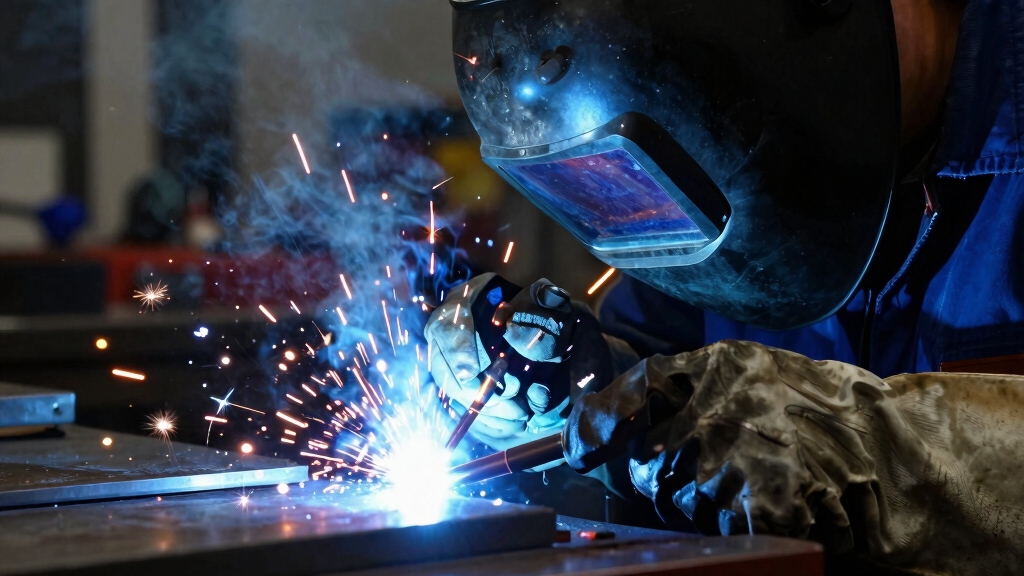
Welding processes frequently produce a broad spectrum of radiation, spanning ultraviolet (UV), visible, and infrared (IR) wavelengths.
You’ll find UV radiation ranges from 200 to 400 nm, subdivided into UV-A, UV-B, and UV-C bands, each with distinct energy levels.
Visible light occupies 400 to 700 nm, which can directly impact your retina if unprotected.
Infrared radiation extends from 700 to 1,400 nm and contributes substantial heat in the welding environment.
Arc welding methods like MIG, TIG, and Stick generate the most intense radiation due to extremely high arc temperatures.
Understanding these wavelength ranges helps you recognize the hazards and implement effective protective measures to shield your eyes and skin from acute and chronic damage caused by this broad radiation spectrum.
Exposure to intense arc rays can cause serious eye injuries such as corneal flash burns and retinal damage, making proper protection essential.
Because arc temperatures can reach thousands of degrees Celsius, processes like MIG, TIG, and Stick welding produce the highest levels of radiation. These arc welding methods emit intense ultraviolet (UV), visible, and infrared radiation due to the high-energy electric arc.
MIG, TIG, and Stick welding generate intense UV, visible, and infrared radiation from their high-energy electric arcs.
UV radiation intensity in these processes exceeds natural sunlight by orders of magnitude, posing significant exposure risks. Conversely, gas welding and cutting only emit visible and infrared radiation, lacking the UV component.
Electron beam welding uniquely generates ionizing X-rays, though this is uncommon in typical welding scenarios. Additionally, some specialized applications may expose you to alpha radiation from thorium-containing electrodes.
Understanding which processes produce the most radiation helps you implement targeted protective measures, ensuring safety when working with high-intensity arc welding methods. Dual shield welding, combining flux-cored wire and external shielding gas, also produces intense UV radiation and requires proper protection to prevent exposure to arc radiation.
The intense ultraviolet (UV) radiation generated by high-energy arc welding processes directly impacts your eyes and skin, posing significant health hazards.
UV exposure can inflame your cornea and conjunctiva, causing painful “arc eye” or keratoconjunctivitis photoelectrica. Repeated exposure increases your risk of skin burns and long-term skin cancer.
Additionally, UV radiation from welding arcs is linked to ocular melanoma, a serious eye cancer classified as carcinogenic. Even reflected UV rays from nearby surfaces can harm you if unprotected.
Protective gear is essential to mitigate these precise UV hazards. Maintaining a safe distance of at least 200 centimeters significantly reduces exposure to harmful UV radiation.
When you’re welding, you’re going to face some pretty intense visible light. Without proper protection, this can really strain your eyes and even lead to temporary vision problems.
It’s no joke!
Now, let’s talk about infrared radiation. While it’s not as harmful to your retina, it does produce a lot of heat.
This heat can cause corneal burns and make your eyes feel pretty uncomfortable.
Repeated exposure to these types of radiation without proper eye protection can increase the risk of serious conditions such as photokeratitis and long-term vision damage.
Frequently underestimated, visible and infrared radiation from welding arcs still pose distinct health risks that you should understand.
Visible light emitted by welding arcs ranges between 400–700 nm. While it lacks ionizing power, its intensity can damage your eyes.
Exposure to intense visible light can cause temporary blindness, severe eye strain, and retinal discomfort. Without adequate filtration, your retina risks photochemical injury from prolonged exposure.
Though infrared radiation primarily produces heat effects, visible light contributes markedly to visual fatigue and discomfort during welding.
Temporary flash blindness and impaired vision during welding can occur. Severe eye strain results from intense visible light exposure. Photochemical retinal damage may arise due to prolonged exposure. Visual discomfort can reduce welding precision and safety.
Proper eye protection with filtered lenses is essential to mitigate these risks. About 50% of welding-related eye injuries affect coworkers not actively welding, highlighting the need for comprehensive eye protection.
Infrared radiation consistently accompanies visible light in welding arcs, contributing primarily to thermal effects rather than direct tissue damage. When you’re exposed, this IR radiation generates intense heat, which can cause skin burns and exacerbate heat stress.
Unlike ultraviolet rays, infrared doesn’t penetrate deeply but can raise local tissue temperatures. This can lead to discomfort or thermal injury if exposure is prolonged without protection.
| Exposure Aspect | Health Impact |
|---|---|
| Skin contact | Burns, heat stress |
| Duration | Increased thermal risk |
| Protective gear | Heat-resistant clothing |
| Welding type | Arc welding emits highest IR |
| Environmental factors | Reflective surfaces amplify heat |
To minimize risk, always wear appropriate thermal barriers and manage exposure duration carefully when working near welding arcs. Additionally, wearing arc-rated face shields and moisture-resistant PPE is crucial to protect against the combined hazards of thermal and electrical exposure in welding environments.
Welding arcs often emit intense visible and infrared radiation that can cause significant eye strain and damage if you’re not properly protected. The visible spectrum can overwhelm your retina, causing temporary blindness or severe discomfort.
Infrared radiation heats ocular tissues, potentially leading to long-term damage. Without adequate filtration, your eyes absorb excessive light and heat, resulting in symptoms ranging from dryness and irritation to more severe conditions like cataracts or retinal burns.
Intense visible light may cause temporary flash blindness during welding. Infrared radiation elevates eye temperature, risking thermal injury. Prolonged exposure can contribute to cataract formation. UV radiation from arcs can trigger keratoconjunctivitis photoelectrica (“arc eye”).
Always use helmets with UV-filtered lenses to safeguard your vision. Proper selection of welding shade lenses based on amperage and electrode type enhances operator precision and reduces eye strain.
Although most welding processes emit non-ionizing radiation, certain specialized techniques can generate ionizing radiation that requires heightened safety measures.
Electron beam welding, for example, produces X-rays, a form of ionizing radiation capable of penetrating body tissues and causing cellular damage. Additionally, welding involving thorium-containing electrodes can expose you to alpha radiation.
These cases demand rigorous radiation monitoring and controlled environments to minimize exposure risks. The necessity of a vacuum environment in electron beam welding also plays a key role in maintaining beam focus and minimizing unwanted radiation scattering.
| Welding Technique | Ionizing Radiation Type | Source Material | Radiation Penetration | Exposure Risk Level |
|---|---|---|---|---|
| Electron Beam Welding | X-rays | High-energy electron beam | High | Significant |
| Thorium Electrode Welding | Alpha particles | Thorium-232 | Low | Moderate |
| Arc Welding (typical) | None (non-ionizing UV) | Electric arc | N/A | Low |
| Laser Welding | Minimal, rare X-rays | High-intensity laser | Low | Low |
| Gas Welding | None | Gas flame | N/A | Minimal |
Properly selected protective gear consistently plays a critical role in safeguarding you from the intense ultraviolet, visible, and infrared radiation emitted during welding operations.
You must rely on equipment that blocks harmful wavelengths effectively to prevent injuries such as keratoconjunctivitis and skin burns.
Your gear should address both eye and skin protection thoroughly.
Key protective items include:
Full-face welding helmets with UV-filtered lenses to shield your eyes from arc rays and visible glare.
Flame-resistant long-sleeved shirts and pants without cuffs, covering all exposed skin to prevent UV burns.
Insulated welding gloves and leather aprons that resist heat and radiation-induced damage.
Portable welding curtains made from non-flammable materials to protect bystanders and reduce reflected radiation exposure.
Selecting and using this gear precisely minimizes your risk from welding radiation hazards.
Maintaining a safe distance of at least 200 cm combined with proper shielding further reduces exposure to hazardous welding radiation.
Minimizing radiation exposure on the job requires deliberate control strategies tailored to the welding environment and processes used.
Effective radiation reduction demands intentional strategies customized to specific welding settings and techniques.
You should reduce welding current to lower ultraviolet and infrared emissions directly.
Rotating tasks among workers limits individual exposure duration to harmful radiation.
Employing automated robotic welding systems also decreases human proximity to intense arc radiation.
Adjusting shielding gases, such as substituting argon for helium or carbon dioxide, can reduce radiation intensity during electric arc welding.
Additionally, implementing fixed or portable non-flammable welding curtains or screens prevents bystander exposure to ultraviolet radiation.
Painting reflective surfaces in dark colors, like black, further minimizes UV reflection hazards.
Always wear properly fitted, certified personal protective equipment including welding helmets with appropriate filter lenses to protect against harmful radiation.
When you want to eliminate exposure to welding radiation entirely, mechanical fastening methods like bolts and rivets offer effective alternatives. These approaches avoid ultraviolet, visible, and infrared radiation emitted by welding arcs, thereby removing associated health risks.
You can also consider adhesive bonding or soldering, which generate minimal radiation and reduce direct exposure. Additionally, robotic assembly systems can automate fastener installation, limiting your time near hazardous sources.
Bolted or riveted joints provide mechanical strength without radiation emission. Adhesive bonding guarantees strong, uniform connections with negligible UV exposure. Soldering emits low-intensity infrared and visible light, minimizing radiation risks. Automated fastening reduces human proximity to welding arcs and radiation fields.
If you’re pregnant and exposed to welding radiation, you risk harmful effects from ultraviolet (UV) and infrared radiation.
UV rays can cause skin burns and eye damage.
Prolonged exposure might increase risks of fetal developmental issues due to thermal stress and potential mutagenic effects.
You should use full protective gear, limit exposure time, and follow strict safety protocols to minimize radiation and heat exposure.
This will help safeguard both your health and your baby’s development.
Welding radiation, primarily non-ionizing UV, visible, and infrared light, typically doesn’t interfere directly with electronic medical implants like pacemakers or neurostimulators.
However, strong electromagnetic fields from arc welding can induce transient interference or malfunctions in sensitive devices.
You should minimize exposure, maintain safe distances, and consult device manufacturers for specific precautions.
Using shielding or automated welding can further reduce risks to your electronic medical implants during welding operations.
Think of welding radiation like a high-voltage wire; it’s tightly regulated to protect you.
Yes, specific regulations exist, such as OSHA’s permissible exposure limits (PELs) for ultraviolet radiation and guidelines from the ACGIH on threshold limit values (TLVs).
These standards set maximum exposure levels to UV, visible, and infrared radiation during welding.
You must follow these to minimize risks to your eyes and skin, ensuring safe work environments.
Healing from welding radiation eye damage, like arc eye or photokeratitis, typically takes 24 to 72 hours with proper care.
You’ll experience pain, redness, and light sensitivity, but symptoms usually subside within three days.
To promote recovery, avoid further UV exposure, rest your eyes, and use lubricating eye drops.
If pain or vision problems persist beyond this period, seek immediate medical evaluation to prevent permanent damage.
Welding radiation dances like invisible sparks, reaching beyond the welder’s shield. Yes, it impacts nearby non-welders too, as ultraviolet rays reflect off metal surfaces and walls, burning unprotected skin and irritating eyes.
Without barriers or protective gear, you risk acute inflammation and long-term damage. Installing shielding curtains and enforcing PPE use aren’t just precautions; they’re your frontline defense against collateral radiation exposure in the workspace.
When you weld, you’re exposed to various types of radiation, from ultraviolet to infrared, and in rare cases, ionizing radiation. Ignoring proper protective gear is like inviting a sun to scorch your eyes and skin repeatedly.
To safeguard your health, always use certified shields and follow safety protocols meticulously. By minimizing exposure and considering alternative methods, you can weld efficiently without turning your workspace into a radiation hazard zone.