Phone:
(701)814-6992
Physical address:
6296 Donnelly Plaza
Ratkeville, Bahamas.

Phone:
(701)814-6992
Physical address:
6296 Donnelly Plaza
Ratkeville, Bahamas.

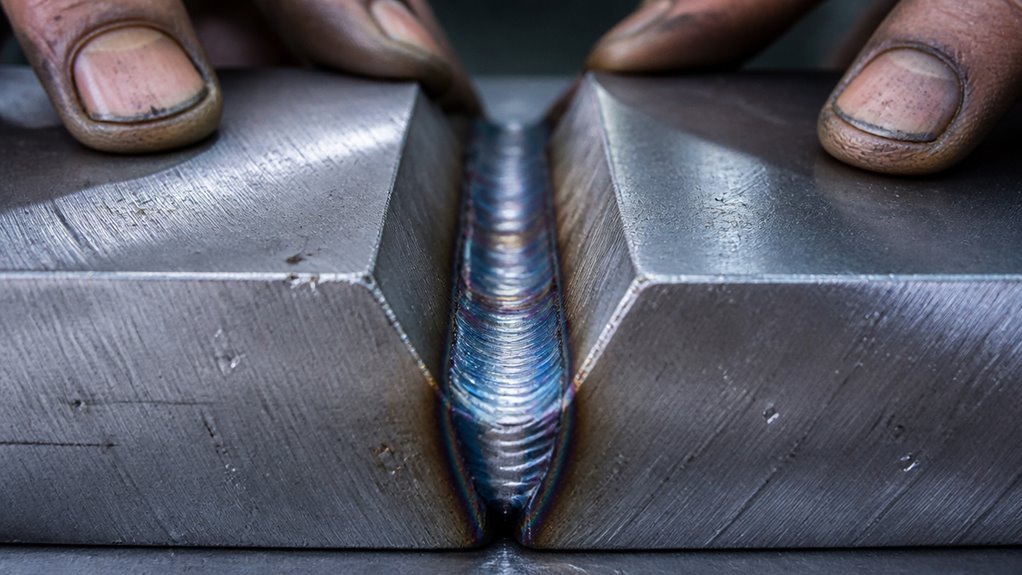
A groove weld joins metal pieces by depositing filler metal into a precisely machined groove between their edges. This ensures deep penetration and complete fusion at the joint root.
You choose groove shapes like V, U, or J to optimize accessibility, filler volume, and strength. Proper groove geometry and multi-pass welding prevent defects and boost structural integrity.
Whether single or double groove, this method suits various thicknesses and applications. Understanding groove welds’ design and process choices leads to stronger, more efficient joints.
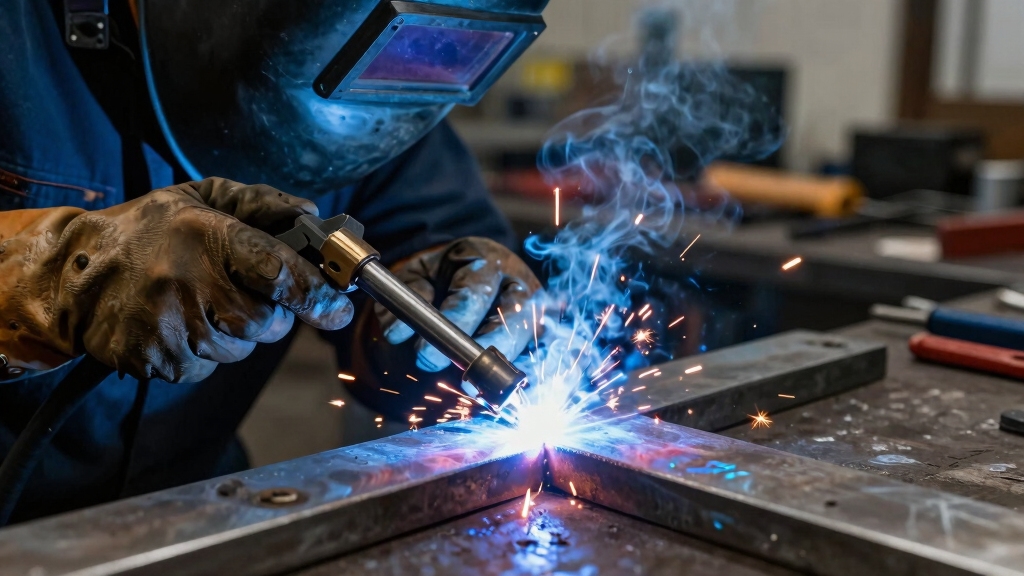
A groove weld is a type of weld created by depositing filler metal into a specifically prepared groove between the edges or surfaces of workpieces.
A groove weld joins workpieces by filling a precisely machined groove with filler metal.
This groove acts as a reservoir, ensuring the weld metal completely fills the joint. The American Welding Society (AWS) defines it precisely as a weld located within a groove on a workpiece, with no restriction on welding process or filler material.
To prepare, you’ll machine the joint to create grooves like V, U, or J shapes that provide clearance for the electrode and allow deep penetration.
This groove geometry is critical because it guides the molten metal to fuse base materials fully. Understanding this core characteristic helps you grasp how groove welds serve as the foundation for robust, precise welds in various applications.
Double groove welds, identified by bilateral groove preparation symbols, involve welding on both sides of the joint to ensure full penetration and balanced stress distribution.
You know why groove welds are so important? It’s all about their design. They allow for deeper penetration, which means the weld metal really bonds with the base materials. This deep fusion makes the joint much stronger, especially in load-bearing situations.
When you have groove welds, you’re ensuring that the joint stays intact through complete root penetration. This is crucial because it helps prevent any defects that could weaken the performance when things get tough. So, if you’re looking for reliability under stress, groove welds are definitely the way to go! Achieving this requires precise heat input control and skilled multi-pass welding to minimize distortion and guarantee full penetration.
Maximizing weld penetration is crucial when guaranteeing the structural integrity of joined metals, especially in demanding applications.
Groove welds enhance penetration depth by providing a precisely machined recess that allows the welding electrode or filler metal to reach the joint root fully.
This groove configuration guarantees complete fusion between the base metals and the deposited weld, eliminating voids and incomplete bonding.
By controlling groove geometry, such as angle, root face, and root opening, you enable deeper and more consistent weld metal deposition.
This depth is critical when welding thick sections, as it guarantees the joint’s core is as robust as its surface.
Without this enhanced penetration, welds risk poor fusion, which compromises joint performance under stress or load.
Proper groove design selection, including single or double bevel and U or J types, is essential to optimize penetration based on material thickness and type, ensuring full penetration and joint strength.
Release exceptional joint strength by utilizing groove welds, which enable deep penetration and full fusion between base metals. This fusion creates a continuous, solid bond that withstands high stress and load, critical in structural applications.
You’ll find groove welds particularly valuable for thick materials where strength can’t be compromised. Their design guarantees weld metal completely fills the joint, eliminating voids and weak points that reduce durability.
| Benefit | Description |
|---|---|
| Deep Penetration | Guarantees weld metal reaches the joint root |
| Full Fusion | Bonds base metals thoroughly |
| Load Bearing Capacity | Supports high structural stress |
| Resistance to Cracking | Minimizes weld defects under stress |
| Versatility | Suitable for various metals and thicknesses |
Groove welds deliver unmatched strength by optimizing joint geometry and weld metal deposition. Specifying Complete Joint Penetration (CJP) welds ensures base-metal-equivalent strength and superior load capacity compared to fillet welds.
Making certain joint integrity starts with the precise preparation and filling of the groove. This guarantees that the weld metal penetrates fully and bonds seamlessly with the base materials.
You must machine the groove accurately to the specified geometry, whether V, U, or J-shaped. This provides proper access for the welding electrode and enables complete root penetration.
This meticulous preparation eliminates voids and lack of fusion, which could compromise the joint. During welding, carefully controlling heat input and filler deposition ensures a uniform, dense weld bead that fuses both sides of the joint without defects.
Following the Welding Procedure Specification (WPS) is essential to maintain consistent quality and prevent defects throughout the groove weld process.
Although groove welds vary widely depending on the application, joint preparation always starts with carefully machining the groove to a specific shape that suits the metal thickness and welding requirements. Proper groove geometry guarantees optimal penetration and fusion.
Joint preparation begins with precision machining to ensure groove geometry matches metal thickness and welding needs.
Common groove types include:
These configurations prepare the joint for welding, control weld metal volume, and guarantee structural strength. Controlling heat input during welding is essential to manage weld pool formation and minimize distortion in groove welds.
When you’re working with joints that only allow access from one side, single groove welds are your best bet. They do a great job of providing enough penetration, especially for those thinner materials.
On the other hand, if you’re dealing with thicker sections, double groove welds come into play. They’re applied on both sides, which not only boosts the structural strength but also helps balance out any residual stresses.
Proper fit-up and alignment are crucial to ensure the effectiveness and integrity of groove welds.
When selecting between single and double groove welds, consider the accessibility and thickness of the joint. Single groove welds suit situations where only one side of the joint is accessible, or material thickness doesn’t justify welding both sides.
You’ll find single groove welds ideal for:
These welds are precise and efficient for applications where full double-sided penetration isn’t critical, yet structural integrity must be maintained.
Use them when joint design or site conditions limit access or when thickness doesn’t demand double-sided welding. Single groove welds require careful control of bevel angles and root openings to ensure sufficient penetration depth and fusion quality.
Strength and durability define the key advantages of double groove welds, making them indispensable for thick or critical joints where uniform penetration is essential.
You benefit from symmetric reinforcement, improved load distribution, and reduced distortion due to welding on both sides. This method guarantees full fusion across the joint depth, essential for structural integrity.
| Feature | Benefit |
|---|---|
| Double-sided welding | Enhanced joint strength |
| Uniform penetration | Eliminates weak points |
| Reduced distortion | Maintains dimensional accuracy |
| Symmetric reinforcement | Balanced stress distribution |
| Suitable for thick materials | Reliable for critical applications |
When you apply double groove welds, you guarantee a robust, defect-resistant joint ideal for demanding environments like construction and shipbuilding. Proper qualification under welding codes ensures the integrity and performance of these critical joints.
Although deep penetration is critical in many welding applications, groove welds specifically enable this by providing a carefully prepared channel that guides the molten filler metal into the joint root. This guarantees full fusion between the base metals, maximizing joint strength and integrity.
To achieve optimal deep penetration in groove welds, you should focus on:
Using welding methods with deep penetration capabilities, such as FCAW or SAW, can significantly enhance the quality and strength of groove welds.
Selecting the appropriate welding method for groove welds directly impacts the quality, penetration, and structural integrity of the joint. You’ll typically choose between arc welding, laser welding, or electron beam welding, each offering distinct penetration control and heat input characteristics.
Arc welding, including Shielded Metal Arc Welding (SMAW) and Gas Tungsten Arc Welding (GTAW), provides versatility and strong fusion for various groove shapes. Laser and electron beam methods deliver deeper penetration with minimal distortion, ideal for precision applications.
Non-conventional processes like friction stir and flash welding also qualify, especially for specific alloys or thicknesses. Your method selection must consider material type, groove configuration, and welding position to guarantee complete root fusion and avoid defects.
Adhering to AWS A3.0 standards guides you in achieving consistent, high-strength groove welds.
Once you’ve determined the appropriate welding method for a groove weld, understanding its practical applications helps you appreciate why this technique is widely adopted in various sectors.
Groove welds provide superior penetration and strength, making them ideal for joining thick metals and ensuring structural integrity.
You’ll find groove welds extensively used in:
1. Construction and Structural Steel
For load-bearing frameworks where full fusion and deep joint penetration are critical.
2. Shipbuilding
Joining large, thick plates where durability and resistance to harsh environments are essential.
3. Manufacturing of Heavy Machinery and Pipelines****
Ensuring strong joints in parts subjected to high stress and varying diameters.
Because groove welds are critical to structural integrity, they must adhere to strict industry standards to guarantee consistency, safety, and performance.
You’ll find that standards like AWS A3.0 precisely define groove welds, specifying groove geometry, joint preparation, and acceptable weld defects.
These standards govern groove dimensions, bevel angles, root openings, and filler material requirements to assure complete fusion and penetration.
Additionally, codes from the American Society of Mechanical Engineers (ASME) and the American Institute of Steel Construction (AISC) set criteria for inspection, testing, and qualification of welders performing groove welds.
By following these standards, you assure the weld’s mechanical properties meet design loads and prevent failure modes like cracking or incomplete fusion.
These issues could compromise the joint’s durability in demanding industrial applications.
When you design a groove weld configuration, you must balance strength requirements with welding efficiency. Carefully consider groove shape, accessibility, and material thickness.
Selecting the appropriate groove type, such as V, U, or J, impacts penetration depth and filler volume. This influences joint strength and welding time.
Focus on these key factors:
You’ll find that environmental conditions like wind, moisture, and temperature markedly impact groove weld quality.
Wind can blow shielding gas away, causing porosity or oxidation.
Moisture leads to hydrogen-induced cracking and weld defects.
Low temperatures may cause brittle welds or inadequate fusion.
High temperatures can affect filler metal flow.
You must control these factors to guarantee full penetration, proper fusion, and structural integrity in groove welds, especially for critical applications.
You should know that porosity accounts for nearly 30% of groove weld defects, weakening the joint.
Common defects include incomplete fusion, where weld metal fails to bond fully with base material.
Slag inclusion traps non-metallic material inside.
Cracks, either hot or cold, can form due to thermal stresses.
Undercut reduces cross-sectional strength by eroding the base metal’s edge.
Identifying these defects is essential for maintaining structural integrity in critical welds.
Groove welding influences post-weld heat treatment (PWHT) by creating thicker weld zones that require controlled heating to relieve residual stresses and reduce hardness.
You need to account for the groove’s depth and geometry, as these affect heat penetration and cooling rates.
Proper PWHT guarantees uniform microstructure and prevents cracking in the weld and heat-affected zones.
Failing to tailor PWHT to groove welds risks compromised mechanical properties and structural integrity.
You need to prioritize ventilation due to deeper penetration generating more fumes and gases.
Use proper eye protection because groove welding often involves higher heat and intense arcs.
Make certain correct joint preparation reduces slag entrapment, preventing defects that cause rework hazards.
Secure workpieces firmly given groove welds’ multi-pass nature to avoid movement.
Also, follow strict PPE protocols since groove welding can produce spatter and ultraviolet radiation more intensely than some other weld types.
You typically perform groove weld inspection using visual examination first, checking for surface defects like cracks or incomplete fusion.
Then, you conduct non-destructive testing methods such as ultrasonic testing (UT) to assess internal flaws, radiographic testing (RT) for detecting porosity or inclusions, and magnetic particle inspection (MPI) for surface and near-surface discontinuities.
You’ll follow applicable AWS standards to verify the weld meets strength and quality requirements before approving it.
If you think groove welds are just another weld type, think again. They’re the backbone of virtually every strong, durable joint you rely on daily.
Mastering groove welds means unleashing unmatched penetration, precision, and strength in your work. Neglecting their importance? You might as well build with butter.
So, choose your groove configurations wisely. In welding, groove welds don’t just join metals—they make or break your entire structure’s integrity.