Phone:
(701)814-6992
Physical address:
6296 Donnelly Plaza
Ratkeville, Bahamas.

Phone:
(701)814-6992
Physical address:
6296 Donnelly Plaza
Ratkeville, Bahamas.

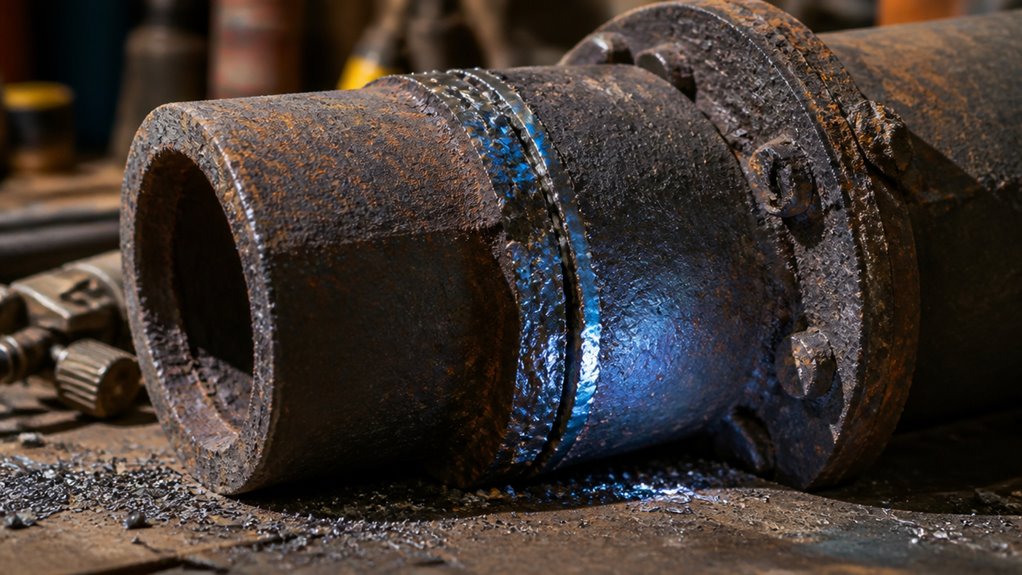
You can weld cast iron effectively if you control heat input precisely and thoroughly prepare surfaces.
Maintain proper preheating and slow cooling to minimize cracking. Avoid rapid temperature changes to reduce residual stresses and prevent the formation of brittle phases like white cast iron.
Use nickel-based electrodes and limit weld runs to manage distortion. Careful temperature monitoring guarantees metallurgical stability.
Understanding these factors is essential to mastering reliable cast iron repair techniques and achieving durable welds.
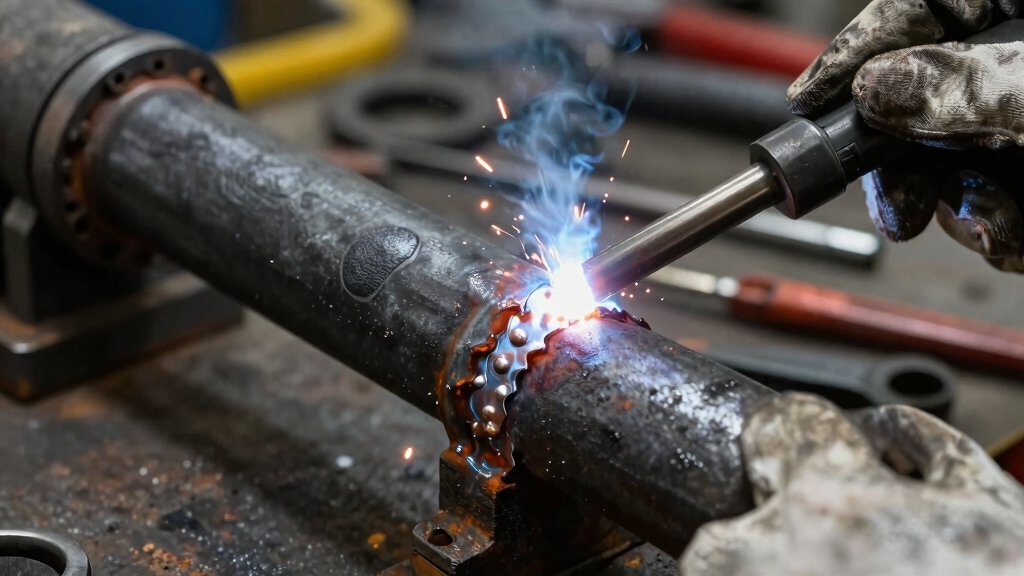
Although welding cast iron is achievable, you’ll face significant challenges due to its high carbon content and brittle microstructure. The carbon creates hard, brittle phases that are prone to cracking under thermal stress.
When you weld, rapid heating and cooling introduce residual stresses that the material’s microstructure can’t accommodate, causing fractures. Additionally, cast iron’s heterogeneity means varying weldability between types. Mild steel-like ductile cast irons weld more readily than grey or hardened cast irons.
You must control heat input meticulously to avoid the formation of white cast iron, a brittle compound formed from rapid chilling. Post-weld cracking is common without precise preheating and cooling protocols.
Also, impurities like casting skin and graphite inclusions in the weld pool can compromise weld integrity. This demands careful preparation and technique to succeed.
Proper preheating and slow cooling are essential to reduce thermal shock and prevent crack propagation during the welding process.
Removing all surface contaminants is critical when preparing cast iron for welding. Oils, grease, and casting skin greatly reduce weld quality and increase failure risk.
You must thoroughly clean the surface using solvents or commercial cleaners to eliminate these impurities. Mechanical removal of casting skin through grinding or chipping is essential to expose sound metal.
Inspect the area carefully for blind cracks, pits, or spongy zones; grind or shot blast to remove all defective material. Fully excavate cracks along their length and depth to prevent propagation during welding.
Address pinholes similarly to maintain structural integrity. This meticulous surface preparation guarantees proper weld fusion, minimizes inclusions, and reduces the likelihood of post-weld defects.
It sets the foundation for a successful cast iron weld. Preheating cast iron to 500–600°F before welding further reduces thermal stresses and cracking risks.
After thoroughly preparing the cast iron surface, managing its temperature becomes the next critical step to guarantee weld integrity.
You must preheat cast iron between 400°F and 1200°F to reduce thermal gradients that cause cracking.
Preheating minimizes residual stresses by slowing cooling rates, preventing brittle white cast iron formation.
It also reduces the risk of rapid solidification, which can induce microstructural flaws and weld defects.
Using temperature crayons or infrared thermometers assures uniform heat distribution, critical for avoiding stress concentrations.
Moreover, maintaining this preheat temperature throughout welding allows controlled fusion and metallurgical stability.
Neglecting preheating greatly increases the likelihood of weld failures due to crack propagation and distortion.
Consequently, precise temperature control before and during welding is essential for durable cast iron repairs.
Proper storage and handling of welding consumables control diffusible hydrogen and prevent related weld defects.
Choose welding methods and electrodes carefully to guarantee a successful cast iron repair. Stick welding (SMAW) is your best bet, providing solid fusion and control.
Use nickel-based electrodes labeled with a “CI” suffix specifically designed for cast iron. They accommodate carbon’s high content and reduce cracking risk.
TIG and MIG welding are less ideal, especially on thick sections, due to heat input challenges.
Proper heat control and preheating are critical to minimizing cracking during cast iron welding.
| Welding Method | Electrode Type |
|---|---|
| SMAW | Nickel-based “CI” |
| TIG | Nickel rods |
| MIG | Nickel wire |
| Oxy-fuel | Cast iron rods |
Stick welding with nickel electrodes offers superior mechanical properties and crack resistance. This makes it the preferred approach for durable repairs.
When welding cast iron, controlling heat input meticulously is essential to prevent cracks caused by thermal stress and material brittleness.
You must preheat the workpiece uniformly, typically between 400°F and 1200°F, to reduce temperature gradients and avoid rapid cooling that induces residual stress.
Use temperature crayons or infrared thermometers to verify consistent heat distribution.
Limit weld runs to short lengths, allowing the metal to cool back to preheat temperature before continuing.
Employ staggered, intermittent weld patterns to minimize localized heat buildup.
After welding, cool the cast iron slowly to prevent the formation of white cast iron, which is brittle and prone to cracking.
Immediate peening of weld beads relieves stress and further reduces crack risk.
Precise heat management guarantees structural integrity and longevity of your cast iron welds.
Maintaining the manifold temperature above approximately 250°C during welding is critical to avoid rapid cooling and new cracking, which accounts for 70% of manifold weld failures.
Although controlling heat input is crucial, managing the length and sequence of weld runs directly influences distortion in cast iron welding.
You should limit weld runs to short lengths, around 50 mm, to reduce heat accumulation and localized expansion.
Staggering welds and alternating their positions helps distribute thermal stresses evenly, minimizing warping.
Allow each bead to cool back to the preheat temperature before proceeding, preventing excessive thermal gradients.
Peening welds immediately after deposition can relieve residual stresses, further controlling distortion.
Avoid continuous long beads as they concentrate heat and promote uneven contraction.
By carefully planning run sequencing and duration, you maintain dimensional stability and structural integrity.
This disciplined approach aligns with cast iron’s low thermal conductivity and high carbon content, which exacerbate distortion risks during welding.
Additionally, applying precise welding parameters tailored to cast iron can further reduce the likelihood of defects and distortion.
You really can’t overlook proper preheating when you’re welding cast iron. If the temperature isn’t controlled well, it can lead to cracking and brittleness, which is definitely not what you want.
And don’t forget about surface preparation! Skipping this step can let contaminants and casting skin sneak in and compromise the integrity of your weld.
Preheating to around 300–600°F is essential to reduce thermal stresses and minimize cracking risks during welding.
Failing to preheat cast iron adequately increases the risk of thermal shock, which can cause severe cracking during and after welding. You need to control temperature carefully to avoid rapid contraction and expansion that induce stress fractures.
Inadequate preheating compromises weld integrity and promotes white cast iron formation, which is brittle and prone to failure.
To mitigate these risks:
Ignoring these precautions leads to weld defects and structural weakness. You must prioritize precise temperature management for successful cast iron welding. Proper preheating and heat management are essential to minimize residual stresses and avoid cracking during welding.
Welding cast iron demands meticulous surface preparation to guarantee a strong, defect-free bond. You must remove all surface contaminants such as oil, grease, and dirt using appropriate solvents or commercial cleaners.
Leaving casting skin intact compromises weld integrity, so mechanically grind or chip it away to expose sound metal. Blind cracks and pits require thorough dressing out to prevent weld defects and crack propagation.
Excavate all cracks fully to their depth and length, ensuring no hidden flaws remain. Spongy areas and pinholes must also be removed to maintain structural soundness.
Neglecting these steps leads to weld inclusions, incomplete fusion, and premature failure. Your precision in surface preparation directly influences weld quality, longevity, and resistance to post-weld cracking, critical factors when working with cast iron’s challenging metallurgy.
Controlling thermal stress during welding is also essential to prevent warping and cracking in cast iron joints.
Cooling cast iron after welding is super important to prevent those pesky cracks. You really want to take your time with this process. By cooling it slowly, you can minimize any residual stresses that might lead to cracking later on.
One effective way to do this is by using controlled cooling techniques. For example, insulating the part with heat-retaining blankets can help keep the temperature drop even and steady. This way, you avoid any sudden changes that could cause problems.
On the flip side, if you cool the cast iron too quickly, you could end up with white cast iron formation, which is brittle and can lead to fractures. That would definitely compromise the integrity of your weld. So, taking it slow is definitely the way to go!
For repairs where welding is impractical, using epoxy putty reinforced with carbon fiber can create a bond as strong as the original metal without the risks associated with heat.
Controlling the cooling rate after welding cast iron is essential to preventing cracks caused by residual stresses and phase changes.
If you cool cast iron too quickly, you risk forming hard, brittle white cast iron, which compromises structural integrity.
Slow cooling allows the weld and surrounding metal to relieve stresses gradually, reducing crack formation.
To guarantee effective slow cooling, you should:
Following these steps minimizes phase transformation stresses, preserving weld quality and durability.
After the welding process, managing the cooling rate of cast iron directly influences the integrity of the weld and surrounding base metal.
To control cooling, you should first insulate the welded area using heat-retaining blankets or ceramic fiber insulation. This slows temperature drop and reduces thermal gradients.
Avoid removing the component from the heat source abruptly; instead, let it cool gradually within a controlled environment.
Maintain temperatures above 200°C (400°F) for several hours or longer, depending on thickness.
Monitoring temperature with infrared thermometers guarantees uniform cooling, preventing localized stresses.
Additionally, you can bury the part in sand or vermiculite to further moderate cooling rates.
These techniques collectively minimize residual tensile stresses and the risk of micro-cracking.
They ensure the weld and heat-affected zones cool uniformly and slowly.
Although rapid cooling might seem like a convenient way to finish the welding process quickly, it markedly increases the risk of cracking in cast iron.
The metal’s high carbon content and inherent brittleness make it vulnerable to thermal stresses caused by sudden temperature changes.
When cast iron cools too fast, it forms hard, brittle white cast iron zones prone to fractures.
To prevent cracks, you should:
These practices minimize residual stresses and promote ductile microstructures, enhancing weld integrity.
You should wear a welding helmet with a proper shade lens to protect your eyes from intense UV and infrared radiation.
Use flame-resistant gloves and a long-sleeve jacket to shield your skin from sparks and heat.
Respiratory protection is essential, especially in poorly ventilated areas, to avoid inhaling harmful fumes.
Don’t forget ear protection to guard against noise, and make sure you have sturdy boots to protect your feet from falling debris or hot materials.
You can weld cast iron underwater or in extreme conditions, but it demands advanced techniques and rigorous control.
Underwater welding requires specialized waterproof electrodes and equipment.
Maintaining precise preheat and cooling protocols is nearly impossible.
Extreme environments exacerbate thermal stresses, increasing cracking risk.
You must adapt welding parameters, use suitable electrodes, and guarantee effective heat management to preserve structural integrity and prevent failure in these challenging scenarios.
Welding cast iron is like rewriting its magnetic signature. You’ll alter its microstructure, especially around the heat-affected zone, which changes magnetic domain alignment.
This shift can reduce magnetic permeability and increase coercivity, weakening its magnetic response. Residual stresses and phase transformations from rapid cooling further disrupt magnetic properties.
Yes, you should be aware of environmental concerns when welding cast iron. The process releases hazardous fumes from flux, coatings, and contaminants, so proper ventilation is essential.
Pre-cleaning removes oils and grease that could emit toxic gases when heated. Waste like slag and grinding dust requires careful disposal to prevent contamination.
Managing heat input avoids excessive thermal distortion, reducing scrap and environmental impact. Always follow regulations to minimize health and ecological risks.
You might think professional cast iron welding is prohibitively expensive, but costs vary based on complexity and preparation.
Expect to pay between $100 and $200 per hour, factoring in surface cleaning, preheating, and slow cooling.
Specialized electrodes and skilled labor increase prices, especially for intricate repairs.
While it’s pricier than standard welding, the precision and techniques used guarantee structural integrity.
This makes the investment worthwhile for durable, long-lasting results.
You can weld cast iron, but it demands careful preparation, precise heat management, and the right electrodes.
No room for guesswork like a blacksmith in the 1800s.
Preheating and controlled cooling are vital to prevent cracks and distortion.
By mastering these techniques and avoiding common mistakes, you’ll guarantee a strong, durable weld.
Remember, welding cast iron isn’t just about joining metal; it’s about respecting its unique properties and challenges for a successful repair.
[…] the table, which can be a big advantage in certain situations. However, welding cast iron requires careful surface preparation and heat management to avoid cracking and ensure structural […]