Phone:
(701)814-6992
Physical address:
6296 Donnelly Plaza
Ratkeville, Bahamas.

Phone:
(701)814-6992
Physical address:
6296 Donnelly Plaza
Ratkeville, Bahamas.

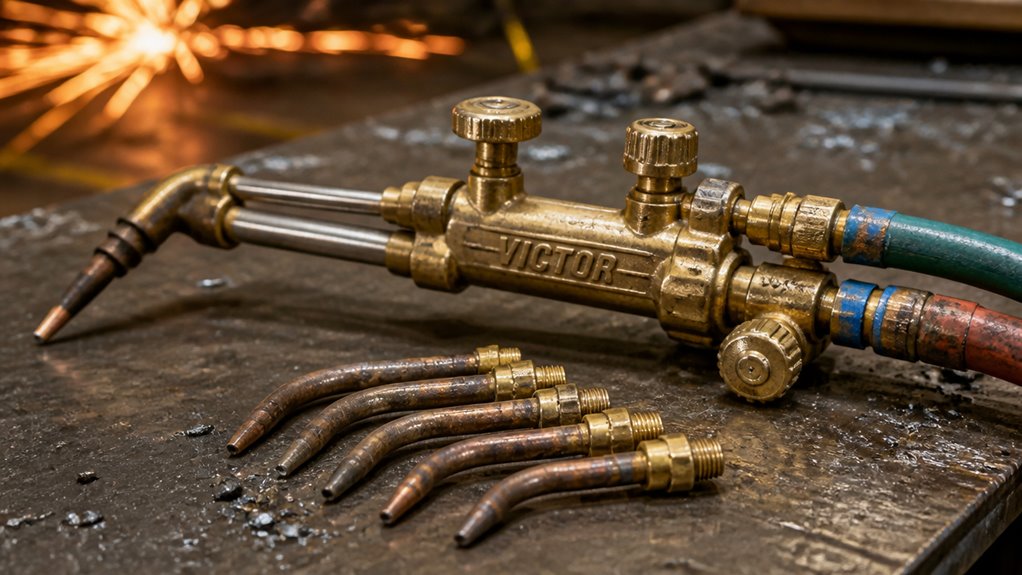
You should select Victor gas welding tips based on your torch type, material thickness, and heat needs.
The W-1 series fits medium-duty 100-series torch handles. W-J offers larger tips for brazing and higher heat, while W-Y suits thin, delicate metals.
Match tip size to metal thickness, balance oxygen and acetylene pressures under 15 PSI for acetylene, and maintain a neutral flame for proper welds.
Proper setup guarantees safety and efficiency. More guidance is available on material compatibility, flame control, and maintenance.
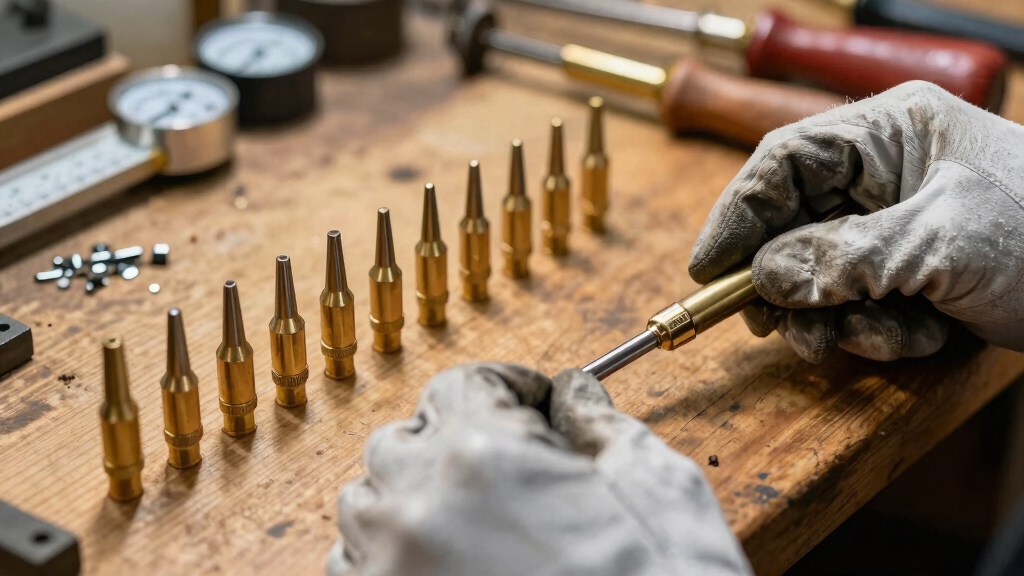
When selecting Victor gas welding tips, understanding the distinct series is essential to match your torch and application needs.
You’ll find three main Victor series: W-1, W-J, and W-Y. The W-1 series fits 100-series torch handles and serves medium-duty welding tasks efficiently.
If you require higher heat output or brazing capabilities, the W-J series offers larger diameter tips designed to deliver increased flame intensity.
For precision work on thin materials, the W-Y series provides specialized tips that allow fine flame control.
All series are compatible with standard CGA 540 oxygen connections, ensuring consistent oxygen delivery.
Knowing these differences enables you to optimize welding performance by selecting a tip that aligns with your torch setup and the specific thermal requirements of your project.
Proper torch tip selection is critical to achieving stable combustion and flawless fusion in gas welding.
When you’re picking a Victor gas welding tip for your project, it’s super important to choose a series that fits your needs. Think about the heat requirements and the thickness of the material you’re working with.
For example, if you’re dealing with medium-duty tasks, you might want the W-1 tip. If you need something for higher heat, the W-J is a solid choice. And for precision work, the W-Y would be your go-to option.
Also, don’t forget to consider the type of material you’re welding. Whether it’s steel, stainless steel, or copper, making sure the tip is compatible is crucial for achieving the best flame settings.
And here’s a tip: balancing the oxygen and acetylene pressures, along with the flow rates, is key. This will help you maintain stable combustion and ensure efficient heat transfer, making your welding process smoother and more effective.
Always select the tip size carefully to match the metal thickness, as using the correct tip maximizes efficiency and weld quality with precise flame control.
Although selecting the appropriate Victor gas welding tip depends on your specific project requirements, understanding the key differences between the W-1, W-J, and W-Y series is essential for peak performance.
The W-1 series offers medium-duty capability, ideal for general welding with 100-series torch handles. If your project demands higher heat output or brazing, the W-J series provides larger diameters to meet those needs efficiently.
For precision work on thin materials, the W-Y series excels, delivering controlled flames that minimize burn-through risks. All three series maintain compatibility with standard CGA 540 oxygen connections, ensuring seamless integration with your equipment.
Choosing the correct tip size and adjusting the flame to achieve a neutral flame is crucial for optimal weld quality and metal compatibility.
Selecting the right Victor gas welding tip hinges on understanding the material you’ll be working with and the specific flame characteristics required. For steel, stainless steel, and cast iron, use medium-duty W-1 series tips with a neutral flame to guarantee proper fusion.
When brazing copper, brass, or aluminum, opt for reversible flow tips that handle lower melting points effectively. For thin materials, W-Y series tips offer precision control and prevent burn-through. Avoid using these tips on non-metallic substrates unless you apply suitable coatings or pre-treatments.
Also, guarantee acetylene pressure doesn’t exceed 15 PSI to maintain flame stability. For lead-bearing materials, select special tips designed to accommodate respiratory safety protocols. Matching your tip to the material optimizes heat transfer and weld quality, making your project both efficient and safe. Additionally, adjusting the oxygen-to-acetylene ratio is crucial to achieve a neutral flame and peak temperature for optimal welding performance.
Understanding the correct pressure and flow settings is key when working with Victor gas welding tips to guarantee peak flame performance and weld quality.
You must keep acetylene pressure below 15 PSI to prevent gas instability. Oxygen pressure typically stays around 20 PSI for standard welding.
Flow rates vary depending on the tip size and material thickness. Selecting the right flow secures proper heat delivery without wasting gas or compromising weld integrity.
Always refer to tip charts specifying flow capacities for your chosen tip to match your project demands accurately. Additionally, use CGA 540 connections exclusively for oxygen to maintain safety standards.
Proper pressure and flow adjustment help you achieve a stable flame, optimize fuel consumption, and produce consistent, high-quality welds with your Victor gas welding tips.
Maintaining a neutral flame by balancing oxygen and acetylene pressures ensures minimal contamination and optimal weld penetration.
When you match Victor gas welding tips to metals and materials, you optimize welding performance by selecting the appropriate tip series and size for the job.
Use W-1 series tips for medium-duty welding on steel, stainless steel, and cast iron. Ensure proper flame adjustment for material thickness.
For higher heat output or brazing copper, brass, and aluminum, choose W-J series tips with larger diameters.
When working on thin metals requiring precision, opt for W-Y tips to maintain control and reduce heat distortion.
Remember, acetylene pressure must stay below 15 PSI to guarantee stable combustion.
Avoid using these tips on non-metallic substrates unless pre-treated.
Matching tip size to metal thickness and welding application prevents inadequate heat delivery or excessive oxidation. This delivers consistent weld quality and improved operational efficiency.
For thicker plates, controlling heat input with multi-pass welding techniques is essential to ensure full penetration and minimize distortion.
When you’re using Victor gas welding tips, safety is key. So, remember to only open the acetylene cylinder valves about a quarter to half a turn. This helps you control the gas flow safely. On the other hand, oxygen valves should be opened fully to ensure you get the proper pressure.
Before you dive into welding, take a moment to check all your connections. A simple way to do this is by using soapy water or an approved leak detection solution. It’s a quick and effective method to spot any gas leaks. Taking these precautions is really important for preventing hazardous gas buildup and ensuring you have a safe welding environment. Stay safe out there!
Always perform cylinder valve operation and leak checks in a well-ventilated area to reduce the risk of oxygen displacement and asphyxiation hazards.
Although cylinder valves might seem straightforward, operating them correctly is critical for your safety and the integrity of the Victor gas welding system.
Always open oxygen cylinder valves fully by turning counter-clockwise until flow begins. Partial openings can cause valve damage and unsafe pressure fluctuations.
Acetylene valves require cautious handling. Open only 1/4 to 1/2 turn to allow quick shutoff during emergencies and prevent excessive pressure buildup.
When closing valves, shut oxygen first, then acetylene, to avoid backflow. Make certain valve outlets are free from obstructions and inspect valve threads for damage before connecting regulators.
Use proper tools for turning valves. Avoid forcing or rapid movements that can compromise valve seals.
Proper valve operation maintains stable gas flow, prevents leaks, and extends cylinder service life, keeping your Victor gas welding setup safe and efficient.
Additionally, always inspect fittings and connectors for oxygen-compatible standards to prevent accidental mix-ups and ensure safe connections.
During setup and operation, detecting leaks in your Victor gas welding system is essential for maintaining safety and preventing hazardous gas buildup.
Use soapy water or an approved leak detection solution applied to connections, hoses, and fittings. Watch carefully for bubbles, which indicate leaks.
Never use a flame to check for leaks. Inspect all connections, including cylinder valves, regulators, and torch fittings, before each use.
Tighten knurled nuts securely but avoid overtightening, which can damage components. If you detect a leak, shut off the gas supply immediately and repair or replace faulty parts before continuing.
Performing regular leak checks prevents dangerous gas accumulation, reduces fire risk, and guarantees peak welding performance. Always follow manufacturer guidelines and safety protocols to maintain a secure and efficient system. Additionally, ensuring proper ventilation and respiratory protection during welding can prevent exposure to hazardous fumes released from heated metals.
When setting pressure and flow for Victor gas welding tips, it’s essential to adhere to specified limits to guarantee flame stability and safety.
You should never exceed 15 PSI acetylene pressure to avoid gas instability. Oxygen pressure typically remains around 20 PSI for ideal combustion.
Adjust flow rates precisely according to tip size and material thickness; each tip chart provides exact flow capacities.
Visualize this setup:
Acetylene regulator dial set below 15 PSI with steady needle movement.
Oxygen flow gauge stabilized near 20 PSI for consistent flame intensity.
Flame shape sharp and blue, indicating correct fuel-to-oxygen ratio.
Mastering flame control is critical for producing strong, clean welds and ensuring operator safety.
After setting the correct pressure and flow for your Victor gas welding tips, maintaining and cleaning the tips guarantees peak performance and safety.
Regularly inspect the tips for carbon buildup and oxide residue, which impair flame stability. Use appropriate tip cleaners or wire brushes to remove deposits without damaging the orifice.
Inspect and clean welding tips regularly to maintain flame stability and prevent damage to the orifice.
Always tighten knurled nuts securely to prevent gas leaks, assuring a proper seal between the tip and torch handle. Check the tip’s orifice for wear or deformation before each use, replacing any damaged tips immediately.
After welding, follow proper shutdown procedures by turning off oxygen first, then acetylene, to avoid backfire and tip damage. Consistent maintenance extends tip life and assures precise flame control during welding operations.
Although Victor gas welding tips are designed for versatility, you need to take into account environmental factors such as ventilation and wind conditions to ensure stable combustion and operator safety. Proper airflow guarantees that toxic gases don’t accumulate, while shielding from wind prevents unstable flames.
Adjust your setup based on the workspace to maintain consistent heat output and avoid flame blowout.
Consider these environmental precautions when welding:
Use well-ventilated areas or forced ventilation systems to disperse hazardous fumes.
Employ flame shields or windbreaks outdoors to stabilize the flame against drafts.
Select appropriate tip sizes and flow rates for the ambient temperature and elevation to ensure ideal gas mixture and combustion efficiency.
Since improper setup or maintenance can compromise weld quality and safety, you should avoid common mistakes with Victor gas welding tips.
First, never exceed the 15 PSI acetylene pressure limit to prevent gas instability.
Avoid using worn or clogged tips; regular cleaning and inspection are essential.
Don’t neglect tight connections; loose knurled nuts risk dangerous leaks.
Make sure you adjust oxygen and acetylene flow rates accurately to maintain a stable flame, matching tip size and material thickness.
Avoid welding non-metallic substrates without appropriate pre-treatment, as tips are ineffective otherwise.
Additionally, always follow correct cylinder valve procedures: open acetylene valves only 1/4 to 1/2 turn and oxygen valves fully.
Finally, never skip leak detection steps; use soapy water to check connections before ignition.
Victor gas welding tips typically come with a limited warranty period of one year from the date of purchase. This warranty covers defects in materials and workmanship under normal use and maintenance.
You should keep your proof of purchase and inspect tips regularly for wear or damage. If you encounter issues within the warranty period, contact the manufacturer or authorized dealer promptly to arrange repair or replacement.
Always follow proper usage and maintenance guidelines to guarantee tip longevity.
You can purchase replacement parts for Victor welding tips directly from authorized Victor distributors or welding supply stores.
Online platforms like the Victor official website, industrial supply retailers, and specialized welding equipment vendors also stock genuine parts.
Always verify compatibility with your specific tip series, such as W-1, W-J, or W-Y.
Make certain the parts meet CGA 540 oxygen service standards. This guarantees safety, performance, and adherence to manufacturer specifications.
Victor tips are specifically designed for oxy-acetylene welding and won’t perform efficiently with other gas combinations. Their construction and flow rates match acetylene’s pressure limits and oxygen’s properties.
Using different gases risks instability and unsafe operation. If you want to use alternative fuel gases, you’ll need tips rated for those gases.
Victor tips’ compatibility is limited to standard CGA 540 oxygen connections paired with acetylene fuel only.
You can expect Victor welding tips to last several months to a year with regular use, depending on maintenance and operating conditions.
Proper cleaning to remove carbon buildup and oxide residue markedly extends tip life.
Frequent inspections for wear and secure tightening of knurled nuts help maintain performance.
Using tips within recommended pressure and flow rates also prevents premature damage, ensuring consistent heat output and safety during your welding tasks.
Imagine you’re a technician at a fabrication shop who just started using Victor equipment.
Yes, there are specialized training courses tailored for Victor welding gear, including hands-on workshops and online modules offered by Victor Technologies and certified partners.
These courses cover equipment setup, safety protocols, maintenance, and peak tip selection.
By understanding Victor gas welding tips and choosing the right one for your project, you’ll avoid many common pitfalls.
Always match your tip to the metal and set pressure precisely to keep your work consistent.
Don’t overlook safety and regular maintenance; these keep your equipment running smoothly.
Remember, getting your welding technique down isn’t just luck. It’s about mastering the tools and conditions so the job goes off without a hitch every time.