Phone:
(701)814-6992
Physical address:
6296 Donnelly Plaza
Ratkeville, Bahamas.

Phone:
(701)814-6992
Physical address:
6296 Donnelly Plaza
Ratkeville, Bahamas.

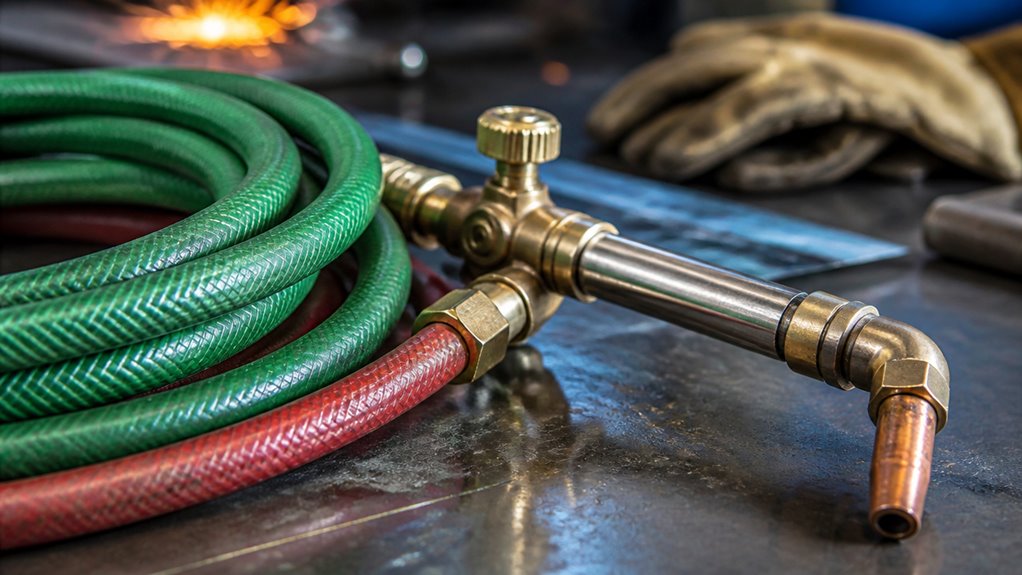
When welding, you’ll most commonly see oxygen hoses colored green in North America and blue in many international markets.
However, these can vary by manufacturer and local regulations. Never rely on color alone; always check hose markings or labels to confirm oxygen compatibility and pressure ratings.
Acetylene hoses, by contrast, are typically red to signal fuel gas safety. Understanding these standards helps prevent dangerous mix-ups.
Exploring further will clarify how to match hose colors safely and correctly.
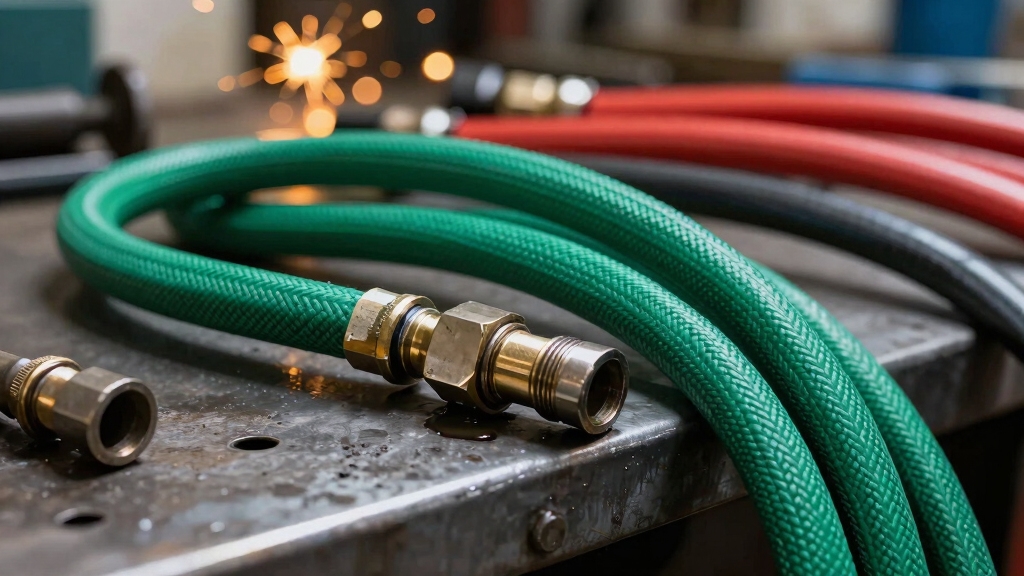
Although color standards for oxygen hoses vary globally, green remains the most widely recognized color in North America. Blue is accepted in some international and manufacturer-specific systems.
You’ll find that green oxygen hoses are commonly specified to reduce the risk of gas mix-ups in welding. Blue hoses, meanwhile, appear in certain standards and regions, reflecting alternative coding practices.
It’s important to note that color coding serves as a quick visual cue to differentiate oxygen from fuel gases like acetylene, which is typically red. However, color alone isn’t foolproof; always verify hose markings and manufacturer instructions.
You should also consider hose construction, as oxygen hoses require pressure resistance and flexibility for safe delivery of oxygen from cylinders to torches. This combination of color and physical properties helps reassure safe welding operations.
For enhanced safety, proper ventilation and the use of oxygen monitors are recommended to detect unsafe oxygen levels during welding.
You might’ve noticed that oxygen hose colors can differ quite a bit from one region to another. In North America, for instance, green is the go-to color for oxygen hoses. On the other hand, if you’re in parts of Europe or Asia, blue tends to be the favored choice.
But it doesn’t stop there! Manufacturers also have their own color standards, which can vary depending on local regulations and market practices. This means that what you see in one place mightn’t be the same somewhere else.
These variations really do matter, especially when it comes to safety protocols. It’s super important to double-check hose colors against local codes. Doing so can help you avoid any dangerous mix-ups. Better safe than sorry, right? Additionally, proper gas identification and handling are critical because inert shielding gases like argon and helium pose asphyxiation hazards in confined spaces.
Because welding standards and practices differ widely across regions and manufacturers, you’ll find notable variations in oxygen hose colors.
In North America, green most commonly identifies oxygen hoses, aligning with longstanding industry conventions.
However, in many international markets, blue frequently replaces green as the standard oxygen hose color, reflecting regional standards such as ISO 3821 and local codes.
Some regions even report black as an oxygen hose color, though this is less common and can cause confusion.
These variations underscore the importance of not relying solely on color; you should always verify hose markings and consult local regulations.
Additionally, proper gas flow rates must be carefully maintained to ensure safe and effective welding operations regardless of hose color standards.
Understanding regional color variations helps set the stage for recognizing how manufacturers apply their own color standards to oxygen hoses.
While green remains the most common oxygen hose color, many manufacturers adopt blue or even black, aligning with specific national or international standards.
You’ll find that some manufacturers strictly follow ISO 3821, which supports blue for oxygen hoses, whereas others adhere to North American conventions favoring green.
These differences stem from market demands, regulatory compliance, and internal quality protocols.
When selecting hoses, you should consult the manufacturer’s specifications and labeling rather than relying solely on color.
This approach guarantees you correctly identify hoses designed to handle oxygen’s high pressure and oxidizing properties, maintaining compatibility with your welding setup and reducing risk caused by inconsistent color coding.
Proper selection and maintenance of hoses are essential to ensure safe operation and prevent hazards during welding.
Although color coding aims to enhance safety by allowing quick identification of oxygen hoses, variations between regional standards and manufacturer practices can create confusion that challenges this goal.
In North America, green commonly denotes oxygen hoses, while some international standards and manufacturers use blue.
This inconsistency increases the risk of mixing oxygen with fuel gases, compromising welding safety.
To mitigate hazards, always cross-check hose markings and consult local regulations rather than relying solely on color.
Understanding these differences helps you guarantee proper hose selection, reduce the risk of fire or explosion, and maintain compliance with safety protocols.
Ultimately, awareness of regional and manufacturer color variations is essential to safeguarding your welding environment effectively.
Additionally, incorporating proper labeling and documentation as outlined in safety guidelines can further prevent hose misidentification and enhance overall safety.
When color alone doesn’t provide a clear identification, you need to rely on additional markings and physical characteristics to spot oxygen hoses accurately.
Look for imprinted or printed text specifying “oxygen” or its pressure rating along the hose length.
Check the hose for imprinted or printed text indicating oxygen or its pressure rating.
Check for manufacturer stamps and compliance labels indicating suitability for oxygen service.
Also, note the hose’s construction: oxygen hoses are designed to withstand high pressure and resist oxidation.
They often feel stiffer and more durable than fuel gas hoses.
Inspect fittings and connectors, which should match oxygen-compatible standards to prevent interchange.
If your hoses lack clear color coding, verifying these details prevents dangerous mix-ups.
Always cross-reference your findings with local standards and manufacturer documentation to make certain the hose’s intended gas service is unmistakably identified.
Additionally, regular inspection and maintenance of hoses ensures safety and prolongs their service life.
Because oxygen and acetylene serve fundamentally different roles in welding, color coding their hoses is critical to maintaining safety and operational efficiency.
You rely on clear visual cues to prevent dangerous mix-ups between oxidizing and fuel gases, which could cause fires or explosions.
Color coding helps you quickly identify the right hose for each gas, especially in complex setups.
Here’s why it matters:
You’ll notice that acetylene hoses are usually red. This bright color clearly marks them as flammable fuel gas lines, making it easy to spot.
Now, if you’re working with other fuel gases, you’ll often see orange hoses. They serve a similar purpose but indicate a different type of gas.
On the other hand, when it comes to inert gases like argon or helium, you’ll typically find black hoses. This is common in many coding systems.
Understanding these color distinctions really helps you quickly identify the gas types. It’s an important part of maintaining safe welding practices!
Additionally, proper hose color coding supports cylinder storage safety by preventing gas mix-ups and ensuring correct handling.
Recognize the acetylene hose by its distinctive red color, a widely accepted standard in welding and cutting applications. This color coding helps you quickly identify the fuel gas line, reducing the risk of dangerous mix-ups with oxygen hoses, which are typically green or blue.
Acetylene hoses must meet specific safety and performance criteria because acetylene is highly flammable and unstable under pressure.
Keep these key points in mind when handling acetylene hoses:
Red color signals fuel gas service, differentiating it from oxidizers and inert gases. Hose construction requires flexibility and resistance to heat and pressure. Proper identification prevents potentially hazardous mistakes during setup and operation.
Always verify hose markings and local standards to guarantee compliance and safety in your welding environment. Understanding the role of welding safety is crucial to prevent accidents related to improper hose connections.
Identify fuel gas hoses by their distinct colors, which serve as essential visual cues to differentiate various gases used in welding beyond just acetylene.
Acetylene hoses are almost universally red, providing a clear indication of this highly flammable fuel gas.
For other fuel gases, such as propane or natural gas, orange hoses are commonly used in many standards, distinguishing them from both acetylene and oxygen lines.
These color codes help prevent dangerous mix-ups during welding operations.
While red and orange are typical for fuel gases, always check your local or manufacturer-specific standards, as variations exist.
Relying solely on color isn’t enough; confirm hose markings and specifications to guarantee proper gas compatibility and safety in your welding setup.
Proper welding equipment maintenance also plays a key role in ensuring safe and effective gas delivery during welding.
When working with inert gases in welding, it’s important to know their hose color codes to prevent mix-ups and guarantee safety. While oxygen hoses are commonly green or blue, inert gases like argon and helium typically use black hoses in many coding systems. This distinction helps you quickly identify the gas type on site and avoid dangerous cross-connections.
Here are key color codes to remember:
Acetylene hoses are almost always red, signaling fuel gas.
Fuel gases other than acetylene often use orange hoses.
Inert gases such as argon or helium generally use black hoses.
Keep in mind, color codes can vary by region and manufacturer. Always verify local standards and rely on hose markings in addition to color for safe, accurate gas identification.
Although hose colors provide a quick visual cue, you shouldn’t rely solely on color to match hoses to gas types safely.
Color conventions vary by region, manufacturer, and standard; for example, oxygen hoses may be green or blue depending on local codes.
Always verify hose markings and manufacturer specifications to confirm gas compatibility.
Use color coding as a preliminary guide, then cross-check with stamped or printed hose information.
Make sure hoses meet pressure and flexibility requirements for their specific gas service.
Also, inspect connectors and fittings for proper gas-type compatibility.
By combining visual color cues with physical markings and equipment checks, you reduce the risk of dangerous gas mix-ups during welding operations.
This approach helps maintain safety and compliance with applicable standards.
You should inspect oxygen hoses before every use to check for wear, cracks, leaks, or other damage.
Regular inspections help guarantee safety by preventing gas leaks and potential accidents.
Additionally, perform a thorough inspection at least monthly, depending on usage frequency.
Replace hoses showing signs of deterioration or if they fail pressure tests.
Consistent monitoring and maintenance keep your welding setup safe and reliable, reducing risks during operation.
Can you really trust a repaired oxygen hose during welding?
Generally, you shouldn’t repair damaged oxygen hoses. Any patch or fix can compromise their pressure resistance and safety.
Oxygen hoses must handle high pressures and avoid leaks to prevent fire hazards.
Instead, you should replace any hose showing wear, cracks, or damage.
Always follow manufacturer guidelines and safety standards to ensure your equipment remains reliable and safe for welding operations.
Oxygen hoses typically have pressure ratings ranging from 200 to 300 psi. Some heavy-duty hoses can handle up to 500 psi or more.
You’ll want to check the manufacturer’s specifications to guarantee your hose matches your system’s pressure requirements.
Using a hose rated below your operating pressure risks failure and safety hazards.
Always confirm compatibility with your welding or cutting equipment to maintain safe and effective oxygen delivery.
You should store oxygen hoses in a cool, dry, and well-ventilated area away from direct sunlight, heat sources, and oil or grease.
Keep hoses coiled loosely to prevent kinks and avoid sharp bends.
Make sure they’re protected from physical damage and contaminants that could compromise hose integrity.
Always isolate oxygen hoses from fuel gas lines during storage to reduce the risk of accidental mixing or damage.
This helps maintain safe and reliable welding operations.
Yes, oxygen hoses use specific connectors designed to prevent accidental gas mix-ups.
You’ll find that oxygen fittings typically have right-hand threads, unlike fuel gas connectors, which use left-hand threads.
This thread difference guarantees you can’t accidentally connect the wrong hose to the wrong regulator or torch.
Additionally, oxygen connectors often have unique shapes or markings to promote safety and compliance with standards.
Always verify compatibility before use.
You might think spotting the oxygen hose is simple—just look for green or blue—but regional differences and manufacturer variations can throw you off.
That’s why relying solely on color isn’t enough; you need to double-check markings and fittings too.
Remember, mixing up hoses isn’t just a mistake; it’s a safety hazard.
By understanding color codes and confirming details, you’ll guarantee safe, effective welding every time. Precision matters more than coincidence in your work.