Phone:
(701)814-6992
Physical address:
6296 Donnelly Plaza
Ratkeville, Bahamas.

Phone:
(701)814-6992
Physical address:
6296 Donnelly Plaza
Ratkeville, Bahamas.

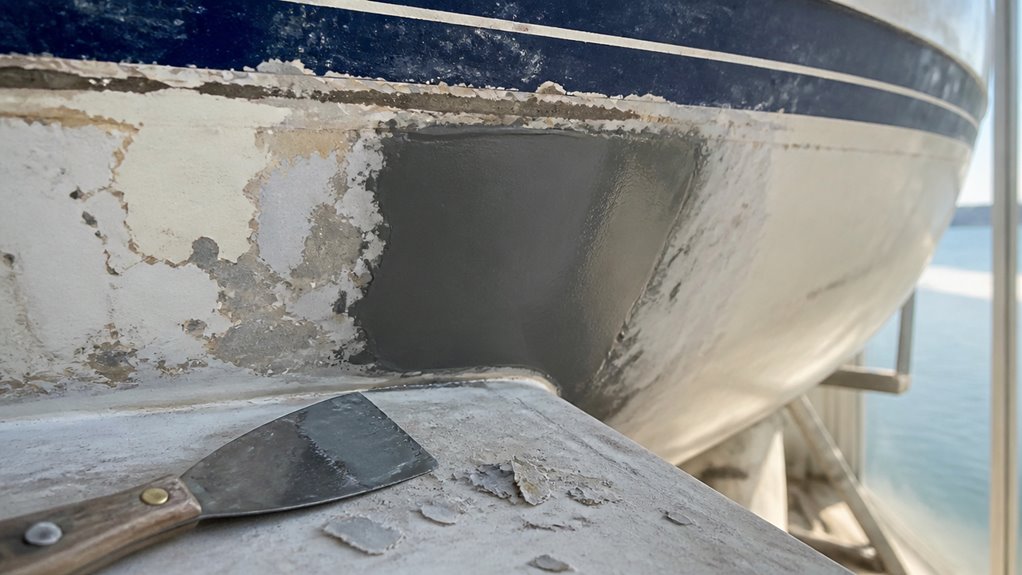
You’ll find JB Weld Marine Weld offers exceptional reliability for tough marine repairs, curing in wet or dry conditions, even underwater.
It bonds strongly to aluminum, fiberglass, and metals with steel-like strength exceeding 3,000 psi, resisting water degradation over time.
The two-part epoxy sets within 4-6 hours and fully cures by 24 hours, making it ideal for demanding environments.
Its dependable performance outshines many marine epoxies. Explore more, and you’ll discover how to maximize its effectiveness and where to get it.
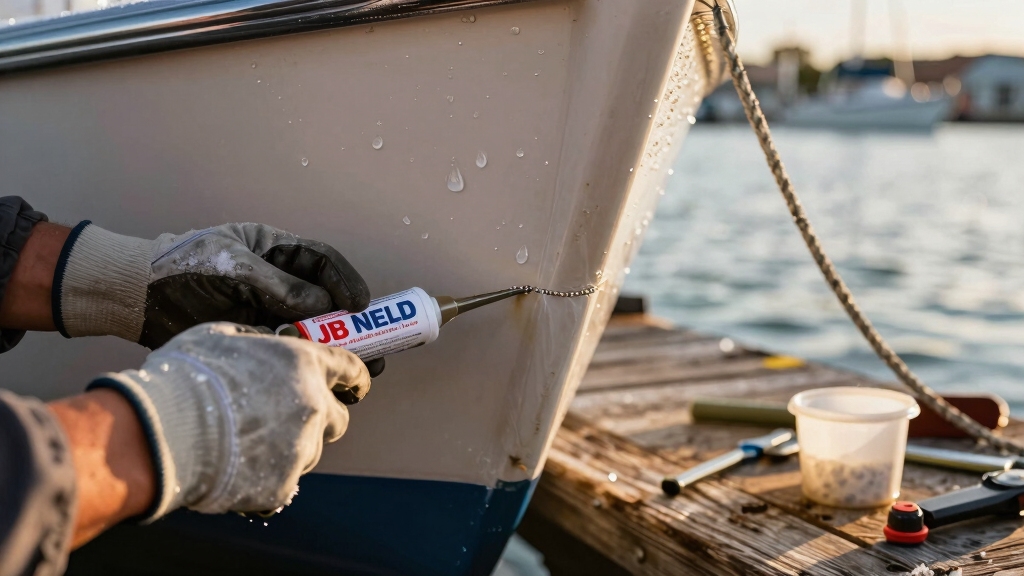
Because JB Weld Marine Weld is specifically formulated to cure in wet conditions, it excels where many adhesives fail.
JB Weld Marine Weld cures reliably in wet conditions, outperforming many adhesives where others fall short.
You’ll find its two-part epoxy formula creates steel-like bonds that withstand the stresses of marine environments.
Unlike conventional adhesives, it sets reliably even when surfaces are wet or submerged.
This strength is backed by tensile testing exceeding 3,000 psi, ensuring your repairs endure turbulent sea forces.
You can expect an initial cure within 4 to 6 hours, accelerating repair workflows without sacrificing quality.
Its resistance to water degradation maintains bond integrity over time, so you won’t worry about weakening from constant exposure.
If you need a dependable adhesive for marine repairs, this product offers the durability and performance you require under challenging wet conditions.
Additionally, proper surface preparation is essential to maximize adhesion and bond strength in marine applications.
When you use JB Weld Marine Weld on aluminum or fiberglass, you’re tapping into a two-part epoxy formula that forms a bond as strong as steel.
Pretty impressive, right?
What’s even cooler is that it cures even in wet conditions, so you don’t have to worry about the weather.
Now, before you dive in, don’t forget about surface preparation.
It’s super important to clean and roughen the surfaces first.
This little step makes a huge difference in maximizing adhesion and ensuring a durable connection.
Trust me, you want that high-strength bond, especially with all the stress and moisture that marine environments throw at it.
For best results, make sure to mix equal parts of resin and hardener thoroughly until you get a uniform gray color to activate the chemical reaction.
Understanding how JB Weld Marine Weld bonds with aluminum and fiberglass reveals why it’s a trusted choice for marine repairs.
This two-part epoxy forms a steel-like bond by chemically reacting to create a durable matrix that adheres tightly to metal and composite surfaces.
When you mix and apply it, the epoxy penetrates microscopic pores and irregularities on aluminum and fiberglass, ensuring mechanical interlocking.
Its unique formula cures even in wet conditions, maintaining a strong, water-resistant bond essential for marine environments.
The cured adhesive withstands tensile forces over 3,000 psi, resisting degradation from water and turbulence.
This combination of chemical adhesion and physical interlocking delivers a reliable, long-lasting repair that performs under demanding marine stresses.
Making JB Weld Marine Weld an effective solution for aluminum and fiberglass bonding.
For optimal results, it is crucial to mix equal parts of resin and hardener on a smooth surface and apply within the epoxy’s workable time to ensure maximum bond strength.
The strength and durability of JB Weld Marine Weld depend heavily on how well you prepare the surfaces before application.
When bonding aluminum or fiberglass, start by thoroughly cleaning the area to remove grease, dirt, or oxidation. Use a solvent like acetone for aluminum and a mild detergent with water for fiberglass, then let the surface dry completely.
Lightly sanding both materials with fine-grit sandpaper creates a rough texture that improves adhesion by increasing surface area. Avoid excess dust by wiping the surface clean afterward.
Since Marine Weld cures in wet conditions, you can apply it even if the surface is damp, but avoid heavy water pooling. Proper preparation guarantees the epoxy forms a steel-like bond that withstands marine stresses effectively.
Ensuring full cure before subjecting the bond to heat or stress is critical for achieving maximum strength and durability.
JB Weld Marine Weld forms exceptionally durable bonds on aluminum and fiberglass by chemically reacting with these surfaces to create a steel-like connection.
When you apply it, the two-part epoxy cures in wet conditions, guaranteeing a reliable bond even underwater. This makes it ideal for marine repairs where exposure to water is constant.
You can expect:
This performance guarantees your repairs withstand turbulent sea conditions and last over time without weakening. Proper surface preparation and curing are essential to achieve the maximum bond strength with marine epoxy.
Alright, before you dive into using JB Weld Marine Weld, let’s make sure you prep that surface really well. It’s super important for getting a strong bond.
Once you’ve got everything prepped, mix equal parts of the epoxy from those twin tubes. Take your time with this step; a good mix is key!
Now, when it comes to applying it, grab your recommended tool and spread that mixture evenly. You want to make sure it covers everything nicely.
And don’t forget about the curing time! You’ll want to let it set for about 4 to 6 hours for the initial hold, but give it a full 24 hours to cure completely. Patience pays off!
Also, keep in mind that storing any leftover product in a cool, dark place will help maintain its effectiveness for future use.
Preparing surfaces properly guarantees a strong, lasting bond when applying Marine Weld. You’ll want to make certain the area is dry, clean, and free of contaminants to maximize adhesion. Follow these steps for ideal surface prep:
Meticulous preparation makes certain Marine Weld’s two-part epoxy forms its steel-like connection reliably and durably. Additionally, using proper eye protection during surface prep tasks like sanding or grinding helps prevent damage from UV exposure and debris.
Once you’ve prepared the surface properly, mixing and applying Marine Weld correctly is essential to achieving a strong, reliable bond.
Start by squeezing equal parts from the twin tubes onto a clean, disposable surface. Use a mixing tool to blend the resin and hardener thoroughly until the color is uniform, guaranteeing full chemical activation.
Apply the mixture swiftly with a specialized applicator to the prepared area, pressing firmly to fill gaps and secure solid contact with the substrate.
Avoid applying excess adhesive, as it can weaken the bond and extend curing time.
Marine Weld’s unique formula allows it to cure even in wet conditions, but precise mixing and immediate application maximize performance and durability in demanding marine environments.
Proper surface preparation and full curing are essential for a waterproof bond and long-lasting performance.
After mixing and applying Marine Weld, paying close attention to curing times guarantees the bond develops its full strength and durability.
You’ll notice the adhesive begins setting within 4 to 6 hours, providing an initial hold suitable for light handling.
However, to achieve maximum tensile strength exceeding 3,000 psi, you must allow a full cure. Here’s what to follow:
For best results, ensure surfaces are properly prepared before application to enhance bond strength and durability.
Observing these guidelines guarantees a durable, water-resistant repair.
Experience the impressive strength and durability of JB Weld Marine Weld, engineered to withstand demanding marine environments.
This two-part epoxy forms a steel-like bond with tensile strength exceeding 3,000 psi, ensuring your repairs hold firm under turbulent sea stress.
It uniquely cures even in wet conditions, maintaining a reliable adhesive connection with materials like aluminum, fiberglass, and metal.
The epoxy resists water degradation, preserving its integrity over time.
You’ll find it sets quickly within 4 to 6 hours, achieving full strength between 15 and 24 hours.
For optimal results, surfaces should be thoroughly cleaned and mechanically roughened to ensure a strong bond before application.
Users consistently praise JB Weld Marine Weld for its exceptional reliability in demanding marine conditions. When you rely on it for critical repairs, you’ll notice its bond holds firm despite exposure to water, salt, and mechanical stress.
Reviewers emphasize its consistent performance, even underwater, making it ideal for boats and related equipment. Many users appreciate its manageable curing time and straightforward application, which reduces downtime.
Here’s what you can expect from user feedback:
In short, you’ll find this epoxy dependable and effective for diverse marine repair needs.
While many marine epoxies promise strong adhesion, JB Weld Marine Weld sets itself apart with a unique two-part formula that cures effectively even in wet conditions. This gives you a reliable bond where others may fail.
It surpasses common epoxies in water resistance and bond strength, making it ideal for critical marine repairs. You’ll find it bonds well to aluminum, fiberglass, and metal, maintaining integrity under sea stress.
| Feature | JB Weld Marine Weld | Typical Marine Epoxies |
|---|---|---|
| Wet Condition Curing | Yes | Rarely |
| Tensile Strength | >3,000 psi | Usually <2,500 psi |
| Water Resistance | High | Moderate |
This comparison shows why JB Weld Marine Weld is often preferred for demanding marine applications.
Understanding the superior bonding capabilities of JB Weld Marine Weld sets a strong foundation, but applying the epoxy correctly guarantees you get the most out of its performance.
To maximize bond strength and longevity, you should:
Following these steps secures the epoxy achieves its full tensile strength, resists marine degradation, and endures turbulent conditions.
This ensures you a reliable, long-lasting repair.
JB Weld Marine Weld’s availability spans major retail outlets and online platforms, giving you convenient access whether you prefer in-person shopping or digital orders.
You can find it at Home Depot, Lowe’s, and other hardware stores, typically in 0.2 oz or 2 oz twin tube sizes.
Pricing varies depending on size and retailer, with the smaller tube generally costing less but the larger offering better value for extensive repairs.
Online retailers often provide competitive prices and bulk purchase discounts.
When shopping, look for product codes 50172 or 8272 to make certain you’re getting the genuine Marine Weld formula.
This variety of purchase options helps you select the size and price point that best fits your marine repair needs without compromising on quality.
Yes, you can use JB Weld Marine Weld on non-metal surfaces like wood.
It bonds well with fiberglass and aluminum, so wood’s porous nature usually won’t be a problem if you prepare the surface properly.
Make sure to clean and roughen the wood first for better adhesion.
The epoxy cures in wet conditions and forms a strong, durable bond, making it suitable for marine or wet environments involving wood repairs.
Yes, you can use JB Weld Marine Weld for underwater pipe repairs. It bonds like a steel anchor in stormy seas.
Its two-part epoxy cures underwater, creating a high-strength, water-resistant seal that withstands turbulent conditions. You’ll want to mix equal parts carefully and apply promptly, ensuring surfaces are prepped.
The adhesive sets within hours and fully cures in 24, giving you a durable, reliable repair even in wet environments.
You can expect JB Weld Marine Weld unopened to have a shelf life of about two years when stored properly.
Keep it in a cool, dry place away from direct sunlight to maintain its effectiveness.
Storing it at room temperature helps prevent premature curing inside the tubes.
If you use it within this timeframe, the epoxy will retain its bonding strength and reliability for your marine repair needs.
Think of JB Weld Marine Weld’s fumes like a gentle sea breeze rather than a storm. It’s low in odor compared to many epoxies.
You won’t find yourself overwhelmed by strong smells during curing. Still, it’s smart to work in a well-ventilated area to avoid any minor irritation.
This two-part epoxy prioritizes performance in wet environments without sacrificing user comfort during application and curing.
Yes, you can paint over JB Weld Marine Weld after it fully cures.
Once it’s cured, typically within 15 to 24 hours, the epoxy forms a hard, steel-like surface that accepts most paints well.
To guarantee the paint adheres properly, you should lightly sand the bonded area first to create a rough texture.
This preparation improves paint adhesion and results in a durable, finished look that withstands marine conditions.
If you want a marine epoxy that’s almost as tough as a sea captain’s resolve, JB Weld Marine Weld is your go-to.
It bonds seamlessly with aluminum and fiberglass, making wet repairs a breeze.
By following the proper application steps, you’ll get maximum strength and durability.
Count on it to hold up under harsh marine conditions where other epoxies might fail.
For reliable, long-lasting repairs, JB Weld Marine Weld truly stands in a league of its own.