Phone:
(701)814-6992
Physical address:
6296 Donnelly Plaza
Ratkeville, Bahamas.

Phone:
(701)814-6992
Physical address:
6296 Donnelly Plaza
Ratkeville, Bahamas.

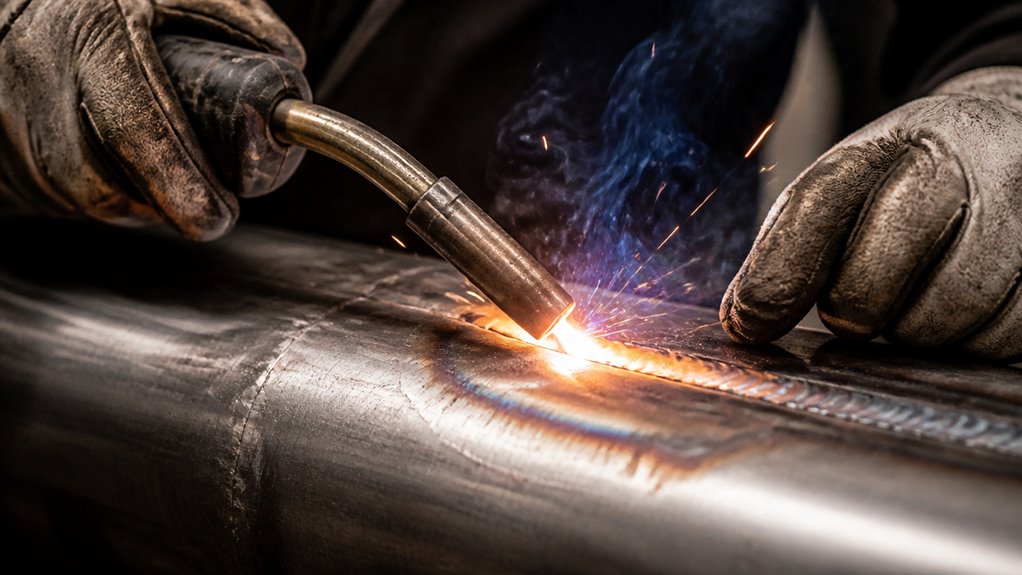
You can flux core weld stainless steel effectively, but you need dedicated stainless flux-core wires that match your stainless grade to maintain corrosion resistance and mechanical strength.
Using mild steel flux-core wire risks rust and weak joints, so avoid it for stainless applications.
Choose between self-shielded FCAW for outdoors or gas-shielded FCAW for cleaner, corrosion-resistant welds indoors.
Proper polarity and heat control are essential for strong, durable welds.
Understanding these factors will clarify when flux core suits your project and when other methods may serve better.
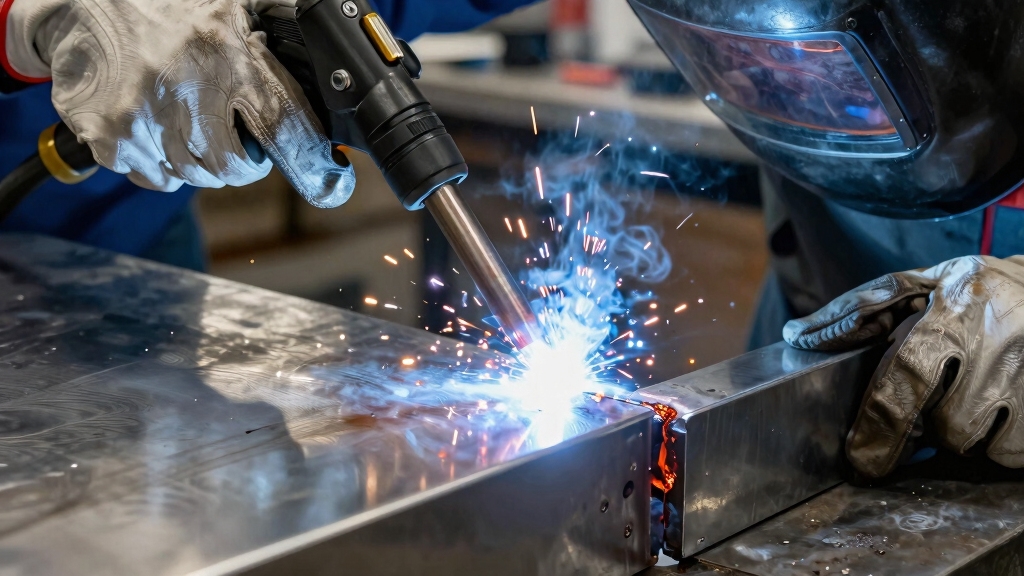
While flux core welding stainless steel is feasible, you need to use dedicated stainless steel flux-core wires to achieve effective results.
These wires contain a stainless alloy sheath with a flux core designed to preserve the corrosion resistance and mechanical properties of the base metal.
Using mild steel flux-core wire may weld ferrous parts but risks rust and compromised corrosion resistance.
You must employ DCEN polarity to optimize arc stability and penetration.
Self-shielded FCAW works for structural, non-aesthetic welds where slag removal won’t damage the oxide layer, but it produces rougher welds compared to MIG or TIG.
Proper wire selection matching the stainless grade, like 304 or 316, is critical to avoid chromium depletion.
However, controlling heat input during welding is essential to prevent weakening and brittleness of the stainless steel.
Because MIG and TIG welding deliver cleaner, more controlled welds, you should choose these methods over flux core when aesthetics and corrosion resistance are critical.
Choose MIG or TIG welding over flux core for superior aesthetics and corrosion resistance.
MIG and TIG use inert gas shielding, which prevents oxidation better than flux-core slag protection. This preserves stainless steel’s oxide layer and corrosion resistance.
You’ll also get superior weld bead appearance and reduced spatter.
For thin stainless components or high-visibility joints, TIG offers precise heat input control, minimizing distortion and maintaining metallurgical integrity.
MIG suits faster, moderately precise welds with better penetration than flux core.
Conversely, flux core suits structural welds where surface finish and corrosion resistance are less important.
To conclude, opt for MIG or TIG when quality, appearance, and corrosion resistance outweigh convenience or speed.
Additionally, maintaining proper shielding gas flow during MIG or TIG welding is essential to prevent oxidation and ensure a strong, corrosion-resistant weld.
When it comes to selecting flux-core wires for your stainless steel welding, it’s really important to choose ones that match the specific stainless steel alloy you’re working with. This helps maintain both corrosion resistance and mechanical integrity.
Using dedicated stainless flux-core wires is a smart move. They ensure that the chromium content is just right and that the slag formation works effectively to protect the weld zone. Plus, this choice significantly reduces the chances of contamination, especially when you’re dealing with exposed or critical applications.
For thicker sections over 3 mm, flux-cored wires are preferred due to their ability to provide better penetration and control of heat input during welding.
When selecting flux-core wires for stainless steel welding, matching the wire alloy to the base metal’s specific stainless grade is critical to maintaining corrosion resistance and mechanical integrity.
You need a wire containing compatible chromium and nickel levels to prevent weld defects and preserve the stainless steel’s protective oxide layer.
Using mild steel flux-core wires may be tempting but introduces rust risk due to absent chromium.
For grades like 304 or 316, choose flux-core wires explicitly formulated for those alloys, ensuring chemical and mechanical compatibility.
The flux core must also provide adequate shielding to avoid contamination.
Precise alloy matching minimizes post-weld corrosion and cracking, safeguarding long-term performance.
Always verify manufacturer specifications to confirm the wire’s suitability for your stainless grade and welding conditions.
Flux-cored wires preferred for outdoor/windy conditions due to their self-shielding capabilities which enhance weld protection in less controlled environments.
Selecting the right stainless flux-core wire directly impacts weld integrity and corrosion resistance in stainless steel applications.
You should use wires specifically alloyed to match the base metal, such as 304 or 316 stainless, to maintain chromium content critical for corrosion resistance.
Stainless flux-core wires feature a stainless metal sheath with a flux core, enabling self-shielded welding without external gas. This offers versatility and portability but requires careful slag removal to prevent oxide layer damage.
While mild steel flux-core wires are cheaper, they lack chromium and risk rust in stainless welds. For best results, prioritize stainless flux-core wires in exposed or corrosive environments.
Fine-tuning welding parameters is essential to balance strength and corrosion resistance for durable stainless steel welds.
In comparing flux-cored arc welding methods for stainless steel, understanding the distinction between self-shielded (FCAW-S) and gas-shielded (FCAW-G) processes is essential.
FCAW-S relies on flux within the wire to shield the weld, eliminating the need for external gas. It’s ideal for quick, structural welds but yields a rougher surface and requires slag removal, risking contamination of the stainless oxide layer.
FCAW-G uses an external shielding gas, producing cleaner, corrosion-resistant welds with less post-weld cleanup. Your choice hinges on the balance between convenience and weld quality.
The selection between these types also depends on environmental conditions, as FCAW-S excels in windy or outdoor settings while FCAW-G is preferred for indoor applications requiring superior weld quality through dual-shield welding.
| Feature | FCAW-S (Self-Shielded) | FCAW-G (Gas-Shielded) |
|---|---|---|
| Shielding | Internal flux | External shielding gas |
| Weld Appearance | Rougher, slag present | Cleaner, minimal slag |
| Equipment | No gas tank needed | Requires gas supply |
| Application | Structural, less visible | Critical, visible welds |
| Post-Weld Cleanup | Slag removal necessary | Minimal cleanup |
Because flux-cored arc welding relies on electrical current flow to transfer molten metal efficiently, polarity plays a critical role in weld quality and stability.
When welding stainless steel with flux-core wires, using direct current electrode negative (DCEN) polarity guarantees peak arc characteristics by concentrating heat at the workpiece.
This polarity promotes deeper penetration and stable metal transfer, reducing spatter and slag inclusions.
Reversing polarity disrupts the electromagnetic forces controlling droplet detachment, leading to erratic arcs and poor fusion.
Additionally, stainless steel’s thermal conductivity and alloy composition demand consistent energy input, which DCEN polarity provides.
Flux-cored wires typically require DCEN polarity to optimize droplet transfer and minimize weld defects.
Flux core welding offers distinct advantages and disadvantages when applied to stainless steel, making it essential to weigh these factors based on your project’s requirements.
Flux core welding has unique pros and cons on stainless steel, crucial to consider for your project needs.
On the plus side, you don’t need shielding gas tanks, simplifying setup and reducing costs. It provides strong penetration, especially on thicker sections, and works well on painted or coated surfaces using mild steel wire.
However, flux core’s slag layer requires chipping, risking contamination of stainless’s protective oxide. Welds typically show a rougher appearance compared to MIG or TIG, which may be unacceptable for visible joints.
Using mild steel wire can cause rust due to chromium absence, compromising corrosion resistance.
Additionally, flux core is less suited for thin stainless parts or high-precision welds, where control and finish quality take priority.
Flux core welding is particularly practical in outdoor and windy conditions where external gas shielding is difficult to maintain.
When you’re prepping to weld stainless steel with flux core wire, the first thing you want to do is clean the surface really well. Any contaminants can mess with the integrity of your weld, so take your time on this step.
Next up, choosing the right stainless flux-core wire is key. Make sure it matches the alloy of your base metal. This will help ensure you get good corrosion resistance and strong welds.
As you start welding, remember to set your machine to DCEN polarity. It’s also important to keep an eye on your amperage. Adjusting it properly will help you achieve the right penetration.
After you’ve made your weld, don’t forget to chip away the slag carefully. This protects that important stainless oxide layer, keeping your welds in top shape.
Using the correct filler metal matching ensures mechanical strength and prevents corrosion issues in the final weld.
Proper surface cleaning almost always determines the success of welding stainless steel with flux core wire. You need to remove all contaminants—oil, grease, dirt, and especially chromium oxide layers that hinder arc stability and weld integrity.
Start by degreasing the surface with a solvent. Then mechanically clean using stainless steel wire brushes or grinding discs dedicated solely to stainless steel to prevent cross-contamination.
Avoid carbon steel tools, which can embed iron particles and risk corrosion. After mechanical cleaning, wipe the surface with acetone or alcohol to eliminate residues.
Make certain the joint is dry and free of moisture, as water introduces porosity and weakens the weld. Maintaining a contaminant-free surface preserves the stainless steel’s corrosion resistance and ensures proper flux-core wire fusion and slag formation during welding.
Additionally, controlling heat input during welding is essential to limit grain growth and prevent sensitization that can degrade corrosion resistance.
Selecting the correct wire alloy is essential to achieving a durable, corrosion-resistant weld on stainless steel. You need a stainless flux-core wire that matches the base metal’s chromium content to preserve corrosion resistance.
Using mild steel flux-core wire risks rust and weak welds. Stainless flux-core wires have a stainless metal sheath and flux core, ensuring proper chemistry and shielding. Choose wires designed for FCAW with DCEN polarity for optimal arc stability and weld quality.
| Wire Type | Application |
|---|---|
| Stainless Flux-Core | Corrosion-resistant welds |
| Mild Steel Flux-Core | Non-critical, painted steel |
| Gas-Shielded FCAW | Cleaner welds, less slag |
Accurate wire selection directly impacts weld integrity and stainless steel performance.
Matching the wire alloy to the stainless base metal sets the foundation for effective welding, but preparing the workpiece and employing the right technique are equally important to assure weld integrity.
Before welding, thoroughly clean the stainless steel surface to remove contaminants that compromise corrosion resistance. Use DCEN polarity for stable arc and peak penetration.
Maintain a consistent travel speed and angle to guarantee proper slag coverage and fusion. After welding, carefully chip slag to avoid damaging the oxide layer.
Key technique tips include:
Precision in prep and technique assures durable, high-quality flux core stainless welds.
You can flux core weld stainless steel without severely damaging the oxide layer, but it’s challenging.
The slag formed during welding requires chipping, which risks contaminating or harming the protective chromium oxide.
To minimize damage, use a dedicated stainless flux-core wire matching your alloy and maintain precise parameters.
Still, flux core welding generally compromises surface quality compared to TIG or MIG.
Expect some oxide disturbance despite careful technique.
Flux core welding stainless steel can compromise corrosion resistance over time if you don’t use a matching stainless flux-core wire.
Mild steel wire introduces carbon and lacks chromium, causing rust and pitting.
The slag removal process risks damaging the oxide layer, reducing protection.
To maintain corrosion resistance, you need proper wire selection, meticulous cleaning, and careful slag removal.
Otherwise, expect accelerated corrosion due to disrupted passive layers and contamination.
Imagine you’re flux core welding stainless steel in a confined space.
You must wear a respirator designed for metal fumes, as chromium and nickel oxides can cause severe respiratory issues.
Unlike mild steel welding, stainless flux-core welding demands strict ventilation controls and protective gear to avoid inhaling toxic fumes.
Also, handle slag carefully to prevent disrupting the stainless oxide layer, which protects against corrosion.
Always switch to DCEN polarity to reduce spatter hazards.
Yes, you can flux core weld stainless steel on painted or coated metals, especially using mild steel flux-core wire. This type of wire tolerates coatings better than gas-shielded methods.
However, you’ll risk contamination and compromised corrosion resistance if coatings aren’t properly removed. Using stainless flux-core wire without cleaning can also create issues.
Make certain to perform thorough surface prep wherever possible. Flux core welding offers versatility for quick structural welds on coated surfaces where appearance and corrosion resistance are less critical.
For thin stainless steel, you’ll reduce amperage to avoid burn-through and distortion. Use lower heat input and faster travel speed.
For thick sections, increase amperage to guarantee deep penetration and proper fusion. This allows for slower travel speed for multiple passes.
You’ll also maintain a wider root opening and overlap passes carefully. Adjust shielding and polarity to DCEN.
Guarantee consistent slag formation without damaging the stainless oxide layer during slag removal.
You can flux core weld stainless steel, but it’s less common due to challenges like slag removal and potential contamination.
Curiously, about 60% of professional welders prefer MIG or TIG for stainless because of superior control and cleaner results.
Still, with the right flux-core wire and polarity, you can achieve solid welds. Just remember to prep meticulously and weigh the pros and cons before choosing flux core for your stainless steel projects.