Phone:
(701)814-6992
Physical address:
6296 Donnelly Plaza
Ratkeville, Bahamas.

Phone:
(701)814-6992
Physical address:
6296 Donnelly Plaza
Ratkeville, Bahamas.

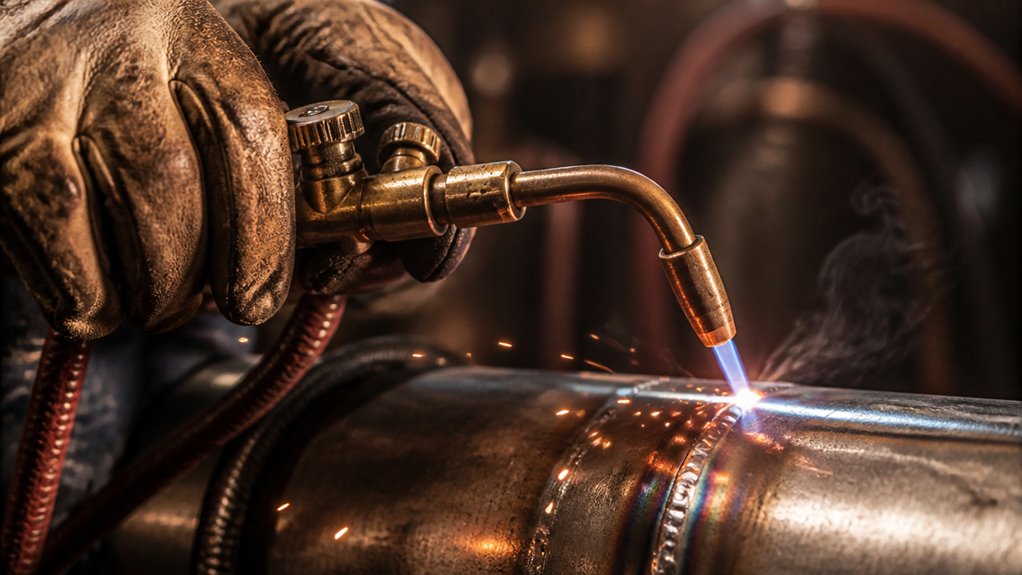
Set up your gas welding safely by storing cylinders 20 feet apart and securing them upright. Check for leaks with approved solutions before use.
Open valves slowly; acetylene only ¼ to ¾ turn. Ignite with a friction lighter, never matches.
Adjust the flame to a neutral cone and maintain steady torch control. Clean joints thoroughly for strong welds.
Wear flame-resistant gear and follow proper shutdown steps to avoid hazards.
Follow these basics closely, and you’ll master every critical welding phase.
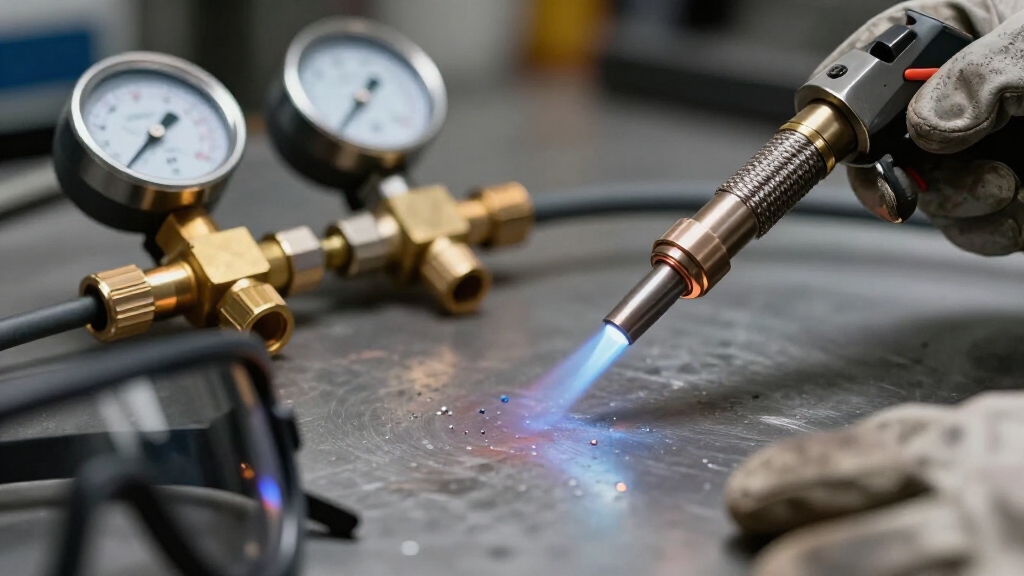
Before you begin welding, you must set up your gas welding equipment with strict adherence to safety protocols.
Store fuel gas and oxygen cylinders at least 20 feet apart or separated by a proper firewall to prevent hazardous interactions.
Secure each cylinder upright using chains or suitable restraints to eliminate tipping risks.
Position cylinders away from heat sources, sparks, flames, and high-traffic zones.
Inspect torches, hoses, regulators, and valves meticulously to ensure they’re leak-free and in peak condition before use.
Utilize only approved, intact equipment.
Always have a fire extinguisher readily accessible at your welding site for immediate response to potential fires.
This structured setup minimizes risks and establishes a controlled environment essential for safe and efficient gas welding operations.
Verify that flashback arrestors and dual check valves are installed and functioning properly to prevent flame propagation and ensure safety.
When you connect your gas welding equipment, always check all fittings and hoses with an approved leak-test solution to make certain there are no leaks that could lead to dangerous gas escapes.
Replace any hoses showing wear, cracks, or contamination immediately. When opening cylinder valves, stand to the side, then open slowly to prevent pressure surges.
For acetylene cylinders, open the valve only 1/4 to 3/4 turn and keep the wrench handy for rapid shutoff if needed.
Key points to control gas leaks and cylinder valves:
Inspect all connections with leak-test solution before lighting.
Replace compromised hoses without delay.
Open valves slowly and carefully, standing clear.
Limit acetylene valve opening and keep tools nearby for emergency shutoff.
Always use flashback arrestors on both oxygen and acetylene lines to prevent flame reverse flow and enhance safety.
Although lighting the flame requires careful attention, following the correct sequence guarantees safety and ideal flame control.
First, open the acetylene valve slowly, no more than 1/4 to 3/4 turn, and ignite it immediately using an approved friction lighter. Never use matches or butane lighters.
Then, gradually open the oxygen valve until you achieve a neutral flame, characterized by a well-defined inner cone without soot or feathering.
Adjust the oxygen and acetylene flow precisely to match your welding needs, ensuring stable combustion and avoiding a carburizing or oxidizing flame.
Always use flashback arrestors and check valves to prevent backflow.
Remember to maintain control and monitor flame characteristics continuously, adjusting gas flow as necessary for consistent, efficient welding.
Proper equipment setup, including checking regulator gauges and hose integrity, is essential to maintain consistent, high-quality welds.
Mastering flame control sets the foundation for welding strong joints. However, the quality of your weld ultimately depends on proper technique.
Before you start, clean the joint thoroughly and prepare edges, spacing, and alignment to guarantee a sound weld. Maintain a steady torch angle of around 45 degrees and adjust the distance to control heat input precisely.
Use a zigzag or circular motion to distribute heat evenly and keep the weld pool controlled. Avoid excessive size that can cause burn-through.
Focus on these key technique points:
Using the correct gas mixture is essential to avoid weld defects and ensure a strong bond.
This disciplined approach guarantees strong, reliable weld joints.
Properly wearing safety gear and correctly shutting down equipment are critical steps that protect you and your workspace from hazards associated with gas welding.
Wearing proper safety gear and correctly shutting down equipment are essential to prevent gas welding hazards.
Always wear flame-resistant clothing, preferably wool, along with leather gloves, a welding apron, spats, and a welding cap.
Avoid synthetic fabrics and open shoes to minimize burn risks.
Use approved eye protection and ensure ventilation is adequate.
When shutting down, close cylinder valves fully, starting with oxygen, then acetylene.
Bleed the lines to release pressure and prevent gas buildup.
Coil hoses neatly and store them securely.
Inspect the area for sparks or smoldering materials before leaving.
Store cylinders upright, capped, and separated by at least 20 feet or a firewall.
Use proper restraints to prevent tipping and transport cylinders on suitable trolleys without turning valves.
Regularly inspect welding equipment for damage and proper grounding to prevent electrical hazards.
You’ll find that steel, particularly low-carbon and mild steel, is best suited for gas welding because it melts at a manageable temperature and forms reliable joints.
About 85% of gas welding applications involve steel due to its versatility and weldability.
Cast iron and copper alloys can also be welded but require more skill and control.
Aluminum and stainless steel aren’t ideal since they need specialized processes for strong, defect-free welds.
Weather conditions markedly impact your gas welding performance.
Wind can blow away heat and disrupt the flame’s stability, causing uneven heating or flashbacks.
Cold temperatures slow metal heating and can cause condensation, leading to poor weld quality.
Humidity increases the risk of contamination and oxidation.
You need to work in a sheltered, well-ventilated area, protect your flame from drafts, and adjust flame settings to maintain consistent heat input under varying weather conditions.
You can’t use conventional gas welding underwater because the flame requires oxygen from the air, which water disrupts.
Instead, underwater repairs rely on specialized techniques like underwater arc welding that generate heat electrically and shield the weld with inert gas or flux.
If you try gas welding underwater, the flame extinguishes instantly, making it ineffective and unsafe.
You need to inspect welding torches regularly for leaks, cracks, or wear in hoses, valves, and regulators.
Clean torch tips to prevent clogging and guarantee proper gas flow.
Replace any damaged or worn parts promptly.
Always perform leak checks with approved solutions before use.
Store torches properly, keeping hoses coiled and avoiding kinks.
Routine maintenance guarantees safety, peak flame control, and prolongs the torch’s lifespan.
When welding in confined spaces, you must ensure proper ventilation to prevent hazardous gas buildup.
Use forced-air ventilation or respirators if necessary. Continuously monitor oxygen and gas levels with appropriate detectors.
Wear full protective gear, including flame-resistant clothing and eye protection.
Keep a fire extinguisher nearby and maintain clear communication with a safety attendant outside.
Always have an emergency escape plan and make certain all equipment is leak-free and ready before starting work.
Remember, “measure twice, cut once” applies just as well to gas welding.
By setting up your equipment carefully, checking for leaks, adjusting the flame properly, and using correct welding techniques, you guarantee strong, reliable joints every time.
Always wear your safety gear and shut down equipment correctly to protect yourself and extend tool life.
Follow these steps diligently, and you’ll weld efficiently and safely with confidence.