Phone:
(701)814-6992
Physical address:
6296 Donnelly Plaza
Ratkeville, Bahamas.

Phone:
(701)814-6992
Physical address:
6296 Donnelly Plaza
Ratkeville, Bahamas.

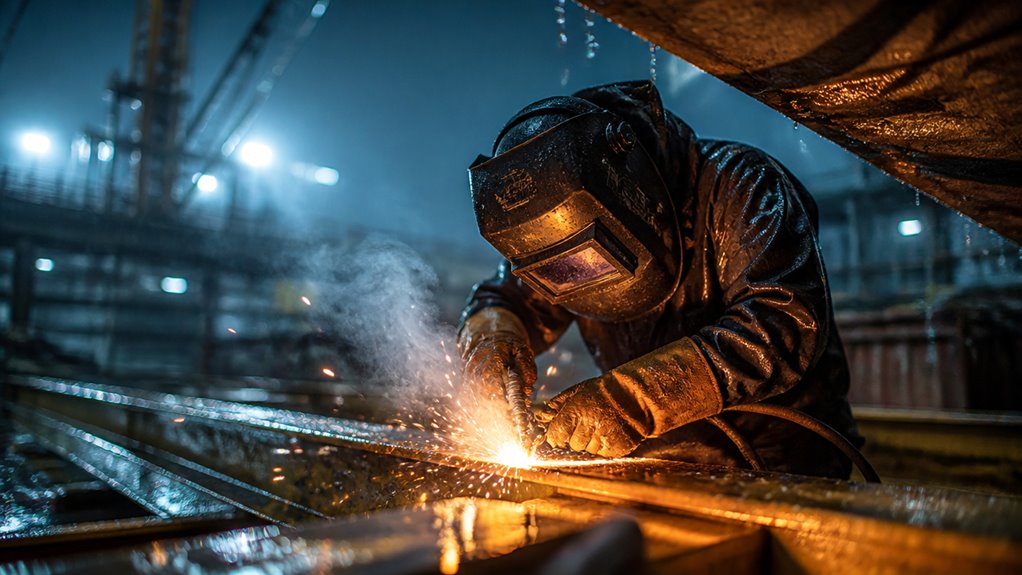
You can weld in the rain, but only by following strict safety protocols and using proper equipment.
Always wear insulated rubber gloves beneath leather gloves and rubber boots to reduce shock risk.
Set up a fireproof, ventilated shelter to keep equipment dry, and thoroughly dry surfaces and gear before welding.
Stick welding is preferred due to better arc stability in damp conditions.
Without these measures, electrocution, arc instability, and poor weld quality become serious risks.
More insights explain how to safely manage these challenges.
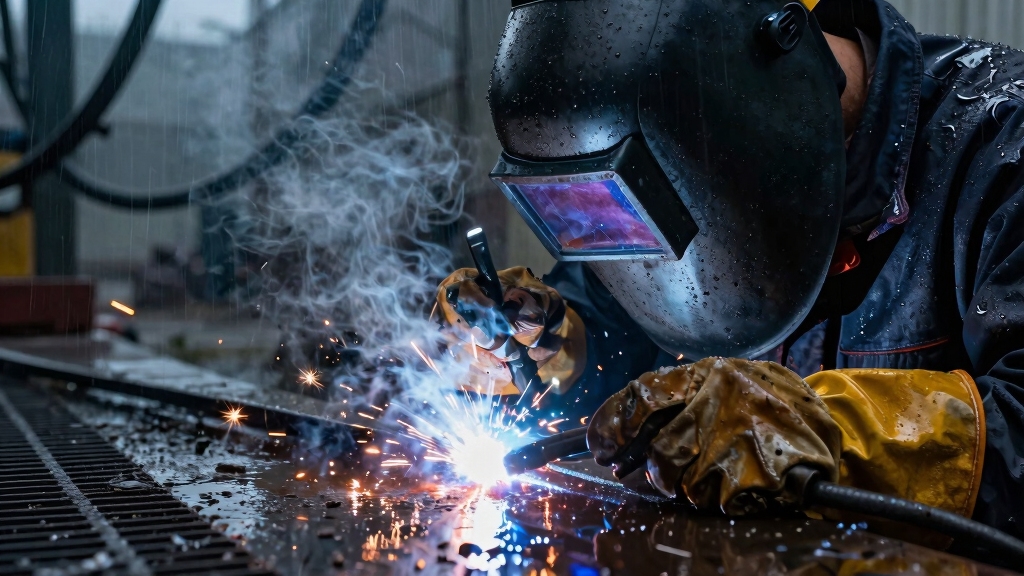
Although welding in wet conditions is sometimes unavoidable, you must recognize the heightened safety risks that come with moisture exposure.
Water dramatically increases the risk of electric shock because it conducts electricity from the welding machine directly to your body.
Wet gloves and boots reduce your insulation, allowing current to pass through more easily.
Additionally, water infiltrating damaged cables or exposed wires creates immediate electrocution hazards.
Slippery surfaces amplify the risk of falls while handling energized equipment, which can cause serious injuries.
You also face severe dangers during lightning storms if welding continues in active precipitation.
Understanding these specific risks is essential for maintaining safety and preventing potentially fatal accidents when welding in wet environments.
Wet skin dramatically lowers body electrical resistance, elevating shock risk significantly.
Hey there! So, if you’re planning to weld in the rain, the first thing you’ll want to do is set up a temporary shelter. Make sure it has a fireproof roof and walls to keep your welding area nice and dry.
Before you dive into welding, take a moment to dry off all the steel surfaces. You can use towels or cloths, or even a blow torch if you need to. Getting rid of that moisture is super important because it can really affect the quality of your welds and even pose safety risks.
Also, don’t forget about the ground and your equipment! Keeping everything dry helps reduce electrical hazards and makes your workspace much more stable. A safer setup means you can focus better on the task at hand. Happy welding!
Remember to use rubber gloves and boots in wet conditions to enhance your electrical safety.
Establishing a temporary shelter is essential for maintaining a safe welding environment during rain. You need a fireproof roof and partial walls to block moisture and reduce electrocution risk.
Position the shelter over your work area and welding machine, ensuring no water pools inside. Use durable, non-conductive materials to avoid hazards. Secure the shelter against wind to maintain stability.
Proper ventilation inside the shelter is crucial to control fume concentration and maintain air quality while welding in enclosed spaces.
| Factor | Impact on Safety | Emotional Response |
|---|---|---|
| Shelter Roof | Prevents rain contact | Relief from danger |
| Side Walls | Reduces wind-driven rain | Confidence in setup |
| Fireproof Material | Minimizes fire risk | Assurance of safety |
| Equipment Coverage | Protects welding tools | Trust in protection |
| Stability | Prevents collapse | Calmness under stress |
This setup directly lowers electrical and slip hazards in wet conditions.
Guaranteeing all surfaces are thoroughly dried before welding in rainy conditions markedly reduces electrical hazards and improves weld quality.
Start by removing all visible moisture from steel surfaces using absorbent cloths or towels, paying close attention to joints and edges where water tends to accumulate.
For residual dampness, apply a controlled heat source like a blow torch to evaporate moisture without overheating the metal.
Clear any standing water from the work area, including puddles underfoot and on equipment platforms, to minimize slip and shock risks.
Maintain a dry environment by positioning welding machines and cables away from wet zones.
Consistently inspect and dry gloves and boots, as damp personal protective equipment compromises insulation.
These surface drying techniques are critical to guaranteeing safe, stable arc formation and prevent defects caused by moisture intrusion during welding in rain.
Additionally, be aware that welding galvanized steel in wet conditions can increase the risk of inhaling zinc oxide fumes, so ensure proper ventilation and respiratory protection are in place.
Although welding in wet conditions poses unique hazards, selecting the correct personal protective gear markedly reduces the risk of electric shock and injury.
You must wear insulated rubber gloves beneath leather ones to maintain a dry, non-conductive barrier. Rubber work boots are essential to isolate your body from wet ground, and standing on a rubber mat adds further insulation.
Make sure all protective gear remains dry and intact, as compromised equipment drastically elevates electrocution risk. Inspect welding cables and leads rigorously for tears or exposed wires before use.
Your helmet and clothing should be water-resistant, preventing moisture from penetrating and interfering with your safety. By implementing this gear precisely, you greatly reduce electrical hazards inherent to welding in rainy environments while maintaining operational safety.
Regular inspection and proper grounding of welding equipment are critical to prevent electrical hazards when welding in wet conditions, ensuring a safer work environment with effective electrical safety.
When it comes to welding in rainy conditions, you’ll want to lean towards DC welding processes. Stick welding, or SMAW, is particularly stable and tends to be safer when things get a bit damp. Now, I know you might be thinking about MIG or TIG methods, but those can struggle in wet environments.
That said, even with stick welding, there are some important considerations. You can’t just keep working through heavy rain or when the ground is excessively wet. It’s crucial to recognize these limits to ensure you maintain both the quality of your welds and the safety of everyone involved. So, make sure to keep an eye on the weather and know when to pause your work! Stick welding’s use of flux-coated electrodes creates a protective gas and slag shield that helps prevent atmospheric contamination in damp or breezy conditions.
When welding in rainy conditions, selecting the appropriate welding technique is critical to maintaining both safety and weld quality. You need methods that minimize electrical hazards and maintain arc stability despite moisture.
Here are four welding techniques best suited for wet environments:
Additionally, electrodes with a cellulose-based flux provide chemical cleaning action that helps maintain arc stability and penetration even on rusted or contaminated surfaces.
Choosing these techniques optimizes safety and weld integrity under rainy conditions.
Since moisture markedly affects arc stability and safety, understanding the limits of various welding processes in rainy conditions is essential.
Stick welding (SMAW) stands out as the most reliable method under light rain or mist due to its robust arc and flux-coated electrodes that offer some moisture resistance.
Conversely, MIG and TIG welding require strictly dry environments. Their sensitivity to water compromises arc stability and weld quality, increasing defects like porosity and hydrogen-induced cracking.
DC welding processes generally provide better arc control and less susceptibility to arc blow in damp conditions, enhancing safety and consistency.
However, heavy rain or standing water mandates halting all welding activities regardless of method. Electrical hazards and weld integrity risks become unacceptable.
Always prioritize safety and process limitations when deciding to weld in wet weather. Proper grounding and dry work conditions are critical to preventing electric shock hazards in such environments.
Welding in wet conditions directly compromises weld integrity by introducing moisture into the arc and molten metal.
When you weld in the rain, water disrupts the stability of the arc, causing inconsistent heat input and penetration.
This leads to defects such as porosity and cracking.
Specifically, moisture can result in hydrogen entrapment, which weakens the weld after cooling.
To understand the impacts on weld quality, consider these critical effects:
Proper shielding gas coverage is essential to minimize porosity caused by moisture contamination during welding.
Moisture not only degrades weld quality but also elevates safety hazards, signaling clear points at which you must halt work.
Stop welding immediately if heavy rain saturates your workspace, creating puddles or standing water around your footing or equipment.
Wet ground markedly increases electric shock risk by lowering insulation between you and the earth.
Cease operations if your gloves, boots, or cables become wet or damaged, as compromised insulation can lead to electrocution.
Additionally, if visibility decreases due to precipitation or wind-driven rain disrupts the arc, weld integrity suffers, mandating a pause.
When lightning occurs, you must stop welding at once to avoid fatal hazards.
Recognizing these conditions and stopping promptly secures your safety and prevents weld defects caused by moisture intrusion.
Maintaining arc stability is critical, as weather disruptions like rain and wind can cause porosity and slag inclusions in the weld.
Welding in the rain can be tricky, but you can take some simple steps to keep yourself safe from electric shock. First off, make sure you’re wearing insulated gloves and rubber boots. These will help keep you properly insulated from any electrical currents.
Next, it’s super important to keep your equipment and workspace dry. Before you start welding, take a moment to inspect your cables and connections for any damage. This way, you’ll ensure that everything is in good shape and ready to go.
Frequently, electric shock hazards escalate when your gloves and boots become wet during welding in rainy conditions.
Maintaining dry, insulated gloves and boots is critical to minimize electrical conductivity and protect you from electrocution. To guarantee maximum safety, follow these key steps:
Maintain a dry workspace and equipment to drastically reduce the risk of electric shock while welding in rainy conditions. Water conducts electricity, increasing shock hazards when it contacts welding machines or cables.
You must make certain all surfaces, tools, and protective gear are moisture-free before striking an arc. Use absorbent materials or forced air to eliminate dampness promptly.
| Equipment | Condition Required |
|---|---|
| Welding Machine | Completely dry |
| Cables & Leads | Intact, no moisture |
| Work Surface | Free of water |
| Operator’s Gear | Dry and insulated |
Shielding your welding equipment from water damage requires deliberate placement and consistent vigilance. Water exposure can short-circuit electrical components and degrade insulation, risking both equipment failure and personal safety.
To protect your tools effectively, follow these technical steps:
These measures minimize electrical hazards and prolong equipment lifespan. Consistent application of these protocols guarantees operational reliability, prevents costly repairs, and maintains compliance with safety standards.
Don’t underestimate the cumulative impact of water exposure on sensitive welding apparatus.
Protecting your welding equipment from water damage directly relates to understanding the legal parameters of welding in wet conditions. Legally, OSHA doesn’t explicitly forbid welding in the rain, but it mandates strict safety measures to prevent hazards like electric shock.
As a welder or employer, you must comply with safety standards even if the act itself isn’t illegal.
| Regulation | Welding in Rain Allowed? | Safety Requirement | Enforcement Body | Notes |
|---|---|---|---|---|
| OSHA 29 CFR 1926.351 | Yes | Safety gear provision | OSHA | No explicit prohibition |
| OSHA 29 CFR 1926.354 | Yes | Electrical safety | OSHA | Focus on hazard prevention |
| OSHA 29 CFR 1926.406(c) | Yes | Safe work environment | OSHA | No bans on wet-weather welding |
| AWS Guidelines | Conditional | Avoid unsafe conditions | AWS | Emphasizes risk assessment |
| Employer Responsibility | Mandatory | Provide PPE and training | OSHA/AWS | Safeguard worker protection |
Although welding in the rain isn’t explicitly prohibited by federal regulations, you must rigorously implement safety measures to mitigate notable hazards such as electric shock and slip injuries.
To weld safely and effectively in wet conditions, you should:
Following these steps reduces electrocution risk, maintains arc stability, and prevents slip hazards.
Yes, welding rainwater can cause corrosion on metal over time.
When rainwater contacts freshly welded metal, it introduces moisture and contaminants that promote oxidation and rust formation.
This risk increases if the metal isn’t properly dried or protected immediately after welding.
You should make certain the weld area is thoroughly dried and apply protective coatings to prevent corrosion.
This helps preserve the weld’s structural integrity and longevity despite exposure to moisture.
Humidity in enclosed spaces during rain acts like a silent saboteur, subtly undermining your welds. You’ll find moisture condensing on metal and equipment, increasing the risk of hydrogen entrapment and porosity in the weld.
This elevates cracking potential and weakens structural integrity. To counter this, you must control humidity levels with ventilation or dehumidifiers.
Ensuring a dry environment stabilizes the arc and preserves weld quality and strength.
You won’t find welding certifications exclusively for wet conditions.
Instead, certifications like AWS D1.1 or API 1104 emphasize proper technique and safety under various environments.
To work safely in rain or moisture, you must integrate additional training on hazard recognition, PPE use, and environmental controls.
Employers typically provide site-specific wet condition protocols, but formal certifications focus on welding quality and safety standards broadly, not on weather-specific scenarios.
Welding in the rain doesn’t markedly increase fire hazards since moisture suppresses ignition sources.
However, wet conditions create electrical dangers that can indirectly lead to fires if equipment shorts or sparks ignite nearby combustible materials.
You must make certain the workspace is clear of flammable debris and that welding equipment remains dry and insulated.
Prioritize electrical safety over fire risk when welding outdoors during precipitation to maintain a controlled, safe environment.
For outdoor projects in drizzle, you should focus on stick welding (SMAW) and DC welding techniques. They offer better arc stability and resist arc blow in light moisture.
Avoid MIG and TIG welding since they require fully dry conditions. Also, make certain you use insulated gloves, rubber boots, and set up a fireproof shelter to minimize moisture exposure.
These steps help maintain weld quality and safety despite light rain conditions.
Welding in the rain raises your electric shock risk by up to 50%, making strict safety measures essential.
You need dry surfaces, proper gear, and suited welding methods to maintain weld integrity and protect yourself.
Following legal guidelines and shielding your equipment from moisture guarantees both safety and efficiency.
By understanding these factors, you can confidently manage wet conditions without compromising quality or risking injury.
Stay vigilant and prepared to weld safely in any weather.