Phone:
(701)814-6992
Physical address:
6296 Donnelly Plaza
Ratkeville, Bahamas.

Phone:
(701)814-6992
Physical address:
6296 Donnelly Plaza
Ratkeville, Bahamas.

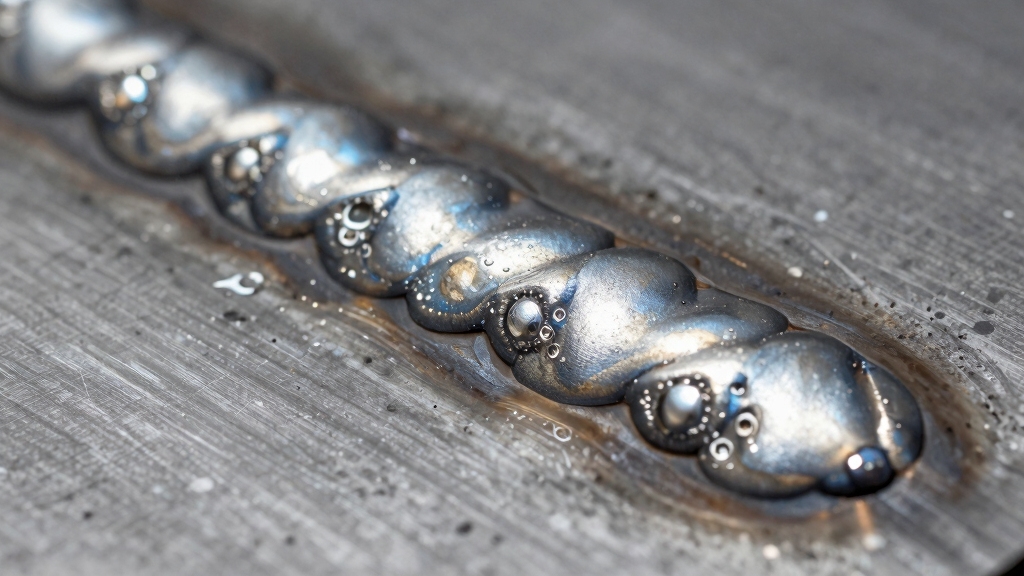
Porosity in welding means tiny gas pockets or voids trapped within the weld metal that reduce the effective cross-sectional area of your joint.
These hidden cavities act as stress concentrators, weakening strength and making your weld more prone to cracking, corrosion, and failure under stress.
Causes include poor shielding gas, contamination, or incorrect welding parameters.
Identifying and controlling porosity is essential for durable, high-quality welds.
Understanding its types and prevention methods will improve your weld integrity markedly.
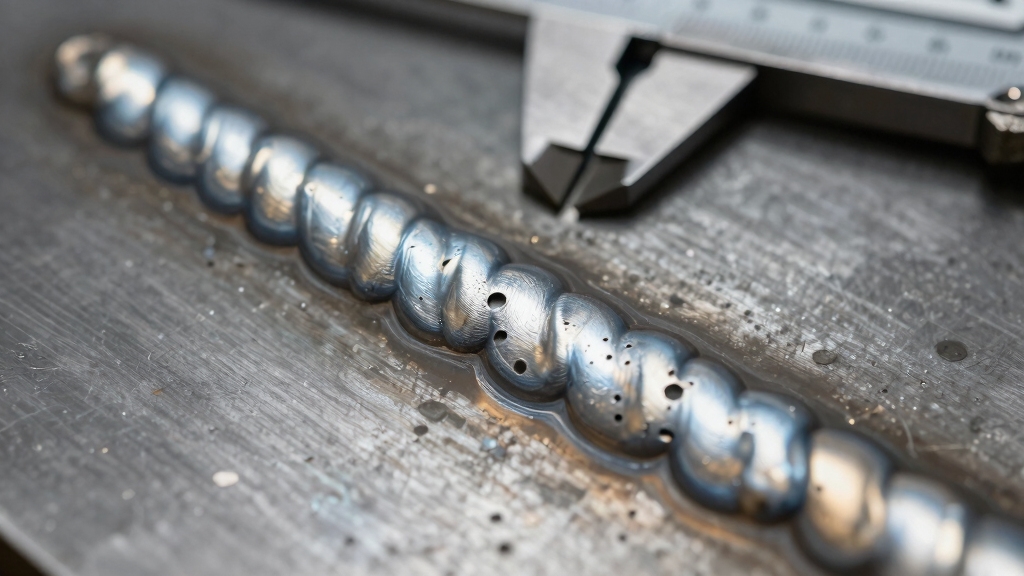
Porosity critically undermines weld quality by introducing gas pockets that reduce the effective cross-sectional area of the joint, compromising its structural integrity.
When these voids form during cooling, they create discontinuities that act as stress concentrators, even if not immediately visible.
You’ll find porosity in various forms: uniform fine pores, clustered groups, or surface pits. All indicate issues like insufficient shielding gas or contamination.
These microscopic or larger cavities disrupt load transfer and can initiate cracks under operational stresses.
Identifying porosity early is vital because it signals compromised fusion and potential failure points.
By understanding how trapped gases form and manifest, you can pinpoint process deficiencies and improve control measures.
This technical awareness helps maintain weld consistency and guarantees the joint meets stringent quality standards essential for reliable performance.
Effective non-destructive inspection methods ensure porosity and other defects are detected before compromising weld integrity.
When gas pockets form within a weld, they reduce the effective cross-sectional area, directly diminishing the joint’s tensile and yield strength.
These trapped voids act as stress concentrators, making the weld more susceptible to crack initiation under load.
You’ll find that porosity compromises structural integrity, leading to premature failure even if the weld looks sound externally.
Furthermore, internal porosity can accelerate corrosion by holding moisture and oxygen, further degrading durability.
This degradation is critical in pressure vessels, pipelines, and load-bearing joints where leak-tightness and strength are non-negotiable.
To maintain weld reliability, you must minimize porosity by controlling shielding gas coverage, cleanliness, and welding parameters.
Ignoring porosity risks costly rework, safety hazards, and reduced service life of your welded structures.
Porosity often results from moisture, rust, or incorrect shielding gas, creating gas pockets that reduce ductility and weld quality, so proper shielding gas selection is essential.
Although gas pockets universally weaken welds, their forms and locations vary markedly. This variation affects detection and remediation strategies.
Gas pockets always weaken welds, but their diverse forms and locations require tailored detection and repair approaches.
You’ll encounter uniform porosity as fine, evenly distributed pores, typically from low shielding gas flow. Cluster porosity appears as grouped voids localized in one area, often due to contamination or moisture.
Surface porosity manifests as visible pits or holes on the weld bead, indicating inadequate shielding or surface impurities. Subsurface porosity hides beneath the surface, requiring non-destructive testing for detection.
Crater porosity forms at arc termination points from improper crater fill techniques. To identify these types, rely on visual inspections for surface defects.
Employ ultrasonic or radiographic testing for subsurface voids. Recognizing the specific porosity type guides you in selecting targeted corrective actions to restore weld integrity effectively.
Proper shielding gas flow rates are essential to prevent porosity caused by atmospheric contamination.
Since gas entrapment directly undermines weld quality, understanding its root causes is essential for any welder aiming to produce defect-free joints.
You must ensure proper shielding gas coverage. Low flow rates, leaks, or drafts can introduce air, leading to porosity.
Contaminants like oil, grease, rust, or moisture on the base metal or filler release gases into the molten pool, causing voids.
Inadequate welding parameters, such as incorrect voltage, amperage, or travel speed, trap gas bubbles instead of allowing them to escape.
Additionally, moisture absorbed by electrodes, wire, or metal introduces hydrogen, exacerbating porosity.
Nitrogen and oxygen absorption due to insufficient shielding also contribute.
Improper control of reactive gases like oxygen percentages can increase porosity by altering arc stability and weld chemistry.
To effectively prevent porosity in your welds, you must control the shielding gas environment meticulously. Assure correct flow rates without leaks or drafts that allow air infiltration.
Additionally, maintaining clean base metals and filler materials is critical. Contaminants like oil, rust, and moisture introduce gases that cause porosity.
You also need to optimize welding parameters, including voltage, amperage, and travel speed, to minimize gas entrapment within the molten pool.
Finally, assure electrodes and wire are dry. Control humidity in your workspace to reduce hydrogen absorption.
Key preventive measures include:
It is also important to use proper ventilation and respiratory protection to minimize inhalation of harmful welding fumes that can be released during welding.
You can detect porosity in welding non-destructively by using visual inspection to spot surface pores or pits on the weld bead.
For subsurface porosity, rely on ultrasonic testing or radiographic inspection, which reveal hidden gas pockets without harming the weld.
Dye penetrant and magnetic particle testing also help identify surface-breaking defects.
These methods comply with standards like AWS D1.1, ensuring accurate detection while preserving weld integrity.
You’ll find acceptable porosity limits specified primarily in AWS D1.1 and ASME Section IX codes.
These standards set strict criteria on pore size, distribution, and total area to guarantee weld integrity.
When you weld, adhere to these codes by controlling porosity within allowed thresholds to prevent structural weaknesses.
Using these guidelines helps you maintain compliance and guarantees safety, especially in critical applications like pressure vessels and pipelines.
You’ll find porosity most common in MIG, TIG, stick, and flux-cored welding processes.
MIG and flux-cored often suffer from poor shielding gas coverage or contaminated wire, causing gas entrapment.
Stick welding can trap moisture in electrodes, leading to hydrogen porosity.
TIG welding, while cleaner, isn’t immune, especially if shielding gas is disrupted.
You need to control shielding, clean materials, and optimize parameters carefully to minimize these defects across all processes.
Of course, you can just ignore porosity and hope it fixes itself. Oh wait, it doesn’t.
You need to grind out the affected weld metal, inspect thoroughly, and re-weld the joint properly. Spot repairs work for small areas, but extensive porosity demands complete removal and re-welding to restore strength and integrity.
Skipping this risks cracks and leaks, so don’t gamble. Address porosity defects methodically with proper cleaning and parameter control.
Humidity introduces moisture that you can’t always see but can drastically increase porosity during welding.
When moisture-laden electrodes, wire, or base metal heat up, they release hydrogen gas into the molten weld pool.
This trapped hydrogen forms gas pockets or voids, causing internal and surface porosity.
You’ll notice increased pore clusters and compromised weld integrity if you don’t control humidity or store materials properly in dry conditions.
When you spot porosity in your welds, it’s like tiny gas bubbles trapped beneath a glassy surface. This weakens the entire structure.
Understanding its causes and types lets you tackle the root problems head-on. By controlling your environment and technique, you’ll create welds as solid and seamless as forged steel.
Strong, durable, and reliable welds are essential. Don’t let unseen imperfections undermine your work; instead, weld with precision and clarity every time.