Phone:
(701)814-6992
Physical address:
6296 Donnelly Plaza
Ratkeville, Bahamas.

Phone:
(701)814-6992
Physical address:
6296 Donnelly Plaza
Ratkeville, Bahamas.

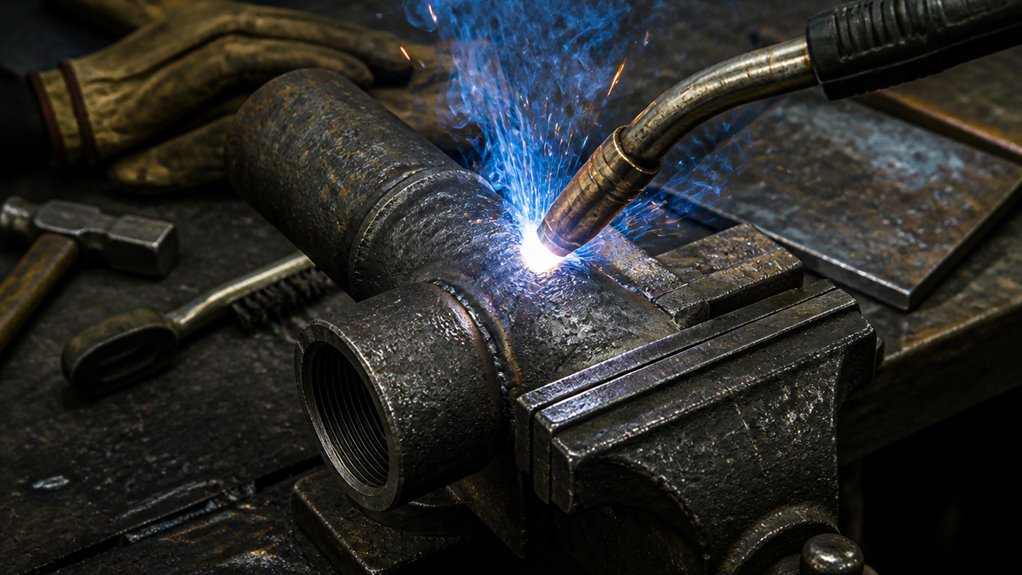
Yes, you can weld cast iron with a MIG welder if you use low heat input and nickel-based filler metals designed for ductile repairs.
Employ short-circuit transfer mode to minimize heat-affected zone size and reduce the risk of cracking.
Preheat the workpiece to control thermal stress and maintain interpass temperatures below 1450°F.
Careful joint preparation and controlled cooling are also essential for sound results.
Exploring these methods further will help you optimize your cast iron welding process.
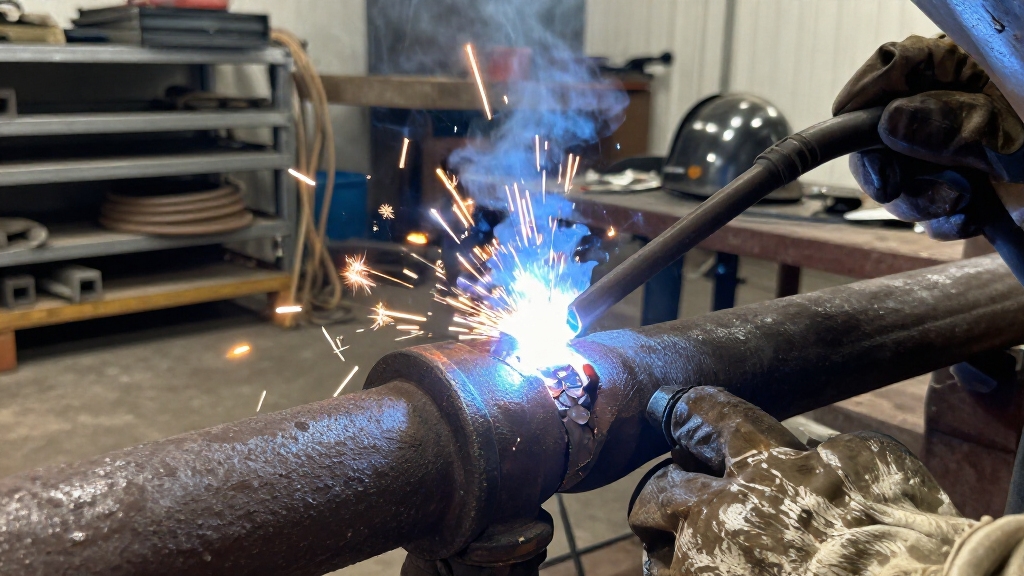
Although MIG welding cast iron presents unique challenges compared to steel, you can successfully weld cast iron using a MIG welder under appropriate conditions.
MIG welding cast iron is challenging but achievable with the right techniques and careful control.
The key lies in selecting proper consumables: nickel-based, steel, or copper-based wires matched to your repair requirements.
You’ll want to use short-circuit dip transfer mode because it minimizes heat input and limits base-metal melting, reducing the heat-affected zone.
Avoid spray transfer, as its higher penetration increases cracking risk.
Precise heat control during welding is critical; excessive heat input compromises the casting’s integrity.
You must manage parameters carefully, focusing on low heat input and controlled bead placement.
While MIG welding is more difficult on cast iron than steel, disciplined technique and process control make it a viable method for targeted repairs like crack restoration or pit filling.
Preheating cast iron between 250–450°F before welding is recommended to reduce thermal shock and improve joint quality.
Understanding which types of cast iron respond well to MIG welding helps you optimize repair outcomes and avoid common pitfalls.
You’ll find that gray and ductile cast irons are suitable candidates due to their microstructures, which tolerate the thermal cycles and filler metal interactions better than others.
Gray cast iron’s graphite flakes reduce brittleness, while ductile cast iron’s nodular graphite enhances toughness, improving weldability.
Conversely, white cast iron’s hard, brittle cementite microstructure resists welding and is generally considered unsuitable.
Additionally, ferritic and pearlitic cast irons vary in weld response, requiring tailored welding parameters.
When selecting cast iron for MIG welding, focus on these types and avoid complex fabrications involving multiple castings.
These increase risks of cracking and weld failure.
This targeted approach guarantees you achieve sound, durable welds with minimal defects.
Preheating cast iron to 500–600°F before welding is critical to reduce thermal stresses and minimize cracking risks.
Preheating cast iron before MIG welding is really important. It helps reduce thermal stress and cuts down on the chances of cracking in the heat-affected zone. You want to aim for a preheat temperature between 500 and 1200°F. Of course, the exact temperature depends on the type and thickness of the cast iron you’re working with.
Keeping that temperature under control is key. It ensures that the cooling rates are slower, which ultimately leads to better weld integrity. So, taking the time to preheat can make a big difference in the quality of your weld! Controlled cooling methods like burying the weld in dry sand further help prevent thermal shock and microstructural changes.
When welding cast iron with a MIG welder, preheating plays a crucial role in preventing cracking and ensuring weld integrity. It helps slow the cooling rate and reduces thermal stresses that cause the brittle heat-affected zone (HAZ) to crack.
Preheating also minimizes temperature gradients, lowering residual stress concentration.
| Benefit | Explanation |
|---|---|
| Crack Prevention | Reduces thermal shock and stress |
| Weld Integrity | Promotes uniform fusion and metallurgical stability |
| Heat Control | Limits overheating and excessive melting |
| Stress Reduction | Lessens residual stresses in the HAZ |
| Cooling Rate | Slows cooling, avoiding brittle microstructures |
Maintaining a preheat temperature between 400°F and 1200°F is critical to reduce thermal stresses and prevent the formation of brittle white cast iron during welding.
Although preheating is widely recognized as essential for welding cast iron, selecting the ideal preheat temperature directly influences the success of the weld and the minimization of cracking risk.
You need to carefully control this temperature based on the cast iron type and thickness to guarantee peak results. Typically, preheat ranges from 500°F to 1200°F (260°C to 650°C) depending on the application.
Key reasons why peak preheat matters include:
Maintaining the manifold temperature above approximately 250°C during welding is critical to avoid rapid cooling and the formation of new cracks, ensuring a more durable repair with proper heat management.
When it comes to choosing the right filler metal for MIG welding cast iron, you really want to take your time with this decision. It’s crucial to consider what your repair needs and what kind of weld properties you’re aiming for.
Now, nickel-based wires are often a go-to choice because they provide excellent crack resistance and machinability when it comes to cast iron repairs. However, it’s also worth noting that steel and copper options might be a better fit for specific situations.
Ultimately, matching your filler metal to the base material and the application at hand is key. Doing so ensures that you get the best performance out of your joint and helps it last longer. For MIG welding cast iron, using ERNi55 or ENi-Cl nickel-based wires is recommended to achieve ductile, crack-resistant welds.
Selecting the right filler metal is essential for achieving durable, crack-resistant welds in cast iron repairs using MIG welding. Nickel-based wire stands out for its compatibility with cast iron’s unique properties, offering enhanced weld integrity and machinability.
When you choose nickel wire, you benefit from:
These advantages stem from nickel’s ability to accommodate cast iron’s brittleness and thermal behavior. This minimizes heat-affected zone damage. By selecting nickel-based wire, you guarantee stronger, longer-lasting repairs tailored to cast iron’s demanding metallurgy. This also reduces costly rework associated with inferior filler metals. Additionally, precise control of weld parameters such as heat input and cooling rate further enhances joint quality and reduces cracking risks.
Nickel-based wire offers excellent crack resistance and machinability. Steel and copper-based filler metals still hold value depending on your repair requirements.
Steel wire, while generally less crack-resistant, can be suitable for temporary or non-critical repairs where cost is a factor. Its higher hardness may increase the risk of cracking, so strict heat control and preheating become vital.
Copper-based fillers provide superior ductility and corrosion resistance. This makes them ideal for cast iron components exposed to corrosive environments or thermal cycling. However, copper’s lower strength limits its use in load-bearing repairs.
When choosing between steel and copper, assess the mechanical demands, thermal exposure, and corrosion factors of your application carefully. Your filler metal choice markedly impacts the weld’s durability and performance under operational stresses. For improved outcomes, consider using nickel-based fillers which enhance ductility and reduce cracking susceptibility during welding.
Several factors determine the best filler metal choice for MIG welding cast iron, including the type of repair, mechanical requirements, and thermal conditions.
You need to select a filler that matches the repair’s demands while minimizing cracking risks and ensuring good machinability.
Nickel-based wires often provide superior crack resistance and thermal compatibility, especially for critical repairs.
Steel and copper-based fillers can be used selectively but may compromise joint integrity or appearance.
Consider these when choosing your filler:
Choosing the correct filler is vital for a durable, reliable cast iron weld.
Nickel-based fillers are preferred because they reduce brittleness and better match the mechanical properties of ductile iron, helping to minimize the risk of cracking during welding and cooling filler selection.
When welding cast iron with a MIG welder, controlling heat input and cooling rates is essential to prevent cracking and distortion.
You need to maintain low heat input by using short-circuit transfer mode to minimize the heat-affected zone.
Preheat the casting uniformly to the recommended range (typically 500–1200°F) to slow the cooling rate and reduce thermal stresses.
Avoid exceeding 1400–1450°F to prevent entering the critical temperature range where microstructural changes occur.
After welding, cool the part slowly and uniformly, ideally in an insulated environment, to reduce residual stresses and minimize crack formation.
Rapid temperature changes cause thermal shock, so controlled post-weld cooling is as crucial as preheating.
You must strictly monitor temperature throughout the process to guarantee consistent thermal management and weld integrity.
Proper preparation steps such as drilling crack stops and grinding a uniform V-groove are also critical to reduce stress concentration and improve weld quality during repair of cast iron. Preparation procedures
Prepare the joint meticulously to optimize MIG welding results on cast iron. Proper preparation minimizes defects and cracking risks by guaranteeing peak fit and cleanliness.
Before welding, remove the casting skin to expose sound metal. Clean the weld area thoroughly to eliminate rust, oil, or dirt.
Use a V-shaped or U-shaped groove to promote adequate weld penetration without excessive heat input. Achieve precise fit-up to reduce stress concentrations and distortion during welding. Avoid deep penetration, as cast iron’s sensitivity to heat can cause cracking.
Key joint preparation steps include:
These steps enhance weld integrity and reduce the likelihood of failure.
Mastering MIG welding techniques for cast iron repairs demands careful control of heat input and welding parameters to minimize cracking and distortion.
Effective MIG welding on cast iron requires precise heat and parameter control to prevent cracking and distortion.
You should use the short-circuit dip transfer mode to limit heat-affected zone size and avoid spray transfer’s deep penetration.
Preheat the casting uniformly to 500–1200°F, depending on thickness and cast iron type, to reduce thermal stress.
Keep interpass temperatures steady and below 1450°F to prevent critical phase transformations.
Remove the casting skin and prepare a V- or U-groove joint for optimal fusion and reduced stress concentration.
Utilize nickel-based filler metals for improved crack resistance and machinability.
Control cooling rates by applying slow, uniform post-weld cooling to mitigate HAZ cracking.
These precise steps guarantee durable, high-quality MIG welds on cast iron repairs.
You need to wear appropriate PPE, including welding helmets with proper filter lenses, heat-resistant gloves, and flame-retardant clothing.
Make sure adequate ventilation or respiratory protection to avoid inhaling hazardous fumes from cast iron and filler metals.
Control heat input carefully to prevent overheating and cracking.
Keep your work area clean and free of flammable materials.
Always inspect equipment before use and follow standard welding safety protocols to minimize risks during MIG welding of cast iron.
You can weld cast iron with a MIG welder outdoors, but it’s not a walk in the park.
Outdoor conditions like wind can disrupt shielding gas coverage, causing porosity and weak welds.
You’ll need windbreaks or enclosures to maintain gas flow and consistent heat control, which are vital for managing the cast iron’s thermal sensitivity.
You should expect a MIG welded cast iron repair to cool slowly over several hours, often 6 to 12 hours or more, depending on casting size and thickness.
Controlled, gradual cooling is critical to minimize thermal stress and reduce crack risk in the heat-affected zone. Rapid cooling can induce brittleness.
For larger or highly stressed castings, you might need to extend cooling time or use insulation to maintain uniform temperature throughout the weld area.
Imagine your weld cracking like a fragile ice sculpture under heat.
Common signs of a poor MIG weld on cast iron include visible cracks, excessive porosity, and spatter around the weld bead.
You’ll notice inconsistent bead shape, lack of fusion, or burn-through caused by excessive heat input.
Discoloration and warping also indicate overheating or poor heat control.
These defects compromise strength and durability, signaling that your welding parameters or preparation need adjustment.
Yes, post-weld machining is often necessary after MIG welding cast iron to restore dimensional accuracy and remove weld irregularities.
You’ll need to machine the weld bead to match original contours and ensure proper fit-up. Cast iron welds can have uneven surfaces or minor distortions.
Machining also helps eliminate stress concentrators and improve fatigue resistance, contributing to the overall integrity and functionality of the repaired component.
You can successfully MIG weld cast iron if you understand its nuances.
For example, a mechanic repairing a cracked engine block preheats the part and uses nickel-based filler metal, controlling cooling to prevent fractures.
By preparing joints meticulously and managing heat, you minimize risks like cracking and porosity.
With these precise techniques, MIG welding cast iron becomes a reliable solution, ensuring structural integrity and lasting repairs.