Phone:
(701)814-6992
Physical address:
6296 Donnelly Plaza
Ratkeville, Bahamas.

Phone:
(701)814-6992
Physical address:
6296 Donnelly Plaza
Ratkeville, Bahamas.

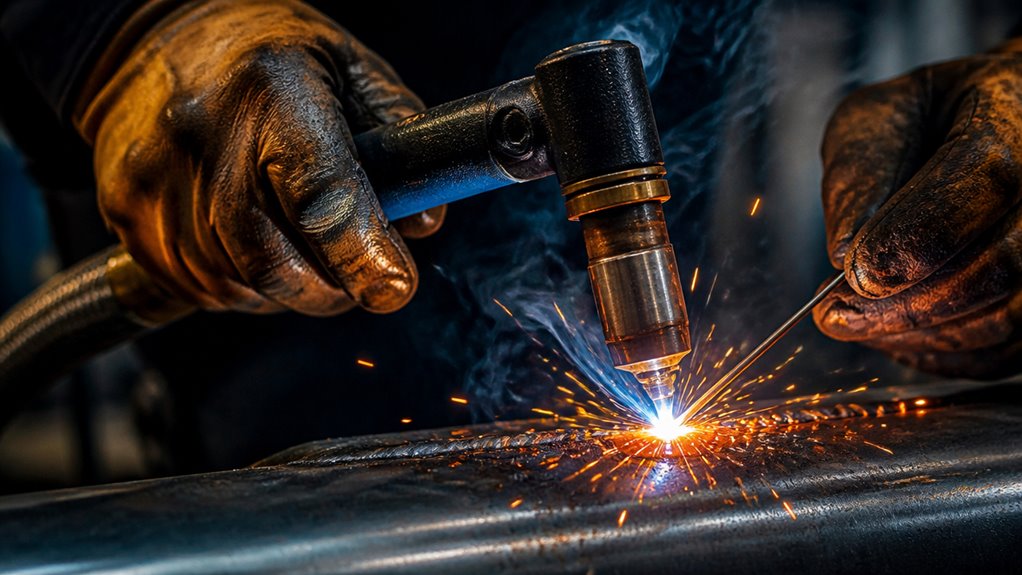
For best Bernard welding, select contact tips sized to match your wire diameter precisely. Inspect them regularly for wear or spatter buildup.
Use drive rolls with grooves suited to your wire type. Adjust tension just past slip, ensuring a clean, straight wire path.
Maintain tight, clean electrical connections. Choose a gun matching your amperage and duty cycle needs.
Control your travel angle for bead consistency. Always follow safety and maintenance protocols to minimize downtime.
You’ll find additional key techniques and troubleshooting insights ahead.
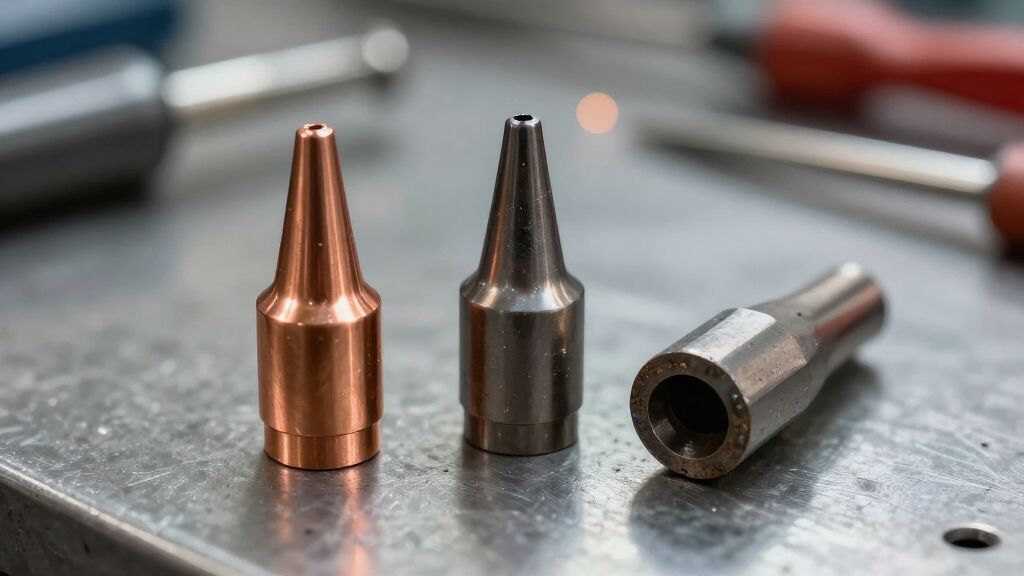
When you choose Bernard contact tips, size them precisely to match your wire diameter to guarantee consistent feeding and stable arc performance. Note that copper and chrome zirconium tips often need to be undersized relative to wire size. For example, use a 0.039-inch tip with a 0.045-inch wire to reduce feeding issues and arc instability.
Before each welding session, inspect tips for bore enlargement, spatter buildup, or signs of internal arcing. Replace tips if the bore becomes oval, markedly enlarged, or visibly damaged to maintain weld quality.
Also, select the correct contact tip recess for your application. An appropriate recess improves arc stability and weld consistency by optimizing electrical contact and wire guidance through the tip. Proper sizing and inspection are essential for precision welding outcomes.
Regular maintenance and precise size selection help prevent micro-arcing and ensure consistent welding performance.
To set up wire feeding for smooth Bernard welding, start by picking drive rolls that match your wire diameter. This is super important because it helps ensure consistent feeding without slipping or crushing.
Next, when you adjust the wire tension, aim for about half a turn past the point where you notice slippage. A good tip is to feed the wire into a gloved hand to see if it curls properly. That way, you can confirm everything’s in order.
Finally, take some time to optimize the wire path. Try to minimize any bends and friction, as this can really help reduce resistance and wear. In the end, it all leads to smoother delivery!
Be sure to select the proper roller groove type based on your wire to prevent slippage and deformation during feeding.
Select the proper drive roll type and size to guarantee consistent wire feeding and reduce feeding resistance in Bernard welding setups. Match the drive roll groove profile to the wire type: V-groove for solid wire, U-groove for soft or flux-cored wire, and knurled for hard wires. This helps prevent slipping or deformation.
Choose the roll diameter to correspond with wire diameter. Oversized rolls can flatten wire, causing feeding issues, while undersized rolls increase pressure and wear. Inspect rolls regularly for wear or damage that may cause inconsistent feed rates or wire deformation.
Confirm the drive roll surface is clean and free of debris to maintain friction without excessive pressure. Correct drive roll selection minimizes feeding resistance and stabilizes wire delivery. This enhances overall weld quality by preventing burnbacks and feed interruptions.
Additionally, ensuring the drive roll and wire are properly matched helps maintain wire feed stability, which is crucial for consistent amperage and weld penetration.
Dialing in the correct wire tension is critical to achieving smooth, consistent wire feeding in Bernard welding systems.
You want to adjust the drive roll tension just enough to prevent wire slippage without deforming it.
Start by increasing tension until the wire slips, then back off about half a turn.
Feed the wire into your gloved hand; it should curl naturally without flattening or slipping.
Excessive tension causes wire deformation, leading to feeding issues and arc instability.
Too little tension allows the wire to slip, causing inconsistent feed rates.
Regularly verify tension, especially after changing wire types or diameters.
Proper tension guarantees steady wire delivery, reduces downtime, and improves weld quality.
Avoid overtightening, as it accelerates consumable wear and increases feed resistance within the gun assembly.
Additionally, maintaining a clean and well-maintained torch, including the copper components, helps ensure consistent wire feed and arc stability.
After setting the proper wire tension, focus on optimizing the wire path to guarantee smooth feeding and minimize resistance. A straight, unobstructed wire path reduces friction and wear, ensuring consistent wire delivery.
Pay close attention to contact tip sizing and condition. An undersized or worn tip can cause feeding issues and arc instability.
To optimize your wire path, follow these key steps:
Regularly cleaning the contact tip and nozzle is essential to prevent spatter buildup and maintain arc stability.
These adjustments improve feed reliability and weld quality.
Regularly tightening all electrical connections is essential to maintain welding circuit integrity and prevent performance issues. Loose or dirty connections increase resistance, causing voltage drops and heat buildup that degrade weld quality and damage equipment.
You need to inspect feeder connections and ground clamps frequently, ensuring they’re secure and placed on clean, unpainted metal surfaces close to the workpiece. Also, keep consumable threads tight and clean during replacements to minimize electrical resistance and wear.
Neglecting these steps can result in erratic arc behavior and reduced machine lifespan. By systematically checking and tightening every connection point, you maintain consistent current flow, reduce downtime, and enhance overall welding reliability.
This disciplined approach safeguards the welding process and optimizes operator efficiency. Additionally, regularly testing ground connection resistance with a multimeter ensures near zero ohms for optimal conductivity.
Maintaining secure electrical connections sets the stage for optimizing your welding setup by guaranteeing consistent power delivery.
Secure electrical connections are essential for reliable power delivery and optimal welding performance.
To match your Bernard gun effectively to material and weld type, focus on these critical factors:
Additionally, maintaining proper stickout length between 3/8” and 1/2” for 0.030” wire is essential for stable arc performance and consistent heat input.
Mastering welding techniques with Bernard welders hinges on controlling key variables such as contact-tip-to-work distance, travel angle, and wire positioning.
Maintain a contact-tip-to-work distance of 3/8 to 1/2 inch for short-circuit welding, extending to approximately 3/4 inch for spray transfer to guarantee arc stability.
Adjust your travel angle strategically: a push angle near 10 degrees yields wider beads with less penetration, while a pull angle of the same degree increases penetration and narrows the bead.
Direct the wire precisely at the weld pool’s leading edge to optimize bead placement and control.
Additionally, regularly inspect contact tips for wear or deformation to prevent arc instability and maintain consistent weld quality with Bernard equipment.
Proper contact tip maintenance is essential to extend tip life and ensure flawless finishes in every weld.
When working with Bernard welding tools, you need to gear up with proper personal protective equipment (PPE) and follow strict safety protocols to minimize exposure to hazards.
Prioritize the following key safety measures:
You know, it’s really important to inspect those contact tips regularly. Keeping an eye on them for any wear or damage will help you maintain consistent arc stability.
Plus, don’t forget to clean all the electrical connections! This simple step can prevent resistance and overheating, which can lead to annoying voltage drops.
And hey, if you ever notice any blockages in the liner, just grab some compressed air to clear them out. This will ensure smooth wire feeding and help reduce any potential downtime.
Trust me, a little maintenance goes a long way! Regular equipment maintenance supports consistent spatter outcomes and smoother welding.
Regularly inspecting contact tips is essential to maintaining consistent weld quality and preventing unexpected downtime. You should carefully check each tip before welding sessions to identify wear or damage that affects wire feeding and arc stability.
Focus on these key points:
Adhering to these inspection criteria helps maintain reliable wire feeding and stable arcs. This minimizes interruptions and enhances overall welding performance.
Tighten and clean all electrical connections to maintain peak circuit performance and prevent heat buildup that can lead to equipment failure.
Regularly inspect feeder connections for looseness or contamination, as even slight resistance increases voltage drops and thermal stress.
Verify that the ground clamp contacts clean, bare metal close to the workpiece to guarantee minimal circuit resistance and stable arc characteristics.
During consumable replacements, clean threads and mating surfaces thoroughly to avoid corrosion or oxidation, which degrade electrical continuity.
Use appropriate tools to secure all connections firmly without over-tightening, which can damage components.
Implement a routine maintenance schedule focusing on these checks to reduce unexpected downtime and extend equipment lifespan.
Precise attention to electrical integrity directly optimizes welding quality and operational reliability.
Maintaining clean and secure electrical connections sets the stage for consistent wire feeding.
However, even the best connections won’t prevent liner blockages if the liner isn’t properly maintained.
Liner blockages cause feeding resistance and downtime, so you must clear them regularly.
Here’s how you can do it efficiently:
Incorporating these steps into your regular maintenance routine will reduce feeding interruptions and extend consumable life.
Identify common issues early by systematically inspecting your Bernard welding setup, focusing on contact tip wear, wire feeding irregularities, and electrical connection integrity.
Check contact tips for enlarged or oval bores and replace them if worn to prevent arc instability.
Verify wire feeding by adjusting drive roll tension; set it about half a turn past slippage. Ensure the wire feeds smoothly without kinks.
Maintain a straight wire path and use appropriate gun and consumables for your wire size.
Inspect electrical connections regularly; tighten cables and clean contact points to avoid voltage drops and heat buildup.
Position the ground clamp close to clean metal near the workpiece.
You’ll notice that using properly sized and undamaged welding tips directly improves your weld’s aesthetics.
When tips wear or bore sizes enlarge, wire feeding becomes inconsistent, causing spatter and irregular arc stability. This results in rough, uneven beads and surface defects.
You can’t just slap any tip on any wire and expect perfection. That’s welding chaos!
Bernard tips are engineered for specific wire materials like copper or chrome zirconium, optimizing feed and arc stability.
Using them with incompatible wire types risks poor weld quality, tip wear, and feeding issues.
The lifespan of a typical Bernard contact tip varies based on welding conditions but generally lasts between 5 to 20 hours of arc time.
You’ll want to monitor wear indicators like bore enlargement, spatter buildup, or internal arcing marks.
Replace the tip once the bore becomes oval or markedly enlarged to maintain consistent wire feeding and arc stability.
Proper sizing and routine inspection are key to extending tip life and optimizing weld quality.
Think of Bernard welding tips as the precise gears in a high-tech machine. They’re designed to integrate smoothly with robotic welding systems.
You’ll find they’re compatible, offering consistent wire feeding and reliable arc stability essential for automation.
Their design supports tight tolerances and repeatability, minimizing downtime.
When you match the right tip size and material with your robot’s parameters, you optimize performance and extend consumable life effectively in automated environments.
You should store welding tips in a clean, dry environment to prevent corrosion and contamination.
Keep them organized in dedicated containers or compartments to avoid physical damage and deformation.
Avoid stacking tips directly on each other, which can cause burrs or distortion.
Regularly inspect stored tips for signs of wear or damage before use.
Maintaining this controlled storage minimizes performance issues and guarantees consistent welding quality.
To excel with Bernard welding, you must choose and inspect contact tips carefully. Set up wire feeding precisely and tighten electrical connections securely.
You need to match your gun to the material and weld type accurately. Master welding techniques consistently and stay safe rigorously.
Perform regular maintenance diligently and troubleshoot issues promptly. By following these steps methodically, you guarantee peak performance, maximize efficiency, and maintain welding reliability each time you work with Bernard tools.