Phone:
(701)814-6992
Physical address:
6296 Donnelly Plaza
Ratkeville, Bahamas.

Phone:
(701)814-6992
Physical address:
6296 Donnelly Plaza
Ratkeville, Bahamas.

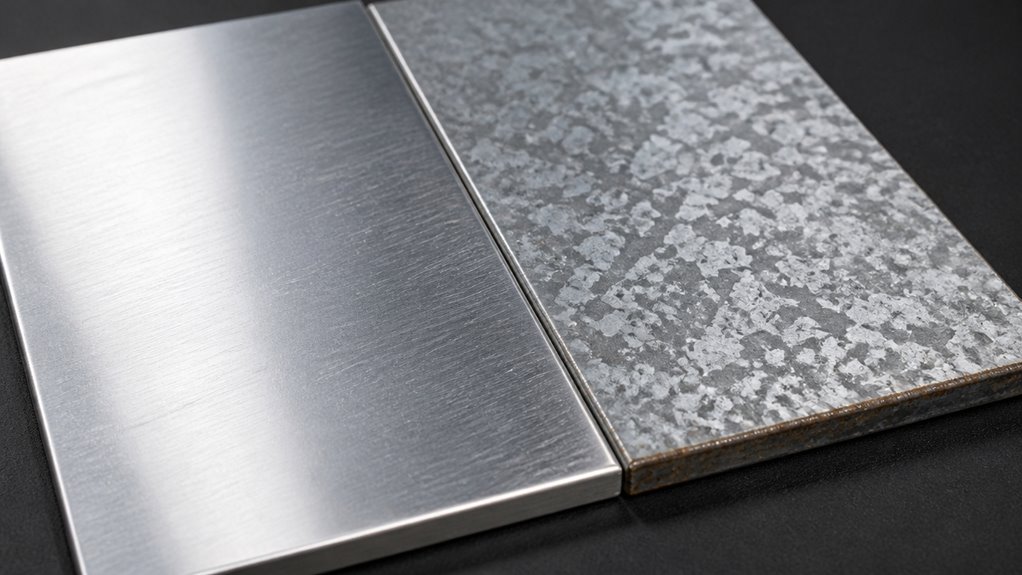
You’ll want aluminized steel for applications needing high heat resistance and radiant heat reflection. Its aluminum-silicon coating withstands temperatures up to 1250 °F and resists corrosion in harsh environments.
Galvanized steel offers cost-effective corrosion protection via sacrificial zinc but degrades faster under heat and chloride exposure. Its protection suits moderate climates and general outdoor use.
Understanding these differences helps you select the right steel for your specific environmental and thermal demands.
| Feature | Aluminized Steel | Galvanized Steel |
|---|---|---|
| Coating Material | Aluminum-silicon alloy | Zinc |
| Coating Method | Typically hot-dip coating | Typically hot-dip galvanizing |
| Primary Purpose | Heat resistance and corrosion protection | Cost-effective corrosion protection |
| Corrosion Protection Mechanism | Protective aluminum oxide layer and corrosion-resistant coating | Sacrificial zinc coating protects exposed steel |
| Heat Resistance | Excellent, withstands temperatures up to 1250°F (677°C) | Lower heat tolerance, zinc coating degrades faster at elevated temperatures |
| Radiant Heat Reflection | Reflects up to 80% of radiant heat at 800°F (427°C) | Less suited to high-temperature applications |
| High-Temperature Performance | Maintains performance under demanding thermal conditions | Prolonged heat can accelerate coating degradation |
| Salt-Spray Resistance | Generally superior resistance | More vulnerable in aggressive chloride environments |
| Marine Environments | Generally better suited to harsh, salt-rich conditions | Zinc coating may deteriorate faster |
| High-Humidity Environments | Offers durable corrosion resistance in moisture-rich conditions | May experience accelerated coating loss and pitting |
| Sacrificial Protection | Does not provide the same sacrificial protection as zinc | Zinc sacrifices itself to protect exposed steel |
| Scratch and Cut Protection | Relies on the remaining coating and its protective oxide layer | Zinc can protect exposed areas through sacrificial action |
| Maintenance Requirements | May require specialized upkeep in corrosive environments | Often requires less costly maintenance due to zinc’s protective patina |
| Welding | Requires careful technique to protect coating integrity and avoid contamination | Requires ventilation and precautions against hazardous zinc oxide fumes |
| Weld-Zone Protection | Coating protection may be lost around welds, increasing rust risk | Zinc coating can be damaged during welding |
| Painting and Finishing | Generally accepts paint well after cleaning | Usually requires thorough cleaning and often a suitable primer |
| Material Recycling | Recyclable, although coating separation may require specialized processing | Recyclable, with zinc potentially recovered during processing |
| Production Impact | Aluminum extraction and coating processes can involve higher energy use | Zinc extraction and coating also require energy, mining, and chemical processing |
| Relative Cost | May be more expensive for specialized applications | Generally more cost-effective |
| Best Applications | Automotive exhaust systems, high-heat equipment, and heat-reflective applications | Outdoor construction, water systems, and general fabrication |
| Main Advantage | Superior heat resistance and performance in harsh chloride environments | Affordable corrosion protection and practical maintenance |
| Main Limitation | Coating protection can be compromised at welds and may require specialized maintenance | Less suitable for sustained high heat and aggressive chloride exposure |
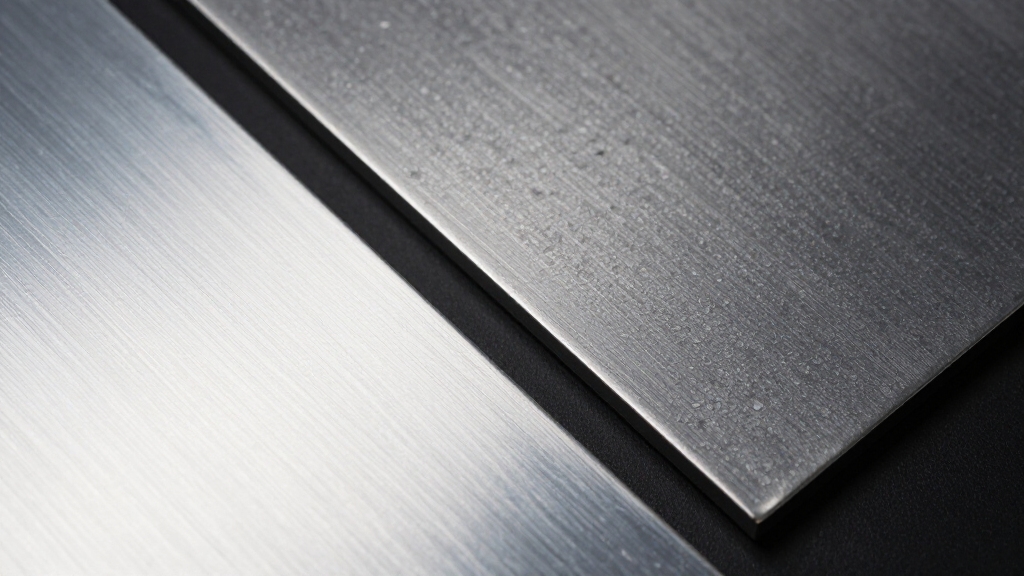
Although both aluminized steel and galvanized steel serve to protect the base metal from corrosion, they differ fundamentally in their coating compositions.
Aluminized and galvanized steel both protect against corrosion but differ significantly in their coating materials.
You’ll find aluminized steel coated with an aluminum-silicon alloy applied through a hot-dip process, combining steel’s mechanical strength with aluminum’s corrosion and heat resistance.
In contrast, galvanized steel features a zinc coating, also typically hot-dipped, designed primarily for barrier protection and sacrificial corrosion resistance.
This zinc layer acts as a controlled sacrificial anode when damaged, which aluminized coatings don’t provide.
The aluminum-silicon coating delivers enhanced heat resistance and reflective properties, whereas zinc focuses on corrosion inhibition through its electrochemical characteristics.
Understanding these distinct chemistries is essential for selecting the right material based on performance requirements rather than just corrosion protection alone.
Additionally, aluminized coatings benefit from aluminum’s ability to form a protective oxide layer, which contributes to their enhanced corrosion resistance and reduced maintenance needs.
When evaluating corrosion protection, you’ll find that galvanized steel relies on its zinc coating to act sacrificially, corroding first to shield the underlying steel. This is especially important at damaged areas like cuts or scratches.
Zinc corrodes at a controlled, slow rate, about 1/30 that of bare steel, forming a protective patina that slows further degradation. In contrast, aluminized steel uses an aluminum-silicon alloy coating that offers superior resistance in atmospheric and salt-spray conditions, outperforming zinc coatings in corrosion tests.
However, galvanized steel can experience accelerated coating loss and pitting in aggressive chloride or high-humidity environments, where its sacrificial protection may be compromised. You’ll need to take into account the exposure conditions carefully, as aluminized steel provides more durable corrosion resistance in harsh, moisture-rich settings without relying on sacrificial action. Proper surface preparation and timely coating application are essential to maintain galvanized steel’s corrosion resistance, particularly through mechanical profiling and cleaning steps before powder coating.
Because heat resistance directly impacts material performance in high-temperature environments, understanding the differences between aluminized and galvanized steel is essential.
You’ll find aluminized steel excels in heat tolerance, making it suitable for intense thermal applications. Galvanized steel has limitations under sustained heat.
Consider these key points:
Weld zones in aluminized steel often lose coating protection, increasing susceptibility to rust over time without proper maintenance of the heat-affected zone.
You’ll rely on aluminized steel for demanding heat environments, while galvanized steel suits moderate temperature applications.
Understanding the heat resistance advantages of aluminized steel helps clarify where each steel type performs best in practical settings.
You’ll want aluminized steel for applications exposed to high temperatures, such as automotive exhaust systems. It offers superior corrosion resistance under thermal cycling and radiant heat up to 1250 °F.
Conversely, galvanized steel suits environments with moderate temperatures and where sacrificial protection is key, like outdoor construction, water systems, and general fabrication. It withstands atmospheric corrosion well, forming a protective zinc patina.
However, avoid galvanized steel in chloride-rich or extreme heat settings, as zinc coatings degrade faster there.
Ultimately, your choice depends on the environment’s temperature, exposure to moisture or salts, and whether heat resistance or cost-effective corrosion protection takes priority.
When welding galvanized steel, be aware that vaporized zinc forms zinc oxide fumes that require proper ventilation and respiratory protection to ensure safety.
Although both aluminized and galvanized steel offer corrosion protection, your selection should hinge on the specific environmental conditions and performance requirements of your application.
To choose effectively, consider these factors:
Proper surface preparation and coating thickness are critical to maximizing corrosion resistance and durability of these materials, ensuring long-term performance in their respective environments with optimal corrosion protection.
You can recycle both aluminized and galvanized steel efficiently since both contain a steel base, which is highly recyclable.
However, aluminized steel‘s aluminum-silicon coating may require specialized processing to separate and recover aluminum.
In contrast, galvanized steel’s zinc coating can be reclaimed during steel recycling.
Both coatings pose minimal recycling challenges, but you should consider local recycling capabilities.
Facilities may vary in handling these coated steels to maximize material recovery and minimize contamination.
You’ll find differences in welding aluminized versus galvanized steel.
Aluminized steel’s aluminum-silicon coating requires careful control to avoid burn-through and contamination during welding.
Galvanized steel’s zinc coating can release toxic fumes, so ventilation and protective gear are essential.
Both need proper surface prep to guarantee strong welds, but galvanized steel generally tolerates welding better with standard precautions.
Aluminized steel demands specialized techniques to maintain coating integrity and joint strength.
You might find it ironic that both aluminized and galvanized steel production involve energy-intensive processes, yet their environmental footprints differ.
Aluminized steel requires aluminum, whose extraction is highly energy-consuming and emits more greenhouse gases.
Galvanized steel uses zinc, which has a lower extraction impact but still involves mining and chemical treatments.
Both generate waste and emissions, but aluminized steel’s higher-temperature coating step often leads to greater energy use overall.
Yes, you can paint or finish both aluminized and galvanized steel coatings, but surface preparation varies.
For galvanized steel, you’ll need thorough cleaning and often a primer to guarantee paint adhesion due to zinc’s naturally slick surface.
Aluminized steel, with its aluminum-silicon coating, generally accepts paint better but still requires cleaning to remove oils or contaminants.
Using appropriate primers and compatible paints guarantees durability and prevents coating degradation over time.
You’ll find galvanized steel usually demands less costly maintenance due to its sacrificial zinc coating that self-heals minor damages.
This extends service life with minimal intervention.
Aluminized steel, while offering superior heat resistance, may require more specialized upkeep in corrosive or marine environments to preserve its coating integrity.
Your maintenance costs will hinge on exposure conditions, but galvanized steel generally lowers ongoing expenses through easier repair and longer-lasting protective patinas.
Choosing between aluminized and galvanized steel is like picking the right shield for a battle. Each offers distinct protection tailored to specific challenges.
Aluminized steel excels in high-heat environments with its aluminum-silicon coating. Galvanized steel provides robust corrosion resistance through its zinc layer.
By understanding their composition and performance, you can make an informed decision that matches your project’s demands. This ensures durability and efficiency in the conditions you face.