Phone:
(701)814-6992
Physical address:
6296 Donnelly Plaza
Ratkeville, Bahamas.

Phone:
(701)814-6992
Physical address:
6296 Donnelly Plaza
Ratkeville, Bahamas.

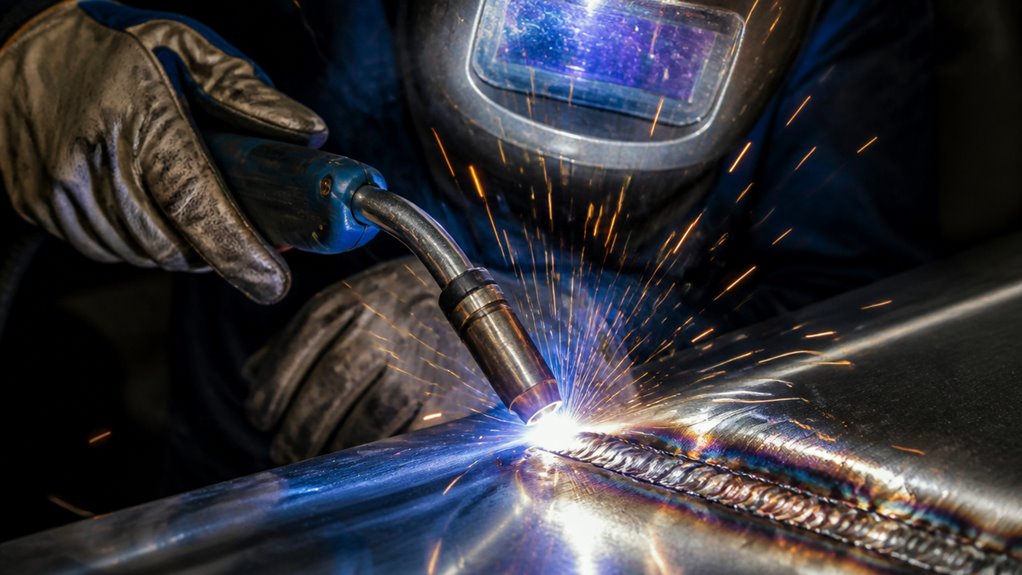
You can weld aluminized steel, but you’ll need to adjust for its aluminum-silicon coating that burns off during welding. This affects arc stability and weld pool dynamics.
Clean the weld zone thoroughly to expose bare metal and guarantee tight fit-up to prevent burn-through.
Use appropriate methods like MIG or stick welding with suitable filler metals to control heat input and fusion quality.
Take safety precautions for hazardous fumes. If you want to master the process, understanding preparation, techniques, and post-weld steps is essential.
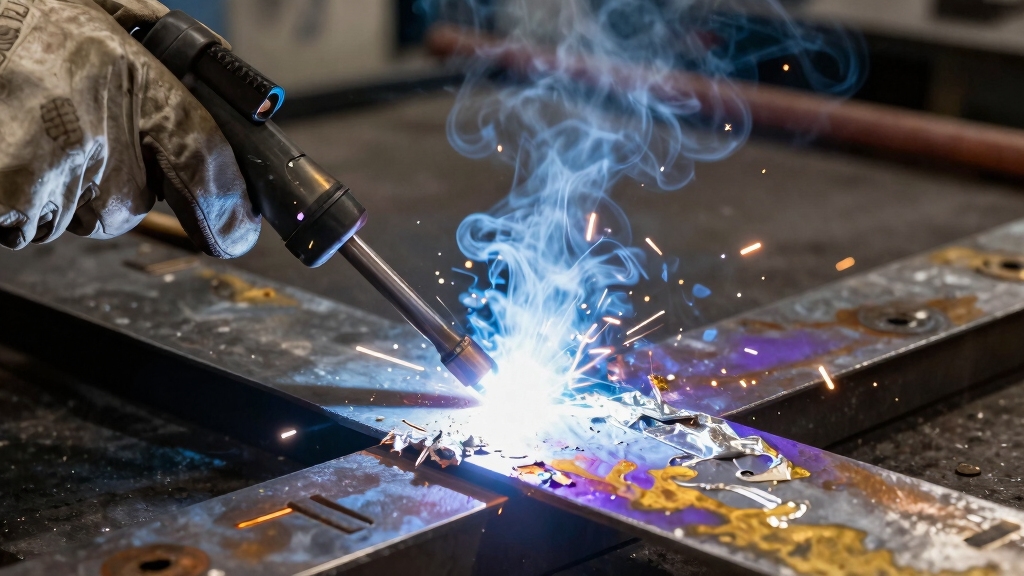
Although aluminized steel retains the weldability of its carbon steel base, the aluminum-silicon coating markedly alters the welding behavior at the joint.
When you weld this material, the coating tends to burn away in the heat-affected zone, exposing bare steel.
This changes arc stability and affects fusion characteristics. You must anticipate altered thermal conductivity and potential coating vaporization, which can influence weld pool dynamics.
The coating’s presence can also create localized contamination, impacting bead formation and penetration.
While the base metal welds similarly to mild steel, you’ll notice different arc responses and occasional spatter.
Understanding these nuances enables you to adjust parameters such as heat input and welding speed to maintain weld integrity.
Properly managing the coating’s effects is essential for achieving sound, corrosion-resistant joints.
It is also important to implement ventilation and respiratory protection to mitigate hazardous fumes released during welding.
When preparing aluminized steel for welding, you must thoroughly clean the weld zone to remove any dirt, oil, and coating residue that can compromise arc stability and fusion quality.
Use a solvent degreaser followed by mechanical cleaning, such as wire brushing or grinding, to expose bare metal at the joint. This guarantees consistent electrical contact and reduces contamination.
Start with solvent degreasing, then mechanically clean to reveal bare metal and ensure optimal weld quality.
Next, focus on fit-up accuracy; tight, uniform gaps minimize the risk of burn-through on thin aluminized steel components. Assure edges align precisely without excessive overlap or separation.
Avoid distortion by controlling clamp pressure and support. Proper cleaning combined with meticulous fit-up enhances weld penetration and structural integrity, ultimately improving joint performance.
Neglecting these steps increases defects, porosity, and weak fusion zones, undermining the corrosion-resistant properties that aluminized steel provides.
To ensure weld quality, it is critical to clean immediately before welding to prevent rapid re-oxidation that can cause contamination and defects.
Select welding methods and filler metals carefully to optimize joint quality when working with aluminized steel. For oxyacetylene welding, use mild steel filler rods without copper coating, ideally 3/32-inch diameter. Apply a 45° torch angle with a forehand technique.
Stick welding demands electrodes like E-6011, low-hydrogen E-7108, or stainless types 309/310 to handle the coating’s effect on arc stability.
MIG welding performs best with ER70S-3 or ER70S-6 wires, using CO2 or a 75% argon/25% CO2 shielding gas to maintain weld integrity.
TIG welding, though less common, can be effective with stainless filler for exhaust repairs, provided you adjust parameters for controlled heat input.
Matching method and filler metal to the application guarantees fusion quality and limits coating burn-off at the joint.
When welding coated metals, it is essential to ensure proper ventilation and respiratory protection to reduce exposure to hazardous fumes.
To prevent burn-through on thin aluminized steel, it’s really important to keep a close eye on heat input. You don’t want to overdo it, or you could end up with some serious issues.
Another thing to consider is fit-up. If you can minimize those gaps, you’re already reducing the risk of defects and making it easier to achieve consistent weld quality.
And let’s not forget about the torch angle and travel speed! Making precise adjustments here can help you maintain stable fusion without damaging that important coating. So, little tweaks can go a long way in ensuring a great weld!
Additionally, controlling heat input and using appropriate welding techniques are essential to reduce coating vaporization and prevent weld defects.
Manage heat input carefully to prevent burn-through and weld defects when working with aluminized steel, especially given its thin gauge in exhaust applications. You need to use the lowest effective heat setting compatible with complete fusion to avoid excessive melting or warping.
Maintain a fast travel speed to minimize heat concentration, and avoid lingering on one spot. For MIG or TIG welding, select wire feed rates and amperage that produce a stable arc without overheating the material.
In oxyacetylene welding, control the flame size and maintain a forehand technique with a 45° torch angle to concentrate heat on the filler rod, not the base metal. Excessive heat causes coating burn-off beyond the weld zone, weakening corrosion resistance and increasing distortion risk.
Precision in heat management guarantees weld integrity and preserves the aluminized layer’s protective qualities. Using a push technique with a 10–15° angle can help direct heat into the joint root while reducing burn-through risk.
Controlling heat input effectively reduces burn-through risks, but proper fit-up plays an equally important role in preventing weld defects on aluminized steel.
You need to make certain tight, consistent joint gaps to minimize excessive penetration and avoid burn-through, especially on thin exhaust components.
Misaligned edges or uneven gaps cause erratic arc behavior and inconsistent fusion, increasing defect likelihood.
Use precision tools to measure and adjust the fit before welding, maintaining uniform contact along the joint.
Avoid excessive spacing, which demands higher heat input and compromises weld integrity.
Proper fit-up also stabilizes the arc, improving weld bead quality and reducing porosity.
To summarize, meticulous joint preparation and gap control are essential to complement heat management, ensuring defect-free welds on aluminized steel assemblies.
Additionally, selecting the appropriate wire feed speed helps maintain a stable arc and consistent weld quality throughout the process.
Welding aluminized steel demands careful attention to safety due to the coating’s potential to generate irritating fumes when heated.
You must control fume exposure by ensuring adequate ventilation or using local exhaust systems to capture airborne contaminants at the source.
Wearing a proper respirator with filters rated for metal fumes is essential to protect your respiratory system.
Additionally, handling the material with gloves and eye protection prevents contact injuries from sparks and hot metal.
Key safety measures include:
Following these precautions reduces health hazards specific to aluminized steel welding. Proper local exhaust ventilation positioned close to the arc is critical to effectively reduce fume exposure.
After completing the weld on aluminized steel, you must thoroughly inspect the joint to ascertain structural integrity and detect any coating damage or weld defects. Focus on identifying cracks, porosity, or incomplete fusion that compromise strength.
Also, check for coating burn-off zones that may require touch-up to restore corrosion resistance. Use visual inspection, dye penetrant testing, or magnetic particle inspection as appropriate.
For finishing, grind weld spatter and smooth transitions to reduce stress concentrators. Apply aluminized paint or cold-spray coating on exposed areas to prevent corrosion.
Proper surface preparation and cleaning prior to inspection are essential to avoid masking any surface discontinuities.
| Inspection Aspect | Recommended Method |
|---|---|
| Weld integrity | Visual/Dye Penetrant Test |
| Coating damage | Visual/Surface Profiling |
| Porosity/Cracks | Magnetic Particle Test |
| Surface finish | Grinding and Coating Repair |
You’ll find aluminized steel is generally more cost-effective than stainless steel.
It offers corrosion resistance at a lower price point because the base is carbon steel with an aluminum-silicon coating.
Stainless steel’s alloying elements make it pricier.
If your application tolerates the coating’s limitations and you want a budget-friendly option with decent rust resistance, aluminized steel is a smart choice compared to the higher upfront cost of stainless steel.
Welding aluminized steel underwater or in extreme conditions is challenging but possible with specialized equipment.
Imagine trying to write a precise note on a wet, slippery surface; it demands extra care.
Underwater welding requires dry environments created by habitats or hyperbaric chambers to protect the aluminum-silicon coating and prevent contamination.
You’ll need proper ventilation and controlled heat input to avoid coating burn-off and maintain weld integrity under these harsh conditions.
You can expect welded aluminized steel exhaust parts to last several years, typically 5 to 10, depending on welding quality and operating conditions.
Proper surface prep, controlled heat input, and appropriate filler metals help maintain corrosion resistance at the weld zone.
However, weld areas often lose some coating protection, making them more prone to rust over time.
Regular inspection and maintenance extend the service life in harsh environments.
Back in the days of yore, you’d still face environmental concerns disposing of aluminized steel welding waste.
You must handle the aluminum-silicon coating residues carefully since they can leach contaminants.
Don’t toss scraps or slag into regular waste; instead, follow hazardous material protocols.
Proper recycling and waste segregation prevent soil and water contamination.
Also, welding fumes contain irritating compounds, so capture and filter emissions to minimize environmental impact during disposal.
Yes, you can paint or coat welded aluminized steel after welding, but you need to prepare the surface properly.
Weld zones often lose their aluminized coating, exposing bare steel prone to rust.
You should clean, degrease, and apply a suitable primer or high-temperature paint designed for exhaust or heat-resistant applications.
This guarantees corrosion protection and maintains durability, especially in harsh environments like mufflers or exhaust systems.
You might think welding aluminized steel is a straightforward task. After all, it’s just steel with a shiny coating, right?
But as you’ve seen, that aluminum layer demands careful cleaning, precise fit-up, and the right welding methods to avoid defects and burn-through. Ignoring these steps won’t just ruin your weld; it’ll turn your project into a costly lesson.
So, don’t underestimate the complexity. Welding aluminized steel is as much an art as it is science.