Phone:
(701)814-6992
Physical address:
6296 Donnelly Plaza
Ratkeville, Bahamas.

Phone:
(701)814-6992
Physical address:
6296 Donnelly Plaza
Ratkeville, Bahamas.

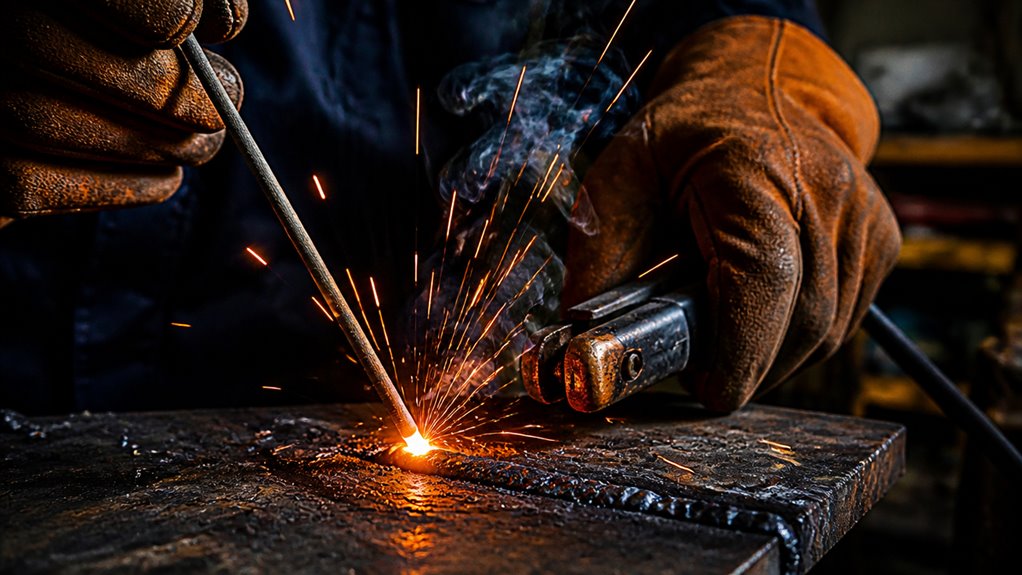
For stick welding, choosing the right polarity depends on your electrode and material thickness. You’ll mostly use DCEP (electrode positive) for deeper penetration and stable arcs. This is ideal for electrodes like E7018 and E6010.
Use DCEN (electrode negative) when you need higher deposition rates with shallower penetration. This is suited for electrodes like E7024.
AC polarity works well with cellulose-coated rods like E6011, balancing heat and improving arc stability. Proper polarity setup directly impacts weld quality, performance, and bead shape. Understanding this fully enhances your welding results.
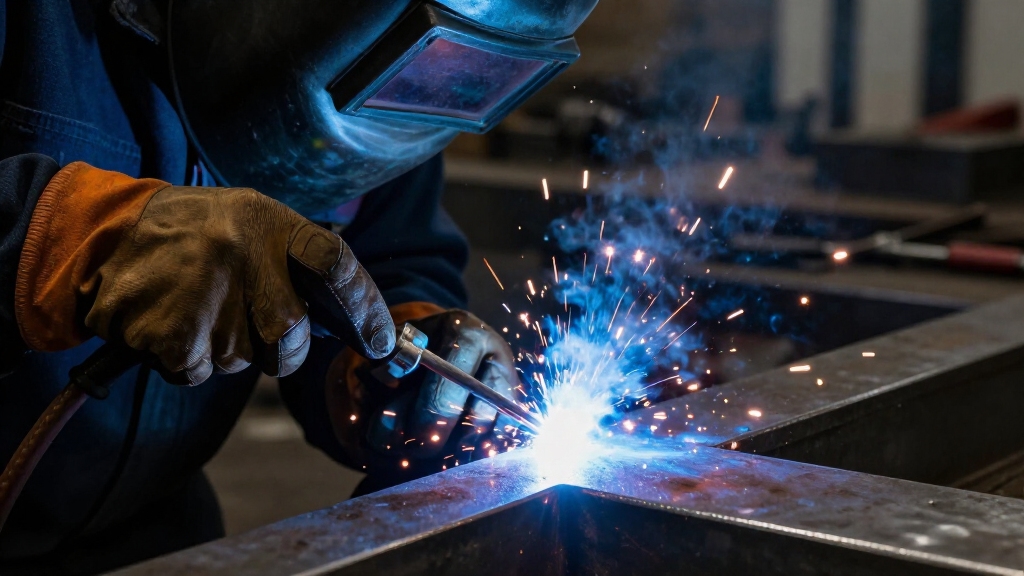
Polarity in stick welding determines how you connect the electrode and work leads to your power source. This connection directly affects arc stability, penetration, and weld quality.
You’ll encounter two main DC polarities: DCEP (electrode positive, work negative) and DCEN (electrode negative, work positive). Each polarity configuration shifts the heat distribution between the electrode and the workpiece, influencing weld penetration and bead profile.
You can also weld using AC, where polarity alternates during the cycle. The correct polarity depends on your electrode type and manufacturer recommendations, which you should always check before welding.
Proper polarity setup guarantees consistent arc behavior, peak melting of the electrode, and desired weld characteristics. Ignoring polarity can cause unstable arcs, poor penetration, and weak welds, so it’s critical to connect your leads accurately.
Stick welding’s use of flux-coated electrodes that generate their own shielding gas and slag means polarity choices also impact the effectiveness of this self-shielding process.
Understanding the impact of lead connections on arc stability and weld quality naturally leads to why DCEP is the preferred choice for most stick welding applications.
When you connect the electrode to positive (DCEP), more heat concentrates at the electrode tip, ensuring efficient melting and a stable arc.
Connecting the electrode to positive (DCEP) focuses heat at the tip for efficient melting and stable arc.
This polarity delivers deeper penetration, which is essential for strong, structural welds on thicker materials.
Electrodes like E7018, E6010, and E6011 commonly require DCEP to perform at peak, providing consistent bead shape and fusion.
Using DCEP also enhances slag removal and overall weld appearance.
Proper surface preparation, including removing oxidation and contaminants, is crucial to improve weld strength and durability.
When it comes to stick welding, you might want to consider using DCEN, especially with certain electrodes like E7024 and some types of E6013. These electrodes really shine when paired with this polarity. Be sure to maintain the correct electrode angle and arc length to ensure a stable and strong weld.
Consider using DCEN when working with specific electrode types or applications that benefit from shallower penetration and increased deposition rates.
Electrodes like E7024 are designed to run on DCEN, offering higher deposition efficiency and smoother weld beads. Some E6013 rods also perform well on DCEN, especially when you need a softer arc and less base metal fusion.
By connecting the electrode to the negative terminal, you reduce heat at the tip, which slows melting and increases filler metal deposition. This polarity suits thinner materials or welds requiring less penetration but good coverage.
Always check the electrode manufacturer’s data sheet for polarity recommendations to ensure peak arc stability and weld quality. Using DCEN with compatible electrodes can enhance productivity without compromising weld integrity.
Choose DCEN when your welding project demands shallower penetration and higher deposition rates. With DCEN, the electrode is negative, directing less heat to the workpiece and more to the electrode tip.
This heat distribution reduces the depth the weld penetrates the base metal, making it ideal for thin materials where burn-through is a risk. Additionally, DCEN encourages a wider, flatter bead profile due to the increased molten weld pool size.
This polarity also improves deposition efficiency by melting more electrode metal into the weld per unit time. However, because penetration is shallower, you should avoid DCEN for thick sections requiring strong fusion.
Understanding penetration characteristics helps you select DCEN to balance weld quality, material thickness, and productivity effectively without compromising arc stability. DCEN is also known for producing a steady crackling sound, which indicates stable metal transfer during welding.
Applying DCEN in stick welding proves advantageous when working with thinner materials or projects requiring controlled heat input.
You’ll find DCEN reduces penetration depth, minimizing burn-through risks and warping on delicate metals. It’s ideal for welding metals like sheet steel or thin-gauge components where excessive heat compromises integrity.
DCEN also enhances deposition rates with electrodes such as E7024, allowing faster fill and smoother beads.
This makes it suitable for flat and horizontal welds demanding high deposition efficiency.
Additionally, some E6013 rods perform well on DCEN, providing stable arcs and cleaner welds. When you prioritize less heat concentration at the workpiece and more at the electrode, DCEN helps maintain arc stability and bead control.
This ultimately improves weld quality in these specific applications. The steady and precise arc control provided by direct current power sources is key to achieving these benefits in DCEN stick welding.
Although AC polarity alternates between positive and negative during each cycle, it plays an essential role in stick welding applications where equipment supports only AC or when welding with electrodes like E6011 and E6013.
This alternating current allows for a balanced heat distribution, preventing excessive electrode overheating and reducing arc blow. AC provides effective arc stability and cleaning action, especially with cellulose-coated electrodes such as E6011.
You’ll find AC useful when your power source lacks DC output or when working on rusty or painted surfaces, as the alternating polarity helps maintain arc continuity.
However, AC typically produces less penetration than DCEP, so it’s best suited for general-purpose welding rather than heavy structural work. Understanding your equipment and electrode requirements will guide you in choosing AC polarity appropriately.
For optimal manual stick welding, power sources with a constant current characteristic are preferred to maintain arc stability despite variations in arc length.
When it comes to stick welding, getting the electrode polarity right is key for achieving the best weld quality and maintaining arc stability.
For most common electrodes, like E7018 and E6010, using Direct Current Electrode Positive (DCEP) is the way to go. This setting helps deliver deeper penetration and allows for more consistent arc control, which is really important for a clean weld.
It’s interesting to note how understanding the polarity preferences of each electrode can make a big difference. It directly influences the bead shape and the effectiveness of the fusion.
When selecting the best polarity for stick welding electrodes, most manufacturers specify preferences based on ideal arc stability and penetration.
Using the correct polarity guarantees consistent weld quality and rod performance. For example:
Following polarity recommendations not only improves arc control but also optimizes weld bead shape and fusion. Ignoring these preferences can lead to poor welds or rod burnout. Always consult the electrode datasheet for the best polarity choice. The last digit in electrode numbers indicates flux coating types and compatible current/polarity for optimal arc stability.
Choosing the correct polarity for stick welding electrodes directly influences weld quality by controlling penetration depth, arc stability, and bead formation.
When you use DCEP (electrode positive), you’ll achieve deeper penetration and a more focused arc. This is ideal for electrodes like E7018 and E6010.
This polarity deposits heat efficiently at the electrode tip, guaranteeing consistent melting and strong fusion.
On the other hand, DCEN (electrode negative) reduces penetration depth, which can be advantageous for thinner materials or electrodes such as E7024 that require higher deposition rates.
AC polarity alternates and provides moderate penetration with stable arc characteristics, commonly used with E6011 and E6013 rods.
Selecting the right polarity secures peak weld bead profile, prevents defects, and enhances mechanical properties tailored to your application.
It is important to always verify the electrode recommended polarity from the manufacturer data or packaging before welding to ensure optimal results.
Although polarity might seem like a straightforward setup choice, it markedly influences stick welding penetration and bead quality.
Choosing DCEP (electrode positive) typically results in deeper penetration because more heat concentrates at the electrode tip. This melts the base metal thoroughly, giving you strong, durable welds with a narrow, stable bead.
Conversely, DCEN (electrode negative) produces shallower penetration, which can be beneficial for thin materials but may sacrifice weld strength.
When welding, keep these effects in mind:
Understanding polarity lets you optimize weld integrity and appearance every time. Note that DCEP also increases electrode heating, which may require larger electrodes or cooling to prevent electrode wear.
Set your stick welder polarity by connecting the electrode holder and work lead according to the electrode specifications and desired weld characteristics.
For most electrodes like E7018 and E6010, connect the electrode holder to the positive terminal (DCEP) and the work lead to the negative. This setup assures deeper penetration and stable arc performance.
If your electrode requires DCEN, reverse the connections: electrode holder to negative and work lead to positive. This reduces penetration and suits thinner materials or specific rods like E7024.
When using AC, polarity alternates automatically, so simply connect as per your machine’s guidelines.
Always consult the electrode packaging or manufacturer data sheet first, as incorrect polarity causes poor arc stability, weak fusion, or excessive spatter.
Proper setup guarantees peak weld quality and rod efficiency.
Additionally, electrodes with a low-hydrogen iron-powder coating like E7018 require careful storage and handling to maintain weld integrity and prevent cracking.
Yes, polarity directly affects electrode lifespan during stick welding.
When you use DCEP, the electrode heats more at the tip, promoting efficient melting but also faster consumption.
With DCEN, the electrode stays cooler, extending its life but reducing penetration.
If you choose incorrect polarity, you risk unstable arcs and premature electrode degradation.
Polarity influences welding fumes by affecting arc stability and electrode melting rate.
With DCEP, you get a hotter electrode tip, producing more intense fumes concentrated near the rod.
DCEN produces less intense fumes but may lead to less stable arcs, potentially increasing spatter and smoke.
You should always use proper ventilation and wear respiratory protection regardless of polarity.
Fume composition varies with electrode type and polarity, impacting your safety.
Think of adjusting polarity mid-weld like switching gears while accelerating. It’s tricky and not recommended.
You can’t safely change stick welding polarity without stopping because the power source and electrode connections must be switched deliberately to maintain arc stability and weld quality.
Attempting this mid-weld risks arc interruption, poor bead formation, and equipment damage.
Always pause, adjust your leads or settings, then resume welding for consistent, reliable results.
You’ll want to use DCEP (electrode positive) for welding rusty or dirty metal because it provides deeper penetration and a hotter arc.
This helps you burn through contaminants.
Electrodes like E6010 or E6011 on DCEP or AC polarity work well since their arc force and cleaning action handle rust effectively.
Avoid DCEN, as its shallower penetration mightn’t overcome surface impurities, risking poor fusion and weld defects.
Think of your welding machine like a car engine. Using the right fuel keeps it running smoothly.
Choosing the correct polarity reduces unnecessary wear on your machine’s components. For example, running DCEP concentrates heat properly, preventing excessive strain on the electrode holder and cables.
Using improper polarity can cause unstable arcs and overheating, increasing maintenance needs. Picking the right polarity helps maintain your machine’s health and extends its service life efficiently.
So, you’ve mastered stick welding polarity: DCEP for penetration, DCEN for cleaning, and AC for that electric mystery tour.
Just remember, choosing the wrong polarity isn’t a plot twist; it’s a guaranteed recipe for a wonky bead and frustrated sparks.
Set your polarity right or prepare to spend more time chasing defects than making solid welds.
Welding’s not magic; it’s science. Don’t let polarity be your kryptonite.