Phone:
(701)814-6992
Physical address:
6296 Donnelly Plaza
Ratkeville, Bahamas.

Phone:
(701)814-6992
Physical address:
6296 Donnelly Plaza
Ratkeville, Bahamas.

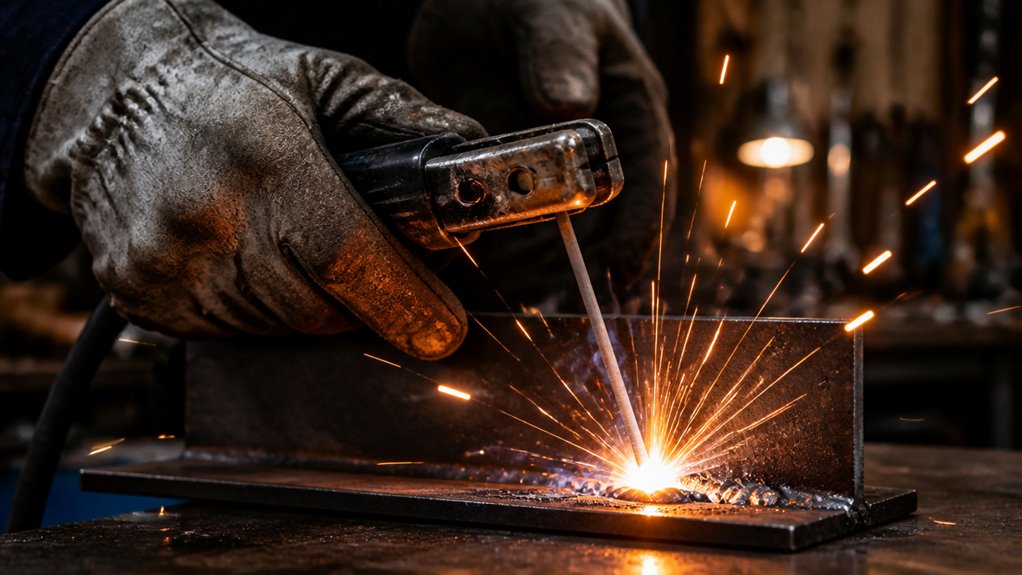
Polarity in welding defines the direction of electrical current between the electrode and work clamp, controlling heat distribution and arc stability.
You decide between DC Electrode Negative (DCEN), DC Electrode Positive (DCEP), or Alternating Current (AC) based on your material and process.
This choice affects weld penetration, bead shape, and electrode consumption.
Getting polarity right guarantees strong, clean welds and consistent arcs.
Understanding these fundamentals will help you optimize your welding results efficiently.
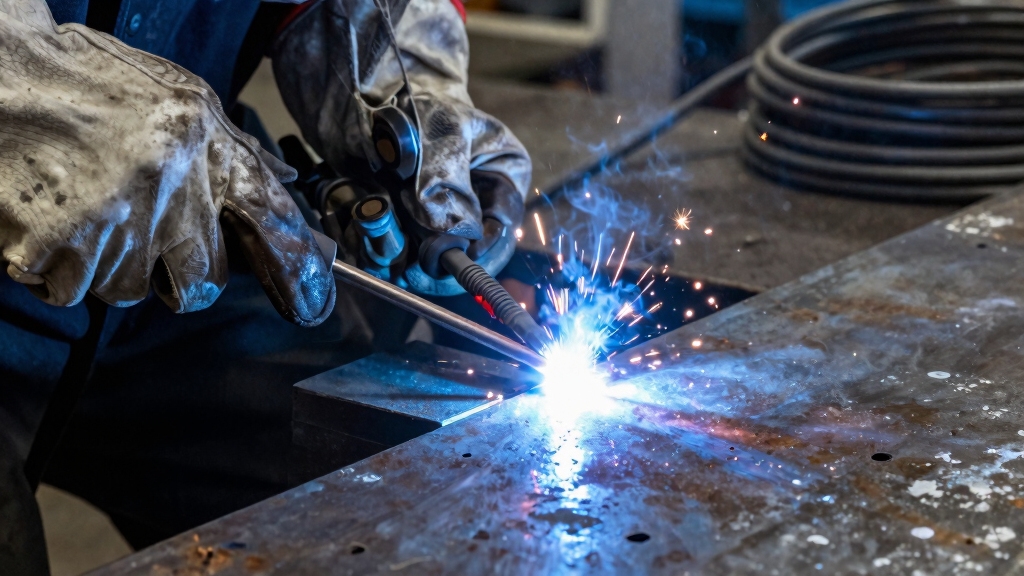
When you activate a welding machine, polarity defines the direction of electrical current flow between the electrode and the work clamp. This establishes either a positive or negative pole in the circuit.
Polarity determines the direction of electrical current flow between the electrode and work clamp.
Polarity creates a complete electrical circuit, with current flowing from the negative terminal through the welding leads to the positive terminal. This directional flow determines where heat concentrates within the arc and parent metal.
Understanding polarity helps you control weld penetration, bead shape, and electrode consumption. In DC welding, the electrode can be negative (DCEN) or positive (DCEP), each affecting heat distribution differently.
AC welding alternates polarity many times per second, balancing heat effects. Mastering polarity fundamentals allows you to optimize arc stability and weld quality by selecting the appropriate configuration for your welding process and material.
For example, using DCEP polarity in MIG welding directs more heat to the workpiece, resulting in deeper penetration and a more stable arc.
—
Alright, so here’s the deal: in a DC welding circuit, electrical current flows from the negative to the positive terminal. This concept is super important because it defines what we call polarity.
Now, there are different types of polarity you might encounter—like AC, DC electrode negative (DCEN), and DC electrode positive (DCEP). Each of these changes the direction of the current and, believe it or not, can really impact how heat is distributed during the welding process.
So, why does this matter? Well, the direction of the flow can directly affect things like arc stability and overall weld quality.
That’s why picking the right polarity is a big deal when you’re setting up your welding project.
In short, don’t overlook polarity; it’s a key player in getting the best results! For example, DCEN polarity directs most of the heat to the workpiece, resulting in deeper penetration and a more stable arc.
Although electrical current flows in a closed loop during welding, understanding its precise direction is essential for controlling heat distribution and weld quality.
Current flows from the negative terminal, through the welding lead, to the electrode or workpiece, depending on polarity. This direction directly impacts where heat concentrates, affecting penetration and bead formation.
When you set up your welding machine, knowing current flow direction helps optimize performance and prevent defects.
| Polarity Setting | Current Flow Direction |
|---|---|
| DC Electrode Negative (DCEN) | Electrode → Workpiece (electrons flow) |
| DC Electrode Positive (DCEP) | Workpiece → Electrode (electrons flow) |
| Alternating Current (AC) | Direction alternates rapidly |
| Closed Circuit | Current completes loop, sustaining arc |
Mastering current flow lets you tailor heat for stronger, cleaner welds. Understanding how direct current (DC) provides steady, unidirectional electron flow enhances arc stability and weld quality.
Since polarity defines the direction of electrical current flow in welding, understanding its types is essential for controlling arc behavior and weld quality.
You’ll encounter three main polarity types, each influencing heat distribution and weld characteristics differently:
Selecting the correct polarity guarantees arc stability, proper heat focus, and peak weld quality for your specific welding process. Proper polarity selection is also crucial when matching welding methods that use constant current or constant voltage power supplies for optimal arc control.
Understanding the distinctions between AC, DCEN, and DCEP polarity is essential for optimizing welding performance and weld quality.
AC polarity alternates between positive and negative poles multiple times per second. This provides balanced heat distribution and is commonly used for aluminum TIG welding.
DCEN (Direct Current Electrode Negative), or straight polarity, directs electrons from the electrode to the workpiece. It concentrates approximately 70% of heat on the electrode, resulting in faster melting but less penetration.
DCEP (Direct Current Electrode Positive), or reverse polarity, reverses this flow, focusing heat on the workpiece for deeper penetration and improved fusion.
Selecting the correct polarity depends on the welding process and material. Improper choice can compromise weld integrity and efficiency.
Recognizing these differences allows you to tailor settings for specific applications with precision.
Balancing polarity with proper amperage and voltage settings is crucial to achieving optimal penetration, arc stability, and weld quality.
You know, heat really behaves differently based on polarity. For instance, with DCEN, around 70% of the heat gets directed to the electrode. On the flip side, DCEP shifts that focus more toward the workpiece. This difference in heat distribution plays a big role in things like weld penetration and the shape of the bead.
And it’s not just about the heat, either. If you pay attention, the sound of the arc can tell you a lot about its stability and whether you’ve picked the right polarity. It’s like having a built-in feedback system!
DCEP typically requires higher amperage and slightly increased voltage for deeper penetration, which also influences heat distribution and weld quality.
Although polarity may seem like a simple setting on your welding machine, it critically influences where heat concentrates during welding and how stable the arc remains.
Understanding heat focus differences helps you optimize weld quality and control electrode consumption.
When you select Direct Current Electrode Negative (DCEN), about 70% of heat concentrates at the workpiece. This ensures deeper penetration but less electrode melting.
Conversely, Direct Current Electrode Positive (DCEP) shifts roughly 70% of heat to the electrode, increasing melting rate and cleaning action.
Alternating Current (AC) balances heat distribution, alternating heat focus between electrode and workpiece. This stabilizes the arc for specific metals.
Modern inverter welding machines enable precise heat input control, enhancing the effect of polarity settings on weld quality and arc stability.
The differences in heat focus between DCEN, DCEP, and AC directly influence the sound produced by the welding arc. This provides you with audible cues about arc stability and heat distribution.
When using DCEN, the arc emits a steady crackling sound due to 70% heat concentration on the electrode. This promotes stable metal transfer.
DCEP shifts heat toward the workpiece, generating a more pronounced, consistent hiss. This indicates deeper penetration and a hotter weld pool.
AC alternates polarity rapidly, causing fluctuating arc tones that reflect varying heat focus and less predictable stability.
If you hear irregular crackling or popping, it signals incorrect polarity or unstable arc conditions. This can compromise weld quality.
Listening attentively helps you adjust polarity to optimize electrode consumption, arc stability, and heat distribution for superior weld performance.
Additionally, the choice of shielding gases can further influence arc stability and heat input, complementing the effects of polarity on the welding process.
Understanding polarity is essential to achieving ideal weld quality and penetration. It controls heat distribution within the weld zone. When you select the appropriate polarity, you optimize where the heat concentrates, either on the electrode or the base metal. This directly affects weld fusion and bead shape. Incorrect polarity compromises penetration depth and weld integrity, leading to weak joints.
Consider these key impacts:
Inductance settings interact with polarity to influence heat distribution and arc stability, ultimately affecting overall weld quality.
Using the wrong welding polarity can cause a range of issues that compromise weld quality and efficiency. When you select incorrect polarity, you risk poor penetration, resulting in weak joints prone to failure.
The arc becomes unstable, producing irregular crackling and excessive spatter. This degrades bead appearance and necessitates additional cleanup.
You may also experience accelerated electrode consumption or improper melting rates, disrupting the weld pool’s consistency.
In stick welding, for example, using DCEN instead of the recommended DCEP reduces heat at the workpiece. This leads to insufficient fusion and potential porosity. Conversely, reverse polarity on thin materials can cause burn-through.
These problems not only affect structural integrity but also increase rework time and costs. Making correct polarity selection critical for peak welding performance.
To optimize heat distribution and penetration, it is essential to set polarity to DCEP for mild steel during MIG welding.
Choosing the correct polarity for stick welding directly influences weld quality, penetration, and electrode performance.
To select the right polarity, you need to take into account the electrode type, base metal thickness, and desired weld characteristics.
Generally, DC electrode positive (DCEP) offers deeper penetration and stable arc for most electrodes, making it the default choice.
However, DC electrode negative (DCEN) suits thin materials and specific rods that require less heat input.
Focus on these three key steps:
Following this method guarantees peak heat distribution and weld integrity.
When you’re setting up MIG welding, you’ll want to connect the torch to the positive terminal. This is super important because it helps ensure proper heat distribution and keeps the arc stable.
Now, when it comes to TIG welding, it’s a bit different. Here, you’ll need to connect the torch to the negative terminal. This setup is crucial for maintaining precise control and achieving peak penetration in your welds.
MIG welding requires the torch to be connected to the positive terminal, establishing Direct Current Electrode Positive (DCEP) polarity. This setup guarantees peak heat distribution, focusing about 70% of the heat on the electrode, which stabilizes the arc and enhances penetration.
When you use DCEP in MIG welding, you’ll notice:
Connecting the torch to the positive terminal is vital because reversing polarity diminishes penetration, destabilizes the arc, and leads to poor weld quality. Always verify your polarity setup before welding to guarantee peak performance and structural integrity.
Unlike MIG welding, which relies on Direct Current Electrode Positive (DCEP) polarity for ideal heat distribution, TIG welding operates differently by connecting the torch to the negative terminal. This establishes Direct Current Electrode Negative (DCEN) polarity.
This setup focuses approximately 70% of the heat on the workpiece, optimizing penetration and weld bead control while reducing electrode consumption. When you use DCEN in TIG welding, the electrode remains cooler, enhancing arc stability and allowing precise manipulation of the weld pool.
For aluminum TIG welding, alternating current (AC) polarity is standard, as it balances cleaning and penetration. Using incorrect polarity in TIG welding compromises arc stability, weld quality, and penetration.
You must guarantee your torch is connected to the negative terminal to achieve peak results.
Identify welding polarity quickly by observing the behavior of the electrode during operation. A carbon electrode on positive polarity (DCEP) burns off rapidly, becoming blunt. On negative polarity (DCEN), it erodes slower and remains sharper.
You can also listen for arc sounds: a steady crackle indicates correct polarity. Irregular snapping suggests incorrect setup.
To test welding polarity efficiently:
This precise evaluation helps confirm polarity alignment. It ensures optimal heat concentration and arc stability, which directly impact weld quality and penetration.
Adjusting polarity correctly can markedly enhance weld quality by optimizing heat distribution and arc stability.
First, identify the welding process and material thickness to select the proper polarity: use DCEP for most stick and MIG welds, and DCEN for TIG or thin materials.
Next, verify polarity by observing the electrode’s burn-off rate and arc sound; a stable crackling noise signals correct settings.
If you notice excessive spatter or poor penetration, switch polarity accordingly.
Always confirm amperage aligns with electrode specifications to maintain consistent heat input.
For AC processes, confirm frequency and polarity switching are appropriate for the metal type.
Finally, perform test beads and inspect bead shape and penetration to fine-tune polarity, guaranteeing peak weld strength and appearance.
Yes, polarity settings directly affect electrode lifespan during long welding sessions.
When you use DCEN, about 70% of heat focuses on the electrode, causing it to burn off faster and reduce its life.
Conversely, DCEP directs more heat to the workpiece, preserving the electrode longer.
Incorrect polarity increases spatter and unstable arcs, accelerating electrode wear.
Like a conductor directing an orchestra, welding polarity controls fume generation by influencing heat concentration and metal vaporization.
When you use DCEP, heat focuses more on the workpiece, increasing fume output from molten metal.
DCEN reduces fume by concentrating heat on the electrode.
You must adapt your ventilation and wear appropriate respiratory protection based on polarity to minimize exposure.
This ensures safety and compliance with health standards during welding.
Yes, you need specific polarity adjustments when welding different steel alloys.
For carbon steels, DC electrode positive (DCEP) usually provides ideal penetration.
With stainless steels, you might switch polarity to balance heat input and prevent distortion.
Alloyed and high-strength steels often require precise polarity to control fusion and minimize cracking.
Adjusting polarity affects arc stability, heat concentration, and weld quality.
You must tailor it to each steel type for best results.
Yes, polarity influences your shielding gas choice in MIG and TIG welding.
For TIG welding with DCEN, you typically use inert gases like pure argon to guarantee arc stability and clean welds.
In MIG welding with DCEP, a mix of argon and CO2 optimizes penetration and arc control.
AC polarity for TIG on aluminum requires pure argon or argon-helium blends to balance cleaning action and heat input.
Matching polarity and gas improves weld quality.
To make certain stable polarity performance, regularly inspect and clean all electrical connections, including cables, clamps, and terminals, to prevent resistance buildup.
Tighten loose connections and replace worn or damaged leads promptly.
Calibrate the welding machine periodically to verify output consistency.
Check the polarity switch and selector settings for proper operation.
Maintain a clean, dry environment to minimize corrosion and electrical noise, which can disrupt polarity stability during welding.
Now that you understand polarity’s role in welding, you might think choosing the right setting is straightforward.
But here’s the twist: a slight polarity shift can drastically alter heat distribution, arc stability, and weld quality.
Ignoring this detail risks weak penetration and flawed joints.
So, before your next weld, pause and consider—are you using the most suitable polarity for your process?
The answer could make or break your work’s integrity.