Phone:
(701)814-6992
Physical address:
6296 Donnelly Plaza
Ratkeville, Bahamas.

Phone:
(701)814-6992
Physical address:
6296 Donnelly Plaza
Ratkeville, Bahamas.

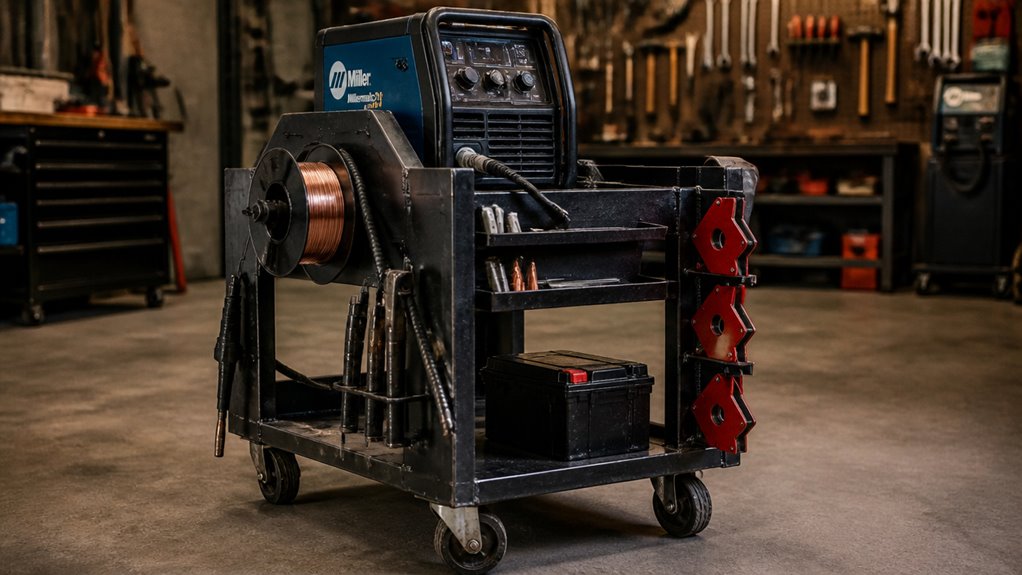
When choosing a welder cart, match the load rating to your welder, gas cylinder, and accessories to avoid overloading.
Secure cylinders upright with sturdy restraints and provide clearance to prevent heat buildup.
Use heavy-duty steel frames for strength and durability, and integrate hooks or reels to manage cables safely.
Select swivel casters upfront for maneuverability and larger rear wheels for stability.
Balanced load and locking casters enhance safe movement.
Keep these essentials in mind to optimize your welding setup and workflow.
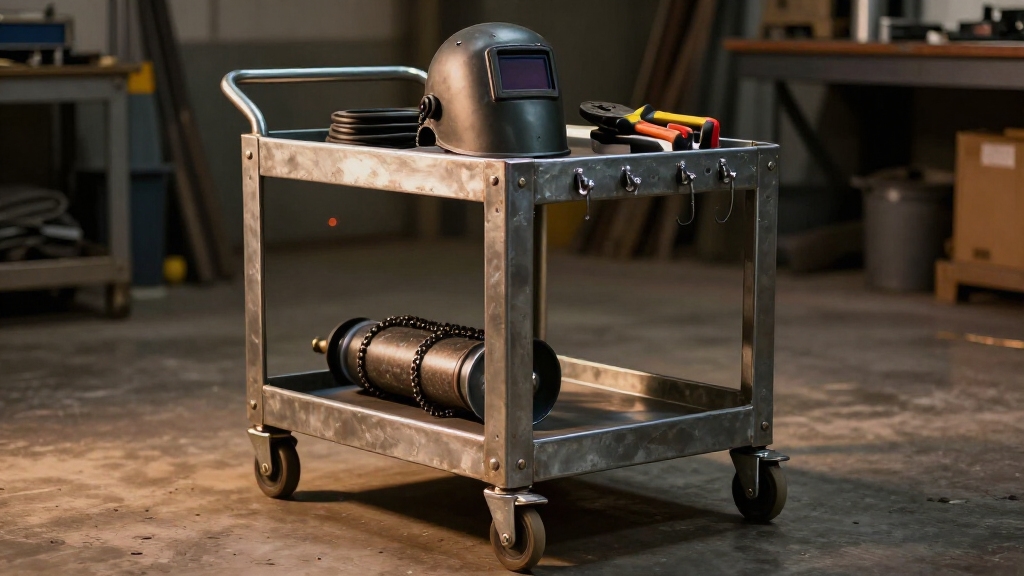
When selecting a welder cart, you need to focus on capacity, mobility, and compatibility with your equipment. First, make certain the cart supports the combined weight of your welder, gas cylinder, and accessories, checking the load rating carefully.
Next, consider mobility: choose carts with heavy-duty swivel casters for maneuverability in tight shop spaces. Larger rear wheels help ensure smooth movement over debris.
Compatibility means the cart’s layout must fit your specific welder model and cylinder size, providing secure retention and proper clearance to prevent tipping or damage.
Prioritize narrow footprints if you work in confined aisles. Steel frame construction offers durability, but balance it with weight to maintain portability.
Additionally, ensure your cart allows for integrated storage of welding leads and tools to keep your workspace organized and efficient.
For small MIG and TIG welders, designing a compact cart means focusing on a streamlined two-shelf layout that efficiently accommodates both the welder and a single gas cylinder.
Prioritize a narrow footprint to navigate tight shop aisles and corners easily. Use steel for the frame to guarantee durability while keeping weight manageable.
Position the welder on the upper shelf for easy access to controls, and secure the gas cylinder upright on the lower shelf with a reliable retention system.
Choose swivel front casters and larger rear wheels for smooth maneuverability. Keep storage minimal to maintain mobility, but consider hooks for cables and torches to improve organization.
Opt for recycled materials when possible to reduce cost without compromising strength. This approach yields a practical, space-saving cart tailored for small MIG and TIG setups.
Inverter welding machines, known for their compact, lightweight design, are ideal candidates for such carts due to their portability and efficient energy use.
Although it’s tempting to maximize capacity, you should carefully match your cart’s design to the size and number of welders and gas cylinders you plan to carry.
Start by selecting a cart with a load rating that safely supports the combined weight of your equipment. Most compact carts handle one cylinder up to 330 cubic feet, while larger or commercial-style carts accommodate two cylinders and multiple welders.
Make certain there’s adequate clearance between cylinders and welders to prevent heat buildup and allow easy access for maintenance.
Secure cylinder retention devices are essential to avoid tipping hazards.
Balance the load distribution to maintain stability, especially when moving the cart.
Prioritize mobility features like locking casters and robust wheels, as they improve handling under heavy loads and maintain safe, controlled movement in your workspace.
Also, ensure that your electrical setup follows breaker sizing guidelines to maintain safe operation and prevent nuisance trips.
When you’re thinking about your welding tool storage, it’s a great idea to add built-in compartments. This way, you can keep consumables like tips and rollers organized and safe from damage. Plus, it just makes everything easier to find!
And don’t forget about cable management! Adding hooks for your torches and cables can really help prevent tangling. It’s such a simple touch that can make a big difference.
Oh, and if you have the space, think about integrating a workbench surface. This way, you can create a functional, all-in-one mobile welding station. It’s super handy to have everything you need in one place!
Also, ensure your cart setup includes proper workspace lighting to clearly see your weld puddle and maintain safety during welding.
When integrating welding tool storage into your cart, built-in consumable compartments keep tips, nozzles, rollers, and rods organized and accessible.
Design compartments with specific dimensions to securely hold each consumable type, preventing damage and loss. Use divided trays or modular bins that fit within the cart’s frame without compromising mobility or weight distribution.
Opt for materials resistant to heat and sparks, such as steel or high-grade plastic, to guarantee durability. Position compartments near the welder for quick access, reducing downtime.
Consider sealable lids or cabinet-style enclosures to protect consumables from dust and workshop debris. By integrating these compartments into your cart’s structure, you maintain a streamlined workspace, improve efficiency, and extend consumable life while preserving the cart’s balance and maneuverability.
Regular maintenance, including frequent light cleaning, helps prevent spatter buildup and ensures consistent arc stability for better welding performance.
Maximize your cart’s organization by integrating torch and cable hooks designed to secure welding accessories efficiently. Installing dedicated hooks prevents tangling, reduces wear, and speeds up tool access, enhancing workflow.
Position hooks to hold torches, guns, stingers, and cables separately, guaranteeing each has a designated spot. Use heavy-gauge steel or reinforced plastic hooks rated to support cable weight without bending or breaking.
Mount hooks near the cart’s top or sides for easy reach without obstructing other components. Make sure there’s enough clearance between cables and gas cylinders to avoid damage or safety hazards.
Properly arranged hooks improve cable management, reduce trip risks, and extend tool life. Incorporate adjustable or modular hook systems to accommodate different torch sizes and cable lengths, adapting to your specific welding setup.
Additionally, routing cables away from heat, sharp edges, and moving parts is essential for maintaining reliable conductivity and ensuring safety.
Enhance your welding cart by integrating a sturdy workbench surface that combines tool storage and a functional workspace in one compact unit. Choose a durable steel or thick hardwood top to withstand heat, sparks, and impact.
Incorporate recessed compartments or shallow drawers beneath the surface to store consumables like nozzles, rods, and tips. Add magnetic strips or small bins for quick access to frequently used tools.
Design the layout to maintain proper clearance for the welder and gas cylinder, ensuring stability and safety. Consider mounting a bench grinder or accessory shelf adjacent to the work surface for efficiency.
This integration maximizes workspace while keeping essential tools organized and within reach. It improves workflow and reduces clutter in tight shop environments. Additionally, incorporating dedicated tie-down points on the cart enhances secure transport and stability during movement.
Properly securing gas cylinders and managing welding cables are critical steps to guarantee safety and efficiency in your welding cart setup.
Use sturdy chains or straps to firmly anchor cylinders upright, preventing tipping during movement or operation.
Make certain clearance between cylinders and the welder to avoid heat damage and maintain accessibility.
For cable management, install dedicated hooks or reels to keep cables coiled and off the floor, reducing trip hazards and wear.
Route welding cables away from sharp edges and moving parts to prevent abrasion and electrical faults.
Organize cables by length and function to streamline workflow and minimize tangling.
Regularly inspect clamps and connectors to maintain secure electrical connections.
Additionally, removing all jewelry before welding is essential to prevent burns and electrical hazards around your workspace.
When you’re picking out wheels and casters for your welder cart, it’s important to think about size and type. This will help ensure that your cart moves smoothly across your workshop floor.
For example, larger rear wheels really boost stability and are great at handling debris.
On the other hand, swivel front casters make it much easier to maneuver in tight spaces. So, if you’re working in a cramped area, those are definitely the way to go!
And hey, if you want your cart to stay put while you’re using it, don’t forget to prioritize heavy-duty locking casters. They’ll keep everything secure when you need it to be!
Also, choosing components with high load capacity ensures your cart can handle heavy welding equipment safely and reliably.
Although selecting wheels may seem straightforward, choosing the right types and sizes for your welder cart directly impacts its maneuverability and stability.
For smooth floors, hard rubber or polyurethane wheels offer low rolling resistance and durability.
If your workspace includes uneven surfaces or debris, opt for larger diameter wheels, typically 6 to 8 inches, to improve obstacle clearance and reduce effort. Swivel casters at the front enhance steering in tight aisles, while fixed rear wheels add directional stability.
Consider load ratings carefully; wheels must support the total weight of your cart, welder, and cylinders. Heavy-duty hubs and reinforced axles increase longevity under frequent movement. By selecting appropriate wheel materials and sizes, you ensure your welder cart moves easily without sacrificing balance or structural integrity. Additionally, accounting for startup surges in power demand when sizing your welder cart’s power source ensures reliable operation and prevents overloads.
Because mobility and stability are vital for a welder cart’s performance, selecting the right wheels and casters directly affects how easily you can maneuver the cart and maintain safety during use.
Choose heavy-duty locking casters to secure the cart during welding, preventing unwanted movement. Larger rear wheels help you navigate debris and uneven floors smoothly. Swivel front casters enable precise steering in tight spaces.
Prioritize wheels with strong hubs and thick axle shafts for durability, especially if your cart carries heavy welders or gas cylinders.
Make certain the wheels’ load rating matches or exceeds your cart’s total weight capacity to avoid instability. Proper wheel placement and weight distribution minimize tipping risks, improving overall safety during transport and operation.
This balance guarantees your cart performs reliably in demanding workshop environments.
Choose steel frames for your welder cart to guarantee superior strength and durability. Steel’s high tensile strength supports heavy welders, gas cylinders, and accessories without bending or warping.
Steel frames ensure your welder cart remains strong, durable, and resistant to bending under heavy loads.
It also withstands impacts common in busy workshops, preserving structural integrity over time. Using heavier-gauge steel enhances load capacity, ensuring your cart can safely carry 250 to 400 pounds or more.
Additionally, steel frames allow modular designs that adapt to various welding setups, providing flexibility without sacrificing strength.
High tensile steel resists deformation under heavy loads. Heavier gauge steel increases overall load capacity. Impact-resistant frames endure workshop wear and tear.
Modular steel construction supports customizable configurations.
Steel frames are a practical investment for a robust, long-lasting welder cart.
Steel frames provide a solid foundation for strength and integrating efficient storage solutions on your welder cart. You can add hooks for torches and cables, bins for consumables like tips and nozzles, and cabinet-style sections to protect delicate parts from dust.
Organizing accessories improves workflow and reduces downtime.
| Storage Type | Purpose | Material/Feature |
|---|---|---|
| Hooks | Hang torches, stingers, cables | Steel, powder-coated |
| Bins | Store tips, rollers, rods | Plastic, removable |
| Cabinets | Secure consumables | Lockable, dust-resistant |
| Shelves | Hold grinders, tools | Adjustable steel |
| Drawers | Keep small parts organized | Ball-bearing slides |
Choose storage based on your consumable volume and accessibility needs to streamline your welding process.
When using a welder cart, always make sure you don’t exceed its rated load capacity. Overloading can compromise stability and safety. Avoid using the cart as a standing platform or workbench to prevent accidents.
Always respect the welder cart’s load limit and never use it as a platform or workbench.
Make certain cylinders are securely retained and positioned with proper clearance from the welder to reduce tipping risks. When moving a loaded cart, always have a spotter in narrow aisles or tight corners to maintain control.
Key safety practices include:
Following these guidelines protects both you and your equipment during welding tasks.
You should clean your welder cart by wiping down surfaces with a damp cloth to remove dust, dirt, and welding debris.
Regularly inspect and tighten bolts, screws, and caster wheels to guarantee stability and mobility.
Lubricate wheel bearings and hinges for smooth movement. Check cylinder retention devices and replace any worn parts.
Keep storage compartments organized and free from clutter to prevent damage and maintain safety.
Perform these steps monthly or after heavy use.
Yes, you can customize a cart to fit non-standard welding equipment. Focus on modular frame designs that allow adjustable shelves and accessory mounts.
Use heavier-gauge steel for added strength if your equipment is bulky or heavy. Consider custom brackets or clamps for unique cylinder sizes.
Plan for balanced weight distribution to maintain stability. Upgrading wheels and casters can improve mobility, especially if your equipment exceeds typical load ratings.
You’ll want to use rust-preventive paints like epoxy primers or polyurethane coatings for the best protection.
Epoxy primers provide excellent adhesion and corrosion resistance on steel frames.
Polyurethane topcoats add durable, UV-resistant finishes that withstand shop conditions.
For maximum rust prevention, prep the surface by cleaning and sanding.
Then apply a rust-inhibiting primer before topcoating.
Avoid standard spray paint, as it lacks long-term durability and corrosion protection.
Imagine reaching for tools on a cart that’s too low. Your back strains like a bent paperclip.
Ergonomic cart heights, typically 36 to 42 inches, keep your arms near a natural 90-degree angle. This reduces fatigue.
Handles placed at waist level with a comfortable grip let you steer without bending or twisting. This design minimizes repetitive strain injuries.
Improving workflow efficiency and safety during long welding sessions is essential. Adjustability adds even more ergonomic benefit.
To transport a fully loaded welder cart safely, secure it firmly using heavy-duty straps or tie-downs to prevent movement during transit.
Make certain gas cylinders are properly capped and upright, with cylinder retention devices engaged.
Remove or lock wheels to avoid rolling.
Place the cart on a flat, stable surface in the vehicle, away from heat sources.
Double-check weight limits on your vehicle and cart, and use a spotter to guide loading and unloading for safety.
Choosing the right welder cart is like building a solid foundation for your workspace. It supports efficiency and safety.
By focusing on design, capacity, secure storage, and durable materials, you’ll create a cart that meets your specific needs.
Remember to prioritize safety features and mobility to keep your equipment organized and accessible.
With careful planning and quality components, your welder cart will enhance your workflow and protect your gear for years to come.