Phone:
(701)814-6992
Physical address:
6296 Donnelly Plaza
Ratkeville, Bahamas.

Phone:
(701)814-6992
Physical address:
6296 Donnelly Plaza
Ratkeville, Bahamas.

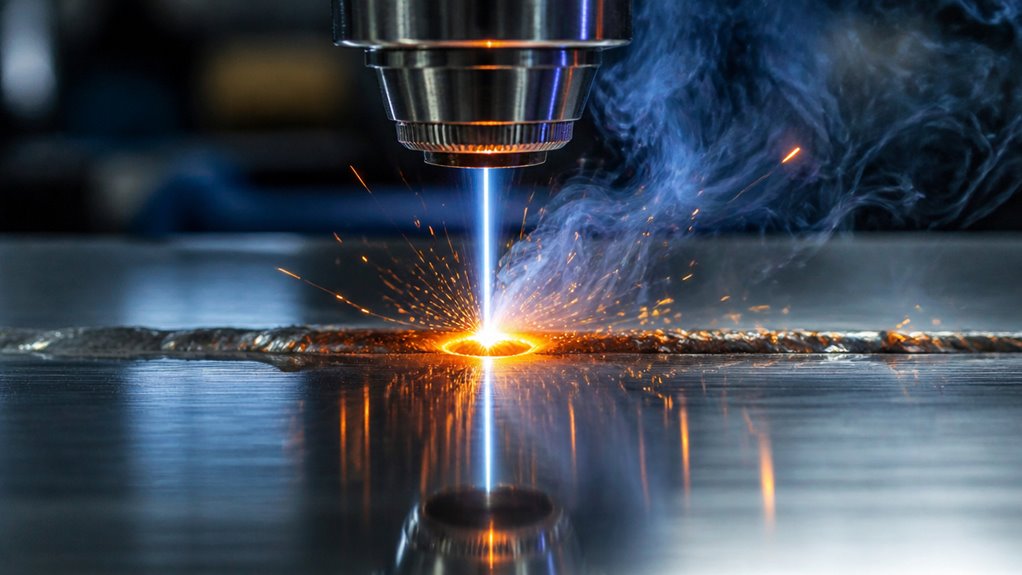
Laser beam welding uses a focused, coherent laser beam to precisely melt and join metals or thermoplastics at the joint.
You’ll get strong, narrow welds with minimal heat distortion and fast cooling, which reduces post-weld adjustments.
This non-contact method suits thin, delicate parts and complex shapes, enabling high automation and consistent quality.
You’ll find it ideal for industries demanding precision and efficiency.
Understanding its materials, advantages, and challenges will show you why it’s such a valuable process.
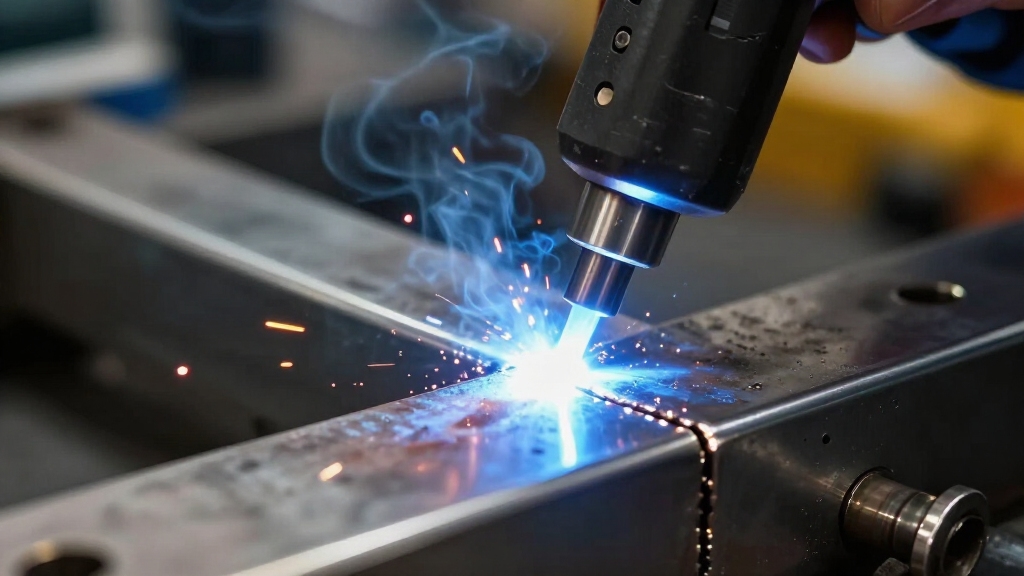
Laser beam welding uses a concentrated laser beam to precisely join materials by melting the base metal at the joint. You direct a focused beam of coherent light at the weld seam, delivering intense energy that melts the material locally.
This molten pool solidifies quickly, forming a strong, narrow weld with minimal heat-affected zones. Some systems employ keyhole welding, where the laser creates a vapor cavity for deep penetration and a high depth-to-width ratio.
You’ll find the process non-contact, avoiding physical tool wear and contamination. Automation or robotics often control beam positioning and parameters, ensuring repeatable, high-quality welds. Effective use of shielding gases helps prevent oxidation and stabilizes the welding process.
Laser beam welding really shines when it comes to certain materials. It works particularly well with metal alloys like steel, titanium, aluminum, and nickel. You’ll also find that some thermoplastics and ceramics are great candidates, as they can melt and resolidify effectively.
Now, it’s important to note that not all materials are ideal for this process. Highly reflective materials, such as copper and certain aluminum alloys, can present some challenges. The reason? They tend to absorb less laser energy, which can complicate the welding process. Using shorter-wavelength lasers can improve energy absorption and welding efficiency for these reflective materials.
Selecting the right metal alloys plays a crucial role in achieving ideal results with beam welding. You’ll want to focus on alloys that absorb laser energy effectively and exhibit favorable thermal conductivity to minimize distortion.
Commonly compatible alloys include those with moderate reflectivity and good weldability, ensuring strong, defect-free joints. Key compatible metal alloys include:
Steel alloys (carbon and stainless steels) for structural and automotive parts.
Titanium alloys favored in aerospace due to high strength-to-weight ratio.
Aluminum alloys with controlled surface oxides for lightweight applications.
Nickel-based superalloys used in high-temperature environments.
When selecting materials, consider reflectivity and thermal diffusivity to optimize energy absorption and weld quality. Laser welding is especially effective on these alloys due to its ability to produce a narrow heat-affected zone, which minimizes distortion and preserves material integrity.
When working with thermoplastics and ceramics, understanding their melting and resolidification behavior is essential for effective laser beam welding.
You need to control the laser parameters carefully, as thermoplastics soften and flow upon heating. This allows the laser to create a strong joint when cooled.
Ceramics, however, require precise energy input since many are brittle and have high melting points. Partial melting or sintering often forms the bond.
You must consider absorption rates and thermal conductivity differences to optimize weld quality. Proper joint design and laser wavelength selection help manage heat distribution and prevent cracking or deformation.
Similar to ultrasonic welding, precise control of energy input is critical to avoid defects and ensure strong, reproducible joints through optimized weld pressure and energy delivery.
Extending laser beam welding from thermoplastics and ceramics to highly reflective metals introduces unique challenges that affect process efficiency and weld quality.
When you weld materials like aluminum, copper, or gold, their high reflectivity can deflect laser energy. This reduces absorption and increases process instability. You must carefully manage these factors to achieve consistent welds.
Key challenges include:
Excessive laser reflection causing energy loss and potential equipment damage.
Difficulty in maintaining stable keyhole formation.
Increased risk of porosity and incomplete fusion.
Necessity for surface preparation to reduce reflectivity and improve absorption.
To overcome these, you’ll often adjust laser parameters, apply surface coatings, or use specialized beam delivery methods. Understanding and addressing reflectivity is essential for successful laser welding of these metals. In comparison, electron beam welding achieves deep, precise welds with minimal distortion by using a focused electron beam in a vacuum environment, which helps maintain beam coherence and weld integrity.
With laser beam welding, you can expect impressive precision. The focused energy and minimal heat input mean that there’s less heat distortion, which is great for maintaining the integrity of delicate or thin materials.
And it doesn’t stop there! This process also boosts production efficiency. You’ll find that it allows for faster, automated welding while still delivering consistent quality. It’s a win-win for anyone looking to improve their welding operations!
Additionally, laser welding’s high energy density enables narrow, consistent welds ideal for precision applications.
Laser beam welding consistently delivers exceptional precision, making it ideal for applications demanding tight tolerances and minimal thermal distortion.
You benefit from a highly focused laser beam that controls heat input precisely.
This enables narrow, clean welds on thin or delicate materials.
This precision reduces the need for post-weld machining and guarantees consistent joint integrity.
Key benefits include:
Accurate control of weld penetration and width for complex geometries.
Minimal weld spatter and defects due to stable, concentrated energy.
Ability to join small, intricate parts without damaging adjacent areas.
Repeatable, automated processes that maintain tight quality standards.
Like plasma welding, laser beam welding provides excellent control over heat input to ensure superior weld quality.
With its highly concentrated heat input, laser beam welding minimizes heat distortion during joining. You benefit from a reduced heat-affected zone (HAZ), preserving the mechanical properties and dimensional stability of the base material.
This precise energy delivery means less thermal expansion and contraction, reducing residual stresses and warping. You can weld thin or delicate parts without compromising their integrity.
The process achieves strong joints by generating heat without melting the base materials, similar to solid-state joining techniques.
| Welding Method | Heat Input | Typical Distortion |
|---|---|---|
| Laser Beam Welding | Low, focused | Minimal |
| TIG Welding | Moderate, diffuse | Moderate |
| MIG Welding | High, broad | Significant |
Minimizing heat distortion preserves material integrity and streamlines the overall manufacturing process. With laser beam welding, you benefit from faster cycle times due to rapid, localized heating and cooling.
This precision reduces the need for rework and secondary finishing steps, directly enhancing throughput. The non-contact nature of the process lets you automate welding with robotic systems, ensuring consistent quality and repeatability.
Key factors for enhanced production efficiency include:
Single-pass welding on thicker materials cuts down processing time. Narrow heat-affected zones reduce post-weld adjustments.
Flexible beam delivery adapts quickly to varying joint geometries. Integration with automated lines boosts production scalability.
Additionally, maintaining optimal shielding gas flow rates is essential to prevent oxidation and porosity, ensuring consistent weld quality and reducing post-weld defects.
Although laser beam welding offers remarkable precision and efficiency, you’ll encounter several challenges that can impact its performance and cost-effectiveness.
Laser beam welding delivers exceptional precision but presents challenges affecting both performance and cost-efficiency.
First, the process demands precise joint fit-up due to the narrow, focused beam. Even slight misalignments can cause weld defects.
You’ll also face difficulties with highly reflective materials like copper or aluminum alloys. These materials reduce laser absorption and welding efficiency.
Additionally, initial equipment costs are markedly higher than traditional welding methods. This may limit adoption for smaller operations.
Operator skill and strict process control, including shielding gas setup, are critical to maintain weld quality and consistency.
Finally, safety is paramount, as laser radiation poses serious eye and skin hazards. This requires controlled environments and protective measures to prevent accidents.
Laser-beam welding generates intense, focused heat exceeding 10,000°C arc temperatures, enabling micro-welding and aerospace applications.
Overcoming the challenges of joint fit-up accuracy and process consistency in laser beam welding often calls for automated solutions.
By integrating robotics, sensors, and control systems, you can enhance precision and repeatability, reducing human error and variability.
Automation lets you maintain exact laser positioning and optimize parameters in real time, vital for narrow, highly focused beams.
Key automation benefits include:
These technologies let you achieve tighter tolerances, minimize defects, and guarantee consistent weld quality.
This is critical for high-precision applications where manual welding falls short.
Laser beam welding frequently plays a crucial role across diverse industries due to its precision and efficiency.
In automotive manufacturing, you’ll find it joining body panels, chassis parts, and battery tabs with minimal distortion.
Aerospace applications leverage LBW for fabricating titanium and aluminum structures, engine components, and fuselage assemblies, where accuracy and strength are critical.
You can also use it in electronics for welding connectors and sensor components, benefiting from its fine control.
In medical device production, LBW joins implants and surgical tools, ensuring biocompatible, defect-free welds.
Additionally, jewelry and tooling industries rely on LBW to perform intricate repairs and join dissimilar metals with low heat input.
Its adaptability to various materials and geometries makes LBW an essential process across high-precision manufacturing sectors.
Working with laser beam welding requires strict adherence to safety protocols because the equipment emits highly concentrated light capable of causing severe eye and skin injuries.
Laser beam welding demands strict safety measures due to intense light that can cause serious eye and skin harm.
You must protect yourself and others by implementing all-encompassing safety measures. Always wear laser safety goggles rated for the specific laser wavelength to prevent retinal damage.
Use protective clothing to shield skin from burns and harmful radiation. Properly enclose or shield the welding area to limit stray beam exposure.
Make certain adequate ventilation to remove hazardous fumes generated during welding.
Use interlocks and warning signs to control access to the laser area. Regularly inspect and maintain laser equipment for safe operation.
Train operators thoroughly on laser hazards and emergency procedures. Avoid reflective materials near the beam path to prevent unintended reflections.
Following these precautions assures a safe working environment during laser beam welding.
Laser beam welding offers more flexibility than electron beam welding because you don’t need a vacuum environment, making setup easier.
You’ll find LBW provides high precision with lower equipment costs but slightly less penetration depth compared to EBW.
EBW, operating in vacuum, achieves deeper welds and less contamination but requires complex, expensive setups.
You’ll need to clean and inspect optics regularly since up to 30% of power loss can stem from dirty lenses.
Replace protective windows and filters on schedule to prevent contamination.
Calibrate the laser source and alignment monthly to maintain beam focus and accuracy.
Don’t forget to check cooling systems and gas supplies frequently to avoid overheating or inconsistent shielding.
Proper maintenance guarantees consistent weld quality and prolongs equipment life.
You generally can’t use laser beam welding on plastics other than thermoplastics because the process relies on melting and resolidifying the material.
Thermosetting plastics don’t melt; they decompose or char instead, making welding ineffective.
If you need to join thermosets, you’ll have to explore alternative methods like adhesives or mechanical fastening.
Keep in mind that laser welding works best with materials that respond predictably to localized heating.
Ambient temperature affects laser beam welding quality by influencing thermal gradients and cooling rates.
If the environment is too cold, it can cause rapid cooling, increasing residual stresses and potential cracking.
Conversely, high ambient temperatures may slow cooling, affecting weld microstructure and mechanical properties.
You need to control or compensate for ambient conditions to maintain consistent weld penetration, minimize distortion, and guarantee peak fusion, especially in precision or automated setups.
You’ll find that laser beam welding has relatively low environmental impacts. It uses less energy than traditional welding, reducing carbon emissions.
The process produces minimal fumes and waste, minimizing pollution. Plus, its precision means less material waste and fewer repairs.
However, you should manage laser equipment energy use and ensure proper ventilation to handle any hazardous fumes safely. Overall, it supports cleaner, more sustainable manufacturing practices.
Laser beam welding isn’t just a tool; it’s a precision powerhouse reshaping industries. You’ll find its unmatched speed and accuracy ideal for metals like steel and aluminum, yet you must navigate challenges like equipment cost and safety rigorously.
Embracing automation elevates your control, pushing efficiency further. So, when you consider laser beam welding, remember: it’s not just about joining materials. It’s about forging the future with exactness and innovation at your fingertips.