Phone:
(701)814-6992
Physical address:
6296 Donnelly Plaza
Ratkeville, Bahamas.

Phone:
(701)814-6992
Physical address:
6296 Donnelly Plaza
Ratkeville, Bahamas.

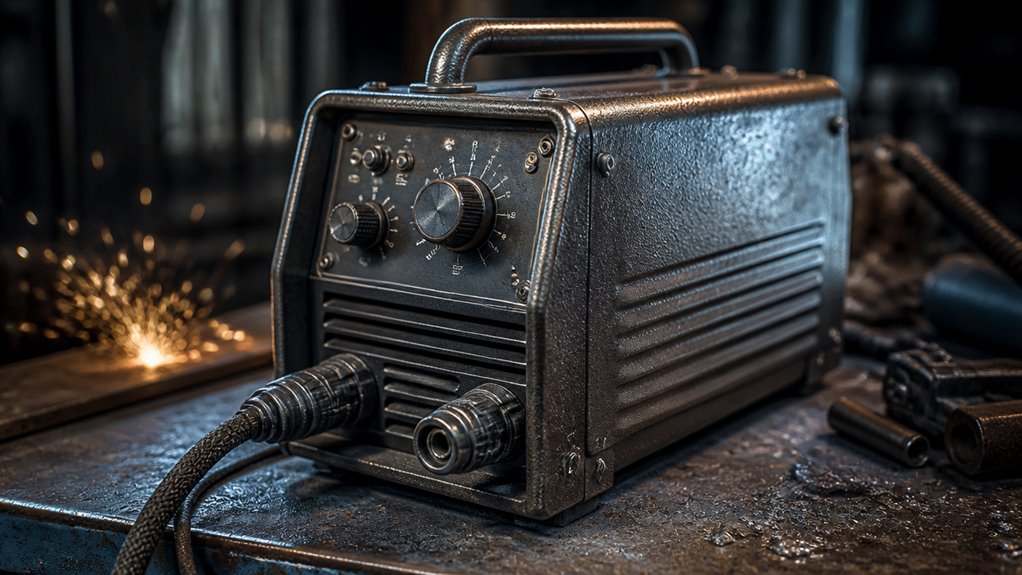
The Lincoln 140HD welder runs on standard 120V power with a 20% duty cycle at 90 amps. This makes it well-suited for home projects and light fabrication.
You’ll appreciate its precise wire feed, tool-free adjustments, and compatibility with MIG and flux-cored welding on mild steel up to 1/4 inch.
A spool gun lets you handle aluminum effectively, though the limited duty cycle means managing weld times carefully.
Explore how these features impact real-world performance and versatility.
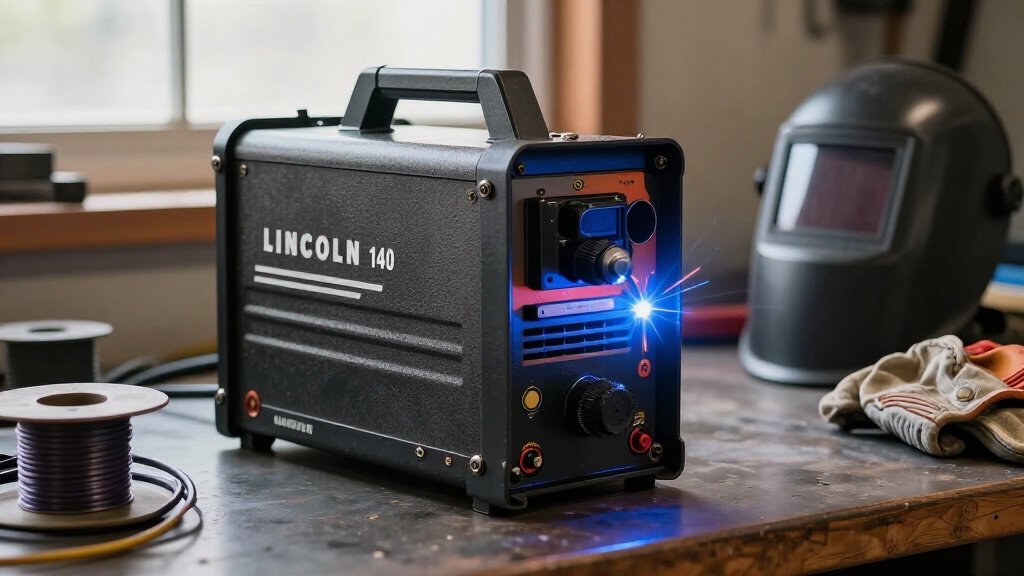
The Lincoln 140HD stands out as a practical choice for home use due to its compatibility with standard 120V household power. This eliminates the need for specialized wiring.
You’ll find it draws a manageable 20A at rated output, making it suitable for typical residential circuits. Its output ranges from 30 to 140 amps, allowing you to handle thin sheet metal up to 1/4 inch mild steel with precision.
The machine’s 20% duty cycle at 90 amps aligns well with intermittent welding tasks common in home projects.
Weighing around 50 pounds and featuring compact dimensions, it’s transportable enough for garage or workshop setups.
While the Lincoln 140HD is ideal for light-duty tasks, it lacks the industrial-grade drive system and higher amperage output found in welders like the Hobart 190 Mig Welder.
You’re going to love the Lincoln 140HD! It’s super portable and designed with beginners in mind, making setup and use a breeze in your home workshop.
What’s really great is its versatility. Whether you’re tackling MIG or flux-cored welding, this machine can handle various mild steel thicknesses with ease.
And let’s talk about convenience! The tool-free adjustments make changing wire spools and switching polarity quick and hassle-free, so you can spend more time welding and less time fiddling with your equipment.
Plus, its operation on standard 115V household power means no special wiring is needed, making it perfect for home-shop compatibility.
A welder that balances portability with user-friendly features can markedly streamline your home welding projects. The Lincoln 140HD weighs around 50 lbs, making it manageable to move and store without sacrificing ruggedness. Its compact dimensions (13.7 x 10.15 x 17.9 in.) fit easily in home workshops.
The tool-less setup, including spool mounting and polarity changes, minimizes downtime and learning curves. Operating on standard 120V power, it avoids costly electrical upgrades, perfect for beginners.
Choosing the right welding rods for your projects will further enhance the quality and durability of your welds.
| Feature | Specification | Benefit |
|---|---|---|
| Weight | 50 lbs (22.7 kg) | Easy portability |
| Tool-less Design | Spool & polarity setup | Quick, beginner-friendly |
| Input Power | 120V / 20A | Compatible with household power |
This welder suits novices, simplifying initial operation and transport.
Open multiple welding processes with the Lincoln 140HD, which supports both MIG (GMAW) and flux-cored (FCAW) wire-feed methods.
You can efficiently handle mild steel projects ranging from thin 24-gauge sheet metal up to 1/4 inch, or even 5/16 inch thickness depending on application.
This amperage flexibility, from 30 to 140 amps, lets you tailor heat input and penetration precisely.
The welder’s 120V input power and maximum 33V open-circuit voltage provide consistent arc stability for both welding modes.
While aluminum welding isn’t native, optional spool gun compatibility expands your material versatility.
The precise wire feed system guarantees smooth, controlled deposition, critical for clean bead profiles and minimal spatter.
Because home welders often juggle multiple tasks, the Lincoln 140HD prioritizes tool-free adjustments to streamline setup and maintenance. You can quickly adapt the machine without extra tools, reducing downtime and enhancing workflow efficiency. This design supports precise control and fast configuration changes, essential for varied home projects.
Key tool-free features include:
These features decrease setup complexity, letting you focus on welding quality rather than machine preparation. The tool-free approach also minimizes errors during adjustments, improving repeatability and ensuring consistent weld performance in your home workshop. Additionally, tool-less drive roll changes like those on the Lincoln 140HD help minimize downtime and ease maintenance, enhancing overall welding efficiency.
Let’s break this down: the Lincoln 140HD has a 20% duty cycle at 90 amps. What does that mean for you? Well, it limits how long you can weld continuously before the machine needs a break to cool down.
Also, keep in mind that it operates on a 120V input. This means it won’t deliver as much power as some higher-voltage machines. So, if you’re planning on tackling thicker materials, you might run into some limitations on both the thickness you can weld and how long you can work without stopping.
But don’t worry! If you manage your welding interruptions wisely, you can really maximize the performance of your Lincoln 140HD without risking any damage to the unit. Just take those breaks when you need them, and you’ll be good to go!
For welding 1/4-inch steel with this machine, you will typically need around 90–130 amps, which is within the Lincoln 140HD’s output range but requires careful management due to its duty cycle.
Although it might seem like a simple specification, understanding the duty cycle is crucial for effectively managing your Lincoln Weld-Pak 140HD’s welding performance and preventing overheating.
The duty cycle indicates the percentage of time within a 10-minute period that the welder can operate at a given amperage before requiring a cooldown. For example, a 20% duty cycle at 90 amps means you can weld for 2 minutes and then must rest for 8 minutes.
Keep these points in mind when using your Lincoln 140HD:
Understanding this guarantees you optimize performance without compromising equipment safety. To avoid thermal tripping and ensure reliable operation, it is important to adjust breaker size according to the welder’s duty cycle rating.
When operating the Lincoln Weld-Pak 140HD on standard 120V household power, its duty cycle and output limitations stem directly from this input constraint.
The welder delivers up to 140 amps but is rated for a 20% duty cycle at 90 amps. This means you can weld continuously for only two minutes within a ten-minute period before overheating risks arise.
The 120V input limits maximum current draw to about 20 amps, restricting the machine’s capacity compared to 240V welders. This power ceiling affects the welder’s ability to sustain higher amperage welding on thicker materials.
Understanding this helps you set realistic expectations: the Lincoln 140HD excels in light-to-moderate home-shop tasks but isn’t designed for prolonged heavy-duty operation due to inherent electrical and thermal constraints imposed by standard household power.
Following proper duty cycle guidelines is essential to prevent equipment strain and ensure safe operation with this welder.
The limited duty cycle of the Lincoln Weld-Pak 140HD requires careful management to avoid overheating and downtime. At 90 amps, you get only 20% duty cycle, meaning 2 minutes of welding followed by 8 minutes of cooling within a 10-minute window.
To optimize your workflow, consider these strategies:
Monitor your welding intervals closely to prevent thermal shutdown.
Use lower amperage settings when possible to extend duty cycle duration.
Plan short, efficient welds rather than continuous passes at max output.
Allow adequate cooling periods and avoid overheating the machine components.
Understanding these constraints lets you balance power demands with machine protection. This ensures consistent performance without compromising longevity or safety during your projects. Always apply the duty cycle multipliers to properly size your circuit breaker and avoid nuisance trips.
Since the Lincoln 140HD offers an output range of 30 to 140 amps, it effectively handles steel thicknesses from thin sheet metal up to about 1/4 inch. Some sources extend its capacity to 5/16 inch mild steel.
You’ll find it suitable for welding 24-gauge up to moderately thick plates without requiring specialized power setups. The 90-amp rating at a 20% duty cycle supports short, precise welds on thicker stock, but continuous heavy welding on 5/16-inch material may necessitate breaks to avoid overheating.
Its wire feed speed and voltage range allow you to fine-tune parameters for clean penetration and minimal spatter across varying thicknesses. Overall, the 140HD strikes a balance between versatility and power, catering well to home-shop projects involving common mild steel thicknesses.
For safe and effective operation, using proper personal protective equipment and ensuring adequate ventilation is essential when welding.
Handling various steel thicknesses effectively sets the stage for understanding how the Lincoln 140HD performs with its dual welding modes: MIG and flux-cored.
You’ll appreciate the machine’s versatility in switching between these processes, each offering distinct advantages depending on your project.
When using MIG welding, the 140HD delivers smooth arc stability and clean weld beads on mild steel up to 1/4 inch.
Experience smooth arc stability and clean weld beads on mild steel up to 1/4 inch with MIG welding.
Flux-cored welding enhances portability by eliminating the need for shielding gas, ideal for outdoor or drafty conditions.
Key operational insights include:
This setup suits hobbyists targeting flexibility in welding techniques. Its duty cycle and inverter technology contribute to reliable performance and precise current control across tasks.
Although the Lincoln 140HD excels at MIG and flux-cored welding on mild steel, it requires a spool gun attachment to effectively weld aluminum.
Aluminum’s softness and tendency to tangle in standard wire feeders make the spool gun essential.
When you need to weld thin to medium-thickness aluminum, typically from 18 gauge up to 1/4 inch, the 140HD paired with a spool gun delivers controlled wire feed and reduces birdnesting issues.
Use the spool gun when precision, clean welds, and minimal wire feed interruptions are critical.
The spool gun’s direct feed mechanism allows stable aluminum wire delivery at the lower amperage range the 140HD offers.
Avoid using the spool gun for thick aluminum sections beyond its power capacity, as the machine’s 140-amp max output and 20% duty cycle limit heavy-duty aluminum welding performance.
You’ll find the Lincoln 140HD welder typically includes a gas hose, regulator, sample wire spools, MIG nozzle, spindle adapter, and a welding guide DVD.
These accessories support immediate setup and basic operation, enhancing user convenience. However, the spool gun for aluminum welding is optional and not included.
This package suits most mild steel applications out of the box, ensuring you can start welding with minimal additional purchases.
You’ll find the welder pleasantly substantial, tipping the scales at about 50 pounds (22.7 kg).
While it’s not featherlight, its dimensions—roughly 13.7 x 10.15 x 17.9 inches—offer a manageable footprint for a home shop.
This makes it moderately portable; you can transport it without specialized equipment, but it’s best to plan your moves carefully.
Its weight strikes a balance between stability during use and ease of relocation.
Yes, the Lincoln 140HD runs directly on a standard 120V household outlet, making it convenient for home use without special wiring.
It draws 20 amps at rated output and operates on typical single-phase 60Hz power.
This compatibility lets you weld mild steel projects with flexibility.
However, keep in mind the 20% duty cycle limits continuous operation at higher currents on standard household circuits.
Yes, the Lincoln 140HD is suitable for beginners. You’ll appreciate its user-friendly setup, tool-less spool mounting, and simple polarity changes, which reduce complexity.
Its 120V operation fits standard outlets, and the adjustable 30–140A range gives you control over various mild steel thicknesses. While the 20% duty cycle limits extended use, it’s ideal for hobbyists and light fabrication.
You get wire feed speeds ranging from 50 to 500 inches per minute, or 1.3 to 12.7 meters per minute. This range lets you precisely control weld bead size and penetration for various materials.
You can adjust the speed to suit thin sheet metal or thicker mild steel up to 1/4 inch. The consistent feed rate helps maintain quality and reduces spatter, giving you better control over your welding projects every time.
When it comes to home welding projects, the Lincoln 140HD fits the bill like a glove. Its robust duty cycle and versatile power range let you tackle various steel thicknesses without breaking a sweat.
Whether you’re MIG welding or using flux-cored wire, this machine delivers consistent performance. If aluminum’s on your agenda, the spool gun option has you covered.
With the Lincoln 140HD, you’re well-equipped to hit the nail on the head every time.