Phone:
(701)814-6992
Physical address:
6296 Donnelly Plaza
Ratkeville, Bahamas.

Phone:
(701)814-6992
Physical address:
6296 Donnelly Plaza
Ratkeville, Bahamas.

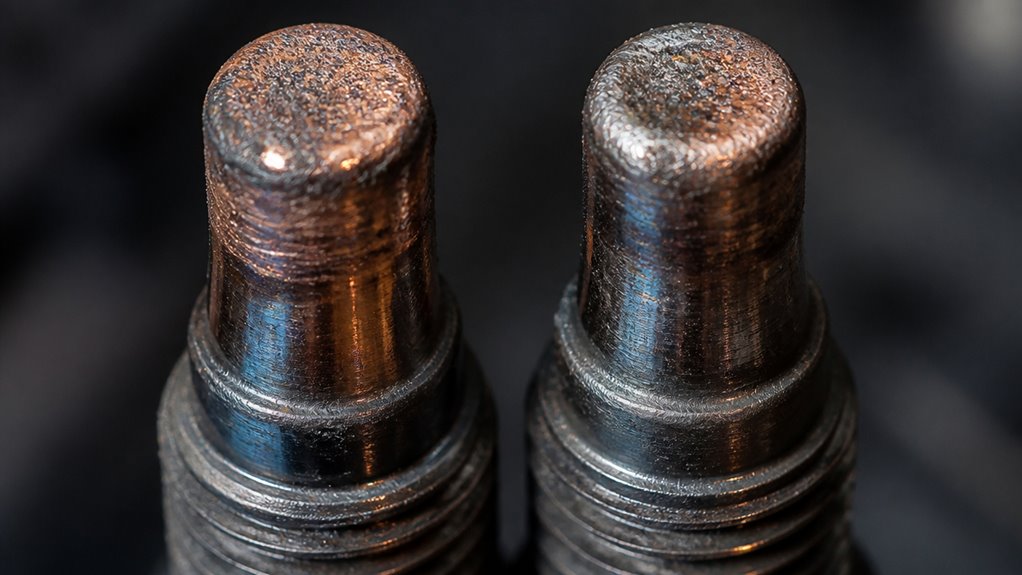
You’ll want Miller spot welder tips that precisely match your tong style and welder model, ensuring proper contact and consistent welds.
RWMA Class 2 copper alloy tips balance conductivity and wear resistance for most mild and stainless steel jobs.
Adjust tong gap carefully to avoid weak or inconsistent welds. Inspect tips regularly for pitting or deformation to maintain performance.
Managing heat with water-cooled tips in demanding applications prevents premature wear.
Learn how to optimize tip selection and maintenance for reliable spot welding.
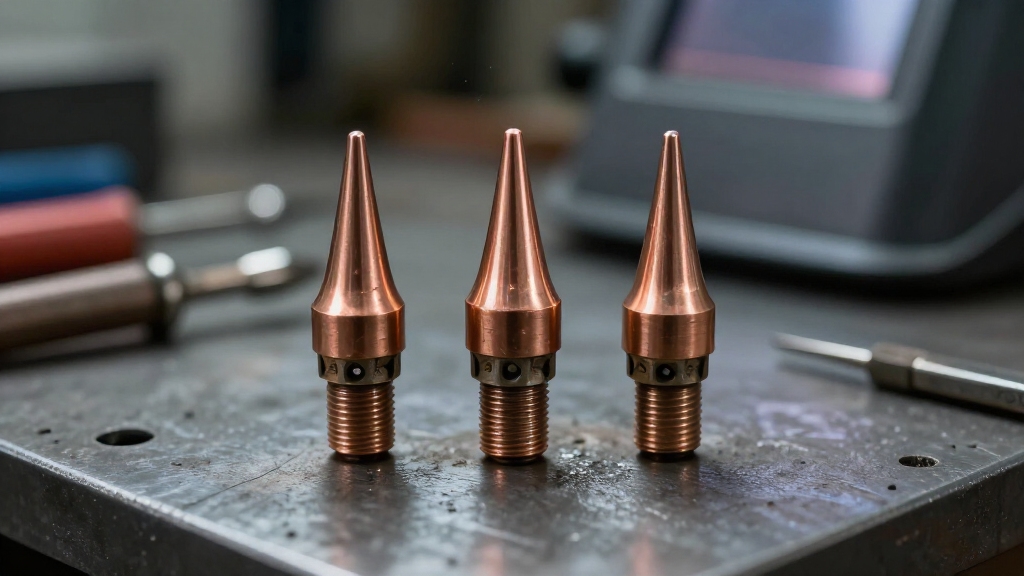
Selecting the right Miller spot welder tips requires matching the tip type to your specific tong style and welder model to assure peak contact and consistent welds.
For instance, standard tips suit standard, TT-6, TT-9, and G-7 tongs on portable models like AASW 1510M or MSW-41/42.
Pointed tips fit No. 1 90-degree tongs used on PSW-1020ATT systems.
You must verify compatibility to prevent poor electrode contact, which compromises weld quality.
Opt for RWMA Class 2 copper alloy tips for durability and consistent heat transfer.
Also, consider whether water-cooled tips are necessary for your application.
Tip sets are usually sold in pairs, so make certain you have the correct quantity.
Regular dressing and maintenance of tips are essential to prevent electrode tip wear and ensure stable weld quality over time.
To get the tong gap just right, start by measuring the total thickness of the weldment. Then, subtract half the thickness of the thinnest workpiece. This step is crucial for maintaining peak pressure during the welding process.
When the gap is properly adjusted, it has a direct impact on weld quality. It helps ensure that you have consistent electrical contact and effective heat transfer. If you find that your welds are coming out weak or if there’s excessive deflection in the tongs, it’s time to troubleshoot.
Make sure to double-check the gap accuracy. Also, keep an eye out for any deformation of the tips or possible contamination. These factors can significantly affect your results!
Accurate tong gap adjustment plays a critical role in achieving consistent spot welds by ensuring proper electrode contact and pressure.
To measure correctly, first determine the total thickness of the weldment.
Then subtract half the thickness of the thinnest workpiece to establish the target tong gap.
Use precise calipers or feeler gauges to set the gap, ensuring slight tong deflection when parts are inserted under welding pressure.
After adjustment, perform a sample weld to validate the settings.
Carefully inspect electrode tip contact surfaces for uniformity and absence of contamination or deformation, as these affect current flow and weld consistency.
Regular verification of the tong gap and tip condition maintains repeatability.
Employ systematic measurement and testing to uphold spot welding accuracy and process reliability.
Maintaining clean and properly shaped electrode tips is essential to ensure consistent current flow and minimize wear during welding.
Consistent weld quality hinges on maintaining the correct tong gap, as even slight deviations can disrupt electrode contact and current flow.
You must set the gap to the total weldment thickness minus half the thinnest workpiece thickness. This guarantees peak pressure and current density for uniform weld nuggets.
Incorrect gaps cause weak welds, excessive tip wear, or electrode sticking. After adjustment, verify by a sample weld and inspect the electrode contact surfaces for deformation or contamination.
Proper control of electrode force, current, and weld time is essential for consistent weld quality.
| Tong Gap Setting | Effect on Weld Quality |
|---|---|
| Correct (per formula) | Uniform weld nugget, strong bond |
| Too narrow | Excessive pressure, tip indentation |
| Too wide | Poor contact, weak welds |
| No gap adjustment | Inconsistent weld strength |
| Post-adjustment verification | Confirms quality consistency |
Monitoring tong deflection is critical for maintaining the proper electrode gap and ensuring stable weld quality. You should adjust the tong gap to the total weldment thickness minus half the thickness of the thinnest workpiece.
When you insert the parts and apply welding pressure, expect a slight tong deflection. This guarantees optimal contact and current flow. If deflection is excessive, it can cause inconsistent weld nuggets or electrode misalignment.
After adjustment, perform a sample weld and inspect for deformation or contamination on tip contact surfaces. Use visual and mechanical testing to verify weld strength.
Regularly check tong pressure and tip condition, as wear or improper settings can alter deflection and degrade weld consistency. Precise tong gap management directly influences heat transfer and weld reliability.
Additionally, maintaining electrode cooling through water-cooled hoses helps prevent overheating that can affect electrode shape and tong deflection.
When you operate Miller spot welder tips, you must prioritize safety to prevent injuries and equipment damage. Always wear flame-resistant clothing, insulated gloves, and a face shield or safety goggles with side shields to protect against sparks and molten metal.
Make certain the work area is free from flammable materials and keep a fire extinguisher nearby. Never weld with wet gear or on standing water to avoid electrical hazards.
Position workpieces correctly between tips before energizing the machine. Avoid using tongs or tips to pull parts together, as this stresses the equipment.
Inspect tong gap and tip alignment before welding to maintain consistent contact and prevent arcing. Follow these protocols rigorously to achieve safe, reliable spot welding results with Miller tips.
Additionally, ensure the ground clamp is attached securely to clean, bare metal near the welding area to maintain proper conductivity and prevent electrical faults.
Proper maintenance and cleaning of Miller spot welding tips directly impact weld quality and equipment longevity. You should inspect tips regularly for deformation and contamination, as worn or dirty tips reduce electrical contact and heat transfer efficiency.
Use a non-abrasive wire brush or specialized tip dressing tool to remove scale and oxidation without altering tip geometry. Avoid excessive grinding, which can change the tip profile and impair weld consistency.
Maintain proper tong pressure to assure uniform contact at the tip faces, preventing uneven wear. After cleaning, verify alignment and seating to preserve precise contact with the workpieces.
Consistent cleaning and inspection reduce tip overheating and improve weld nugget uniformity. This ultimately extends tip life and maintains peak welding performance. Additionally, controlling electrode force is essential to ensure proper metal contact and avoid weak or inconsistent welds.
Since tip condition directly affects weld quality, you need to recognize clear signs indicating that your Miller spot welder tips require replacement. Worn or damaged tips can compromise heat transfer and weld consistency, making timely replacement critical.
Watch for these key indicators:
Regular inspection and prompt replacement preserve weld integrity.
Always match replacement tips to your tong model to maintain proper alignment and contact pressure.
Additionally, ensure tips are stored in clean, dry, organized containers to prevent corrosion and damage that could affect performance.
Although selecting the right Miller spot welder tip material may seem straightforward, aligning the tip alloy with your specific welding application is essential for optimizing performance and longevity.
Miller tips primarily use RWMA Class 2 copper alloy, chosen for its balance of electrical conductivity and wear resistance during repeated weld cycles. You should match tip material to the tong style and welder model.
Standard Class 2 tips suit lower-amperage welding on mild, galvanized, and stainless steels. For higher-demand applications, consider water-cooled tips to manage heat buildup and prevent deformation.
Using incompatible alloys or improper tip types risks uneven heat transfer, accelerated tip wear, and inconsistent weld quality.
Consequently, select tips that maintain precise contact pressure and withstand your application’s amperage and material thickness to guarantee reliable, repeatable welds.
Proper heat input control is critical to prevent tip overheating and extend the service life of welding tips.
You’ll find Miller standard tips fit standard, TT-6, TT-9, and G-7 tongs for portable welders, designed mainly for mild, galvanized, or stainless materials at lower amperages.
Pointed tips, however, suit No. 1 90-degree tongs used on specific PSW and SSW systems, offering precise weld placement.
Choosing between them depends on your tong style and welder system to guarantee proper contact, consistent heat transfer, and peak weld quality.
You can’t just slam Miller spot welder tips onto any old welding system without careful consideration.
Tip compatibility hinges on matching tong style and welder model precisely.
Using Miller tips on non-Miller systems risks poor contact, inconsistent welds, and tip deformation, undermining performance.
Always verify specifications, tip size, and alloy to guarantee peak heat transfer.
When in doubt, consult manufacturer guidelines to avoid costly mistakes and compromised weld quality.
Water cooling improves spot welder tip performance by efficiently dissipating heat, preventing tip overheating during repeated weld cycles.
This maintains consistent tip temperature, reducing thermal deformation and wear, which preserves precise contact surfaces. You’ll get more stable weld quality and longer tip life.
Additionally, cooler tips enhance electrical conductivity and reduce the risk of tip sticking or contamination buildup. This ensures reliable, repeatable welds in demanding applications.
You’ll find Miller spot welder tips best suited for mild steel, galvanized steel, and stainless steel.
Their RWMA Class 2 alloy construction provides wear resistance ideal for repeated weld cycles on these materials.
When welding lower-amperage applications involving these metals, the standard tips maintain consistent heat transfer and weld quality.
Make sure to select tips matching your tong style and welder model for peak contact and reliable welds.
No, Miller spot welder tips aren’t compatible with all tong models. You need to match tip style specifically to the tong type and welder model for proper fit and consistent welds.
Standard tips fit standard, TT-6, TT-9, and G-7 tongs. Pointed tips suit No. 1 90-degree tongs. Using incompatible tips risks poor contact, decreased weld quality, and potential equipment damage.
Always verify compatibility before installation.
To maximize Miller spot welder tips’ performance, prioritize precise pairing of tip material with your project. Perfect the tong gap for consistent connections and practice proper cleaning and careful handling.
Consistently checking for wear prevents premature pitfalls, preserving productivity and precision. By balancing these basics—best material matching, meticulous maintenance, and measured adjustments—you’ll secure strong, steady spot welds with superior safety and efficiency.
This ensures your equipment excels under every demanding application.