Phone:
(701)814-6992
Physical address:
6296 Donnelly Plaza
Ratkeville, Bahamas.

Phone:
(701)814-6992
Physical address:
6296 Donnelly Plaza
Ratkeville, Bahamas.

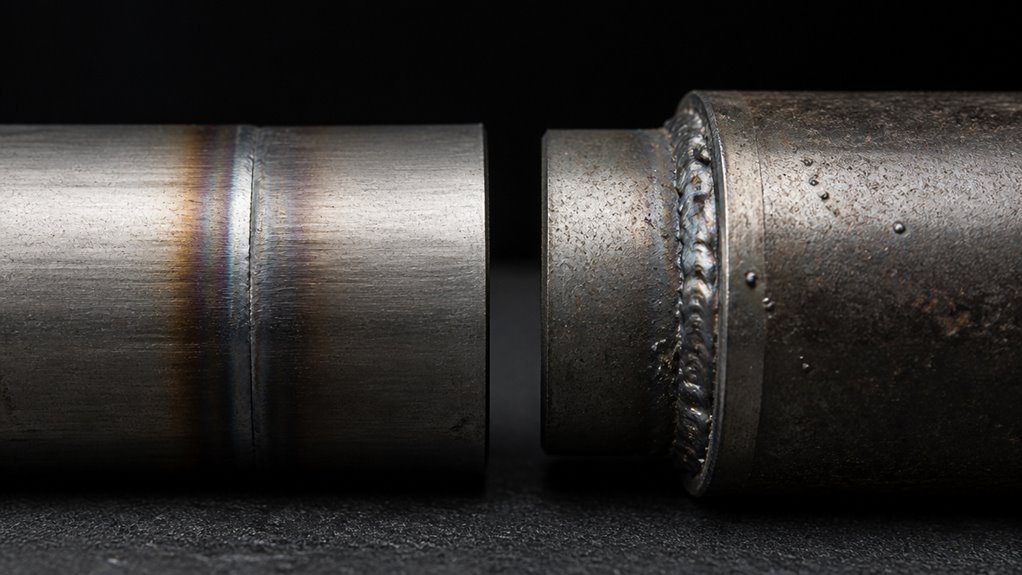
If you need strong, high-pressure joints for pipes over 2 inches, butt welds are your go-to. They provide full penetration and near-parent metal strength.
Socket welds suit smaller pipes, typically 2 inches and below. They offer quicker, simpler installation but have limited pressure capacity and potential crevice corrosion risks.
Socket welds create flow disturbances inside the pipe and require more inspection effort. Understanding these differences helps you choose the best weld type based on size, strength, and maintenance needs.
| Feature | Butt Weld | Socket Weld |
|---|---|---|
| Joint Design | Edge-to-edge groove weld | Pipe inserted into fitting with external fillet weld |
| Weld Penetration | Full penetration | No root penetration |
| Joint Strength | About 90–100% of parent pipe | About 70–80% of parent pipe |
| Best Pipe Size | All sizes, especially over 2 inches | Small-bore pipes, typically 2 inches and below |
| Pressure Capacity | Excellent; suited for high-pressure systems | Moderate; better for lower-pressure systems |
| Temperature Performance | Excellent | Good for moderate conditions |
| Internal Bore | Smooth and continuous | Internal step/crevice present |
| Flow Disturbance | Minimal | Greater turbulence and flow disruption |
| Corrosion Risk | Lower | Higher due to crevice formation |
| Installation | Requires beveling, precise fit-up, and skilled welding | Faster and simpler with less preparation |
| Labor Requirement | Higher | Lower |
| Fabrication Cost | Higher | Lower |
| Inspection | Easier NDT with radiography and ultrasonic testing | More difficult; often relies on visual and dye penetrant testing |
| Maintenance | Easier and generally less frequent | More demanding due to crevices and corrosion risk |
| Vibration/Fatigue Resistance | Better | More susceptible to fatigue under cyclic loads |
| Typical Applications | Large piping, high-pressure systems, process piping, critical services | Instrument lines, utility lines, and compact small-bore systems |
| Main Advantage | Superior strength, flow efficiency, and reliability | Simple, quick, and cost-effective installation |
| Main Drawback | More preparation, skill, and fabrication time | Lower strength, flow disturbance, and crevice-corrosion risk |
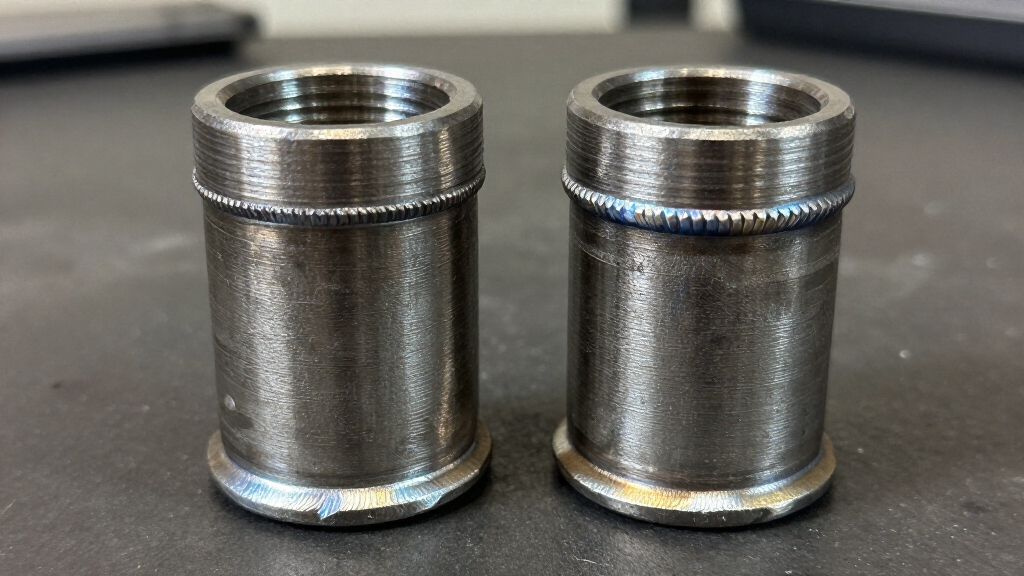
When comparing butt weld and socket weld joint designs, you’ll notice their fundamental differences lie in how the pipes are joined and the resulting weld geometry.
Butt welds join pipe ends edge-to-edge in the same plane, typically with beveled edges to form a groove weld that achieves full penetration. This design guarantees a continuous metal fusion along the joint’s thickness.
In contrast, socket welds involve inserting a pipe into a recessed fitting socket and applying an external fillet weld around the joint, without root penetration. This creates a fillet weld geometry rather than a groove weld.
You’ll find butt welds standard for larger diameters, while socket welds suit small-bore piping due to simpler fit-up and less demanding preparation requirements.
Butt welds provide full penetration for strong, leak-proof connections suitable for load-bearing and pressure applications.
Understanding the joint design differences between butt welds and socket welds sets the stage for evaluating their performance under pressure.
Butt welds offer near-parent-pipe strength, typically achieving 90–100% joint integrity due to full penetration and uniform load distribution. This makes them suitable for high-pressure and high-temperature systems.
Conversely, socket welds rely on a fillet weld around the socket, lacking root penetration. This limits their strength to approximately 70–80% of the pipe’s base material.
As a result, socket welds are best for lower-pressure applications and smaller diameters where maximum structural strength is less critical.
When you select between these weld types, consider that butt welds provide superior pressure handling and durability. Socket welds balance adequate strength with simpler fabrication for moderate pressure systems.
The deliberate 1/16-inch setback in socket welds accommodates thermal expansion, preventing stress cracking and maintaining joint integrity.
Socket welds are great for small-bore pipes, usually 2 inches and below. They’re easier to install and still strong enough for most applications. On the other hand, when you’re dealing with larger diameters, butt welds really shine. They offer full penetration and better joint integrity, which is crucial for more demanding situations. Proper welding preparation and positioning are essential to avoid misalignment and ensure reliable, leak-proof joints, especially in high-pressure applications.
Small-bore socket welds primarily serve pipe sizes of 2 inches and below. They offer a practical solution where compactness and ease of installation take precedence.
You’ll find socket welds ideal for small-diameter piping systems, such as instrument or utility lines. Here, space constraints and quick assembly are critical.
Unlike butt welds, socket welds don’t require beveling or full penetration welds. This simplifies preparation and fit-up.
However, consider that socket weld joints offer lower strength, typically around 70–80% of the parent pipe. They may also introduce flow disturbances due to the internal socket step.
For small-bore lines operating at moderate pressures and temperatures, socket welds provide a reliable, cost-effective joint. Still, in applications demanding higher integrity or larger diameters, butt welds remain the preferred choice.
Additionally, the choice between welding processes, such as stick welding vs TIG, can impact joint quality and suitability based on material thickness and environmental conditions.
Large-diameter butt welds excel in applications requiring robust, full-penetration joints that maintain near-parent-pipe strength across extensive pipe sizes.
When working with pipe diameters above 2 inches, you’ll find butt welds provide superior structural integrity, especially under high pressure and temperature conditions.
Unlike socket welds, which are limited to small-bore piping, butt welds accommodate larger dimensions without compromising joint performance.
Consider these factors when selecting large-diameter butt welds:
Although both butt welds and socket welds serve to join piping effectively, they differ markedly in how they impact internal flow and cleanliness.
With butt welds, you get a smooth, continuous internal bore due to full penetration and edge-to-edge joining. This minimizes flow disturbance and reduces potential accumulation of contaminants, making butt welds preferable for clean or high-purity systems.
Conversely, socket welds create an internal step where the pipe inserts into the fitting socket, generating turbulence and flow disruption. This crevice can trap media, increasing the risk of deposits and localized contamination.
Consequently, when flow efficiency and internal cleanliness are critical, you’ll favor butt welds for their superior bore continuity and reduced crevice areas. Socket welds suit smaller, less demanding applications where ease of installation outweighs flow considerations. Proper environmental conditions such as maintaining temperature and humidity control during installation can further help prevent contamination and ensure weld integrity.
Socket welds can create little pockets, or crevices, where fluids might linger. When that happens, it can lead to localized corrosion.
This type of corrosion can speed up the wear and tear on the material, making it more challenging to inspect.
Proper cleaning and maintenance are essential to prevent crevice corrosion and preserve the integrity of the weld.
When you examine socket weld joints, you’ll find inherent crevice regions where the pipe end seats inside the recessed fitting.
These crevices trap moisture and contaminants, creating localized environments prone to corrosion.
Oxygen depletion within these narrow gaps leads to differential aeration cells, accelerating metal dissolution.
You should recognize that the fillet weld outside the socket doesn’t access the crevice internally, so corrosion protection there’s limited.
Key crevice corrosion factors include:
Understanding these mechanisms helps you anticipate failure modes and select appropriate mitigation strategies for socket welds. Proper cleaning and maintenance, including removal of moisture from crevices, are essential to reduce corrosion risks.
Crevice corrosion in socket welds directly influences maintenance strategies by increasing inspection frequency and complexity.
You’ll need to monitor these joints more rigorously due to the recessed geometry, which traps moisture and contaminants, accelerating localized corrosion.
Unlike butt welds, socket welds form crevices that are difficult to access, requiring specialized inspection techniques such as ultrasonic testing or radiography with enhanced focus on the socket region.
This elevated risk demands more frequent preventive maintenance, including cleaning and protective coating application.
Moreover, repair procedures can be more intricate since corrosion damage often occurs beneath the fillet weld, complicating defect detection and remediation.
Understanding these factors helps you optimize maintenance schedules and reduce unexpected failures, ensuring system reliability despite inherent socket weld vulnerabilities.
Due to the increased risk of crack initiation in stressed or improperly treated welds, controlling preheating and cooling rates during repair is critical to prevent weld failure.
Although socket welds require less extensive surface preparation and simpler fit-up compared to butt welds, you’ll need to account for the higher skill level and precise alignment demanded by butt weld installation.
Socket welds ease prep, but butt welds demand greater skill and precise alignment for reliable joints.
Butt welds require beveling and meticulous surface cleaning to achieve full penetration and structural integrity. You must guarantee exact pipe alignment and consistent root gap to avoid defects.
Socket welds simplify assembly by inserting the pipe into a recessed fitting, reducing preparation time but creating potential flow disturbances.
Consider these factors during installation and fabrication:
This guarantees peak joint performance and longevity. Achieving maximum weld strength also depends on full-penetration joint designs and matching filler metals to base metals regardless of the welding method used.
Beyond installation complexities, cost and time factors strongly influence the choice between socket and butt welds.
When you opt for socket welds, you benefit from lower fabrication costs due to minimal surface preparation and simpler fit-up.
You don’t need to bevel pipe ends, which reduces labor and machining expenses.
The welding process itself is faster, requiring less skilled labor and shorter welding time since socket welds use external fillet welds rather than full-penetration groove welds.
This efficiency translates to quicker project turnaround and reduced labor costs, especially in small-bore piping systems.
However, these savings are balanced against the socket weld’s limited application to smaller diameters and lower pressure ratings.
Therefore, you should weigh cost and time benefits within your system’s design requirements.
When you evaluate inspection and reliability, butt welds typically offer superior performance due to their full-penetration design and smoother internal profile. This facilitates more effective non-destructive testing methods like radiography or ultrasonic inspection.
Socket welds, with their external fillet and lack of root penetration, pose challenges for such inspections. This often limits detection to surface defects.
Consider these inspection and reliability aspects:
Butt welds enable all-encompassing radiographic and ultrasonic testing throughout the joint thickness.
Socket welds often require visual and dye penetrant tests, which are less effective at detecting internal flaws.
The smoother bore of butt welds reduces corrosion and flow disturbance risks, enhancing reliability.
Socket welds have crevice areas prone to corrosion, impacting long-term joint integrity.
You’ll find butt welds more dependable where rigorous inspection and durability are critical.
Since your project’s requirements vary widely based on pipe size, pressure, and environmental conditions, choosing between butt and socket welds demands careful analysis of these factors.
You’ll want to take into account strength, installation complexity, flow quality, and cost. Butt welds suit larger pipes, high-pressure systems, and clean service, while socket welds fit smaller pipes and compact layouts with faster installation.
| Factor | Butt Weld | Socket Weld |
|---|---|---|
| Pipe Size | All sizes, especially large | Small-bore (≤ 2 inches) |
| Strength | High (90–100% parent strength) | Moderate (70–80% parent strength) |
| Installation | Skilled labor, time-intensive | Simpler, quicker |
| Flow & Corrosion | Smooth bore, low corrosion risk | Internal crevices, higher corrosion risk |
Evaluate these to optimize weld selection for your application.
You generally shouldn’t rely on socket welds in seismic or high-vibration environments. Their external fillet welds and lack of full penetration make them less robust under dynamic loads.
Socket welds can be prone to fatigue and crevice corrosion, increasing joint failure risk. Instead, you want full-penetration butt welds, which provide higher integrity and better fatigue resistance. They also offer improved performance under cyclic stresses common in seismic conditions.
You’ll find that butt welds, with their full penetration and continuous bore, allow uniform thermal expansion along the pipe, minimizing stress concentrations.
Socket welds, however, introduce localized stiffness at the joint due to the socket’s recess and fillet weld. This can restrict expansion and cause stress risers under thermal cycling.
Imagine you’re working on a plant upgrade with small-bore piping.
Yes, there are specific welding codes for socket welds. ASME Section IX covers qualification for socket weld procedures and welders separately from butt welds.
These standards address the unique fillet weld geometry and fit-up requirements you’ll encounter. Adhering to these guarantees structural integrity and compliance.
This is especially important since socket welds differ in penetration and inspection criteria compared to other weld types.
Common causes of failure in socket weld joints include crevice corrosion due to fluid entrapment in the socket recess, leading to localized corrosion.
You’ll also encounter stress concentration at the fillet weld, making it vulnerable to fatigue cracking under cyclic loading.
Improper fit-up or misalignment can cause stress risers.
Inadequate welding technique may result in lack of fusion or porosity, reducing joint strength and integrity.
Regular inspection can help you spot these issues early.
Cleaning and maintaining socket welds is like traversing a rocky path. You’ve got to be cautious of crevices where debris and corrosion hide.
You’ll spend extra effort removing buildup from the internal steps and gaps.
For butt welds, the smoother bore simplifies cleaning and reduces corrosion risk.
Maintenance is more straightforward and less frequent. You’ll focus on inspecting the continuous weld for cracks, ensuring long-term integrity with less intensive cleaning.
When you weigh butt welds against socket welds, you’re steering a crossroads where strength meets convenience. It’s like choosing between a solid bridge and a quick, sturdy footpath.
Butt welds offer superior pressure limits and flow efficiency. Socket welds save time and ease fabrication.
Your choice hinges on pipe size, inspection needs, and corrosion risks. Align your project demands carefully because in welding, precision isn’t just technique; it’s the backbone of your system’s integrity.