Phone:
(701)814-6992
Physical address:
6296 Donnelly Plaza
Ratkeville, Bahamas.

Phone:
(701)814-6992
Physical address:
6296 Donnelly Plaza
Ratkeville, Bahamas.

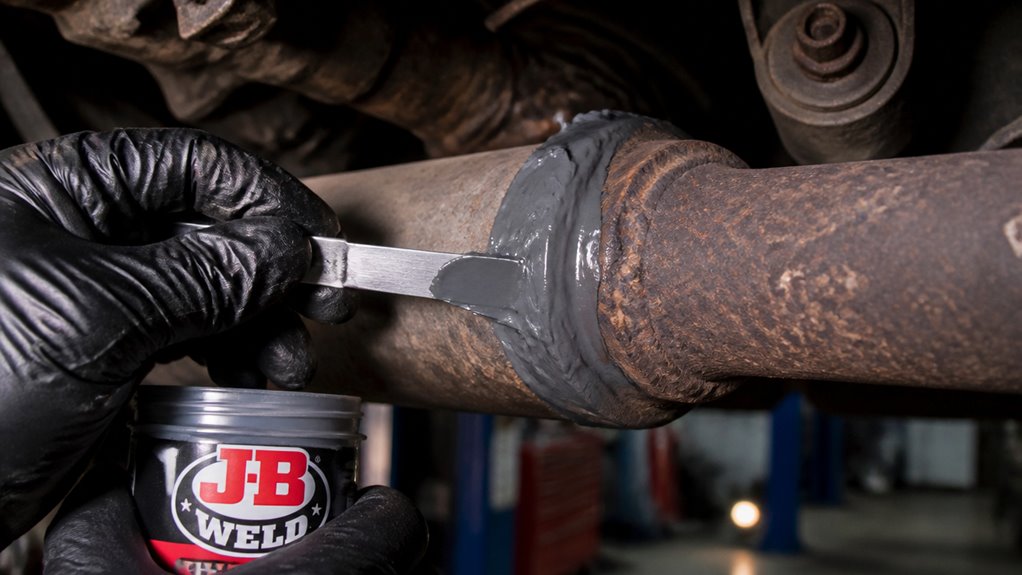
You can use JB Weld to fix small cracks, pinholes, or seams in accessible exhaust sections. However, you must pick a heat-rated formula that matches your repair zone’s temperature.
Standard epoxy won’t hold up near manifolds or high-heat areas because it softens or cracks. Proper surface prep and full curing are essential for a durable bond.
Larger holes or rusted parts need replacement. Keep going to better understand product choices, application tips, and when repair isn’t practical.
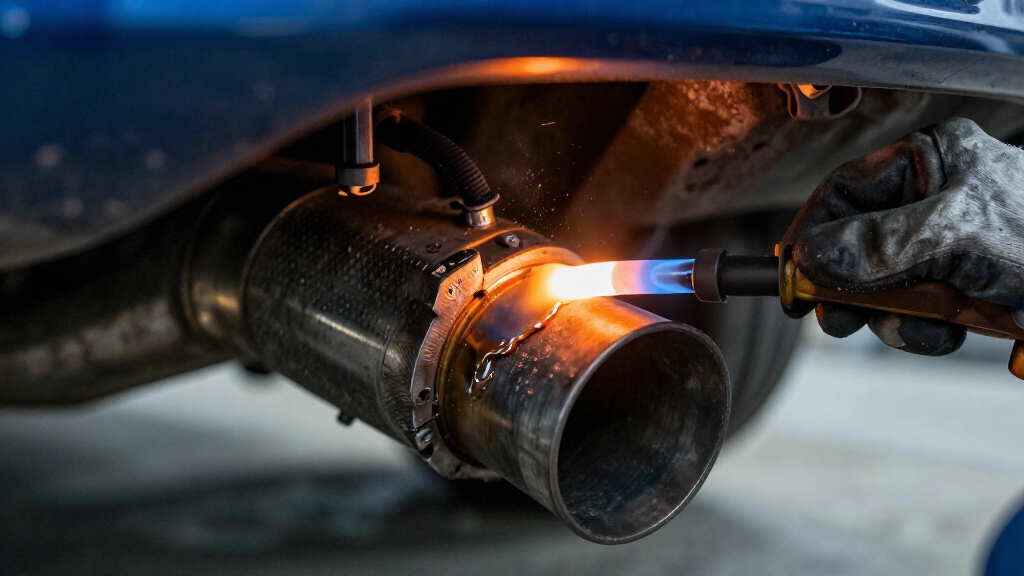
While JB Weld can fix small exhaust issues, its effectiveness depends heavily on the product you choose and the damage’s location.
JB Weld can repair minor exhaust problems, but success varies with the specific product and damage area.
You’ll want to select heat-rated formulas like Exhaust System Sealant or ExhaustWeld, which withstand temperatures up to 850°F and 1100°F respectively.
These products are best for minor cracks, pinholes, seams, or leaks in tailpipes and mufflers.
Before applying, thoroughly clean the metal surface, removing any rust or debris to guarantee strong adhesion.
Avoid using standard epoxy near high-heat zones like manifolds or catalytic converters since they exceed typical epoxy temperature limits.
Keep in mind that repairs are temporary for structural failures or large rusted areas; replacement is a better solution there.
Correct product choice, surface prep, application thickness, and curing time are critical for a successful exhaust repair.
For best results, allow the epoxy to cure fully for 12–14 hours at room temperature followed by heat exposure to ensure maximum bond strength.
Because exhaust manifolds experience extreme heat, often exceeding 1000°F, standard epoxy can’t maintain its bond or structural integrity in these conditions.
Most conventional epoxies have maximum temperature ratings well below manifold heat levels, causing them to soften, crack, or delaminate quickly.
When exposed to such temperatures, the epoxy loses adhesion to metal surfaces, leading to failure of the repair.
Additionally, thermal cycling near the manifold induces expansion and contraction stresses that standard epoxy can’t accommodate.
If you try to use regular epoxy here, you’ll likely see early breakdown, leaks, or detachment.
For effective repairs, you need a product specifically engineered for high-temperature environments.
Without heat resistance and flexibility, standard epoxy won’t deliver a durable fix near exhaust manifolds.
Products like JB Weld Extreme Heat, designed as a metallic paste for patching cracks, can withstand temperatures up to 2400°F, making them far more suitable for such repairs.
When you’re dealing with exhaust repairs, it’s important to pick the right JB Weld products that can handle high heat. I recommend checking out options like Exhaust System Sealant or ExhaustWeld. Just keep in mind that the choice depends on the temperature your exhaust reaches and the type of damage you’re facing.
Now, let’s talk about prep work. Proper surface preparation is key! And don’t forget to follow the recommended cure times; that’s what really helps create a strong, lasting bond. These products shine when it comes to fixing small cracks, pinholes, and seams. However, if you’re facing major rust or structural issues, these mightn’t be the best solution for you. Using the HighHeat variant can improve performance under continuous heat up to 450°F, making it ideal for exhaust repairs.
When repairing exhaust systems, selecting a JB Weld product specifically formulated for high heat is crucial to guarantee durability and effectiveness. Standard epoxies won’t handle the extreme temperatures near manifolds or catalytic converters.
Instead, choose from JB Weld’s heat-resistant options designed for exhaust repairs. These products vary in temperature tolerance and application method, so matching the product to the repair location is critical.
Consider these JB Weld heat-resistant options:
Using the correct product guarantees a reliable, long-lasting exhaust repair. Proper surface preparation and workspace safety measures, such as wearing protective gloves and ensuring a stable work area, also contribute to the best repair results and longevity of the fix, reflecting key principles of workplace safety.
Selecting the right JB Weld product for your exhaust repair sets the foundation. Proper application and curing determine its success.
You’ll need to start with thorough surface prep. Remove rust, grease, and loose debris to ensure strong adhesion.
Apply the epoxy or sealant thickly into cracks or holes for a complete seal. Avoid thin layers that can crack under heat stress.
Most exhaust-specific products require several hours to initial set and up to 24 hours to fully cure. Don’t start the engine prematurely.
Some formulas allow for heat acceleration using a heat gun, but full cure time remains critical.
Follow manufacturer instructions precisely to match the product’s heat rating with your exhaust’s operating temperatures for a durable, lasting repair.
For maximum durability and chemical resistance, allow a full 24 to 48-hour cure at room temperature before exposing the repair to heat or fuel.
Pinpointing the right JB Weld product for your exhaust repair depends on the damage type and location. You want to use heat-resistant products like Exhaust System Sealant or ExhaustWeld for small cracks, pinholes, seams, and minor leaks, especially on mufflers or tailpipes.
Avoid general-purpose epoxies near high-heat zones like manifolds or catalytic converters. Proper surface prep and curing are critical for durability.
Key points to bear in mind:
Following these guidelines guarantees a practical, effective exhaust repair with JB Weld. It is important to thoroughly clean and sand the metal surface before application to ensure a strong bond and long-lasting repair.
When it comes to using JB Weld for your exhaust repairs, picking the right product is crucial. You really want to choose one with a temperature rating that matches where you’re working. For example, if you’re near the manifold, using a formula that’s rated too low can lead to some serious issues down the line.
It’s super important to check the maximum continuous heat that your chosen product can handle before you dive in. This step can really make a difference in ensuring your repair holds up over time. Trust me, taking the time to verify that can save you from a lot of headaches later!
For exhaust repairs, the ExtremeHeat formula is generally recommended because it tolerates continuous temperatures up to 1000°F and intermittent spikes as high as 2400°F.
Because exhaust systems experience extreme temperatures, the heat resistance of your JB Weld product directly determines whether a repair will hold up or fail prematurely.
You need to select a product with a temperature rating that matches or exceeds the exhaust area’s operating heat. Using a lower-rated epoxy near the manifold or catalytic converter invites early failure.
Consider these key points when evaluating temperature ratings:
Exhaust System Sealant tolerates up to 850°F (454°C).
ExhaustWeld withstands temperatures up to 1100°F (593°C).
Standard JB Weld handles only about 550°F (288°C).
Exceeding a product’s heat threshold causes cracking or delamination.
Proper temperature rating prevents shrinkage and maintains adhesion.
Always check your JB Weld’s specifications against your exhaust’s heat profile to make certain a durable, lasting repair.
Remember that J-B Weld Original maintains integrity up to 550°F once fully cured due to its steel-reinforced formula.
Selecting the right JB Weld product means aligning its heat resistance with the specific temperature demands of your exhaust repair. You need to evaluate the heat zone. Muffler and tailpipe areas tolerate lower temperatures than manifolds or catalytic converters.
For instance, Exhaust System Sealant withstands up to 850°F (454°C), while ExhaustWeld handles 1100°F (593°C). Using a product below the local operating temperature leads to premature failure. Always check the product’s maximum continuous heat rating and match it to your exhaust section.
Also, make sure your surface prep is meticulous. Clean, dry metal without rust or debris improves adhesion. If you apply the correct JB Weld product with proper technique and curing, your repair lasts longer, especially on small cracks or seams in less extreme heat zones.
Working within the optimal ambient temperature range of 70°F–85°F during curing ensures the epoxy reaches maximum strength and durability.
Begin by thoroughly cleaning the exhaust surface to guarantee maximum adhesion for JB Weld repairs. Remove all rust, grease, dirt, and loose paint.
The metal must be dry and free of contaminants to assure a strong bond.
Use a wire brush or sandpaper to roughen the area, improving mechanical grip. Avoid oil-based cleaners that leave residues.
Key preparation steps:
Proper surface prep is critical.
Even the best high-heat products won’t bond well on dirty or oily metal. Take your time here to maximize repair durability.
For optimal adhesion, it is essential to create a textured surface profile known as “tooth” for epoxy before application.
With the exhaust surface properly prepared, you can focus on identifying the types of damage that JB Weld products can effectively repair.
JB Weld excels at fixing small holes, pinholes, minor cracks, and seams in mufflers, tailpipes, and other accessible exhaust sections.
Its heat-resistant formulations, like Exhaust System Sealant and ExhaustWeld, handle temperatures up to 1100°F. This makes them suitable for many exhaust repairs but not for high-heat zones near the manifold or catalytic converter.
Avoid using standard epoxy on extreme heat areas. JB Weld works best on limited, non-structural damage where metal remains sound.
Large holes, rusted, or load-bearing components require replacement. Matching the product’s heat tolerance with the damage location is critical for a durable repair that withstands vibration and thermal cycling.
Although choosing the right JB Weld product is essential, how you apply and cure it determines the repair’s effectiveness and longevity.
You must start with a clean, dry, and rust-free surface to guarantee proper adhesion.
Mix the epoxy or prepare the wrap according to the specific product instructions.
Apply the material generously, filling cracks or holes completely.
Avoid starting the engine until the material fully cures, which can take up to 24 hours.
Use gentle heat, like a heat gun, to speed curing if the product allows.
If your exhaust damage involves large holes, severe rust, or structural weakness, replacing the affected parts is often safer and more reliable than attempting a repair.
JB Weld and similar epoxies function best on small cracks or pinholes in intact metal. When corrosion compromises the metal’s integrity or the damage spans a large area, patches won’t restore proper strength or sealing.
High-stress components like exhaust manifolds or areas near catalytic converters experience extreme heat beyond most repair compounds’ limits, necessitating replacement.
Vibrations and flexing accelerate failure in patched sections lacking structural soundness. In these cases, replacement guarantees durability, safety, and proper exhaust flow.
Reserve repairs for minor, accessible damage where JB Weld’s heat ratings and bonding capabilities can be effective without risking premature failure.
Prepare the repair surface meticulously to guarantee your JB Weld exhaust fix lasts longer. Start by thoroughly cleaning the area, removing rust, grease, and loose debris to ensure peak adhesion.
Meticulously prepare the repair surface by cleaning away rust, grease, and debris for optimal JB Weld adhesion.
Use exhaust-specific JB Weld products rated for the temperature zone of your repair. Apply the epoxy or sealant thickly into cracks or holes to fill gaps completely.
Allow the repair to cure fully, as premature heat exposure compromises durability.
Remove rust and contaminants before application.
Select a JB Weld product with proper heat resistance.
Apply a thick, even layer into the damaged area.
Follow recommended cure times without engine startup.
Avoid repairs on structurally compromised or high-stress parts.
These steps increase the longevity and effectiveness of your JB Weld exhaust repair.
Yes, you can paint over JB Weld after an exhaust repair, but only once it’s fully cured.
Make certain the surface is clean and dry before painting to guarantee good adhesion.
Use a high-temperature paint designed for exhaust systems to withstand heat exposure.
Avoid painting too soon, as uncured epoxy can compromise the finish.
Proper curing and the right paint help protect the repair and improve durability under exhaust heat conditions.
Imagine intense heat meeting a precise repair: JB Weld can be safe on motorcycle exhausts if you choose the right product.
Use exhaust-specific formulas like Exhaust System Sealant or ExhaustWeld, rated for high temperatures up to 1100°F.
Make certain the surface is clean and dry, apply thickly, and allow full curing before use.
Avoid standard epoxy near manifolds or catalytic areas to prevent early failure.
Proper prep and product choice keep your repair secure and lasting.
A JB Weld exhaust repair typically lasts months to a couple of years, depending on factors like heat exposure, repair size, and surface prep.
If you use the right high-temp product, clean the metal thoroughly, apply thickly, and allow full curing (up to 24 hours), you’ll maximize durability.
However, repairs near extreme heat zones or on heavily rusted parts may fail sooner, so monitor and replace parts if damage worsens.
You might worry that JB Weld won’t hold up against road salt and moisture, but it can resist corrosion when applied properly. Its cured epoxy forms a durable, water-resistant seal that protects metal surfaces from salt-induced rust.
Just make sure you thoroughly clean and dry the area before application to maximize adhesion.
Keep in mind, prolonged exposure to harsh elements may degrade even the best seal. Regular inspection and maintenance are essential.
JB Weld exhaust repairs aren’t fully environmentally friendly since they use synthetic resins and fillers that don’t biodegrade.
However, they can reduce waste by extending your exhaust system’s life, preventing full replacements.
You should apply them correctly to avoid leaks that could cause harmful emissions.
While not perfect, JB Weld offers a practical, less wasteful repair option compared to discarding and replacing large exhaust parts prematurely.
You might wonder if JB Weld truly holds up on exhaust systems. The truth is, it works best on cooler sections and minor cracks, thanks to its heat-resistant formulas.
But near manifolds, extreme heat often defeats standard epoxy. Proper surface prep and correct curing are essential for a lasting fix.
Still, for severe damage or high-heat zones, replacing parts is smarter. Use JB Weld wisely, matching the product to the job for reliable, practical repairs.