Phone:
(701)814-6992
Physical address:
6296 Donnelly Plaza
Ratkeville, Bahamas.

Phone:
(701)814-6992
Physical address:
6296 Donnelly Plaza
Ratkeville, Bahamas.

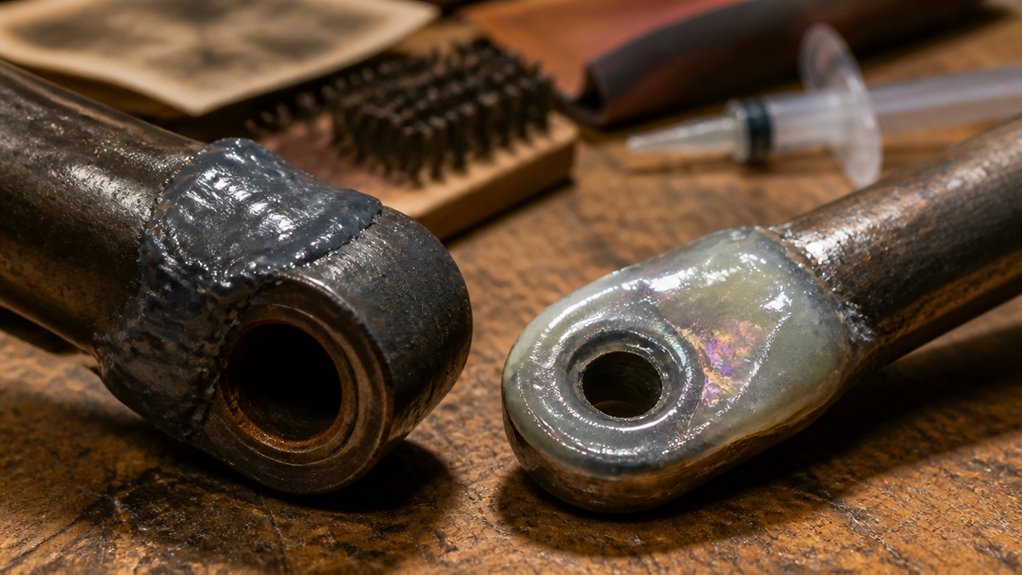
You’ll want J-B Weld when you need a steel-reinforced epoxy with exceptional strength. It offers around 3,960 psi tensile and heat resistance up to 550°F.
With ExtremeHeat, it withstands temperatures up to 1,000°F. It cures slower but delivers machinable, durable metal repairs.
Standard epoxies often cure faster and bond plastics better but usually lack J-B Weld’s high heat tolerance and structural toughness.
Choosing the right adhesive depends on your project’s material, stress, and thermal demands. Exploring these differences can clarify your decision.
| Feature | J-B Weld | Standard Epoxy |
|---|---|---|
| Type | Steel-reinforced two-part epoxy | General-purpose two-part adhesive |
| Tensile Strength | About 3,960 PSI | Varies; some exceed 4,350 PSI |
| Heat Resistance | Up to 550°F | Varies by formulation |
| ExtremeHeat Formula | Up to 1,000°F | Usually lower |
| Cure Time | 15–24 hours for full cure | Varies from minutes to several days |
| Mixing Ratio | 1:1 | Commonly 1:1 to 2:1 |
| Metal Bonding | Excellent | Good to excellent depending on formula |
| Plastic Bonding | Limited; best with rigid plastics | Often better for plastics and composites |
| Structural Repairs | Excellent | Depends on formulation |
| Machinability | Excellent after curing | Varies |
| Flexibility | More rigid | Some formulas offer greater flexibility |
| Surface Preparation | Cleaning and roughening recommended | Depends on product |
| Application Speed | Slower | Many fast-setting options available |
| Best For | Heavy-duty metal and high-stress repairs | Quick fixes, plastics, composites, and general bonding |
| Main Advantage | Superior durability, heat resistance, and metal repair strength | Greater versatility and faster curing options |
| Main Drawback | Longer cure time and less suitable for some plastics | Performance varies and many formulas offer lower heat resistance |
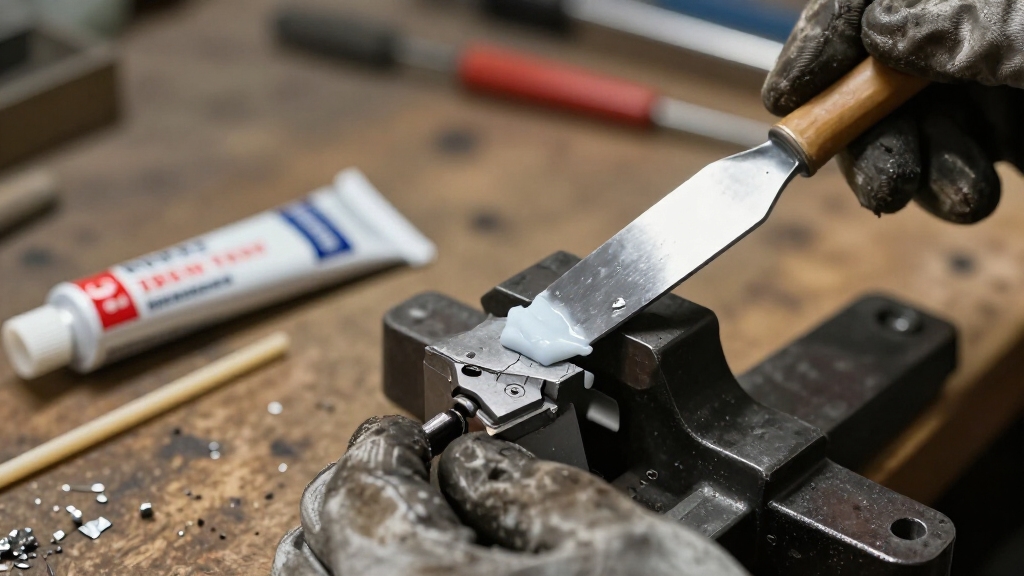
Consider J-B Weld when you need a highly durable, steel-reinforced epoxy adhesive specifically engineered for strong, permanent repairs on metal and other tough surfaces.
It’s a two-part system mixing resin and hardener in a 1:1 ratio, curing to a tensile strength of approximately 3,960 psi.
You’ll find it ideal for applications demanding structural integrity, including metal bonding, crack filling, and high-stress repairs, thanks to its cold-weld characteristics and ability to be machined after curing.
The product withstands temperatures up to 550°F, making it suitable for automotive and industrial uses where thermal resistance is critical.
With a 4-6 hour set time and full cure within 24 hours at room temperature, J-B Weld balances workability and strength for demanding repair tasks.
For best results, ensure proper surface preparation including cleaning and roughening to create a strong mechanical bond.
While J-B Weld represents a specialized, steel-reinforced epoxy formulated for high-strength, heat-resistant metal repairs, standard epoxy adhesives encompass a wider range of two-part resin and hardener systems designed for diverse substrates and performance requirements.
You’ll find standard epoxies vary markedly in cure time, tensile strength, and thermal tolerance. They’re tailored to applications from quick fixes to industrial bonding.
J-B Weld’s consistent 1:1 mixing ratio and 550°F heat resistance target demanding metal repairs. In contrast, many epoxies emphasize versatility, offering options like fast curing, clear finishes, or plastic adhesion.
When selecting between them, consider substrate compatibility, mechanical stress, and temperature conditions. Unlike J-B Weld’s focus on structural, durable metal bonds, standard epoxies provide customizable solutions across materials and environments. This makes them broadly applicable beyond J-B Weld’s niche.
Proper surface preparation and curing time are critical to achieving maximum bond strength with J-B Weld.
Understanding the strength differences between J-B Weld and standard epoxy requires examining their formulations and performance metrics.
J-B Weld Original features a steel-reinforced formula delivering tensile strength around 3,960 psi. This positions it near the top among epoxy adhesives for metal and high-stress repairs.
J-B Weld Original’s steel-reinforced formula offers impressive 3,960 psi tensile strength for tough metal repairs.
Standard epoxies, however, vary widely. Some formulations exceed 30 MPa (~4,350 psi) tensile strength, depending on chemistry and intended application.
While J-B Weld emphasizes durability, heat resistance, and machinability, many standard epoxies optimize for faster cure, flexibility, or substrate compatibility. This can sometimes come at the expense of peak strength.
Ultimately, J-B Weld offers superior strength in metal bonding and structural fixes. However, certain specialized epoxies can match or surpass its tensile strength when tailored to specific materials and conditions.
Your choice should reflect the exact performance demands. For best results with J-B Weld, proper surface preparation is critical to achieving maximum bond strength.
Because cure times directly impact project scheduling and handling, it’s critical to distinguish how J-B Weld and standard epoxy differ in this aspect.
J-B Weld Original sets in about 4 to 6 hours and reaches full cure within 15 to 24 hours at room temperature.
In contrast, standard epoxy cure times vary widely depending on formulation, ranging from fast-setting products (minutes) to longer structural cures (days).
When choosing between them, consider:
Understanding these distinctions helps you optimize workflow and ensure proper bond development. Proper surface preparation and allowing full cure time are essential for achieving maximum strength and durability.
When your project demands bonding materials exposed to extreme temperatures, J-B Weld’s heat resistance becomes a critical advantage. Fully cured, it withstands heat up to 550°F, markedly higher than many general epoxy adhesives designed for lower thermal ranges.
This elevated tolerance stems from its steel-reinforced epoxy matrix, which maintains structural integrity under thermal stress. You’ll find this especially important in automotive or metal repair tasks where heat cycling occurs repeatedly.
While some epoxies can be formulated for heat resistance, J-B Weld consistently delivers reliable performance at these elevated temperatures. This reduces the risk of bond failure. For applications requiring even higher heat tolerance, the ExtremeHeat formula withstands continuous temperatures up to 1000°F.
Although both J-B Weld and regular epoxy adhesives serve bonding purposes, their best-use scenarios differ markedly based on material compatibility, stress demands, and environmental conditions.
J-B Weld and regular epoxy each excel in different applications depending on materials, stress levels, and conditions.
You’ll find J-B Weld excels in situations demanding high tensile strength and heat resistance, particularly with metals. Regular epoxy offers broader versatility across various substrates and cure profiles.
Consider these distinctions when selecting:
Use J-B Weld for durable metal repairs, larger cracks, and high-stress applications requiring structural integrity. Choose regular epoxy for bonding plastics, composites, or when you need faster cure times or clear finishes.
Opt for J-B Weld if your project faces elevated temperatures (up to 550°F) post-cure. Select general epoxy when flexibility in cure speed, appearance, or substrate compatibility is critical.
Matching the adhesive to your material and stress needs guarantees peak performance. Additionally, J-B Weld cures to a steel-like hardness rated at 4000 PSI, making it ideal for structural metal maintenance.
To get the best results with J-B Weld, it’s super important to measure and mix it at a precise 1:1 ratio. This step is key for achieving that peak bonding strength you want. And don’t forget about surface prep! Cleaning and roughening the surfaces really helps maximize adhesion, whether you’re using J-B Weld or other epoxy options.
Also, keep an eye on those cure times. Following the product specifications will make a big difference in ensuring you get the structural integrity and durability you’re aiming for. Just take your time with each step, and you’ll be set up for success!
Make sure to mix the epoxy thoroughly until the color and texture are completely uniform to ensure proper curing and maximum bond strength.
Since proper mixing ratios directly impact the strength and curing behavior of adhesives, understanding the exact proportions for J-B Weld and general epoxy is essential.
You must adhere strictly to the recommended ratios to achieve peak bonding and mechanical properties.
J-B Weld Original requires a 1:1 ratio by volume of resin to hardener, ensuring a balanced chemical reaction.
General epoxy ratios vary widely, often ranging from 1:1 to 2:1, depending on the formulation and intended use.
Deviating from specified ratios can lead to incomplete curing, reduced tensile strength, and compromised heat resistance.
Always measure components precisely and mix thoroughly to guarantee uniform consistency and performance.
The chemical reaction begins immediately upon mixing, so thorough blending until uniform color is critical to avoid uncured spots and ensure a strong bond.
To get the strongest bond with J-B Weld or any epoxy, start by thoroughly cleaning and preparing the surface.
Remove grease, oil, dirt, rust, and loose particles using a solvent like acetone or isopropyl alcohol.
For metals, roughen the surface with fine-grit sandpaper or a wire brush to increase mechanical adhesion.
Avoid contamination after cleaning, as oils from your skin can reduce bond strength.
Both J-B Weld and standard epoxy require dry, stable substrates to cure properly, so verify no moisture remains.
When handling, mix components precisely at the recommended ratios, then apply immediately to maximize work time.
Precise surface prep optimizes the epoxy’s chemical and mechanical bonding, ensuring durability and structural integrity in demanding applications.
Always wear protective gloves and safety goggles during preparation and application to ensure safe handling of chemicals and materials.
After preparing the surface meticulously, managing the cure time becomes the next critical step to achieve peak bonding with J-B Weld or any epoxy product.
You need to understand that J-B Weld sets in 4 to 6 hours and fully cures in 15 to 24 hours. Epoxy cure times vary widely by formulation.
To optimize handling and application, consider these tips:
Mix components accurately at the specified ratio (1:1 for J-B Weld) to guarantee proper polymerization.
Maintain ambient temperature close to room temperature for consistent cure rates.
Avoid disturbing the bond during the initial set period to prevent weakening.
Allow full cure before subjecting the joint to mechanical stress or machining.
These steps guarantee structural integrity and maximize adhesive performance.
Additionally, achieving a full 24-hour cure under ideal conditions is essential for reaching the maximum tensile strength of the bond.
Choosing between J-B Weld and other epoxy adhesives requires a clear understanding of your project’s specific demands, including substrate material, required bond strength, heat exposure, and cure time.
If you need a durable, high-strength bond on metal that withstands elevated temperatures up to 550°F, J-B Weld’s steel-reinforced formula excels.
For applications demanding rapid curing or bonding plastics and composites, other epoxies with specialized formulations may serve better.
Consider tensile strength too; J-B Weld Original offers approximately 3,960 psi, which surpasses many general-purpose epoxies but may be outperformed by select industrial-grade variants.
Evaluate cure time requirements carefully. J-B Weld sets in 4–6 hours, reaching full strength after 15–24 hours, while alternative epoxies offer faster or longer cure profiles.
Match your adhesive choice precisely to your substrate, thermal conditions, and mechanical stresses for best results.
When you need a quick repair, fast-curing epoxy formulas really shine.
They beat out J-B Weld’s longer set time, making them the go-to option when you’re in a hurry. Plus, many of these products come with simplified mixing ratios or even pre-measured cartridges.
This means fewer chances for application errors and less downtime for you.
Sometimes, speed and ease are what really matter, especially in time-sensitive or low-stress situations.
In those cases, you don’t always need maximum strength; you just want something that gets the job done quickly.
Several epoxy products prioritize fast curing to meet urgent repair needs where speed or convenience outweighs maximum strength. While J-B Weld’s original formula sets in 4 to 6 hours, many standard epoxies offer rapid set times under 5 minutes.
When you need quick fixes, consider these fast cure options:
Fast-setting epoxy variants achieve handling strength within minutes, enabling immediate use or assembly. Rapid curing often trades off ultimate tensile strength and heat resistance for convenience.
Some fast epoxies use specialized accelerators or altered resin ratios to speed polymerization. You should match cure time with application demands; fast cures suffice for temporary or low-stress repairs.
Choosing a fast cure epoxy means prioritizing turnaround over durability. This is ideal for emergency patches rather than structural bonding.
Fast cure epoxies offer clear advantages in time-sensitive repairs, but ease of application also plays a significant role when strength takes a backseat to convenience.
You’ll find that many standard epoxies come in pre-measured cartridges or syringes, enabling accurate mixing ratios without extra tools. This reduces preparation time and minimizes user error.
Unlike J-B Weld’s 1:1 mixing paste, these epoxies often flow smoothly, allowing quick spreading and penetration into tight joints.
If you need a fast, mess-free repair, such products outperform traditional two-part systems that require manual blending.
While you might sacrifice some tensile strength or heat resistance, the streamlined application benefits faster project completion and reduces handling complexity. This is critical when speed and simplicity outweigh maximum durability in your repair scenario.
You can use J-B Weld on some plastic surfaces, but its effectiveness depends on the plastic type.
It bonds well with rigid plastics like PVC or ABS but struggles with flexible or low-surface-energy plastics such as polyethylene or polypropylene.
For best adhesion, you should clean and roughen the surface before application. Testing a small area first confirms compatibility, as J-B Weld is primarily designed for metal and high-stress repairs rather than all plastics.
You shouldn’t use J-B Weld for food-contact repairs. It’s a high-strength epoxy designed for metal and industrial fixes, but it’s not FDA-approved or certified safe for direct food contact.
Chemicals in the cured adhesive could leach into food, posing health risks.
If you need a repair for utensils or containers, look for FDA-compliant epoxy products specifically formulated and tested for food safety to guarantee no contamination occurs.
Once opened, J-B Weld’s potent paste remains useable for about six months if you seal it securely and store it in a cool, dry place.
Exposure to air accelerates hardening, so airtight containment is essential.
Over time, the resin and hardener’s chemical integrity can degrade, reducing bonding strength.
For peak performance, always check consistency before use and discard if you notice clumping or separation, ensuring reliable repairs every time.
Yes, you can paint over J-B Weld after it’s fully cured.
Once cured, typically after 15 to 24 hours, it forms a hard, sandable surface ideal for primer and paint adhesion.
For best results, lightly sand the cured epoxy to create a rough texture, then apply a compatible primer before painting.
This process guarantees peak paint bonding and a durable finish on your repair or project surface.
You can expect J-B Weld to have a shelf life of about 2 to 3 years when stored unopened at room temperature.
Standard epoxy adhesives generally have a similar shelf life range, typically 1 to 3 years depending on formulation and storage conditions.
To maximize performance, keep both products sealed tightly in a cool, dry place.
Once opened, curing agents and resins begin to degrade faster, so use them promptly for best results.
You’ll find J-B Weld excels when strength and heat resistance are non-negotiable. It bonds metals and tough materials with lasting durability.
In contrast, standard epoxy shines in quick fixes and lighter applications. It cures faster but lacks J-B Weld’s toughness.
Choosing between them means balancing power against convenience. Sometimes you need the heavy-duty hold; other times a speedy, simpler solution.
Understanding these contrasts guarantees you pick the right adhesive for your project’s exact demands.