Phone:
(701)814-6992
Physical address:
6296 Donnelly Plaza
Ratkeville, Bahamas.

Phone:
(701)814-6992
Physical address:
6296 Donnelly Plaza
Ratkeville, Bahamas.

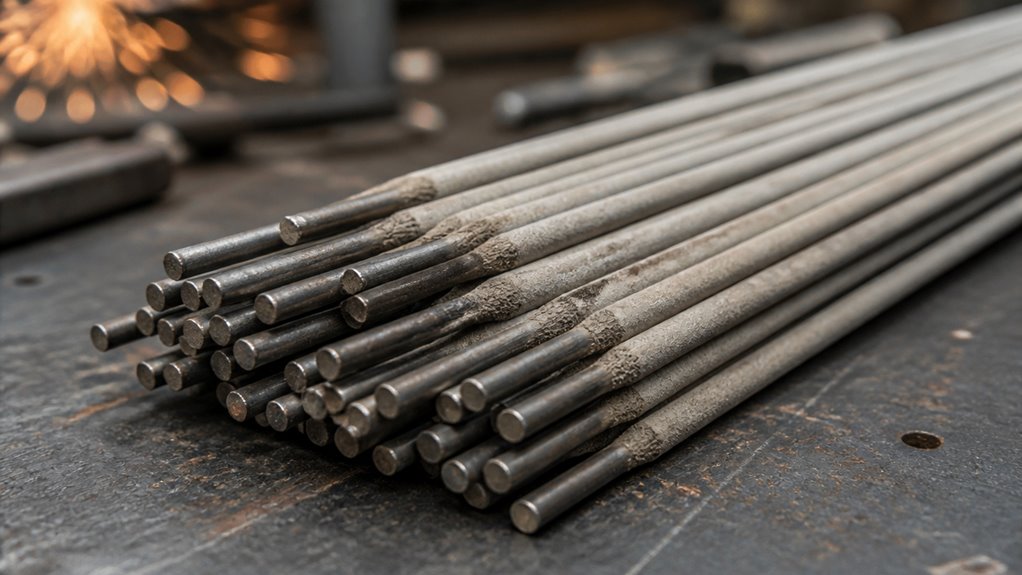
A welding rod acts as both the electrode and filler metal you use to join metals by striking an electric arc that melts the rod and base metals, forming a strong metallurgical bond.
Its metal core, like mild steel or aluminum, provides strength and corrosion resistance. The flux coating protects the molten weld pool from contamination and stabilizes the arc.
Proper rod selection, storage, and handling directly impact weld quality and durability. Explore further to understand types, coding, and best practices.
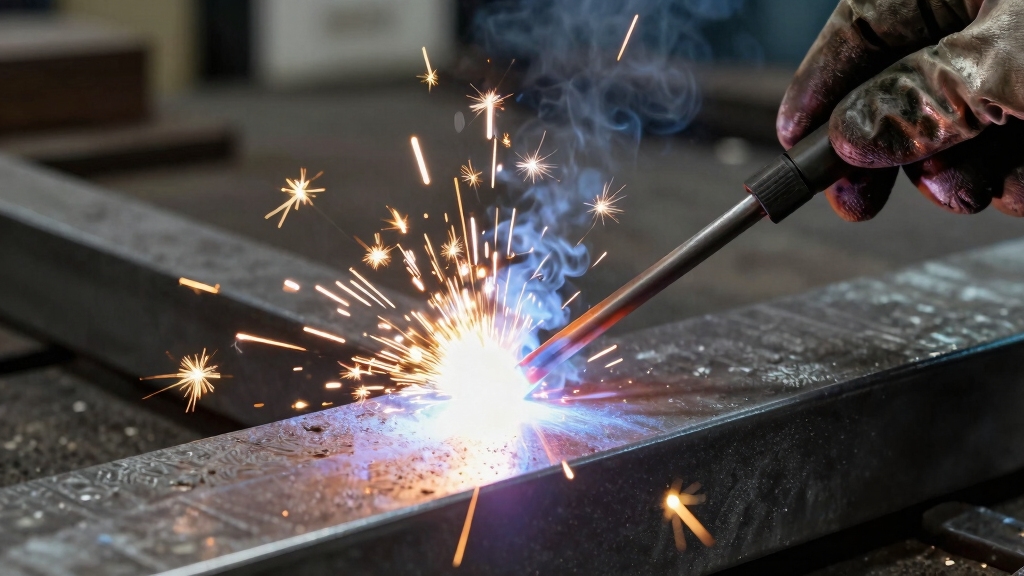
A welding rod acts as both a filler metal and an electrode in welding. It enables you to join two metal pieces by creating an electric arc that melts the rod and base metals.
A welding rod serves as both electrode and filler, joining metals through an electric arc that melts materials together.
When you strike the arc, the rod conducts current and generates intense heat, melting itself and the adjacent base metal. This molten mixture fuses, forming a metallurgical bond upon cooling.
The rod’s flux coating plays a critical role by protecting the molten weld pool from atmospheric contamination and oxidation. As the flux burns, it releases shielding gases and forms slag, which solidifies to shield the weld as it cools.
Your precise rod selection influences arc stability, weld penetration, and final joint integrity. Understanding its dual function is essential for consistent, high-quality welds.
Electrodes are often classified by a code that indicates their tensile strength, welding position suitability, and coating type, helping ensure optimal welding performance through proper selection of electrode classifications.
Manufacturers create welding rods by combining a metal core with a specialized flux coating designed for specific welding applications.
The metal core may consist of mild steel, stainless steel, or other alloys, providing the filler metal’s mechanical properties. The flux coating protects the molten weld pool from oxidation, releases shielding gases, and forms slag for weld integrity.
Understanding the material composition helps you select the right rod for strength and corrosion resistance.
| Core Metal | Flux Function | Application Focus |
|---|---|---|
| Mild Steel | Shielding & Slag | General-purpose welding |
| Stainless Steel | Contamination control | Corrosion-resistant welds |
| Aluminum Alloy | Arc stabilization | Lightweight structures |
This precise construction guarantees peak arc stability and weld quality in your projects. Proper selection and storage of welding rods in dry, controlled environments preserve their performance consistency and prevent defects.
Understanding the specific types of welding rods available allows you to match the rod’s properties to your welding application for ideal results.
For instance, E6010 rods offer deep penetration, making them suitable for pipeline and structural welding where root pass strength is critical.
E6011 rods provide versatility for beginners and general-purpose use, accommodating AC and DC currents.
E6013 rods deliver smooth, all-position welds on mild steel with cleaner slag removal, ideal for maintenance and light fabrication.
For demanding structural or heavy equipment work, E7018 rods guarantee low-hydrogen welds with superior toughness and crack resistance.
Finally, E7024 rods excel in flat or horizontal positions, providing high-speed deposition for thick materials.
Selecting the correct type optimizes weld integrity, penetration, and morphology based on metallurgical and mechanical requirements.
Understanding the flux coating type and current compatibility is critical to achieving stable arc performance and preventing weld defects.
You’ll recognize welding rods by their codes, which start with “E” for electrode. Pretty straightforward, right? The numbers that follow specify things like tensile strength and welding position.
But there’s more! Those digits also indicate the rod’s coating type and current compatibility. These factors are super important for ensuring weld quality. For example, rods like E6010 require DCEP polarity to achieve deep penetration and optimal weld performance.
Decoding welding rod numbers reveals critical information about their mechanical properties and application suitability.
When you read a code like E7018, you’re looking at a precise specification:
“E” denotes electrode type, confirming it’s suitable for welding.
The first two digits (70) indicate minimum tensile strength in thousands of psi, guiding you on weld strength.
The next digit (1) defines welding positions the rod supports.
1 means all-position capability.
The final digit (8) identifies coating type and current compatibility, affecting arc stability and penetration.
Understanding the low-hydrogen flux coating marked by the final digit is essential for preventing weld cracking and ensuring strong, clean welds.
Although the tensile strength digits in welding rod codes provide essential information, the position and coating indicators reveal how and where you can use the rod effectively.
The third digit in the code specifies the welding position: 1 means all-position welding, while 2 indicates flat and horizontal positions only. This helps you select rods suited for specific joint orientations.
The final digit denotes the type of flux coating and current compatibility, impacting arc stability, slag formation, and weld penetration. For instance, a “8” in the last digit, as in E7018, indicates a low-hydrogen electrode suitable for DC or AC currents, producing strong, clean welds.
Understanding these indicators guarantees you match the rod to your welding conditions, optimizing performance and weld quality. Proper storage and handling of electrodes according to shelf life limits are also crucial to maintain coating integrity and prevent weld defects.
When selecting a welding rod, understanding the specific requirements of your project is essential to guarantee peak weld integrity and performance.
Choosing the right welding rod ensures optimal weld strength and flawless project results.
You need to analyze the base metal type, welding position, and mechanical demands. Matching the rod’s tensile strength and coating to your metal secures chemical compatibility and optimal fusion.
Consider these critical factors when choosing your welding rod:
Base metal composition: Choose a rod whose core metal matches or complements your workpiece to prevent weld defects.
Welding position: Select rods rated for flat, horizontal, vertical, or overhead positions as your project dictates.
Mechanical properties: Focus on tensile strength and ductility requirements, especially for structural or load-bearing welds.
This analytical approach maximizes arc stability, penetration, and final weld performance. Additionally, ensuring the correct fillet weld size is essential for achieving the required joint strength and compliance with welding codes.
Keeping welding rods dry is super important!
When they absorb moisture, it can really mess with the flux coating. This can lead to issues like hydrogen-induced porosity and weld cracking—definitely not what you want.
To avoid these problems, using rod ovens is a great move.
They help maintain the right temperature and humidity, which keeps the rods in top shape. This way, you’re preserving their chemical integrity and ensuring that the arc performance stays stable.
In short, proper storage is key.
It helps minimize defects by preventing flux degradation and contamination, so you can focus on getting the job done right!
Additionally, ensuring proper breaker sizing and electrical safety can help maintain consistent welding performance when using stored rods.
Moisture can markedly degrade welding rod performance, leading to defects that compromise weld integrity. When rods absorb moisture, hydrogen from water vapor enters the weld pool, causing porosity and hydrogen-induced cracking.
You’ll notice unstable arcs and slag removal issues, which reduce weld strength and appearance. Proper rod storage prevents moisture uptake, preserving flux coating functionality and ensuring consistent electrical conductivity.
Moisture effects include:
Additionally, moisture in electrodes causes arc instability, spatter, and uneven heating, further impacting weld quality.
Proper storage of welding rods almost always involves using rod ovens. They play a critical role in preventing welding defects by maintaining the rods at a controlled, dry temperature.
Rod ovens prevent moisture absorption into the flux coating, which is essential because moisture leads to hydrogen-induced weld defects such as porosity and cracking.
By keeping rods within specified temperature ranges (typically 250°F to 300°F), rod ovens preserve flux integrity and assure consistent arc stability.
This controlled environment minimizes the risk of weld contamination and improves deposition quality, especially for low-hydrogen electrodes like E7018.
Using rod ovens also reduces the need for re-baking rods, saving time and resources.
In short, rod ovens optimize welding performance by maintaining electrode reliability and preventing defects caused by environmental exposure.
Welding rod problems often crop up when issues like contamination, moisture absorption, or improper storage interfere with the welding process.
You may encounter slag inclusions, porosity, or arc instability, all of which degrade weld quality.
To fix these, start by ensuring rods remain dry and uncontaminated.
Slag inclusions: Often caused by damaged flux; remove slag between passes and store rods properly.
Porosity: Results from moisture in rods or base metal.
Bake rods in a rod oven before use.
Arc instability: May stem from flux contamination or incorrect amperage.
Clean rods and adjust welding parameters.
Implementing proper rod storage and handling is essential to prevent common weld defects and maintain weld integrity.
Welding rods affect your environmental impact by influencing emissions and waste.
Flux coatings release gases and slag that you must manage to minimize pollutants.
Choosing rods with low-hydrogen coatings reduces harmful hydrogen emissions and improves weld quality, lowering rework.
Proper storage prevents moisture-related defects, reducing scrap.
Selecting efficient rods tailored to your application helps you use less material and energy, ultimately decreasing your welding process’s carbon footprint and environmental harm.
You can recycle welding rods, but reusing them in welding isn’t practical due to flux degradation and contamination.
Notably, recycling metals from welding rods contributes to reducing industrial waste by up to 30%.
After welding, the metal core can be melted down and repurposed, but the flux coating loses effectiveness once used.
When handling welding rods, you must wear insulated gloves to prevent electric shock and avoid direct skin contact with flux coatings, which can irritate.
Keep rods dry by storing them in sealed containers or rod ovens to prevent moisture absorption that causes weld defects.
Use eye protection to shield against sparks and UV radiation.
Avoid inhaling fumes by working in well-ventilated areas or using exhaust systems.
Follow manufacturer guidelines strictly for safe handling.
Did you know welding rod performance can drop by up to 30% if improperly heated?
Temperature directly affects your welding rod’s flux and metal core behavior.
If too cold, moisture causes hydrogen embrittlement and weld defects.
Overheating degrades flux, reducing shielding effectiveness and leading to porosity.
You must preheat low-hydrogen rods like E7018 to around 250°F to maintain arc stability and weld integrity.
Controlling temperature guarantees peak penetration and strength.
Yes, you’ll find specialized welding rods designed for underwater and extreme conditions.
These rods have flux coatings formulated to maintain arc stability and prevent contamination despite moisture and pressure.
For underwater welding, waterproof electrodes like E6010 or E7018 variants are common. They ensure deep penetration and reduced hydrogen absorption.
Using these rods maintains weld integrity under harsh environments.
This is essential for structural safety and performance in subsea or extreme temperature applications.
Now that you understand what a welding rod is and how it functions, are you ready to select the right one for your project?
Choosing the correct rod material and type guarantees peak metal fusion and structural integrity.
Remember, proper storage and handling prevent defects that compromise weld quality.
By mastering welding rod codes and troubleshooting common issues, you can achieve precise, reliable welds every time.
Don’t let oversight undermine your craftsmanship.