Phone:
(701)814-6992
Physical address:
6296 Donnelly Plaza
Ratkeville, Bahamas.

Phone:
(701)814-6992
Physical address:
6296 Donnelly Plaza
Ratkeville, Bahamas.

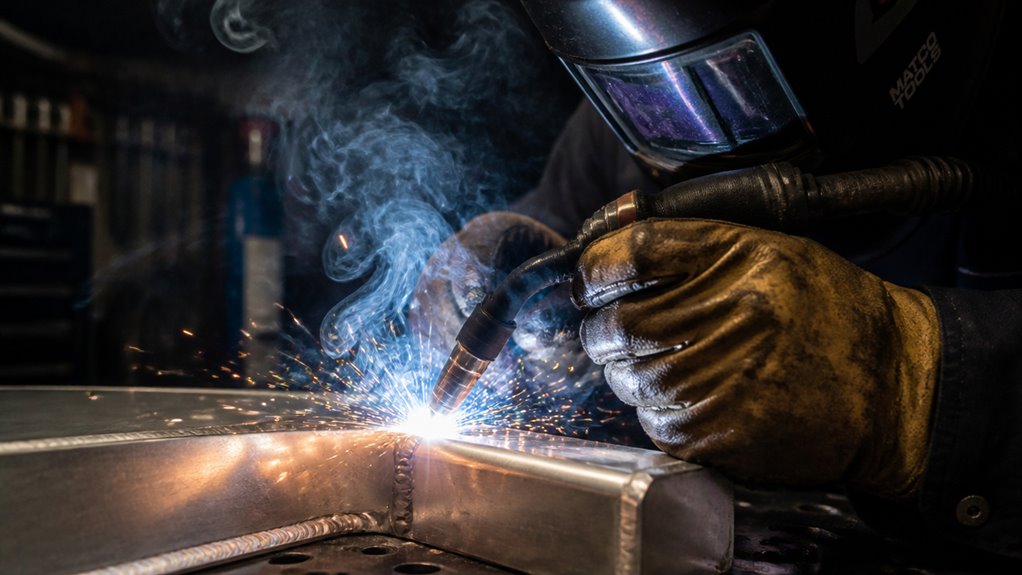
Yes, welding aluminum can be toxic because the high-temperature arc produces fumes containing harmful gases like ozone and nitrogen oxides.
It also emits fine aluminum oxide particles that penetrate deep into your lungs. Different welding methods and alloy compositions affect fume levels, with MIG welding often producing higher concentrations.
Prolonged exposure may cause respiratory issues including aluminosis and metal fume fever. Without proper ventilation, respiratory protection, and control measures, you risk serious health effects.
Understanding these hazards and controls is essential to protect yourself.
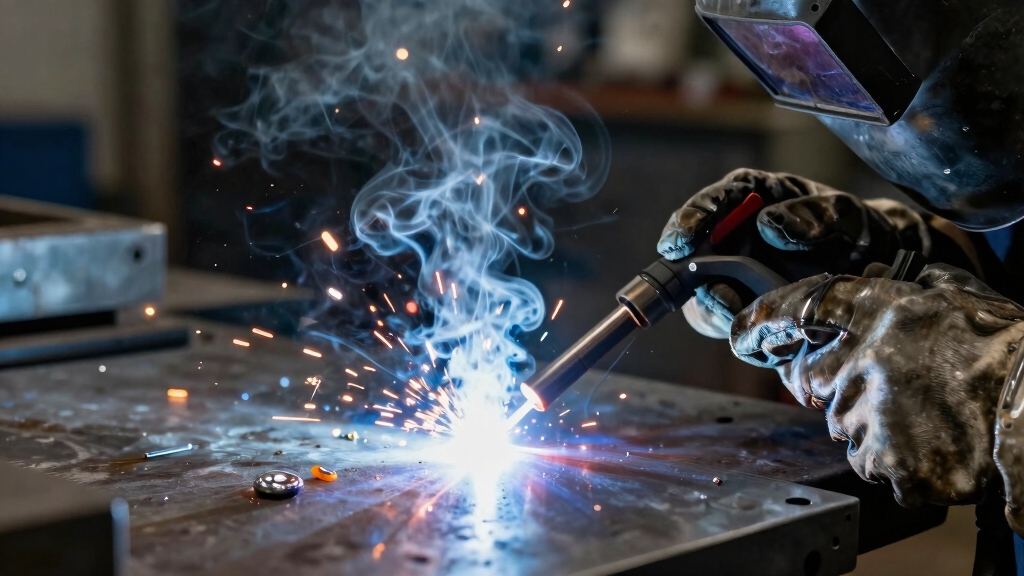
Generating toxic fumes during aluminum welding results from the high-temperature processes that vaporize base metals and consumables. This produces gases and particulate matter.
The welding arc’s intense heat causes aluminum and alloy components to oxidize rapidly, forming fine particulates like aluminum oxide. This fume production varies with the welding method, such as MIG or TIG, and the specific alloy’s composition.
Combustion residues from fluxes and coatings also contribute to the toxic load. Without proper ventilation, these airborne contaminants accumulate in your breathing zone, increasing exposure risk.
Factors like current intensity and shielding gas type influence fume generation rates. To control exposure, you must understand these variables and implement engineering controls, such as local exhaust ventilation, to minimize fume concentration effectively during welding operations.
Proper cleaning, including thorough degreasing and oxide removal, helps reduce contaminants that contribute to toxic fume formation during welding.
When you weld aluminum, a mixture of harmful gases and fine particles is released into the air, posing significant health risks if inhaled.
Welding aluminum releases harmful gases and fine particles, creating serious inhalation health risks.
The welding process generates ozone and nitrogen oxides from arc interaction with atmospheric gases. Additionally, aluminum oxide particles form from vaporized metal, contributing to airborne particulate matter.
Fume concentration varies with welding method, alloy composition, and ventilation. Studies show MIG welding can produce dust levels exceeding occupational exposure limits, with total dust around 6.0 mg/m³, 1.2 times the ACGIH TLV.
These ultrafine particles and gases accumulate in your breathing zone without proper local exhaust ventilation. Controlling exposure through engineering controls and respiratory protection is essential to minimize inhalation of these toxic substances during aluminum welding. Maintaining the proper arc length during welding also helps reduce spatter and improve weld quality, indirectly decreasing airborne contaminants.
Although aluminum welding is essential in many industries, it poses significant risks to your respiratory system due to inhalation of fine aluminum oxide particles and other metal contaminants present in the fumes.
These particles can irritate your airways, leading to bronchitis or acute respiratory symptoms. Without adequate ventilation, fume concentrations increase in your breathing zone, heightening exposure risks.
| Hazard | Effect on Respiratory System |
|---|---|
| Aluminum oxide dust | Airway irritation, coughing |
| Metal contaminants | Inflammation, bronchial damage |
| Fine particulate size | Deep lung penetration |
| Ozone and nitrogen oxides | Mucous membrane irritation |
Welding fumes are classified as a Group 1 carcinogen by the IARC, highlighting the importance of proper respiratory protection.
You should use local exhaust ventilation and respiratory protection to reduce inhalation of hazardous fumes during welding.
Because aluminum welding fumes contain fine particulate matter and potentially toxic metals, prolonged exposure can lead to serious chronic health issues.
When you inhale these fumes over time, the particles can accumulate in your lungs and cause persistent damage.
Research links long-term exposure to conditions such as aluminosis, a form of pneumoconiosis characterized by lung fibrosis.
Additionally, repeated inhalation can aggravate bronchitis and increase susceptibility to chronic respiratory diseases.
You should be aware of the following risks:
Mitigating exposure with ventilation and respiratory protection is essential to reduce these long-term hazards.
It is also important to use proper respiratory protection during welding to minimize the risk of eye irritation and other respiratory issues caused by fumes.
Since aluminum welding relies on electric arc processes, it exposes you to intense ultraviolet (UV) and infrared (IR) radiation emitted by the arc.
UV radiation can cause arc eye, a painful corneal injury resulting from brief, unprotected exposure. This photokeratitis inflames your eye’s surface, impairing vision temporarily.
Simultaneously, IR radiation penetrates deeper, risking skin burns during or after welding. Both types of radiation pose acute hazards even with short exposure times, emphasizing the need for appropriate PPE.
Using welding helmets with UV/IR filtering lenses and wearing protective clothing markedly reduces your risk. Without these controls, you risk severe eye damage and skin injuries.
Evidence consistently shows that arc radiation hazards demand strict adherence to safety protocols to prevent acute injuries in aluminum welding environments.
Proper selection of filter lenses with the correct shade level is essential to effectively block harmful UV and IR rays during welding.
Protective measures against arc radiation reduce immediate injury risks, but you must also manage fire and explosion hazards inherent to aluminum welding.
While arc radiation protections prevent injuries, fire and explosion risks in aluminum welding demand equal attention.
The extremely high temperatures generate sparks and molten metal spatter that can ignite combustible materials nearby.
Certain aluminum alloys may release hydrogen gas, increasing explosion potential if not properly ventilated or controlled.
Maintaining strict housekeeping standards is essential to minimize accumulated flammables around the work area.
Key precautions include:
Using a spool gun with pulsed MIG welding can also help reduce spatter and minimize fire risks during aluminum welding.
While welding aluminum, you face significant electrical shock hazards due to the high-voltage equipment involved, including transformers, cables, and machines.
Defective components or compromised insulation can increase this risk, especially in humid environments where moisture lowers resistance.
Improper grounding further elevates the electrocution hazard by allowing stray currents to flow through your body.
To mitigate these dangers, you must routinely inspect equipment for wear, damage, and secure grounding connections.
Handling cables and machines with dry, intact gloves and footwear reduces shock likelihood.
Maintaining equipment according to manufacturer specifications, avoiding wet conditions, and ensuring proper insulation integrity are critical controls.
Adhering to these practices helps prevent severe electrical injury during aluminum welding, supporting your safety in this high-voltage environment.
Using lockout/tagout procedures during maintenance is essential to isolate energy sources and prevent accidental energization.
You’ll notice that fume intensity varies quite a bit depending on the aluminum welding method you choose. For instance, MIG welding often produces higher concentrations of fumes compared to other techniques.
Now, it’s not just the welding method that matters. The specific alloy you’re working with and any surface contaminants can also impact the amount and composition of the particulate emissions. Proper cleaning to remove the oxide layer and contaminants is essential for reducing porosity and fume generation during welding.
Because fume intensity varies markedly with the aluminum welding method used, understanding these differences is critical for controlling exposure.
You’ll notice that some processes generate more airborne contaminants, increasing potential respiratory risks. For example, MIG welding often produces higher fume concentrations compared to TIG or stick welding due to higher deposition rates and continuous wire feed.
Key factors influencing fume intensity by process include:
MIG (Metal Inert Gas) welding generates significant fumes, with dust/fume levels sometimes exceeding ACGIH TLVs.
TIG (Tungsten Inert Gas) welding produces lower fume levels due to minimal filler metal evaporation.
Stick welding has moderate fume generation, influenced by electrode type and flux composition.
Flux-cored arc welding has variable fume output, depending on flux formulation and welding parameters.
Selecting the appropriate transfer mode in MIG welding can influence heat input and spatter, which may affect fume generation during aluminum welding.
Knowing these differences helps you implement targeted ventilation and PPE strategies effectively.
When welding aluminum, the specific alloy composition markedly influences the type and amount of fumes generated. Different alloys contain varying levels of magnesium, silicon, and other metals, altering fume chemistry and toxicity.
For example, alloys high in magnesium tend to produce more intense aluminum oxide particles. Your choice of alloy directly affects fume concentration and respiratory risk. Proper cleaning and preparation of the aluminum surface before welding can also reduce contaminant-related fumes.
| Alloy Series | Key Element | Fume Emission Level (mg/m³) |
|---|---|---|
| 1xxx | Pure Al | Low (≈2.0) |
| 4xxx | Silicon | Moderate (≈4.5) |
| 5xxx | Magnesium | High (≈6.2) |
| 6xxx | Mg + Si | Moderate (≈5.0) |
| 7xxx | Zinc | Variable (≈3.5) |
You should tailor ventilation and PPE use based on your alloy to minimize exposure.
When you’re welding aluminum, it’s really important to protect your lungs. So, make sure to use respiratory protection like N95 respirators or even supplied-air systems. This helps keep those pesky aluminum oxide fumes at bay.
And don’t forget about ventilation! Proper techniques, like local exhaust ventilation, are key to controlling airborne contaminants right where you’re working. You want to breathe easy, right?
On top of that, you’ll need some essential personal protective equipment. A welding helmet with UV/IR filters is a must, along with flame-resistant clothing and gloves. These will help shield you from arc radiation, sparks, and burns. Safety first, always!
In environments where aluminum welding generates hazardous fumes, selecting appropriate respiratory protection is critical to minimizing inhalation risks.
Welding fumes contain fine aluminum oxide particles and gases like ozone that can irritate or damage your lungs. When ventilation alone isn’t enough, you must rely on effective respiratory protective equipment.
Choose from these options based on exposure severity and task duration:
N95 or P100 particulate respirators filter fine metal particles effectively.
Powered Air-Purifying Respirators (PAPRs) provide higher protection with airflow assistance.
Half-mask or full-face elastomeric respirators offer reusable solutions with replaceable filters.
Supplied-air respirators deliver clean air from a remote source, ideal for high fume concentrations.
Ensure your respirator fits properly and is certified by NIOSH to safeguard your respiratory health during aluminum welding.
Implementing effective ventilation techniques markedly reduces your exposure to hazardous aluminum welding fumes.
You should employ local exhaust ventilation (LEV) systems positioned close to the welding arc to capture fumes at the source. This minimizes airborne contaminant concentration in your breathing zone.
General ventilation alone is insufficient; it dilutes but doesn’t remove toxic particles like aluminum oxide or gases such as ozone.
Make certain airflow rates meet OSHA or ACGIH recommendations for welding operations, typically around 100-150 feet per minute at the hood face.
Regularly inspect and maintain ventilation equipment to prevent system failure.
When welding in confined spaces, use forced-air ventilation to prevent fume accumulation.
Effective ventilation substantially reduces exposure to hazardous aluminum welding fumes, but it doesn’t eliminate all risks. You must wear essential personal protective equipment (PPE) to further minimize health hazards. This includes protection from fumes, radiation, and sparks.
Use gear designed to protect your respiratory system, eyes, and skin from specific aluminum welding dangers. Key PPE includes:
Combining PPE with ventilation and safe practices guarantees all-encompassing protection against aluminum welding’s toxic and physical hazards.
When welding aluminum, controlling airborne contaminants is vital to reducing health risks. You should guarantee effective local exhaust ventilation to capture fumes at the source. This considerably lowers inhalation of aluminum oxide particles and associated gases like ozone.
Always wear appropriate respiratory protection, especially when ventilation is inadequate or fume concentrations exceed exposure limits. Maintain your welding equipment regularly to prevent electrical hazards.
Minimize arc radiation exposure by using certified helmets, face shields, and flame-resistant clothing. Keep your workspace clear of flammable materials to prevent fire risks from sparks or molten metal.
Finally, monitor exposure levels and adhere strictly to occupational safety guidelines. These combined engineering, administrative, and personal protective measures form the best defense against the toxic effects of aluminum welding fumes.
Yes, aluminum welding fumes can affect pregnant women and unborn babies.
When you inhale fumes containing aluminum oxide and other toxic metals, these particulates can irritate your respiratory system and potentially cross the placental barrier.
This exposure increases risks of respiratory issues and developmental harm to the fetus.
You should minimize exposure by using proper ventilation, wearing respiratory protection, and avoiding welding activities during pregnancy to protect both you and your baby.
Yes, you should undergo pulmonary function tests (PFTs) to monitor lung capacity and detect early respiratory impairment from aluminum oxide exposure.
Regular chest X-rays can identify aluminosis or other lung changes.
Biological monitoring isn’t standardized for aluminum fumes, but blood and urine tests may help assess metal exposure if mixed contaminants are suspected.
Periodic medical evaluations focusing on respiratory symptoms and spirometry are essential for early detection and prevention.
Aluminum welding toxicity is generally lower than welding metals like cadmium or chromium but still poses significant respiratory risks due to aluminum oxide particles and ozone.
You’ll face less carcinogenic exposure compared to stainless steel welding but must manage fine particulate inhalation to prevent aluminosis.
Compared to steel or nickel alloys, aluminum fumes are less chemically complex.
Yet proper ventilation and PPE remain essential to control exposure and avoid lung irritation or chronic conditions.
Think of aluminum welding fumes as invisible fog clouds that drift beyond your workspace, carrying aluminum oxide particles and gases like ozone and nitrogen oxides.
These pollutants can settle on soil and water, potentially disrupting ecosystems by altering chemical balances and harming microorganisms.
You must control fume emissions with ventilation and filtration systems to minimize environmental contamination and comply with regulations.
This protects both the workplace and surrounding environment from cumulative toxic effects.
Yes, aluminum welding fumes can cause allergic reactions or skin issues.
The fumes contain metal particles like aluminum oxide and other hazardous metals, which can irritate your skin upon contact.
Additionally, exposure to ultraviolet and infrared radiation from the welding arc can cause burns or dermatitis.
To protect yourself, you should always wear proper personal protective equipment, including gloves and protective clothing.
Maintaining good ventilation helps minimize fume exposure.
While you might think welding aluminum is harmless, the truth is that toxic fumes and harmful gases can seriously impact your respiratory health.
Proper ventilation and protective gear aren’t just recommendations; they’re essential. Ignoring these precautions increases your risk of lung damage and long-term health issues.
By understanding the dangers and using the right safety measures, you can weld aluminum effectively without compromising your health or safety. Don’t take shortcuts when it comes to your well-being.