Phone:
(701)814-6992
Physical address:
6296 Donnelly Plaza
Ratkeville, Bahamas.

Phone:
(701)814-6992
Physical address:
6296 Donnelly Plaza
Ratkeville, Bahamas.

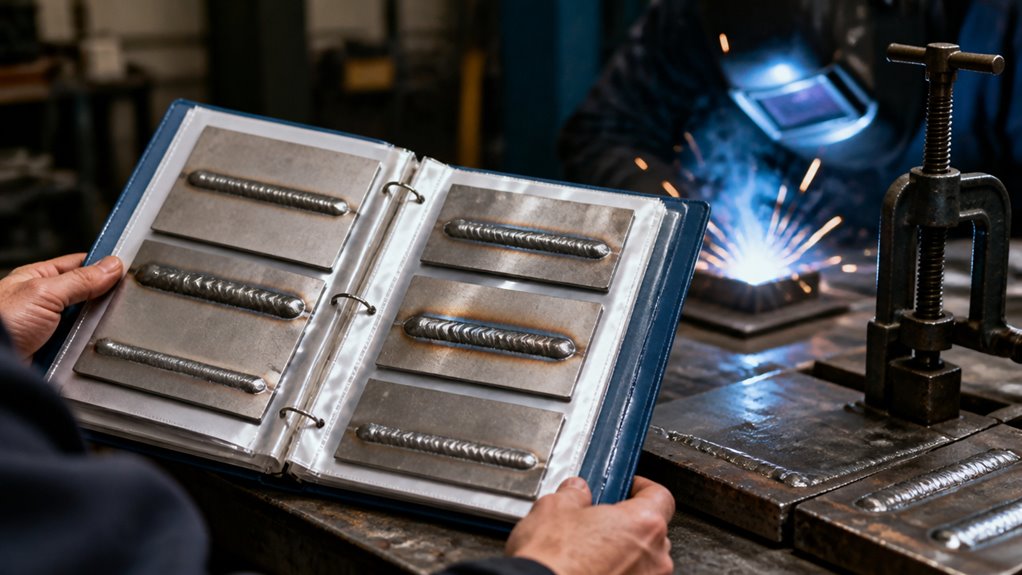
You use the Welding Procedure Qualification Record (WPQR) to document controlled test welds that verify your welding procedures meet required mechanical and metallurgical standards.
It records critical variables like base material, filler metal, and heat input, linking actual test data to your Welding Procedure Specification (WPS).
The WPQR guarantees consistent, repeatable quality by validating production weld methods through specified tests and examinations.
Understanding WPQR will help you maintain compliance and optimize your welding process control.
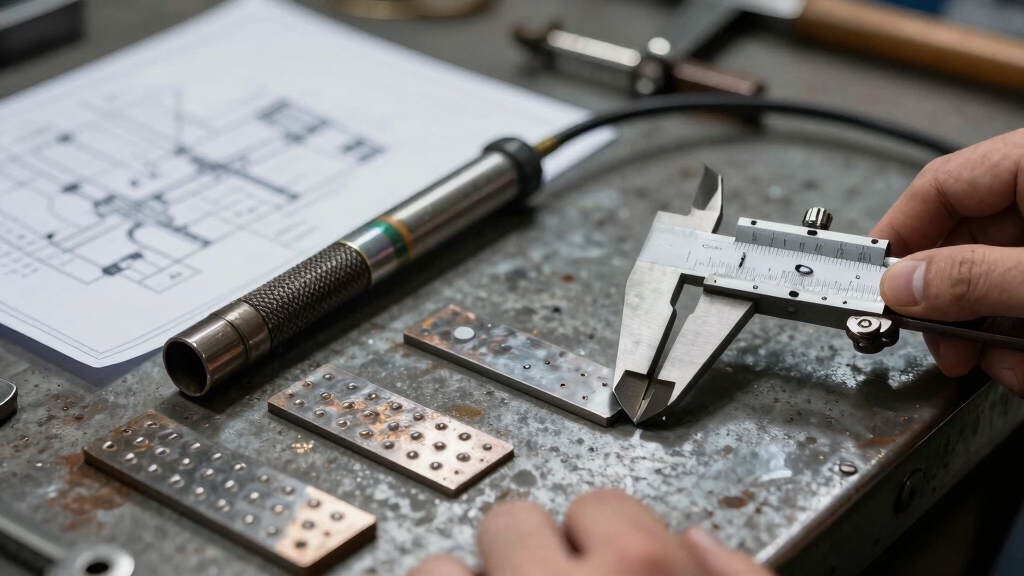
The Welding Procedure Qualification Record (WPQR) documents the specific welding variables and test results that confirm a welding procedure meets required standards.
The WPQR records welding variables and test results confirming a procedure meets required standards.
You use WPQR to record critical parameters such as welding process, base material, filler metal, preheat temperature, and heat input. This record links the test weldment’s data to the qualification of a Welding Procedure Specification (WPS).
By maintaining a detailed WPQR, you verify that the welding process consistently produces sound welds meeting mechanical and metallurgical criteria. It serves as an official, traceable document demonstrating compliance with applicable codes and standards.
Understanding WPQR guarantees you can confirm that the tested welding procedure is valid before applying it in production, avoiding unqualified or inconsistent welding practices. WPQR provides factual evidence of weld quality and verifies process capability by providing actual test results on mechanical properties and weld integrity.
You know, when it comes to welding, WPQR is your best friend. It’s like a safety net that ensures your welding procedures deliver consistent, high-quality results every single time.
Pretty reassuring, right?
But it doesn’t stop there! WPQR also verifies that your process aligns with industry standards and technical specifications.
That way, you can have peace of mind knowing you’re on the right track.
And let’s not forget about regulatory requirements. WPQR provides documented proof that your welding meets all those mandatory codes.
Additionally, WPQR is a crucial part of AWS’s certification and training programs that guarantee weld integrity and safety through Welding Procedure Qualification.
Ensuring consistent weld quality hinges on properly documenting and verifying welding procedures through a WPQR. When you rely on a WPQR, you establish a controlled baseline of welding variables such as current, voltage, and travel speed that consistently produce acceptable welds.
This documentation helps you replicate the procedure accurately on production welds, minimizing variability. By referencing the WPQR, you confirm that the mechanical and metallurgical properties meet required standards, ensuring structural integrity and performance.
This record acts as your technical guarantee that the welding process is qualified and repeatable. Without a WPQR, you risk inconsistencies that could lead to weld defects or failures, compromising safety and compliance.
Fundamentally, the WPQR is your key tool for maintaining methodical control and repeatability in welding quality. It also supports adherence to Welding Procedure Specification requirements, which detail essential parameters like base/filler metals, heat input, and shielding gas to prevent defects and ensure weld durability.
Verifying procedure compliance hinges on how effectively you use the WPQR to confirm that welding practices align with established standards.
By referencing the WPQR, you systematically ensure that the welding variables, such as current, voltage, travel speed, and filler material, match those recorded during the qualification test.
This alignment guarantees that the production welds replicate the tested conditions, maintaining mechanical properties and structural integrity.
You must cross-check test results documented in the WPQR, including visual inspections and mechanical tests, to validate that the procedure consistently meets quality criteria.
Deviations from the WPQR can compromise weld performance and lead to failures.
Hence, thorough verification using the WPQR is essential for maintaining controlled, repeatable welding processes and upholding the stringent requirements demanded by welding codes and standards.
Controlling heat input and welding parameters as specified in the WPQR helps manage the heat-affected zone to prevent microstructure alteration that could weaken the joint.
Because regulatory bodies demand strict adherence to welding standards, the WPQR plays a critical role in demonstrating compliance with these requirements.
You rely on the WPQR to provide documented evidence that welding procedures meet established codes and specifications. This guarantees consistent weld quality and safety across projects.
Here’s why WPQR matters for regulatory support:
The relationship between WPQR, WPS, and PQR forms the foundation of welding procedure qualification.
Understanding WPQR, WPS, and PQR is essential for effective welding procedure qualification.
You use the PQR to document actual test weld data, including welding variables and test results. This demonstrates that the procedure meets required mechanical and metallurgical standards.
From the PQR, you develop the WPS, which specifies how to perform production welds consistently.
The WPQR serves as the formal record that links the PQR test data to the qualification of the WPS. This verifies that the welding procedure is approved for use.
Together, these documents guarantee repeatability and compliance with codes. Understanding their distinct roles lets you maintain rigorous welding quality control and confidently apply qualified procedures in production environments. Moreover, selecting the appropriate primary power source is crucial to ensure stable arc conditions and optimal weld quality.
Typically, a WPQR qualification involves a series of standardized tests that validate the mechanical and metallurgical integrity of the weld.
You’ll need to conduct these tests to guarantee the welding procedure meets technical requirements and produces sound welds.
Key tests you’ll encounter include:
These tests collectively confirm that the welding procedure produces consistent, high-quality welds within required standards, while also helping to identify common weld defects like lack of fusion that could compromise joint integrity.
To qualify a Welding Procedure Qualification Record (WPQR), you’ll carry out a controlled test weld under specified conditions that replicate the intended production environment.
Qualify a Welding Procedure Qualification Record by performing controlled test welds that simulate actual production conditions.
First, you select appropriate base materials, welding consumables, and parameters per the applicable code. Next, you perform the test weld on a coupon, ensuring strict adherence to the Welding Procedure Specification (WPS).
After welding, you prepare test specimens and conduct required examinations such as visual, mechanical, and sometimes non-destructive tests. You then document all welding variables, test results, and observations in the WPQR.
Finally, you submit the WPQR for review and approval by qualified personnel or certification bodies. This process verifies the procedure’s capability to produce welds meeting mechanical and metallurgical standards consistently before production welding begins. Achieving full joint penetration during qualification is critical to ensure structural integrity and compliance with standards.
Once you’ve completed and documented the WPQR, you’ll need to understand which welding standards and certifications apply to your procedure.
These standards guarantee your welding process meets industry-specific quality and safety requirements.
Here are three key standards you should be familiar with:
1. ASME Section IX
Governs welding procedure and welder qualifications, widely used in pressure vessel and piping industries, emphasizing WPQR documentation.
2. AWS D1.1
Covers structural welding of steel, requiring WPQR to validate procedures for consistent weld quality in construction.
3. ISO 15614
International standard specifying the qualification of welding procedures, including WPQR elements for various metals and processes.
Understanding and aligning your WPQR with these standards guarantees regulatory compliance and enhances the credibility of your welding procedure. Proper WPQR execution often requires using equipment like a welding transformer to provide stable current conditions essential for procedure validation.
A WPQR’s validity typically lasts from one to five years, depending on the governing code or standard you follow.
You’ll need to requalify if there are any significant changes in welding variables, materials, or processes.
If your project or code specifies a shorter duration, you must comply.
Always check specific industry standards or client requirements, as these dictate when requalification is mandatory to ensure continued welding procedure integrity.
You generally can’t transfer a WPQR directly between different welding projects without confirming compatibility.
Each project often has unique requirements: material, welding process, position, and code that the WPQR must match precisely.
Before using an existing WPQR, you need to verify it meets the new project’s specifications and standards.
If conditions differ markedly, requalification or a new WPQR is necessary to guarantee compliance and weld integrity.
You’re responsible for maintaining the WPQR documentation if you’re managing welding quality control or overseeing procedure qualification.
Typically, the welding engineer, quality assurance team, or designated welding coordinator ensures all records, test results, and approvals are accurately documented and securely stored.
You must keep the WPQR accessible for audits and future reference.
Follow industry standards and company protocols to guarantee procedural compliance and traceability throughout the project lifecycle.
Think of WPQR testing and certification like investing in a fortress’s foundation. It’s essential but comes with costs.
You’ll face expenses for materials, weld specimens, lab testing (including destructive tests), and hiring qualified inspectors.
Certification fees and potential retesting add up too. Depending on complexity and standards, costs can range from a few thousand to tens of thousands of dollars. Planning meticulously helps you manage and justify these necessary investments.
You’ll find WPQR impacts welder training programs by providing a verified baseline for welding procedures. It guarantees you train welders on methods proven to meet quality standards, aligning instruction with qualified practices.
This reduces trial-and-error during training, enhances skill consistency, and validates that welders can reproduce tested results. Incorporating WPQR data helps you design focused curricula, leading to better certification outcomes and adherence to industry codes.
You might think WPQR is just extra paperwork, but it’s actually essential for ensuring consistent, high-quality welds.
By thoroughly documenting and qualifying welding procedures, WPQR helps you avoid costly errors and meet industry standards confidently.
Understanding its role alongside WPS and PQR allows you to control welding variables methodically, ensuring safety and reliability in your projects. Don’t overlook WPQR; it’s a critical step in mastering welding quality.