Phone:
(701)814-6992
Physical address:
6296 Donnelly Plaza
Ratkeville, Bahamas.

Phone:
(701)814-6992
Physical address:
6296 Donnelly Plaza
Ratkeville, Bahamas.

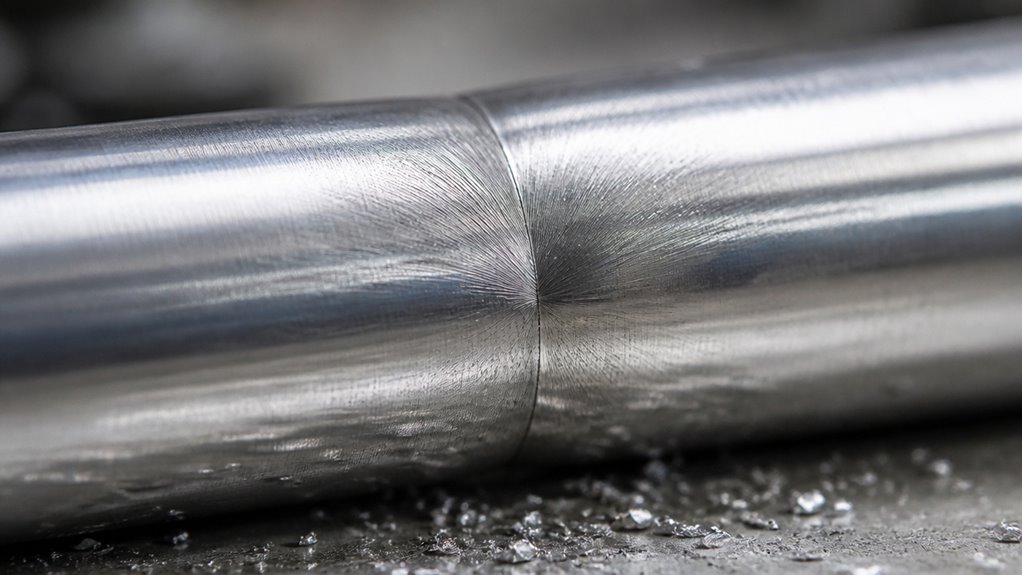
A cold weld forms when you press two impeccably clean metal surfaces together under high pressure, allowing their atoms to bond without any heat or melting.
This solid-state process preserves the metals’ original microstructure by avoiding thermal cycles or phase changes.
Surface cleanliness and pressure are vital to break oxide layers and enable intimate atomic contact.
Typically, ductile metals like aluminum and copper bond best.
Understanding these fundamentals lays the groundwork for exploring practical joint types and applications.
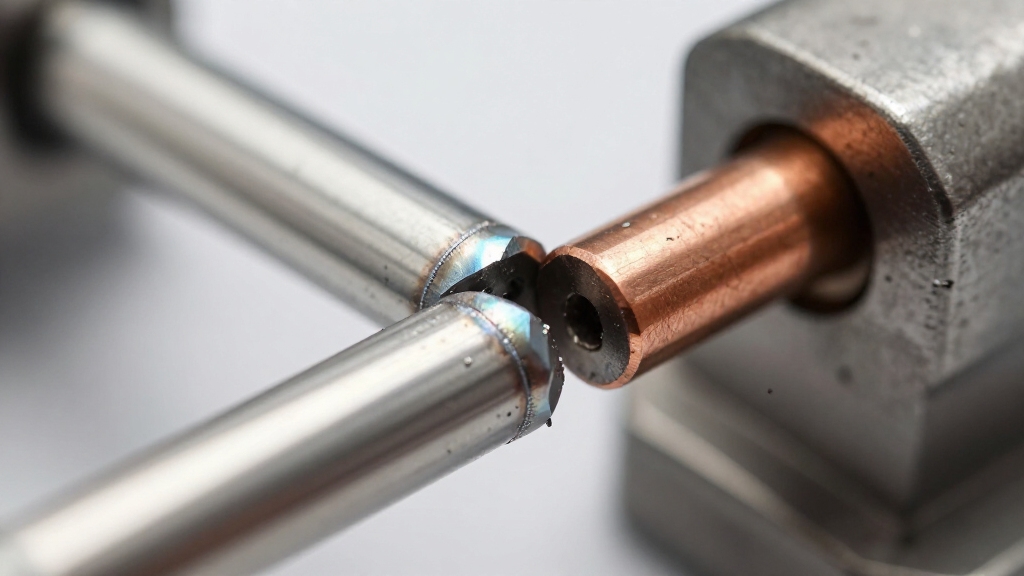
Although cold welding doesn’t involve heat, it creates a strong bond by pressing two clean metal surfaces together until their atoms interlock.
You must make certain both surfaces are oxide-free and extremely clean, as contaminants inhibit atomic contact.
When you apply sufficient pressure, the metal atoms deform plastically, allowing their electron clouds to overlap and form metallic bonds.
No melting or liquid phase occurs; the joint is purely solid-state.
This process requires precise surface preparation and adequate pressure to overcome surface films and enable intimate atomic contact.
You’ll find cold welding effective mainly with ductile metals like aluminum, copper, or gold.
Understanding these fundamentals helps you control the process, guaranteeing reliable, high-strength joints without thermal input or phase change.
Like friction welding, cold welding preserves the original microstructure by avoiding melting, resulting in strong, clean bonds.
You know, it’s pretty fascinating how high pressure can bond metals without any heat. Basically, what happens is you take two clean metal surfaces and apply intense pressure to them. This pressure brings the surfaces into such close contact that their atoms can actually deform and bond together, all without needing to heat anything up.
Now, here’s the catch: you really need to get rid of any oxide layers and contaminants on those surfaces. If you don’t, those barriers will stop the atoms from interacting directly. So, once you’ve got everything cleaned up and prepped just right, the magic happens. Just the pressure alone is enough to create a strong, solid-state bond between the metals. Isn’t that cool? This process works by disrupting oxide layers and promoting interfacial diffusion under pressure, enabling the metals to join without melting, a key principle in solid-state welding.
Pressure forces metal atoms at clean surfaces to deform plastically and flow into close contact. This enables atomic bonding without the need for heat.
Plastic deformation removes microscopic irregularities, allowing electron clouds from adjacent atoms to overlap and form metallic bonds. Sufficient pressure overcomes surface barriers, initiating direct atomic interaction.
The process depends heavily on the cleanliness and flatness of the surfaces to maintain atomic proximity.
Proper surface preparation, including cleaning and removal of contaminants, is essential to achieve a strong metal-to-metal bond.
| Parameter | Effect on Bonding | Notes |
|---|---|---|
| Pressure magnitude | Increases atomic contact area | Critical for plastic deformation |
| Surface cleanliness | Enables electron cloud overlap | Oxides hinder bonding |
| Material ductility | Facilitates atomic flow | Ductile metals cold weld better |
Understanding these factors helps you optimize cold welding conditions precisely.
Achieving effective cold welding hinges on meticulous surface preparation, as only clean, oxide-free metal surfaces can bond directly under pressure.
You must remove oxide layers and contaminants because these barriers prevent intimate atomic contact, which is essential for cold weld formation.
When you apply high pressure, metal atoms deform plastically, allowing surfaces to interlock at the atomic level.
If surfaces retain oxides or debris, the pressure won’t suffice to break through, impairing bond strength.
You should make certain surfaces are flat and smooth to maximize contact area, enhancing atomic diffusion.
Fundamentally, your ability to prepare surfaces meticulously determines the success of cold welding, enabling pressure to create a robust, solid-state joint without heat.
Proper cleaning methods, including degreasing with solvents like acetone and mechanical oxide removal such as wire brushing, are critical to ensure oxide elimination before cold welding.
When it comes to cold welding, surface cleanliness is super important. You’ve got to get rid of those oxide films because they act like little barriers, preventing the metal surfaces from making the close contact needed for a good bond.
So, how do we achieve that? Well, effective surface preparation techniques like mechanical polishing or chemical cleaning do the trick. These methods ensure that the surfaces aren’t only free of oxide but also nice and smooth.
If you skip this critical step, you won’t get the atomic bonding necessary for a strong cold weld, even if you apply a lot of pressure. It’s all about that clean surface! Proper cleaning methods avoid damaging the protective oxide layer, which is essential to maintain the metal’s integrity and bonding capability.
A critical factor in successful cold welding is the removal of oxide films from metal surfaces before joining.
These oxide layers act as barriers that prevent intimate contact between clean metal atoms, obstructing the atomic diffusion necessary for bonding.
To guarantee effective oxide removal, you must focus on:
Maintaining proper shielding gas selection during the process is essential to prevent oxidation and ensure a clean surface for bonding.
Ensuring surface cleanliness is essential to successful cold welding because contaminants like oxides, oils, and dirt obstruct the intimate metal-to-metal contact required for atomic bonding.
To achieve ideal surface preparation, you must remove these barriers through mechanical abrasion, chemical cleaning, or ultrasonic cleaning.
Mechanical methods, such as fine polishing or grit blasting, break up oxide layers and expose fresh metal.
Chemical treatments dissolve organic residues and oxides without damaging the base material.
Ultrasonic cleaning uses high-frequency vibrations in a solvent bath to dislodge microscopic particles.
By combining these techniques, you make certain the surfaces are flat, oxide-free, and free of contaminants.
This preparation maximizes atomic-level contact under pressure, promoting strong, durable cold welds.
Neglecting cleanliness decreases weld integrity, leading to weak joints and potential failure.
Unlike fusion welding, cold welding does not involve melting, so controlling the heat-affected zone is not a concern during the process.
Many metals lend themselves well to cold welding due to their ductility and surface characteristics. Metals with soft, malleable structures and clean, oxide-free surfaces form stronger cold welds. Typically, these metals exhibit high atomic mobility under pressure, enhancing bond formation.
Here are three metals best suited for cold welding:
You can also cold weld some low-carbon steels and certain alloys, but surface preparation and metal compatibility critically affect weld quality. Proper surface preparation such as removing oxides and oils is essential to achieve strong bonds in cold welding.
Selecting metals like aluminum, copper, or gold sets a strong foundation. However, achieving a successful cold weld demands meticulous surface preparation and controlled pressure application.
Choosing metals such as aluminum, copper, or gold is essential for effective cold welding success.
You must first ensure the metal surfaces are impeccably clean, free from oxide layers, contaminants, and moisture. Techniques like mechanical polishing or chemical etching help expose fresh metal atoms.
Next, align the surfaces precisely to maximize contact area. Applying uniform, high pressure deforms the metal atoms at the interface, allowing them to flow and bond without melting.
Maintaining a controlled environment, ideally a vacuum or inert atmosphere, minimizes oxidation during the process. Avoid excessive roughness, as it reduces intimate contact.
Additionally, understanding the high thermal conductivity of metals like copper is essential to manage heat flow and prevent defects during the welding process.
Although cold welding can be applied to various configurations, two joint types dominate practical use: butt joints and lap joints. You’ll find these joints essential for creating strong, metallurgically bonded connections without heat.
Understanding these joint types helps you select appropriate configurations for reliable cold welds in your projects. Unlike resistance welding, cold welding does not rely on electrical resistance heating to form the bond, making it suitable for applications sensitive to heat.
Cold welding finds critical use in industries requiring strong, heat-free metal bonds, such as electrical wiring and aerospace manufacturing.
You’ll see it in wire splicing, where continuous metal strands join without melting, preserving conductivity and mechanical strength.
Aerospace applications use cold welding to bond lightweight alloys, reducing thermal distortion and maintaining integrity under stress.
Packaging industries exploit this method to seal metal foils tightly without heat damage.
| Application | Key Benefit |
|---|---|
| Electrical wiring | Maintains conductivity, strong joints |
| Aerospace | Avoids thermal distortion |
| Packaging | Heat-free sealing |
You can rely on cold welding when you need precise, durable joins without thermal alteration, especially on ductile metals like aluminum and copper.
When metal surfaces come into contact within a vacuum, the absence of atmospheric gases greatly increases the likelihood of cold welding.
Without oxygen or moisture, oxide layers that normally inhibit bonding are absent or minimal, allowing metal atoms to interact directly.
You’ll notice vacuum conditions affect cold welding behavior in three key ways:
1. Surface Cleanliness
Vacuum environments maintain ultra-clean surfaces, preventing contamination that hinders atomic bonding.
2. Enhanced Contact
Lack of gas molecules reduces surface barriers, enabling closer atomic proximity under pressure.
3. Increased Bond Strength
Direct atomic interaction in vacuum promotes stronger, more uniform cold welds.
Thus, when working in vacuum, you must account for these factors to predict and control cold weld formation accurately.
While fusion welding relies on melting metal to create joints, cold welding achieves bonding through pressure without any heat input. This offers distinct advantages that you should consider for sensitive materials.
Without thermal cycles, cold welding prevents microstructural changes, preserving mechanical and electrical properties. You avoid heat-affected zones, reducing distortion and residual stresses common in fusion welding.
Cold welding also eliminates issues like porosity and cracking caused by solidification. Since it requires clean, oxide-free surfaces and high pressure, you can achieve joints in ductile metals difficult to fuse traditionally.
Additionally, cold welding minimizes contamination risks, making it ideal for applications demanding high integrity and conductivity, such as aerospace and electronics. However, you must ensure meticulous surface preparation to maximize bond strength.
You generally can’t reverse or separate a cold weld without damaging the materials involved.
Since cold welding forms a solid-state bond through atomic diffusion and intimate contact, the joint behaves like a continuous metal piece.
Mechanical separation usually causes deformation or fractures.
To undo it, you’d need careful cutting or grinding, which compromises integrity.
Like a sculptor’s chisel shaping stone, you’ll need a hydraulic press or a heavy-duty mechanical press to apply the intense pressure required for cold welding.
Additionally, you’ll use precision cleaning tools: solvents, abrasive pads, or ultrasonic cleaners to remove oxides and contaminants.
Flat, rigid fixtures help maintain alignment, ensuring the metal surfaces meet perfectly.
In some cases, vacuum chambers can aid in achieving the oxide-free environment essential for strong bonds.
Temperature influences cold weld strength by affecting surface cleanliness and atomic mobility.
Lower temperatures reduce atomic diffusion, potentially weakening the bond. Too high a temperature can cause oxidation, hindering weld formation.
Ideally, you keep surfaces clean and control temperature to prevent oxide layers, ensuring intimate metal contact.
Maintaining near-room temperature or slightly elevated levels often optimizes cold weld strength by balancing surface condition and atomic interaction.
Imagine two dancers pressed so tightly their movements synchronize perfectly. That’s cold welding.
You need to watch for safety concerns like unexpected sticking of tools or parts due to high pressure. This can cause pinching injuries.
Also, surface contaminants might create weak bonds, leading to sudden joint failures.
Always ensure clean surfaces, use protective gear, and handle materials carefully to avoid mechanical hazards. This helps maintain weld integrity under pressure.
Yes, you can automate cold welding in manufacturing.
Automated systems apply precise pressure and ensure clean, oxide-free surfaces, which are critical for reliable bonds.
Robots and specialized machinery handle consistent surface preparation, alignment, and pressure application, improving repeatability and efficiency.
Automation suits high-volume production, especially in electrical wiring and thin metal joining.
You’ll need strict process controls and monitoring to maintain weld quality, as surface cleanliness and pressure consistency directly affect joint strength.
As you explore cold welding, think of it as the industrial equivalent of a handshake. No sparks, just pure pressure bonding metals flawlessly.
By mastering surface cleanliness and vacuum conditions, you guarantee a seamless joint without heat’s distortions.
Like a silent pact between metals, cold welding offers precise, reliable bonds ideal for sensitive applications.
When you choose cold welding over fusion, you’re opting for efficiency and integrity, opening new possibilities in advanced manufacturing.