Phone:
(701)814-6992
Physical address:
6296 Donnelly Plaza
Ratkeville, Bahamas.

Phone:
(701)814-6992
Physical address:
6296 Donnelly Plaza
Ratkeville, Bahamas.

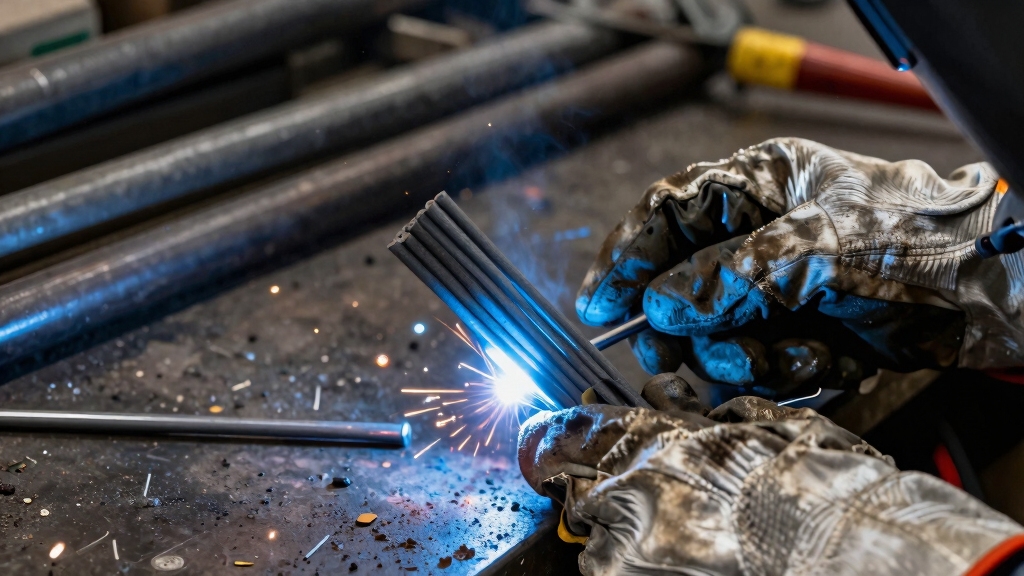
You use 6011 welding rods for deep-penetration repairs on mild and low carbon steel, especially when dealing with rusty, painted, or contaminated surfaces.
Their aggressive arc cuts through corrosion and mill scale. Fast-freezing slag stabilizes welds in all positions, including overhead and vertical.
These rods perform reliably outdoors with AC or DC power, making them ideal for field maintenance on farm equipment and structural steel.
Exploring their versatility reveals why they’re a top choice for tough welds.
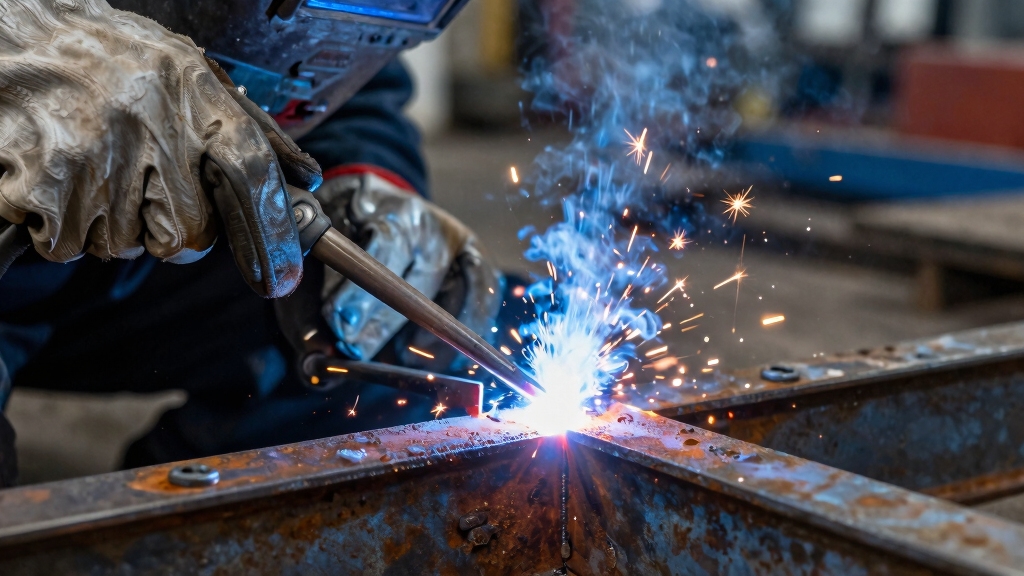
When you need reliable steel repairs, 6011 welding rods deliver deep penetration and aggressive arc action that cuts through rust, paint, and contamination.
You benefit from their fast-freezing slag, which stabilizes the weld puddle and reduces slag inclusion. This is critical when working on poorly prepared surfaces.
Their strong arc force enhances penetration into thick sections, providing a keyhole effect ideal for sound fusion.
You’ll appreciate their versatility across all welding positions, including vertical and overhead. This enables effective repairs in awkward field conditions.
Additionally, 6011 rods run efficiently on both AC and DC power sources, including low-voltage machines. This grants you flexibility in equipment choice.
This combination of penetration, arc stability, and power source adaptability makes 6011 rods the best choice for precise, durable steel repair tasks.
Unlike 6010 rods, which require DC electrode positive polarity for optimal penetration, 6011 rods offer greater versatility with power sources.
Although 6011 welding rods are primarily engineered for mild and low carbon steel, they excel in environments where metal surfaces are dirty, rusty, or coated with paint.
6011 welding rods are designed for mild steel and excel on dirty, rusty, or painted metal surfaces.
You’ll find these rods ideal when working with poorly prepared metals, as their aggressive arc penetrates through rust, mill scale, and oil, ensuring solid fusion.
Avoid using 6011 rods on aluminum or stainless steel, as their flux composition doesn’t suit those alloys.
They perform well on structural steel repairs, farm equipment, and utility frames, especially in field conditions where cleaning the metal thoroughly isn’t feasible.
Their fast-freezing slag and strong arc force accommodate out-of-position welding, making them versatile for vertical and overhead applications on contaminated surfaces.
This makes 6011 rods your go-to choice for maintenance and repair of weathered steel components.
Unlike 7018 rods, 6011 electrodes have different flux chemistry and do not require the same strict storage and handling protocols to prevent moisture absorption.
Selecting the appropriate power source for 6011 welding rods markedly impacts weld quality and efficiency.
These rods are versatile, running effectively on both AC and DC power supplies, including inverter welders, engine-driven units, and traditional AC buzz boxes.
You should consider using DC with straight or reverse polarity to optimize arc stability and penetration, especially on heavily contaminated surfaces.
AC power sources are suitable but may produce a slightly less stable arc.
Low open circuit voltage machines work well with 6011 rods, particularly for thinner rod sizes like 3/32-inch or 1/16-inch.
Matching rod size to power source capacity guarantees consistent arc behavior and penetration depth.
Proper power source selection maximizes the rod’s aggressive arc force and fast-freeze characteristics, vital for welding through rust, paint, and mill scale.
For comparison, 6011 rods provide deeper penetration than 6013 rods, making them more suitable for deep-penetrating welds and heavy-duty applications.
6011 welding rods excel across flat, vertical, overhead, and horizontal positions, offering reliable performance even in challenging out-of-position welds.
You’ll find their fast-freezing slag and aggressive arc force enable vertical uphill and downhill welding with minimal slag interference.
In overhead positions, these rods reduce sagging and dripping, maintaining weld integrity when gravity works against you.
Their adaptability shines in awkward field repairs, where precise control prevents defects.
The rods’ deep penetration supports keyhole welding, ensuring fusion despite position constraints.
By understanding these traits, you can confidently tackle varied weld angles and orientations.
Whether welding structural frames or farm equipment, 6011 rods maintain arc stability and slag control.
This optimizes weld quality across all positions without sacrificing speed or strength.
They are best used with AC power sources to achieve optimal arc stability and penetration in diverse positions.
Mastering welding positions with these rods is only part of their advantage; their ability to penetrate rust and painted surfaces truly sets them apart.
When you use 6011 rods, the aggressive arc force actively burns through surface contaminants like rust, paint, oil, and mill scale.
This capability guarantees a reliable weld without extensive pre-cleaning, which saves time in field repairs.
The rod’s fast-freezing slag prevents slag entrapment on these uneven surfaces, maintaining weld integrity.
Additionally, their deep penetration stabilizes the weld pool despite inconsistent base metal conditions.
This makes 6011 rods ideal for maintenance on farm equipment or structural steel exposed to environmental degradation, where surface preparation is limited.
To achieve the best results, it is important to maintain the correct electrode angle and an appropriate arc length during welding with 6011 rods.
When you need a welding rod that can handle tough, contaminated surfaces while ensuring strong weld integrity, understanding how 6011 rods achieve deep penetration and fast freeze is essential.
The 6011’s cellulose potassium coating creates an aggressive arc with high arc force, enabling it to burn through rust, paint, and mill scale effectively.
This aggressive arc directs heat deeply into the base metal, producing a keyhole effect for thorough fusion in thick or poorly prepared materials.
Simultaneously, the rod’s fast-freeze characteristic solidifies the weld pool quickly, reducing slag entrapment and preventing sagging in out-of-position welds.
This combination of deep penetration and rapid solidification makes 6011 rods ideal for demanding repairs where weld strength and cleanliness are critical, especially on rough or contaminated surfaces.
Additionally, the 6011 electrode is designed for use with DC+ polarity, optimizing heat distribution and weld quality in various positions.
You know, 6011 rods really shine when it comes to fixing up rusted farm equipment. They’ve this amazing ability to penetrate through contaminants thanks to their strong arc, which is super helpful.
Plus, they’re perfect for welding farm fences and reinforcing structural supports, even when the metal is a bit dirty or not fitting together perfectly.
What’s great about them is their fast freeze and deep penetration. This makes them reliable for those on-site field repairs that we often need.
They are commonly used with cellulose-based flux which provides excellent cleaning action and deep penetration in vertical welding positions.
Although rusty equipment presents significant challenges for welding, 6011 welding rods provide reliable performance by penetrating through rust, paint, and other surface contaminants.
When you’re repairing farm machinery or field tools, these rods maintain strong arc force and deep penetration. This ensures structural integrity despite surface oxidation.
Their fast-freezing slag minimizes cleanup time, making them ideal for on-site repairs under varied conditions. You can weld in multiple positions, even overhead, addressing awkward angles common in fieldwork.
| Challenge | 6011 Rod Feature | Benefit |
|---|---|---|
| Rust and paint | Aggressive arc | Penetrates contaminants |
| Irregular fit-up | Deep penetration | Strong, durable welds |
| Varied positions | Fast freeze slag | Easier slag removal, less slag inclusion |
Use 6011 rods to restore reliability in corroded equipment efficiently. Their ability to maintain arc stability in extreme weather conditions ensures dependable welding performance outdoors.
Building on the ability of 6011 welding rods to handle rusty and contaminated surfaces, these rods are particularly suited for repairing and constructing farm fences.
You’ll find their deep penetration and aggressive arc ideal for overcoming surface rust, paint, or dirt common in outdoor fence materials.
The rods’ fast-freeze characteristics let you weld in various positions, essential when working on vertical posts or overhead rails.
When welding farm fences, you can expect to:
This makes 6011 rods the go-to choice for reliable, efficient farm fence maintenance and construction. Proper use of these rods can also help minimize common weld defects like lack of fusion, ensuring stronger joints and longer service life.
When addressing structural supports in farm and field environments, 6011 welding rods offer unmatched versatility and reliability. You can confidently repair rusted or painted steel frames, brackets, and supports thanks to their deep penetration and aggressive arc.
Their fast-freeze slag minimizes clean-up, even on vertical and overhead welds, making them ideal for tough field conditions.
| Feature | Benefit |
|---|---|
| Penetration & Arc Force | Guarantees strong welds on contaminated metal |
| Position Flexibility | Works flat, vertical, overhead, and horizontal |
| Power Compatibility | Runs on AC/DC with inverter or buzz box power |
Leveraging these traits, you’ll restore structural integrity efficiently, even on poorly prepared surfaces. The ability of 6011 rods to create a protective slag shield ensures welds remain uncontaminated even in damp or breezy outdoor environments.
Mastering tack welding and welding thin sheet metal with 6011 rods requires understanding their fast-freeze arc and deep penetration characteristics. You’ll leverage the rod’s aggressive arc to burn through surface contamination while avoiding burn-through on thin materials by controlling heat input.
Master tack welding with 6011 rods by balancing deep penetration and heat control for clean, precise results.
Begin with tack welds to hold parts firmly. Use short, controlled strikes to prevent warping. For thin sheet metal, select 1/16-inch rods and use low amperage settings to maintain stability.
Keep these points in mind:
This technique guarantees reliable, clean welds on thin, rusty, or painted surfaces.
No, you shouldn’t use 6011 rods for welding stainless steel. They’re specifically designed for mild and low carbon steel, especially in dirty or rusty conditions.
Using them on stainless steel can cause weak, brittle welds and corrosion issues because their flux and alloy composition don’t match stainless steel’s properties.
Instead, choose rods or filler metals formulated for stainless welding to guarantee proper strength, corrosion resistance, and metallurgical compatibility.
When welding with 6011 rods, you’ll want well-fitted welding helmets with high-quality filters to fend off flashes.
Don flame-resistant gloves and durable jackets to defend against sparks and spatter.
Use safety spectacles beneath helmets for supplemental shield. Secure sturdy steel-toed boots and coveralls to combat contamination.
Don’t disregard respiratory protection, especially outdoors where fumes fluctuate.
Proper PPE prevents potential physical peril, providing precision and protection throughout your welding process.
You should store 6011 rods in a dry environment and use them within six months to maintain peak quality.
Prolonged exposure to moisture can degrade the flux coating, causing porosity and arc instability.
If you need longer storage, keep them in a rod oven at 250°F (121°C) to prevent moisture absorption.
Proper storage preserves their fast-freeze characteristics and deep penetration capabilities, ensuring consistent welding performance every time you use them.
You can reuse 6011 rods after breaking, but only if the broken pieces remain dry and free from contamination.
Since these rods are designed for welding on rusty or dirty surfaces, minor exposure isn’t critical. However, moisture absorption severely impacts arc stability and weld quality.
Always store broken segments in a rod oven or dry container.
If you notice slag issues or arc instability, discard the rod pieces to avoid weld defects.
Think of dialing in your 6011 rod amperage like tuning a guitar string. Too tight or loose spoils the sound.
You’ll want to set your amperage between 75 and 125 amps, depending on rod diameter and material thickness.
Smaller rods like 1/16-inch need lower amps around 75-90, while 3/32-inch rods require 90-125 amps.
This range guarantees peak penetration, arc stability, and prevents burn-through or weak welds.
Adjust carefully for best results.
When you choose 6011 welding rods, you’re picking a tool that cuts through rust and paint like a scalpel through fabric. Precise and efficient, their deep penetration and compatibility with various power sources make them ideal for challenging steel repairs, especially in farm and field settings.
Whether welding thin sheet metal or tack welding, 6011 rods deliver reliable, fast-freezing welds in multiple positions. This ensures your work stands up to demanding conditions with technical excellence.