Phone:
(701)814-6992
Physical address:
6296 Donnelly Plaza
Ratkeville, Bahamas.

Phone:
(701)814-6992
Physical address:
6296 Donnelly Plaza
Ratkeville, Bahamas.

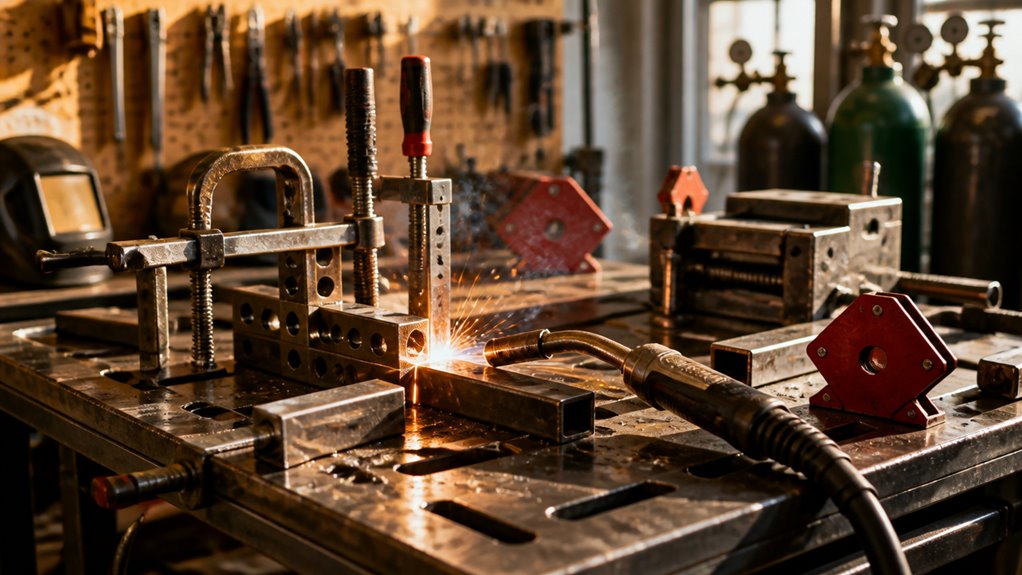
When building your welding bed, choose rugged steel or lightweight aluminum for the deck. Reinforce stress points with thicker plates or crossmembers to guarantee rigidity.
Design compartment layouts that position rods, leads, and cylinders within easy reach. Integrate recessed lead reels and lockable storage to protect tools and cables.
Secure mounts must distribute loads evenly and allow quick cylinder removal. Incorporate flame-resistant surfaces and robust lighting to enhance safety and efficiency.
Explore these core design strategies to optimize your setup for both durability and workflow.
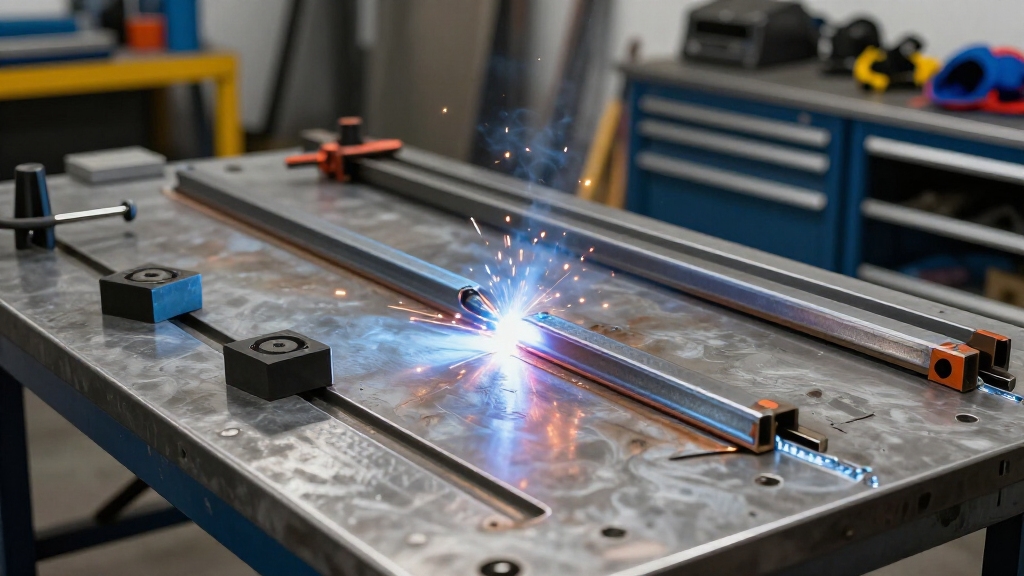
When selecting materials for your welding bed, you need to balance durability, weight, and the specific demands of your work environment.
Steel is the go-to for rugged durability, especially under harsh field conditions, with typical floor thicknesses ranging from 3/16 to 1/4 inch for structural integrity.
Steel ensures rugged durability with floor thicknesses from 3/16 to 1/4 inch for strong structural support.
Aluminum offers a lighter alternative with excellent longevity, often seen in extruded deck frames and crossmembers. This reduces overall weight without sacrificing strength.
Mixed-material constructions combine steel’s toughness and aluminum’s lightness, delivering an ideal balance.
For custom or homemade beds, heavy-duty steel deck plates provide extreme rigidity.
Flooring options like diamond plate steel or smooth aluminum boards influence grip and maintenance.
Choose materials that withstand routine wear, integrate seamlessly with your storage solutions, and maintain stability under heavy equipment loads for efficient, safe operation.
It is also important to ensure your welding bed materials can handle the heat input control necessary for welding thick steel components safely and effectively.
To optimize your welding bed for daily tasks, start by mapping out your typical workflow and identifying key equipment placement.
Position your welder compartment, whether Lincoln or Miller, where you can easily access controls and cables.
Integrate lockable side compartments for rods, discs, and leads within arm’s reach to minimize downtime.
Allocate space for pipe racks or cradles aligned with your material handling patterns.
Incorporate recessed lead reels and dedicated fuel tank compartments to reduce clutter.
Design your work surface using appropriate steel thickness, commonly 3/16 to 1/4 inch plate, for rigidity under heavy use.
Make certain oxygen and acetylene bottle racks are conveniently accessible, favoring vertical or side-by-side arrangements.
Finally, customize storage and toolboxes to reflect your equipment’s size and frequency of use, creating an efficient, organized workspace tailored to your welding demands.
Consider integrating an onboard generator or inverter to provide consistent power supply directly at your welding bed for enhanced efficiency and mobility.
Select flooring and deck materials that balance strength, durability, and weight to withstand rigorous welding tasks and field conditions.
Steel remains the primary choice for maximum durability, with 3/16- or 1/4-inch thick plates commonly used in custom builds to resist warping and impact.
For lighter-weight options, extruded aluminum decks with tongue-and-groove boards provide corrosion resistance while maintaining structural integrity.
Consider diamond plate steel or smooth steel plates for enhanced traction and ease of cleaning.
Mixed-material decks, combining steel framing with aluminum decking, offer an optimal balance between strength and reduced mass.
Make sure the deck layout accommodates your workflow by integrating flatbed-style surfaces for maximum usable area.
Reinforce key stress points with thicker plate or crossmembers to maintain rigidity during heavy-duty fabrication and transport.
Proper heat input control during welding is essential to minimize distortion and maintain the structural integrity of the deck.
When it comes to storing your welding rods, having dedicated rod boxes is a game-changer. They really help keep your consumables organized and make it super easy to grab what you need while working on projects.
Now, let’s talk about those welding leads. Managing them can be a hassle, but using recessed lead wells or integrated lead reels can really cut down on the clutter. Plus, it helps prevent any damage, which is always a win.
And don’t forget about your tools! Having lockable compartments with reinforced construction is key. It ensures that your essential gear stays secure and organized on the job site, so you can focus on what you do best.
To keep your gloves in top condition, avoid excessive washing and always allow them to air dry thoroughly to prevent brittleness and extend their lifespan.
Maximize efficiency on the jobsite by integrating a well-designed rod box into your welding bed setup. A dedicated rod box guarantees your welding rods remain dry, organized, and easily accessible, preventing contamination that could compromise weld quality.
Opt for a lockable, covered compartment constructed from durable steel or aluminum to withstand harsh field conditions. Incorporate dividers or segmented trays to separate different rod types and sizes, streamlining retrieval and inventory management.
Position the rod box within arm’s reach of your welding machine to reduce downtime. Additionally, allocate space for essential hand tools inside the box or adjacent compartments, optimizing workflow.
Prioritize weatherproof seals and ventilation to maintain ideal storage conditions. This preserves consumables and tools for consistent, high-quality performance throughout your projects. To further ensure rod integrity, maintain stable temperature and humidity levels inside the rod box to prevent moisture absorption and flux deterioration.
Manage welding leads efficiently by incorporating recessed lead reels and dedicated lead wells into your welding bed design. These features secure cables, prevent tangling, and reduce wear by keeping leads off the deck surface.
Recessed lead reels should be mounted flush with the bed floor to maintain a flat workspace and protect cables during transport. Lead wells, sized to accommodate multiple leads, offer organized storage that minimizes clutter and quickens setup.
Use durable steel or aluminum construction to withstand harsh field conditions. Incorporate locking covers to safeguard leads from environmental damage and theft.
Position lead management components near the welder compartment for easy access during operation. Proper lead routing prevents damage and maintains electrical integrity, enhancing safety and prolonging equipment life on the jobsite.
Additionally, keep ground cables short, thick-gauge, and routed away from heat, sharp edges, or moving parts to maintain reliable conductivity and prevent damage to the ground cables.
When designing tool compartments for welding beds, prioritize secure, organized storage tailored to rods, leads, and various hand tools. Incorporate lockable, covered compartments that prevent moisture and damage.
Separate rod boxes ensure consumables stay dry and accessible, while recessed lead wells reduce cable clutter and tangling. Use durable steel or aluminum materials with weather-resistant finishes for longevity.
Efficient layout optimizes workflow by grouping tools logically. Regular maintenance and cleaning of welding equipment stored in these compartments can help extend consumable life and maintain consistent performance through torch maintenance.
| Feature | Purpose | Material Recommendation |
|---|---|---|
| Lockable Compartments | Secure storage | Powder-coated steel |
| Rod Boxes | Consumable organization | Aluminum with seals |
| Lead Wells | Cable management | Steel with rubber lining |
| Tool Trays | Quick access to hand tools | Aluminum or steel |
| Moisture Seals | Protection from elements | Rubber gaskets |
This design guarantees durability and functionality on-site.
Although welding beds must accommodate various equipment, ensuring the safe integration of cylinder and machine mounts demands careful attention to placement, stability, and accessibility.
You need to position oxygen and acetylene bottle racks to minimize tipping risks, often using vertical or side-by-side configurations secured with robust brackets and straps.
Recessed welder wells improve machine stability by lowering the center of gravity, reducing vibration during transit.
Mounts must allow quick access for cylinder removal while maintaining clearance from heat sources and cables.
Use heavy-duty steel or aluminum for mounting points to withstand operational stresses.
Additionally, reinforce framing around mounts to distribute load evenly and prevent structural fatigue.
Thoughtful integration guarantees your welding bed remains functional, safe, and durable under demanding field conditions.
To maintain safety, ensure that all mounts and adjacent surfaces are covered with flame-resistant materials to protect against sparks and heat exposure.
When setting up your welding bed, consider adding some enhanced LED lighting. It really makes a difference for visibility during those low-light conditions, and it’s a big boost for overall safety. You definitely don’t want to compromise on that!
Also, think about incorporating accessible tie-down points, like outside stake pockets and reinforced rub rails. These features give you secure and flexible options for stabilizing your equipment, especially when you’re on rough terrain. It’s all about keeping everything in place and ensuring a smooth operation.
Additionally, maintaining regular equipment inspections helps prevent downtime and ensures a safe working environment.
Frequently overlooked, enhanced lighting solutions play a critical role in welding bed safety and accessibility. They guarantee peak visibility during low-light conditions.
You want to maximize both operational efficiency and safety around your welding bed by integrating proper illumination. Consider these key features:
Using fire-resistant materials in any nearby welding curtains or barriers complements lighting improvements by enhancing overall safety.
These lighting upgrades enhance your workspace clarity, minimizing errors and improving safety during nighttime or enclosed environment welding.
Multiple strategically placed tie-down points can dramatically improve the safety and functionality of your welding bed. They secure equipment and materials during transport and on uneven job sites.
You should integrate heavy-duty stake pockets along the bed’s perimeter, allowing flexible attachment of straps and chains. Reinforced, capped tie-down points prevent deformation under load and extend durability.
Incorporating rub rails with built-in D-ring mounts offers additional securement options without obstructing workspace. Position tie-downs at regular intervals to accommodate varying load sizes and shapes.
This ensures stability for pipe racks, welding machines, and gas cylinders. Accessible tie-down points reduce movement, minimizing damage risk and enhancing operator safety.
Always verify that mounting hardware meets or exceeds load ratings for your expected cargo. This helps maintain regulatory compliance and jobsite reliability.
You should regularly clean your welding bed by removing slag, dust, and debris with a wire brush or scraper to prevent corrosion and surface damage.
Inspect for rust or cracks, then apply rust inhibitors or touch-up paint on steel surfaces.
Keep compartments dry and lubricate hinges and locks.
Use a protective cover when idle to avoid weather exposure.
Routine checks and timely repairs ensure your welding bed stays durable and functional over time.
To prevent rust on your welding bed, regularly clean off dirt and moisture.
This is especially important after exposure to rain or welding sparks.
Apply a rust-inhibiting primer or coating to steel surfaces.
Inspect for scratches or chips and touch up promptly.
Use corrosion-resistant materials like aluminum or mixed steel-aluminum builds if possible.
Store your bed under cover or use weatherproof tarps when idle.
Ensure proper drainage to avoid standing water accumulation.
Imagine your welding bed as a custom control center designed for electric vehicle setups. You can absolutely tailor it with dedicated compartments for battery pack welding equipment.
Integrated power outlets compatible with EV tools and enhanced cable management for high-voltage leads are essential features. Aluminum or mixed-material construction keeps weight down, while reinforced flooring supports heavy components.
Adding LED lighting and secure, lockable storage guarantees safety and efficiency on-site. This design perfectly matches your EV-specific welding workflow.
To transport a fully loaded welding bed safely, secure all equipment using heavy-duty tie-downs attached to reinforced stake pockets or rub rails.
Make certain oxygen and acetylene bottles are properly mounted in vertical racks with caps on. Lock all compartments to prevent shifting.
Verify weight distribution to maintain vehicle stability and check departure angles to avoid damage.
Use DOT-compliant lighting and rear skirting for visibility and road legality during transit.
Imagine your custom welding bed standing strong through rugged jobsite challenges. That’s what warranties aim to assure.
You’ll often find limited warranties covering structural integrity for 1 to 5 years, protecting against defects in materials and workmanship.
Some manufacturers offer extended coverage on components like paint, locks, or electrical parts.
Always review terms carefully to make certain coverage matches your use. Ask about service support and replacement policies to keep your investment secure.
When designing your welding bed, remember it’s the backbone of your workspace: strong, organized, and safe.
Choose durable materials and tailor the design to fit your workflow seamlessly.
Prioritize sturdy flooring and integrated mounts for cylinders and machines to enhance stability.
Don’t overlook essential storage solutions and safety features; they keep your tools accessible and hazards at bay.
With careful planning, your welding bed becomes a precision-crafted hub that powers your productivity efficiently.