Phone:
(701)814-6992
Physical address:
6296 Donnelly Plaza
Ratkeville, Bahamas.

Phone:
(701)814-6992
Physical address:
6296 Donnelly Plaza
Ratkeville, Bahamas.

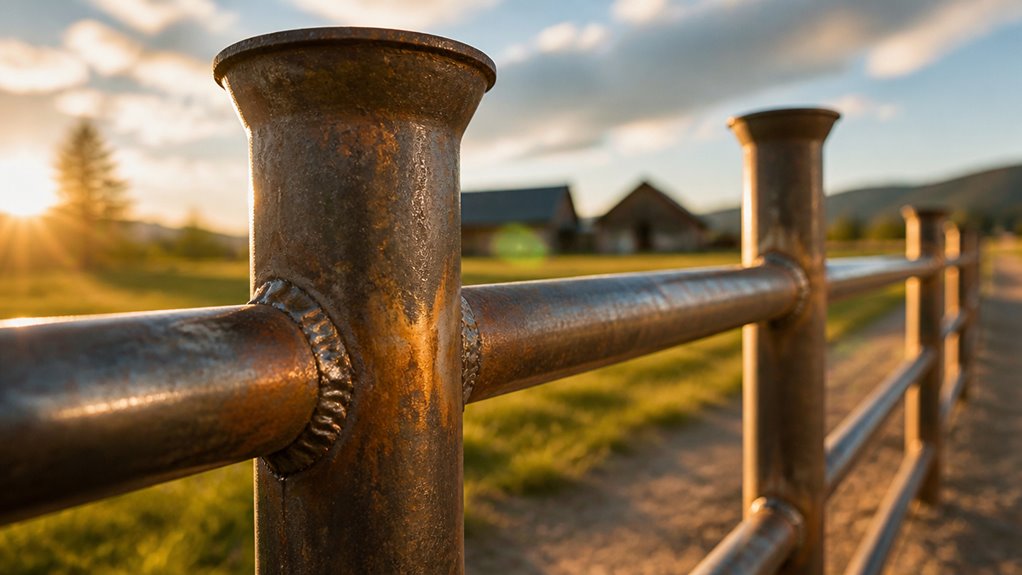
When planning a welded pipe fence, choose galvanized steel for up to 30 years of durability or black steel for about 25 years.
Use 2 7/8-inch posts for ranch styles, paired with 1 3/8 to 1 5/8-inch rails on 8-foot centers to guarantee strength.
Combine classic solid rails with modern cable or metal infill for style and function.
Properly set posts in concrete and weld components for precision.
Explore options to enhance design and maintenance practices for lasting performance.
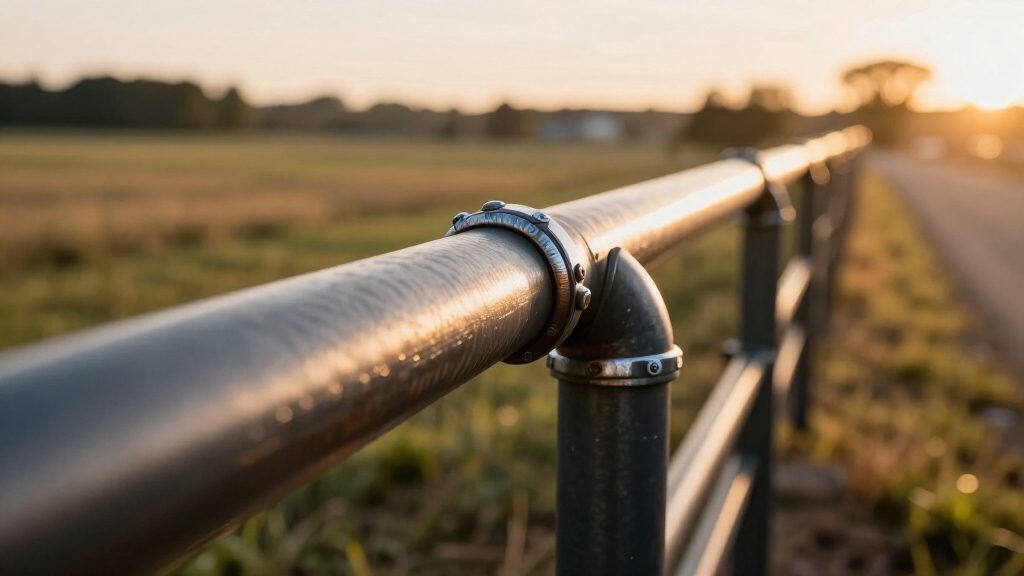
Selecting the right steel pipe for your welded fence starts with understanding the demands of your project and the material options available.
Choosing the right steel pipe begins with assessing your project’s specific needs and material choices.
You’ll typically choose between galvanized steel for longevity, offering an estimated 30 years of service, or black steel pipe, which lasts about 25 years.
For posts, consider 2 7/8-inch diameter pipes to guarantee structural strength, especially in ranch-style or heavy-duty applications.
Rails and frames often use round steel pipe ranging from 1 3/8 to 1 5/8 inches in diameter, with Schedule 10 or 20 wall thickness for lighter residential fences.
Solid steel rod is ideal for continuous rail systems due to its weldability and strength.
Prioritize pipe dimensions and wall thickness based on load requirements, environmental exposure, and desired fence durability to secure peak performance and lifespan.
Incorporating proper welding techniques during assembly is crucial to ensure structural integrity and long-lasting fence performance.
When planning your welded pipe fence, understanding classic and modern layouts guarantees you achieve both functionality and aesthetic appeal.
Classic layouts often feature ranch-style 2 7/8-inch posts with solid sucker rod rails, providing heavy-duty strength. Modern designs incorporate decorative elements like curved tops, cable infills, or metal sheet accents for a refined look.
Align posts on 8-foot centers for optimal structural integrity and consider sectional frames welded post-installation for precision.
Choosing rectangular or square tubing for the fence frame can enhance strength and resist twisting under load.
| Layout Type | Post Size (in) | Notable Feature |
|---|---|---|
| Classic | 2 7/8 | Solid sucker rod rails |
| Modern | 1 3/8–1 5/8 | Cable or metal sheet infill |
| Hybrid | Varies | Decorative welded accents |
Selecting the right layout streamlines installation and enhances durability.
Start by precisely planning your fence layout and preparing all materials before construction. Begin with detailed drawings to define post spacing, typically 8-foot centers for residential fences, and section dimensions.
Dig post holes about 1.5 meters deep in loose soil and 1 meter in dense soil, with a diameter 100 mm wider than the post. Set steel posts in gravel and concrete, ensuring vertical alignment.
Cut pipe rails and frame sections to size, clean surfaces thoroughly, then weld components into panels. Allow concrete to cure 2 to 3 days before attaching rails and panels to posts.
Finish weld seams smoothly to prevent snagging, then degrease and apply corrosion-resistant paint. Use sectional construction for easier future repairs and maintain strict welding quality for structural integrity.
For enhanced corrosion protection, consider using powder coating galvanized steel on metal surfaces during finishing.
Beyond structural soundness and proper installation, enhancing welded pipe fences with decorative and functional upgrades can markedly boost their utility and aesthetic appeal.
You can integrate metal sheet panels or cable infill between rails to increase privacy without sacrificing airflow. Curved or arched tops add a modern visual element while maintaining strength.
Adding welded decorative accents, such as scrollwork or geometric patterns, elevates design sophistication. Functionally, no-climb wire infill prevents animal escape and intrusion.
Bottom rails raised 18 inches accommodate wildlife movement. You might also consider powder coating or specialized paint finishes to improve corrosion resistance and color longevity.
These upgrades not only personalize your fence but also enhance performance, making your welded pipe fence both a durable barrier and a visually compelling feature. Selecting the appropriate welding process based on material type and environmental conditions ensures optimal durability and finish for your fence, highlighting the importance of process selection.
Properly maintaining and repairing welded pipe fences guarantees their strength and longevity over decades of use.
Start by inspecting weld seams and pipe surfaces regularly for cracks, rust, or damage. Clean the fence with degreasers and remove corrosion spots before applying rust-inhibitive primer and paint to preserve the steel.
Regularly inspect and clean welded pipe fences, treating corrosion before applying rust-inhibitive primer and paint.
For repairs, cut out damaged rails or panels and weld in new pipe sections, assuring alignment and structural integrity. Smooth all welds to prevent snags, then finish with protective coatings.
Check post stability and concrete footings annually, resetting any loose posts to maintain fence rigidity. Prompt maintenance reduces costly replacements and preserves the fence’s function and appearance.
Your proactive care will assure the welded pipe fence performs reliably in residential, ranch, or agricultural settings. Ensuring a secure ground connection during welding repairs is essential to maintain weld quality and safety.
You should know welded pipe fencing impacts the environment through steel production’s energy use and emissions.
Galvanizing adds protective coatings but involves chemicals.
The fence itself is durable, reducing waste from frequent replacement.
However, installation disturbs soil and local habitats.
Proper design, like raising bottom rails for wildlife passage, minimizes disruption.
Regular maintenance prevents rust, prolonging life and lessening resource consumption.
You’ll find welded pipe fencing generally costs more upfront than wood or chain-link fences due to steel material prices and welding labor.
However, it offers superior durability and lower maintenance, potentially reducing long-term expenses.
Its rigid, permanent structure means fewer repairs and longer service life, making it cost-effective over decades despite higher initial investment.
If you prioritize strength and longevity, welded pipe fencing delivers better value compared to lighter, cheaper alternatives.
You need to meet federal, state, and local safety codes when installing welded pipe fences on farms.
OSHA guidelines emphasize secure welding, smooth finishes, and proper post depth to prevent injuries.
You should make certain rails are spaced to prevent livestock entrapment and maintain structural integrity under stress.
Regular inspections, corrosion protection, and adherence to animal containment standards keep your fence safe, durable, and compliant with agricultural safety regulations.
Yes, you can recycle or repurpose welded pipe fences after use.
Steel components are fully recyclable, so you can send them to scrap metal facilities.
For repurposing, you might dismantle sections for use as garden trellises, livestock pens, or structural supports.
Just cut out damaged parts and weld or bolt reused pieces for new configurations.
Proper surface treatment before reuse helps prevent corrosion and extends the secondary service life effectively.
You won’t finish a welded pipe fence before your morning coffee, but typically, expect about one to two days per 100 feet if you’re organized.
Posts alone need setting in concrete, which demands a 2-3 day curing wait before attaching rails. Cutting, welding, cleaning, and painting add time.
Your speed depends on crew size and experience, but don’t underestimate curing delays and precise alignment for a durable, professional installation.
So, you’re ready to wrestle with steel pipes and sparks?
Remember, choosing the right steel pipe isn’t rocket science. Just don’t pick the flimsy stuff unless you want your fence to resemble a modern art disaster.
Stick to classic or modern layouts, or risk creating a confused metal sculpture.
Build it right, upgrade smartly, and maintain religiously. Because nothing says “I care” like welding your way out of rust and ruin.
Now, go fence like a pro.