Phone:
(701)814-6992
Physical address:
6296 Donnelly Plaza
Ratkeville, Bahamas.

Phone:
(701)814-6992
Physical address:
6296 Donnelly Plaza
Ratkeville, Bahamas.

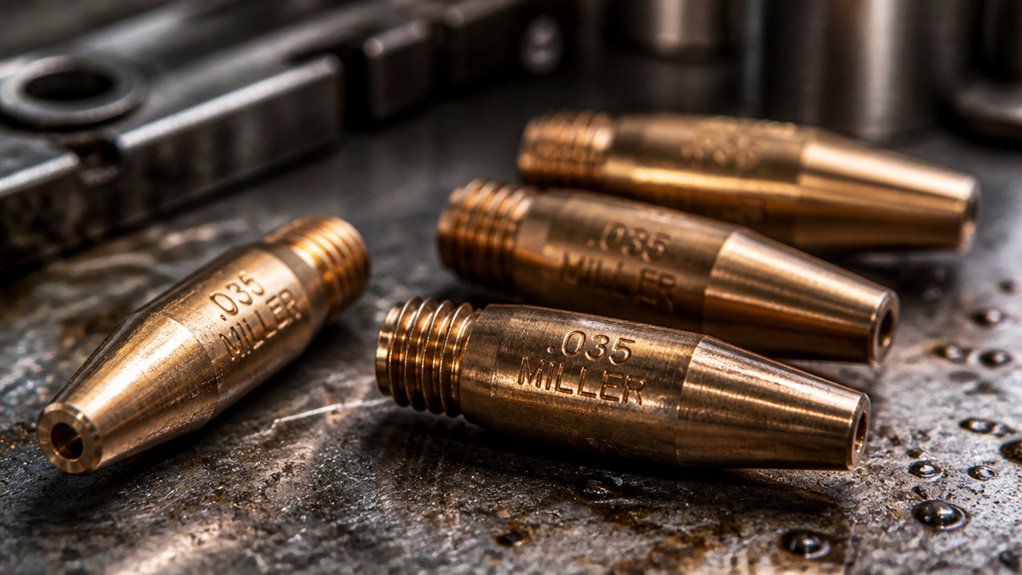
You’ll want Miller .035 welding tips engineered for exact fit with MIG guns like Spoolmate or AccuLock MDX, ensuring smooth wire feed and consistent arc stability.
Crafted from copper, these tips offer superior conductivity and heat dissipation, preventing spatter and wear.
Match the tip’s thread size, wire diameter, and amperage rating, typically up to 250 amps, for peak performance.
Proper maintenance extends service life, but signs like irregular feeding signal replacement.
Exploring further reveals detailed compatibility and performance insights.
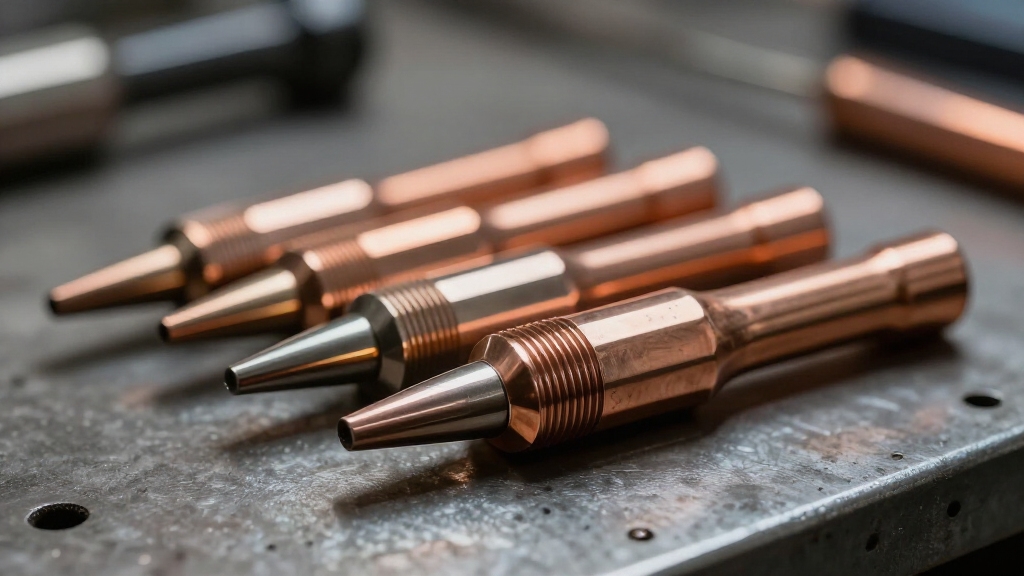
Although you might find various options on the market, Miller .035 welding tips stand out due to their precise compatibility with specific MIG gun families like Spoolmate, Spoolrunner, and AccuLock MDX, guaranteeing ideal fit and performance.
These tips are engineered for 0.035-inch wire, some covering a range from .023 to .035 inches, and utilize M5 x 0.8 mm threading in many models.
Constructed from copper, they offer excellent conductivity and arc stability, promoting consistent weld quality and extended service life.
Miller tips come in both tapered and standard designs, matching diffuser styles and thread patterns unique to each gun series.
Their amperage ratings vary, commonly up to 250 A, supporting diverse welding applications.
This exacting specification guarantees you maintain wire-feed precision and arc consistency critical to MIG welding efficiency.
Regular inspection and maintenance of these tips help prevent micro-arcing and ensure long-term welding performance.
To get the best performance from your Miller MIG gun, it’s super important to match your .035 contact tip with the right gun series. Trust me, you don’t want to overlook this step!
Start by ensuring that the tips you choose are compatible with your gun’s diffuser style. Remember, each model has its own specific part number—like 186406 or 000068. Using the correct part number is key to avoiding any feed issues.
When everything aligns properly, you’ll notice a big difference in arc stability while welding. So, take a moment to double-check that your tips are a perfect match for your MIG gun. It’s worth it for a smoother welding experience!
Proper tip sizing guarantees seamless current transfer and prevents common performance problems.
When selecting Miller .035 contact tips, matching the tip to your specific MIG gun series guarantees peak performance and compatibility. Each Miller gun family, such as Spoolmate, Spoolrunner, M-Series, Roughneck, and AccuLock MDX, requires tips with precise threading and dimensions, often M5 x 0.8 mm or proprietary designs.
Using the correct part number, like 186406 for Spoolmate or 000068 for M-Series, secures proper fit and prevents feeding issues. Tips are engineered for specific diffuser geometries, so mismatching can degrade arc stability and wire-feed consistency.
Copper construction and precision machining optimize conductivity and wear resistance, but only when matched correctly to the gun. Always verify your gun series and corresponding tip specifications before replacement to maintain arc quality and prolong consumable life. Proper tip selection also minimizes feeding stoppages and ensures wire feed stability during welding operations.
Proper tip and diffuser matching guarantees peak wire feeding and arc stability in your Miller MIG welding system. You must select contact tips that precisely fit your MIG gun series: Spoolmate, Spoolrunner, M-Series, or AccuLock MDX to maintain optimal alignment and avoid feed issues.
Each gun family uses specific diffuser styles and tip threading, such as M5 x 0.8 mm for certain spool guns. Using a tip mismatched to the diffuser or gun series disrupts wire trajectory, causing inconsistent feed and arc instability.
Copper tips machined to exact dimensions guarantee consistent electrical contact and minimize wear. Always verify that the tip’s design and diffuser interface correspond to your gun’s specifications. Differences in shape, threading, and connection type critically impact welding performance and consumable lifespan.
Maintaining the correct stickout length is also crucial, as it affects arc stability and wire feed consistency when using the proper tip and diffuser combination.
Matching the correct part number to your Miller MIG gun series guarantees compatibility and peak performance. You must identify the specific gun model, such as Spoolmate, Spoolrunner, M-Series, or AccuLock MDX, to select the right contact tip part number, like 186406, 000068, or T-M035.
Each series often requires a distinct tip thread size and diffuser interface. Many Miller .035 tips use M5 x 0.8 mm threading. Using an incompatible tip may impair wire feeding and arc stability. Verify that the tip’s design and material align with your wire type and welding process.
Cross-referencing part numbers guarantees you maintain ideal electrical ratings and service life. Proper part number identification streamlines maintenance and maximizes consumable efficiency in your welding setup. Ensuring the tip fits your gun and wire diameter supports maintaining arc stability and consistent feed during welding.
Select a Miller .035 contact tip based on your specific welding gun model, wire type, and application requirements to guarantee peak performance.
First, verify compatibility with your gun series: Spoolmate, Spoolrunner, M-Series, or AccuLock MDX. Tip thread size and shape vary, especially between M5 x 0.8 mm and other standards.
Next, match the tip to the wire diameter and type. A 0.035-inch tip suits solid or flux-cored wire, but aluminum wires often require specialized tips.
Consider the amperage rating too, assuring the tip can handle your welding current without premature wear.
Finally, confirm the part number aligns with your diffuser and gun to maintain proper wire feed path and arc stability.
Selecting precisely secures consistent wire feeding, arc quality, and longer consumable life.
Regular inspection and cleaning of contact tips to prevent spatter buildup is essential to maintain proper electrical conductivity and avoid welding defects.
You know, copper really shines when it comes to its electrical conductivity, especially in Miller .035 tips. It directly reduces resistance, which is a game changer for promoting a steady current flow. And let’s be honest, that consistency is key!
It helps stabilize the arc, making sure your welds are high-quality and free from defects.
When you understand how copper works in these tips, you can really optimize their performance. Plus, you’ll find that it helps extend the service life of your tips, even under some pretty demanding welding conditions.
Using tungsten electrodes instead of pure copper tips can further improve durability and weld quality by handling heat better and reducing wear.
Copper’s exceptional electrical conductivity plays a critical role in the performance of Miller .035 contact tips.
When you use copper tips, you benefit from minimal electrical resistance, which guarantees efficient current transfer from the welding gun to the wire.
This efficiency reduces heat buildup in the tip, preventing premature wear and deformation.
You’ll also notice that copper’s conductivity supports consistent, stable electrical flow, essential for maintaining reliable arc initiation and wire melting.
As a result, copper tips extend service life and improve overall welding quality.
By choosing copper-constructed tips, you optimize thermal management and electrical performance simultaneously.
This helps maintain precise wire feeding and reduces the risk of interruptions during MIG welding processes.
This conductivity advantage directly impacts your welding productivity and consumable longevity.
Copper’s use in welding components is especially valued for its role in precise wire feed control, which minimizes downtime and enhances weld quality.
Building on copper’s superior conductivity, its role in enhancing arc stability in Miller .035 contact tips becomes clear.
Copper facilitates consistent electrical transfer, minimizing voltage fluctuations that could destabilize the arc.
When you use a copper tip, the heat dissipation is more efficient, preventing overheating and maintaining a steady contact area with the wire.
This stability directly influences your arc’s uniformity, reducing spatter and guaranteeing smoother weld beads.
Precise machining of copper tips further secures that the wire feeds without interruption, avoiding arc interruptions caused by irregular contact surfaces.
In your welding setup, selecting a copper-constructed Miller .035 tip means you maintain peak arc control, which is critical for repeatable weld quality and longer consumable life, especially under higher amperage conditions.
Proper heat management is essential to prevent common defects like porosity and cracking that can compromise weld integrity.
Selecting the right wire type for Miller .035 contact tips is crucial to optimizing welding performance and consumable longevity.
These tips are engineered primarily for 0.035 in diameter solid and flux-cored wires, ensuring proper fit and consistent feed.
Designed for 0.035-inch solid and flux-cored wires to ensure precise fit and smooth feeding.
You’ll find standard copper tips compatible with steel solid wires, while specialized aluminum tips cater to aluminum wire feeding, addressing differing thermal conductivity and arc characteristics.
Flux-cored wire compatibility depends on the specific tip model, so verify manufacturer recommendations.
Using a wire type mismatched to the tip can cause erratic feeding, increased spatter, and premature tip wear.
Always match the wire material and diameter precisely with the tip specification to maintain arc stability and prevent consumable failure.
This ultimately supports a consistent welding process and reduces downtime.
Choosing the correct wire diameter ensures optimal penetration and reduces welding defects, maximizing overall weld quality.
When you choose a Miller .035 contact tip, understanding its amperage rating is essential to guarantee peak welding performance and tip longevity.
These tips typically handle between 160 and 250 amps, depending on the specific model and gun compatibility.
For example, standard-duty tips often support around 160 amps at a 60% duty cycle. AccuLock MDX variants can reach up to 250 amps maximum.
Selecting a tip with an appropriate amperage rating prevents overheating and premature wear. This ensures consistent wire feed and stable arc characteristics.
Always match the tip’s amperage capacity to your welding parameters, including wire type and thickness.
Exceeding the tip’s rating risks arc instability, increased spatter, and reduced consumable life. This undermines weld quality and productivity.
Optimizing wire feed and arc stability hinges on using the correct Miller .035 contact tip matched precisely to your wire diameter and gun series. When the tip’s orifice matches the 0.035-inch wire diameter exactly, it guarantees consistent wire feeding without drag or wobble. This directly stabilizes the arc.
Improper tip-to-wire fit causes erratic wire movement, leading to arc fluctuations and poor weld quality. Additionally, the tip’s threading and diffuser compatibility maintain ideal wire alignment, preventing feed jams.
Miller tips, made from high-conductivity copper and precision-machined, provide reliable electrical contact. This sustains steady amperage and arc consistency.
Selecting the appropriate tip for your Spoolmate, M-Series, or AccuLock MDX gun supports proper wire feed rates and reduces premature consumable wear. Ultimately, this enhances arc stability and welding performance.
Maintaining consistent wire feed and arc stability depends not only on choosing the right Miller .035 contact tip but also on recognizing when it’s time to replace worn or damaged tips.
You should replace the tip if you notice irregular wire feeding, increased spatter, or erratic arc behavior. These indicate tip wear or internal deformation.
Inspect the contact tip for visible erosion, ovalization of the orifice, or buildup affecting wire alignment. Oversized or damaged tips disrupt the wire-feed path, causing poor arc performance and potentially damaging the diffuser.
Also, if you experience frequent wire jams or inconsistent electrical contact despite proper gun setup, it signals tip degradation.
Timely replacement maintains electrical conductivity, prolongs consumable life, and guarantees stable arc characteristics essential for optimal welding results.
Although Miller offers a range of .035 contact tips across multiple MIG gun families, identifying the correct part number is essential for compatibility and performance.
Choosing the right .035 contact tip part number is key for MIG gun compatibility and optimal welding performance.
You’ll encounter part numbers like 186406, 000068, and T-M035, each tailored to specific guns such as Spoolmate, Spoolrunner, M-Series, and AccuLock MDX.
Pay attention to threading; M5 x 0.8 mm is common for several spool gun tips and diffuser compatibility. Tip shape and connection types differ.
Packaging varies from single units to multi-packs of 3, 5, 10, or 25, letting you choose based on usage frequency.
Selecting the precise part number assures proper wire feeding, arc stability, and extends consumable life.
This minimizes downtime and maintains welding quality.
You generally shouldn’t use Miller .035 tips with non-Miller welding guns unless compatibility is confirmed.
Threading, tip shape, and diffuser style vary by manufacturer, affecting fit and wire feeding.
If your gun matches the M5 x 0.8 mm threading and diffuser style of Miller tips, you might achieve good performance.
Always verify part numbers, thread specs, and gun series to guarantee proper alignment and avoid arc instability or premature wear.
If you expose your welding tip to a hurricane of dust, moisture, or extreme heat, expect its lifespan to plummet drastically.
Environmental factors accelerate tip wear by promoting corrosion, clogging, and arc instability.
Contaminants alter electrical conductivity, while temperature swings cause metal fatigue and deformation.
To maximize tip life, you need controlled, clean conditions and proper storage.
Ignoring environment leads to premature tip failure and inconsistent weld quality.
Yes, you should clean Miller .035 contact tips regularly to maintain peak performance.
Use a wire brush or tip cleaner to remove spatter and debris without damaging the copper surface.
Avoid abrasive tools that can alter tip geometry, leading to inconsistent arc.
Periodic inspection combined with gentle cleaning helps prevent feed issues and extends tip life.
Always clean tips when replacing wire or after prolonged use to guarantee consistent conductivity and arc stability.
You’ll need a properly sized wrench or socket, typically a 5/8-inch or adjustable wrench, to remove and install Miller .035 tips securely.
Use a clean, non-marring tool to avoid damaging the copper tip or gun threads. Pair this with precision alignment of the diffuser and tip to maintain wire-feed accuracy.
Avoid overtightening, as this can distort the tip or gun components. Consistent tool use guarantees peak arc stability and prolongs consumable life.
You generally shouldn’t modify Miller .035 tips because their precise dimensions and threading guarantee proper wire feeding and arc stability.
Altering tip size or shape can cause poor contact, inconsistent arcs, and accelerated wear.
Instead, select tips designed for your specific wire type, gun model, and welding process.
If your application demands customization, consider consulting the manufacturer or using specialized consumables made for unique welding conditions to maintain performance and safety.
When you choose the right Miller .035 welding tip, you’re tuning your MIG gun like a finely crafted instrument. This ensures smooth wire feed and stable arcs.
Copper’s conductivity is the lifeblood of consistent welding performance. Correct amperage ratings keep your setup from burning out.
Recognize wear early to avoid unexpected failures. With precise matching and maintenance, your Miller .035 tips become the silent backbone of flawless welds.
They transform sparks into strength.