Phone:
(701)814-6992
Physical address:
6296 Donnelly Plaza
Ratkeville, Bahamas.

Phone:
(701)814-6992
Physical address:
6296 Donnelly Plaza
Ratkeville, Bahamas.

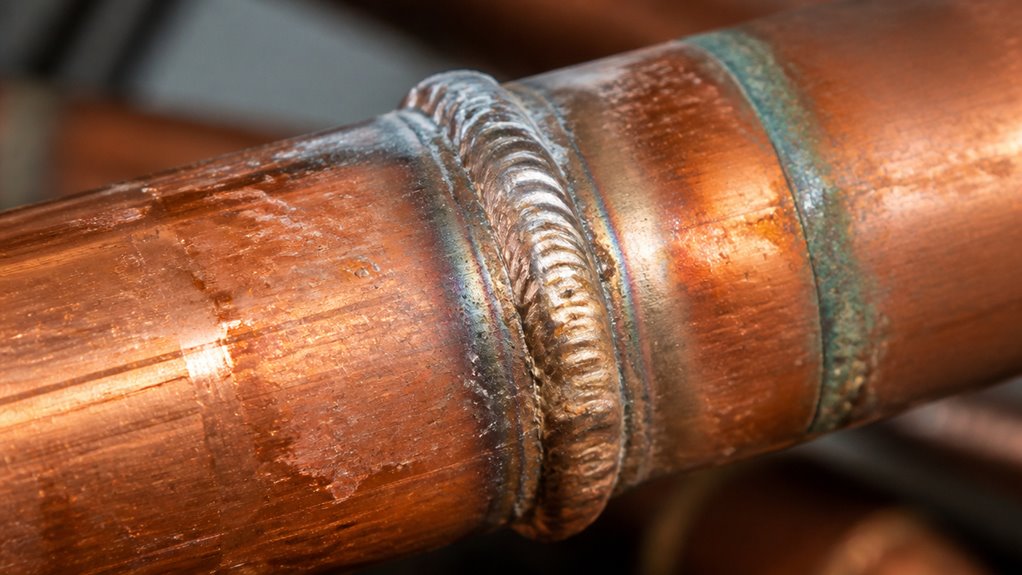
You can spot weld copper effectively by using tungsten-tipped electrodes to handle copper’s high thermal conductivity and avoid excessive wear.
Apply a copper-specific flux to reduce surface oxides and enhance electrical flow.
Adjust your spot welder to lower power settings, since copper requires less heat than steel.
Consider double pulse techniques for thinner material.
Managing preheating and electrode pressure is critical to guarantee strong, consistent welds.
Understanding these parameters will help you achieve ideal copper spot weld results.
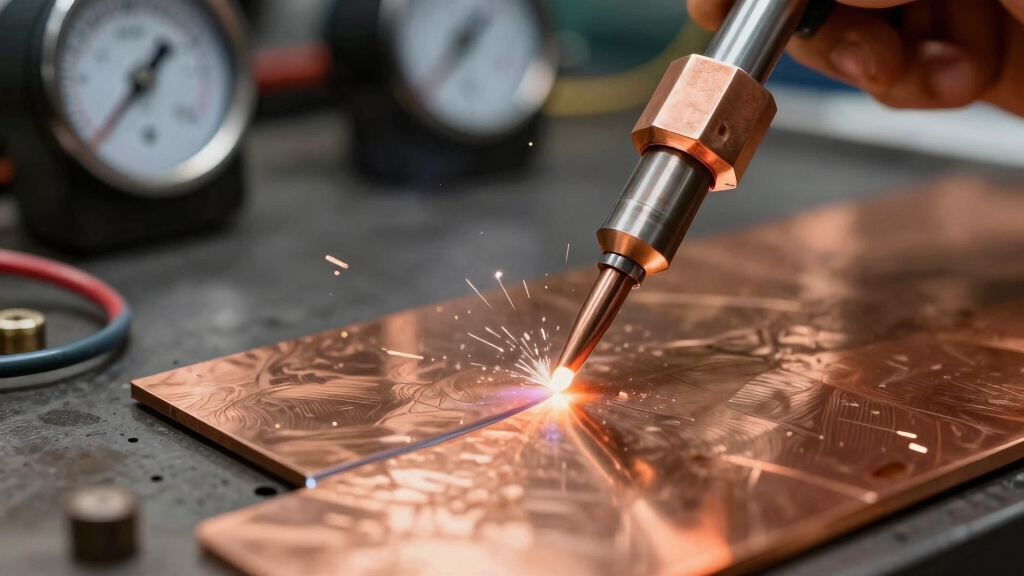
Although standard spot welding equipment won’t suffice, you can successfully weld copper by upgrading your setup with specific modifications. First, replace copper electrodes with tungsten tips to handle copper’s high thermal conductivity and prevent rapid electrode wear.
You’ll need a spot welder with adjustable power settings to fine-tune the welding current precisely. Copper requires lower power levels than typical metals. Additionally, incorporate graphite electrodes with copper tubing to maintain an efficient electrical path and manage heat dissipation.
Before welding, apply a specialized copper welding flux between the copper pieces to enhance resistance heating and ensure consistent weld quality. Using equipment like the Glitter 811H spot welder, combined with these adaptations, enables you to achieve reliable, high-integrity copper spot welds that standard setups can’t produce. Be sure to adjust current, pressure, and weld time specifically for copper to avoid weak welds or burn-through.
Building on the equipment modifications discussed, you’ll need to prepare tungsten tips on your spot welder and apply a specialized flux to achieve effective copper welds.
Replace standard copper electrodes with tungsten tips due to tungsten’s higher melting point and superior electrical resistance. This concentrates heat efficiently at the weld interface.
Before welding, spread a thin layer of copper-specific flux between copper pieces. This flux facilitates electrical resistance heating by reducing surface oxides and improving current flow.
Use controlled power settings, typically lower than those for steel, to prevent overheating. The flux also enables double pulse welding techniques, enhancing weld integrity on thin copper layers.
Together, tungsten tips and flux optimize heat generation and weld quality, overcoming copper’s high thermal conductivity and ensuring strong, reliable spot welds.
For best results, it is essential to sharpen tungsten electrodes at precise angles to maintain arc stability and extend electrode life.
Selecting the right copper thickness is essential for achieving reliable spot welds, as it directly influences the required power settings and welding techniques.
You’ll find that 0.1mm pure copper welds effectively at low power, about 15%, making it ideal for delicate applications.
When working with 0.15mm copper atop 0.1mm, preheating and moderate power around gear 850 guarantee solid bonds.
For thicker copper, like 0.2mm or 0.3mm, applying specialized flux becomes critical to generate sufficient resistance heat. This enables stable welds at standard or slightly increased power settings.
Avoid exceeding 0.3mm without adjusting equipment, as weld integrity diminishes.
Maintaining preheating and surface cleanliness is crucial to prevent oxidation and ensure strong spot welds in copper.
Mastering copper-nickel sandwich spot welds requires precise control over material layering and power settings.
You’ll start by stacking 0.1mm pure copper with 0.1mm nickel-plated steel. This guarantees clean, oxide-free surfaces for peak contact.
Use tungsten electrodes to maintain stable arcs and prevent electrode degradation.
Apply a specialized copper welding flux between layers to enhance resistance heat generation and promote consistent fusion.
Adjust your spot welder’s power to approximately 15-30% capacity to avoid overheating. This prevents warping or weak joints.
Employ a double pulse technique when welding thinner layers to preheat and then fuse the metals effectively.
Maintain consistent electrode pressure to ensure uniform current flow through the sandwich. This minimizes resistance fluctuations.
This approach yields robust, conductive welds essential for battery busbar applications.
For optimal results, ensure precise current control to prevent heat loss and maintain weld consistency.
How can you confidently determine the strength and integrity of copper spot welds? Start by performing a peel test, which directly measures weld adhesion by applying a controlled force to separate the welded materials.
Strong adhesion during the peel test indicates solid mechanical and electrical bonding. Complement this with visual inspection to verify weld presence and uniformity after the test.
Additionally, compare welds made with copper against those using nickel strips to assess relative bond strength. For precise evaluation, ensure test conditions replicate operational stresses the weld will face.
These methods together provide reliable confirmation of weld quality, assuring the copper spot welds meet both mechanical durability and electrical conductivity requirements. You’ll thereby verify weld strength with accuracy and confidence.
For best results, it is important to control heat input during welding to prevent weakening or cracking of the joint.
Yes, spot welding copper can damage battery cells if you don’t control power settings carefully. Excessive heat or improper electrode materials may cause thermal stress or deformation in the cell casing.
Using tungsten tips, appropriate flux, and low power levels tailored for thin copper layers minimizes risk. Preheating and double pulse techniques further protect cells by reducing sudden temperature spikes. This ensures welds are strong without compromising battery integrity.
Don’t worry. Copper spot welding actually enhances electrical conductivity by creating a low-resistance, solid bond between copper surfaces.
When you use tungsten tips and specialized flux, you guarantee a clean weld that maintains excellent electron flow.
This method eliminates intermediate layers like nickel strips, reducing contact resistance.
Properly executed welds show strong adhesion and consistent conductivity, verified by peel tests. Your connections remain efficient and reliable in high-current applications.
You need to wear insulated gloves and eye protection to guard against electrical shocks and bright arc flashes.
Make certain proper ventilation to avoid inhaling flux fumes, which can be hazardous.
Use tungsten tips carefully to prevent burns and equipment damage.
Keep the workspace clear of flammable materials and verify that your spot welder’s power settings match the copper thickness to avoid overheating.
Always follow manufacturer guidelines for flux handling and welding procedures.
Yes, you can automate copper spot welding for mass production by integrating precise power controls, tungsten electrodes, and specialized flux application into robotic systems.
Automation guarantees consistent weld quality, especially for thin copper layers (0.1–0.3mm). You’ll need adjustable power settings and reliable flux dispensing to maintain heat generation and weld integrity.
Automated peel testing can verify weld strength, making the process efficient and reproducible for high-volume manufacturing.
You can expect a copper spot weld to last for thousands of stress cycles if properly executed with tungsten tips and specialized flux.
Its durability depends on factors like copper thickness, power settings, and environmental conditions.
With correct parameters, welds withstand mechanical fatigue and thermal expansion without cracking.
Regular peel tests confirm adhesion strength, ensuring longevity in high-stress applications such as battery busbars or electrical connections under dynamic loads.
Now that you’ve mastered the essential tools and techniques, imagine the perfect copper spot weld forming: bright, seamless, and strong. Your tungsten tips, flux, and precise thickness control work in harmony, creating a bond that resists stress and heat.
But here’s the real test: will your inspection methods catch every imperfection? With careful analysis and rigorous testing, you guarantee each weld meets exacting standards.
Because in copper spot welding, precision isn’t just preferred, it’s critical.