Phone:
(701)814-6992
Physical address:
6296 Donnelly Plaza
Ratkeville, Bahamas.

Phone:
(701)814-6992
Physical address:
6296 Donnelly Plaza
Ratkeville, Bahamas.

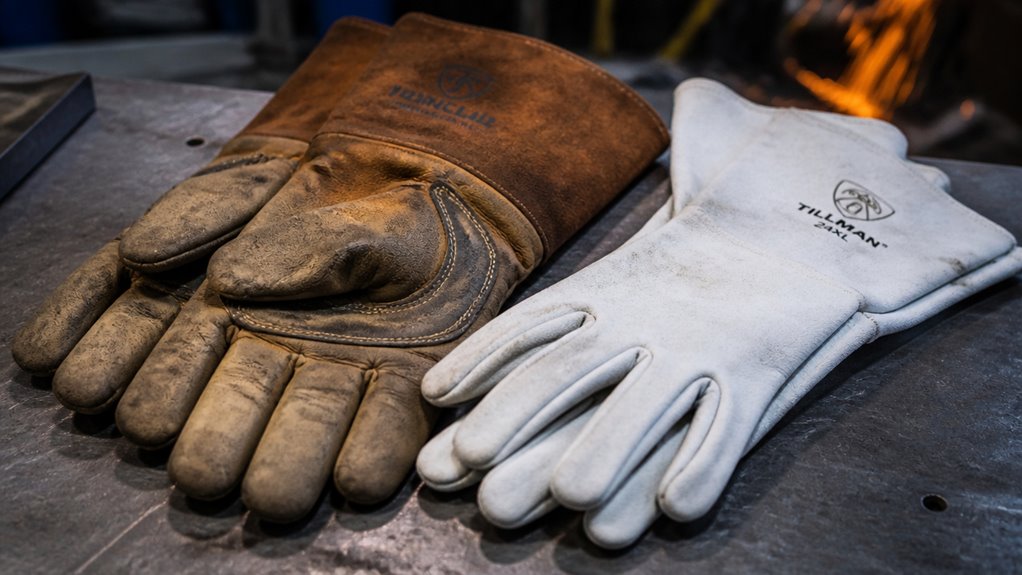
When choosing between MIG and TIG welding gloves, consider your task’s demands: MIG gloves use thicker cowhide with heavy padding and long cuffs to prioritize heat and spatter protection, sacrificing some dexterity.
TIG gloves are thinner goatskin or deerskin, designed for precision, fingertip sensitivity, and wrist mobility, with minimal padding and shorter cuffs.
Both often feature kevlar stitching for durability. Understanding these trade-offs helps you match gloves to your welding environment and control needs.
Explore design, safety standards, and comfort factors to refine your choice.
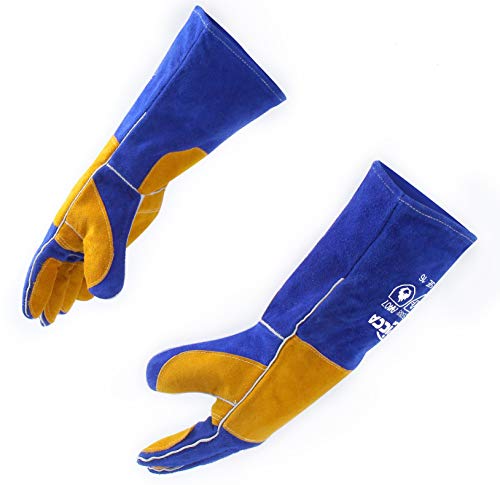

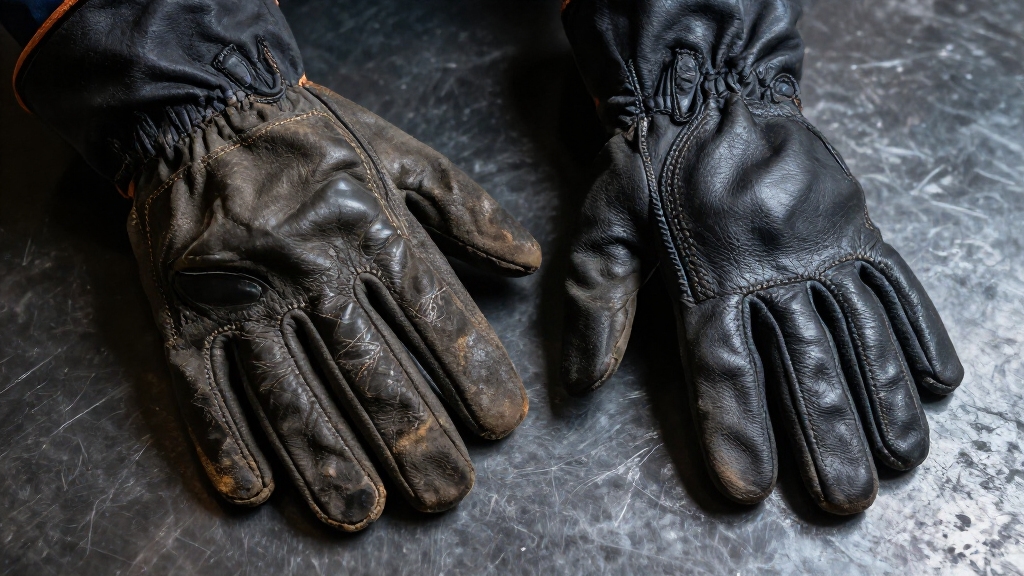
While both MIG and TIG welding gloves serve to protect your hands, they differ fundamentally in purpose and design to match the specific demands of each welding process.
MIG gloves prioritize heat and spark protection, built heavier and more rugged to withstand the medium-heat exposure and spatter typical in MIG welding.
In contrast, TIG gloves emphasize fingertip dexterity and tactile control, featuring thinner, more flexible construction suited for precise torch manipulation and fine seam work.
This difference means you’ll choose MIG gloves when durability against sparks and heat matters most, while TIG gloves fit better when you need sensitive hand control.
Understanding these distinctions guarantees you select gloves that optimize performance and safety based on your welding environment’s heat intensity, spatter levels, and required manual precision.
Type A gloves, typically preferred for MIG welding, offer higher abrasion, tear, and puncture resistance compared to Type B gloves used in TIG welding, which prioritize flexibility.
Choosing the right welding glove means understanding the materials that define their performance characteristics. MIG gloves typically use thicker, more durable leathers like cowhide or pigskin, which resist heat and abrasion effectively.
TIG gloves prefer thinner, more supple leathers such as goatskin or deerskin to maximize tactile sensitivity and dexterity. Both gloves often employ aramid fiber stitching to enhance seam strength and heat resistance.
MIG gloves: 1.2–1.5 mm thick cowhide or pigskin leather for rugged heat protection.
TIG gloves: 0.7–1.0 mm goatskin or deerskin leather for precision and control.
Stitching: Aramid thread reinforces seams for durability and burn resistance.
Proper care, including gentle washing and thorough air drying, is essential to maintain the material integrity and lifespan of these gloves.
Because welding tasks demand both safety and precision, MIG and TIG gloves carefully balance protection with dexterity according to their specific applications.
MIG gloves prioritize robust heat and spatter resistance, using thicker leather and heavier padding to shield your hands during high-spatter, medium-heat welding. This design, while protective, reduces fingertip sensitivity.
Conversely, TIG gloves use thinner, softer leathers like goatskin to enhance tactile control and fine motor skills, enabling precise torch and filler-rod manipulation. They sacrifice some heat resistance for superior dexterity.
Both glove types incorporate durable, heat-resistant stitching and ergonomic fits to optimize performance.
Your choice hinges on balancing spatter exposure and the need for hand mobility: select MIG gloves when thermal protection is paramount, and opt for TIG gloves when precision and delicate handling dominate.
Additionally, considering the heat resistance levels and the type of stitching used can further enhance glove durability and safety during welding.
You’ll notice that MIG and TIG gloves have some pretty significant differences when it comes to their design. For starters, the thumb positioning and overall ergonomic design are tailored to fit the specific tasks of each welding type. MIG gloves, for example, come with reinforced palms and extra padding. This added protection is essential because MIG welding involves higher heat and more spatter.
On the flip side, TIG gloves take a different approach. They prioritize minimal padding, which really helps with tactile control. This is crucial for TIG welding, where precision is key.
And let’s not forget about the cuffs! MIG gloves usually have longer cuffs to provide that extra spark protection, while TIG gloves keep theirs shorter. This design choice really enhances maneuverability, allowing for better movement during intricate welding tasks.
Additionally, the choice of leather—such as cowhide for MIG and goatskin for TIG—plays a key role in balancing heat resistance and dexterity specific to each welding process.
While both MIG and TIG gloves prioritize safety and durability, their thumb positioning and ergonomic design reflect their distinct functional demands.
You’ll notice TIG gloves often feature a natural thumb position and ergonomic shaping that enhances fingertip dexterity and fine motor control, critical for precise torch manipulation.
Conversely, MIG gloves emphasize a more robust thumb design to maximize heat resistance and protect against sparks, sacrificing some flexibility.
Consider these distinctions:
TIG gloves: Thinner leather and natural thumb placement optimize tactile feedback and minimize hand fatigue.
MIG gloves: Reinforced, slightly straighter thumbs improve durability and heat shielding during high-spatter tasks.
Ergonomics: TIG gloves prioritize mobility with contoured fits; MIG gloves balance protection with moderate flexibility.
Understanding these differences helps you select gloves tailored to your welding process and ergonomic needs. Additionally, ensuring the gloves provide adequate heat resistance and electrical shock protection is essential for overall hand safety during welding.
Palm reinforcement and padding play an essential role in distinguishing MIG and TIG welding gloves, directly impacting durability and comfort under different welding conditions.
With MIG gloves, manufacturers add thicker leather layers, often cowhide or pigskin, on the palm to resist abrasion and spatter heat. They also incorporate robust padding and heat-insulating materials to protect you from higher thermal exposure.
This reinforcement compromises some dexterity but markedly extends wear life and safety.
In contrast, TIG gloves prioritize tactile precision, so their palms use thinner, more flexible leathers like goatskin with minimal or no padding.
This allows enhanced sensitivity for fine torch control. This design sacrifices some impact protection but maximizes your hand’s responsiveness.
Understanding these palm construction differences helps you select gloves tailored to your welding process and protection needs.
Additionally, proper welding safety equipment like gloves complement other protective gear to ensure overall worker safety during operations.
After considering how palm reinforcement and padding affect glove performance, the focus shifts to cuff length and coverage. These factors markedly influence protection and maneuverability.
MIG gloves typically feature longer cuffs to shield your wrists and lower arms from sparks and heat. This is essential for high-spatter environments. In contrast, TIG gloves use shorter or medium-length cuffs, prioritizing wrist mobility and fine control over extended coverage.
Key distinctions include:
Selecting cuff length depends on your welding process’s thermal risks and the dexterity you require for peak performance. Some gloves also incorporate kevlar stitching to reinforce cuffs and seams, enhancing durability during repetitive use.
Understanding welding glove safety standards is essential for selecting the right protection for your MIG or TIG welding tasks.
The EN 12477 standard governs performance requirements, classifying gloves into Type A (higher protection, less dexterity) and Type B (greater dexterity, moderate protection), primarily for TIG gloves.
MIG gloves emphasize compliance with EN 407, focusing on heat resistance, flame retardancy, and mechanical durability due to higher spatter and heat exposure.
Both glove types must meet EN 420 general requirements for ergonomics and harmlessness.
You’ll find TIG gloves often rated with EN 420 dexterity levels up to 5, reflecting their precision design.
Meanwhile, MIG gloves prioritize stronger thermal and abrasion resistance, validated by EN 407 ratings, ensuring durability and safety during intense fabrication and wire-feed welding operations.
Consistent use of properly rated gloves significantly reduces injury risk by protecting against burns, electrical shocks, and sharp metal edges.
Assess your welding environment carefully to select gloves that balance heat resistance, spatter protection, and tactile precision.
Carefully evaluate your welding conditions to choose gloves that offer the right mix of protection and dexterity.
If you face high spatter and medium heat, opt for MIG gloves with thicker cowhide and reinforced palms to shield from sparks and abrasion.
For detailed TIG welding, choose thin goatskin or deerskin gloves that maximize fingertip dexterity and tactile control.
Consider these factors:
Additionally, selecting gloves with heat-resistant stitching improves durability and helps prevent burns during welding tasks.
When selecting MIG or TIG gloves, you must match your glove choice directly to the specific welding conditions you encounter.
Evaluate the intensity of heat and spatter: MIG gloves, with thicker cowhide and reinforced padding, excel in high-spatter, medium-heat environments. They prioritize protection over dexterity.
For tasks demanding fine torch control and tactile feedback, opt for TIG gloves made from thinner goatskin or deerskin. These enhance fingertip sensitivity and allow precise bead manipulation.
Consider the welding process’s spatter level and required hand mobility. If your work involves intricate seams with minimal spatter, prioritize flexibility and natural thumb positioning in a TIG glove.
Conversely, for fabrication with heavy spatter, select rugged MIG gloves featuring longer cuffs and durable stitching to guarantee safety and durability under harsher conditions.
Additionally, proper fit and cuff design are crucial to ensure both protection and dexterity, especially for those with small hands needing snug gloves.
Choosing the right glove thickness and lining directly impacts both comfort and safety during welding.
Thicker gloves, typical in MIG styles, provide superior heat resistance and spatter protection but reduce tactile feedback and hand flexibility.
Conversely, thinner gloves, common in TIG models, enhance dexterity and control but offer less thermal insulation.
Lining adds another layer of safety by improving heat comfort and moisture management but can decrease fingertip sensitivity.
Consider these factors when selecting gloves:
Your glove choice must reflect the welding process requirements and your need for precision versus protection.
Although welding gloves may seem like a straightforward purchase, many buyers overlook critical factors that compromise safety and performance.
You must avoid confusing glove types, neglecting material and thickness differences, or ignoring process-specific needs.
Choosing gloves not suited to heat exposure or dexterity requirements increases injury risk and reduces efficiency.
| Mistake | Impact | How to Avoid |
|---|---|---|
| Selecting wrong glove type | Insufficient protection or control | Match gloves to MIG or TIG process |
| Ignoring material specs | Reduced durability or sensitivity | Verify leather type and thickness |
| Overlooking lining | Discomfort or heat buildup | Assess lining based on heat exposure |
| Neglecting dexterity needs | Poor torch control or fatigue | Choose gloves balancing flexibility |
| Skipping safety ratings | Unverified protection levels | Check EN 12477 and EN 407 standards |
You can use MIG and TIG gloves interchangeably in emergencies, but be cautious.
MIG gloves provide better heat and spatter protection, so they’re safer around intense sparks.
TIG gloves offer superior dexterity but less thermal shielding.
If you prioritize protection during high-heat tasks, choose MIG gloves.
For precision work, TIG gloves are better.
In urgent situations, MIG gloves generally reduce injury risk more effectively than TIG gloves.
You should replace welding gloves as soon as you notice significant wear, holes, thinning, or compromised seams to maintain peak safety.
Regular inspections before each use are essential.
Depending on usage frequency and intensity, gloves might last weeks to months.
Heavy-duty tasks or high-heat exposure accelerate degradation.
Don’t wait for discomfort or visible damage; proactive replacement prevents burns, abrasions, and reduced protection.
This ensures your hands remain fully shielded during welding operations.
Yes, you can find welding gloves designed specifically for cold weather that combine thermal insulation with protection.
These gloves often include thicker linings, such as Thinsulate or wool, layered beneath durable leather exteriors to maintain dexterity while retaining warmth.
Look for models with extended cuffs and reinforced palms, engineered to resist both cold exposure and welding hazards.
Choosing gloves rated for low temperatures guarantees your hands stay protected and functional in harsh conditions.
Welding gloves generally reduce grip on wet or oily surfaces due to their leather construction, which lacks inherent slip resistance.
You’ll find that thicker, heavily padded gloves further diminish tactile feedback, making secure handling harder.
To improve grip, you might choose gloves with textured or reinforced palms or add aftermarket grip-enhancing coatings.
Always assess glove fit and flexibility, as a snug, dexterous glove helps maintain better control even when conditions are slick.
When it comes to allergic reactions, don’t throw the baby out with the bathwater. Some welding gloves contain materials like leather tanning chemicals or synthetic fibers that might trigger skin sensitivities.
If you have latex allergies, gloves with natural rubber can cause issues. To minimize risks, choose gloves labeled hypoallergenic or made from alternative materials.
Always perform a patch test before prolonged use. Protective gear shouldn’t come at the cost of your health.
When welding, your gloves protect you from burns and injuries. Yet, 60% of welders report discomfort from improper glove choice.
Choosing the right MIG or TIG gloves isn’t just about protection; it’s about balancing dexterity, heat resistance, and durability.
By understanding materials, design, and safety standards, you can avoid common mistakes and enhance both comfort and safety.
Prioritize gloves that fit your specific welding style to optimize performance and reduce risk effectively.
Last update on 2026-10-31 / Affiliate links / Images from Amazon Product Advertising API
