Phone:
(701)814-6992
Physical address:
6296 Donnelly Plaza
Ratkeville, Bahamas.

Phone:
(701)814-6992
Physical address:
6296 Donnelly Plaza
Ratkeville, Bahamas.

If you need rugged, cost-effective welders for versatile fieldwork, Lincoln’s broad multi-process models fit well with their durable construction and lower price points.
For precision and refined arc quality, especially in controlled shop settings, Miller excels with smoother welds, ergonomic design, and faster setup through Auto-Set technology.
Your choice hinges on whether you prioritize portability and multi-functionality or premium arc performance and shop convenience.
Exploring deeper reveals nuanced differences in warranty, controls, and application suitability.
| Feature | Lincoln Welders | Miller Welders |
|---|---|---|
| Primary Strength | Rugged durability and versatility | Refined arc quality and precision |
| Multi-Process Support | Broad; MIG, flux-core, stick, and TIG on select models | Often focused on MIG and flux-core |
| Arc Quality | Reliable and consistent | Smoother and more refined |
| Spatter | Generally higher | Generally lower |
| Setup | Digital controls; model dependent | Fast setup with Auto-Set on select models |
| Thin-Material Welding | Good | Excellent |
| Weld Appearance | Good | Excellent |
| Portability | Rugged and suited to field transport | Lighter and more ergonomic on many models |
| Build Quality | Robust for demanding jobsites | Refined design for shop use |
| Field Use | Excellent | Good |
| Shop Use | Excellent | Excellent |
| Price | Generally more affordable | Generally more expensive |
| Example Mid-Range Price | Power MIG 210 MP: about $900–$1,000 | Millermatic 211: about $980–$1,100 |
| Warranty | Typically 3 years | About 3–5 years depending on model |
| Parts Availability | Extensive dealer/service network | More specialized network |
| Energy Efficiency | Good | Generally better with advanced inverter technology |
| Best For | Fieldwork, mixed applications, and value-focused buyers | Precision fabrication and controlled shop environments |
| Main Advantage | Cost efficiency, ruggedness, and multi-process flexibility | Smooth arc performance, easy setup, and refined controls |
| Main Drawback | Slightly less refined arc and more spatter | Higher price and often less multi-process flexibility |
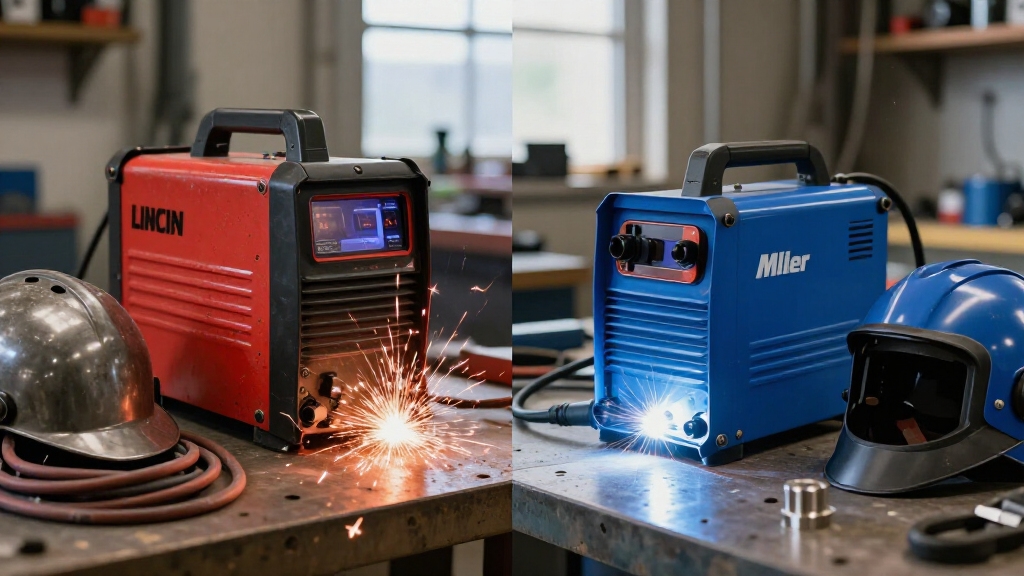
When choosing between Lincoln and Miller welders, you’ll want to weigh your priorities in cost, arc quality, and machine versatility.
Lincoln welders cover a broad market range, from entry-level to industrial, offering multi-process flexibility and strong general performance at a lower upfront cost.
If you need a rugged, cost-efficient machine with digital controls supporting MIG, flux-core, stick, and TIG, Lincoln is a solid choice.
Miller welders, positioned as premium, focus on refined arc quality with smoother performance and less spatter, especially in thin materials and cosmetic welding.
Miller tends to deliver quicker setup with features like Auto-Set but leans toward MIG and flux-core processes.
Evaluating these parameters helps you align the welder’s capabilities with your specific fabrication, shop, or field requirements.
Lincoln’s Power MIG 140 MP, for example, offers multi-process versatility that supports a wide range of welding tasks for beginners and hobbyists alike.
Several key price points highlight the value differences between Lincoln and Miller welders.
Key price points reveal how Lincoln and Miller welders differ in value and performance.
When you’re balancing budget and performance, understanding these metrics is vital:
You’ll find Lincoln excels in cost efficiency and versatility, appealing to entry-level and budget-conscious users.
Miller’s higher price reflects advanced engineering and smoother welds, suited for professional and industrial applications where precision and reliability justify the investment.
Additionally, considering the duty cycle and amperage output is essential to match the welder’s performance with your material thickness and project duration requirements.
Although both Lincoln and Miller offer versatile welding machines, their process support varies to suit different user needs.
Lincoln welders, such as the Power MIG 210 MP, provide multi-process capability: MIG, flux-core, stick, and TIG. This offers flexibility for varied applications, making Lincoln a solid choice if you require all-in-one functionality.
Miller, on the other hand, often specializes in MIG and flux-core processes. The Millermatic 211 exemplifies this focus, emphasizing efficiency and user-friendly features like Auto-Set.
While Miller’s TIG support is less common in their compact lines, their machines emphasize refined control in core processes.
When selecting, consider whether you need multi-process versatility from Lincoln or premium, streamlined MIG/flux-core welding from Miller. Align your choice with the specific welding tasks and environments you face.
Miller machines also offer features like Auto-Set technology that automatically adjusts voltage and wire feed speed based on material thickness and wire diameter, simplifying setup and improving arc stability.
When you compare arc smoothness, you’ll find that Miller welders usually shine with a more consistent and stable arc, especially when you’re working at those low to mid amperage settings. It’s pretty noticeable!
Plus, Miller machines often produce less spatter, which really helps with weld cleanup and gives you a better overall finish quality.
Now, don’t get me wrong—Lincoln welders are still very competitive. They often focus on general performance rather than those refined arc characteristics. So, while they mightn’t have the same level of smoothness as Miller, they still get the job done well.
This is largely due to Miller’s use of high-frequency inverter technology that enables precise arc control and rapid current adjustments.
If you prioritize arc smoothness, Miller welders tend to deliver a more refined experience, especially at low to mid amperage settings. Their advanced electronics stabilize the arc, providing consistent heat input and precise control.
Lincoln welders, while competitive, often exhibit a slightly less stable arc under similar conditions.
When comparing arc smoothness, consider these key points:
While Lincoln welders perform reliably, Miller’s superior arc smoothness gives you finer control for demanding applications. Additionally, features like high-frequency arc starting contribute significantly to stable arc initiation and consistent weld quality.
Because spatter directly affects cleanup time and weld appearance, analyzing spatter levels between Lincoln and Miller welders is essential for selecting the right machine.
Miller welders generally produce less spatter, especially at low to mid amperage ranges. This enhances weld aesthetics and reduces post-weld cleaning.
This advantage is notable in thin material welding and cosmetic applications, where precision matters most.
Lincoln welders, while slightly more prone to spatter in comparable MIG setups, remain competitive and reliable for general fabrication and farm tasks. Here, spatter tolerance is higher.
If minimizing spatter is critical for your projects, Miller’s refined arc control delivers superior performance.
However, if you prioritize value and multi-process flexibility over minimal spatter, Lincoln still offers a solid, cost-effective solution without significant compromise.
Fine-tuning voltage and wire speed settings is key to optimizing arc stability and further reducing spatter in both brands.
Although both Lincoln and Miller offer versatile welding machines, Lincoln tends to provide broader multi-process support. This is evident in models like the Power MIG 210 MP, which handles MIG, flux-core, stick, and TIG welding.
Miller’s lineup, such as the Millermatic 211, focuses primarily on MIG and flux-core welding, with less emphasis on multi-process capability.
When choosing, consider these distinct features:
Additionally, some welders, like the Hobart 190, offer a seven-position voltage selector that allows precise control over arc stability, which can be a valuable feature depending on your specific welding needs.
These differences matter depending on your welding demands and the range of applications you tackle.
When it comes to welders, Lincoln really shines when it comes to rugged utility and portability. They’re built tough, making them ideal for job sites where durability and cost efficiency are essential.
If you need something that can handle the demands of the field, Lincoln’s got you covered.
On the flip side, Miller welders are all about lighter weight and refined controls. They’re designed with shop environments in mind, where precision and convenience really matter.
So, if you’re working in a controlled setting and need that extra finesse, Miller’s the way to go.
Understanding these differences in design can really help you choose the right welder for your specific needs, whether you’re out in the field or working in a shop. Additionally, models with dual voltage input provide greater flexibility across various work environments.
Lincoln and Miller welders consistently demonstrate distinct strengths when it comes to rugged utility and portability. This shapes their suitability for different work environments. If you need a welder for fieldwork, Lincoln’s robust construction and cost efficiency make it ideal. Miller’s lighter, more refined units excel in controlled shop settings where ease of handling and precision matter.
Consider these key points:
Additionally, some welders incorporate IGBT inverter technology to balance performance and efficiency in various environments.
Your choice hinges on prioritizing field durability versus shop convenience.
When working in a shop environment, control and convenience become critical factors that influence welder choice. You’ll find Miller welders generally excel here, offering lighter, more compact units with features like Auto-Set for faster, precise adjustments and smoother arc performance.
This refinement supports fine control crucial for cosmetic welds and thin materials. Lincoln welders, while slightly heavier, deliver robust multi-process flexibility and digital controls, making them strong contenders if you value versatile functionality alongside portability.
However, their build leans toward rugged utility rather than refined shop convenience. Ultimately, if your priority is streamlined setup and ergonomic handling in a controlled shop setting, Miller often edges out. But for cost-efficient, durable machines that can shift between shop and field, Lincoln remains a solid choice. Everlast welders, by comparison, offer multi-process support in compact units ideal for hobbyists and light fabrication, combining versatility with a strong performance-to-value ratio.
Although both brands offer dependable warranty coverage, your choice between Lincoln and Miller welders may hinge on the specific terms and support networks each provides.
Lincoln welders typically come with a 3-year warranty and benefit from an extensive dealer and service network.
This makes repairs and parts replacement accessible.
Miller welders often boast a longer warranty span, ranging from 3 to 5 years, emphasizing premium protection.
When deciding, consider these factors:
Assess your priorities between warranty length, service accessibility, and coverage depth for an informed decision.
You’ll find Lincoln Electric generally offers better availability of replacement parts due to its extensive dealer and service network.
This broad distribution guarantees you can source components more easily, especially in rural or less urban areas.
While Miller also provides quality parts, their network is often more specialized and premium-focused, which can limit quick access.
You’ll find that Miller welders generally operate with noticeably lower noise levels, often producing up to 10 decibels less sound than comparable machines.
This quieter arc results from Miller’s refined inverter technology and superior cooling design, which reduces mechanical and electrical noise.
Lincoln welders, while robust, tend to be louder, especially under heavy load.
You’ll find Miller welders generally offer better energy efficiency thanks to advanced inverter technology and optimized power consumption, especially at lower amperages.
Lincoln machines perform solidly but often use slightly more power due to traditional transformer designs in some models.
If minimizing electrical draw is critical, Miller’s premium models typically deliver smoother arcs with less energy waste.
Meanwhile, Lincoln balances efficiency with broader multi-process flexibility at a lower cost point.
You’ll want Lincoln’s digital control upgrade kits and their broad spool gun options for aluminum work. These enhance multi-process flexibility.
For Miller, focus on their Auto-Set feature accessories and specialized wire feeders designed for smoother arc performance and reduced spatter. Miller’s lightweight gun options also improve shop convenience.
Both brands offer unique consumables. Lincoln’s rugged field-use accessories contrast with Miller’s premium, precision-focused add-ons tailored to professional welders.
Yes, both Lincoln and Miller offer financing options to buyers, typically through third-party lenders. You’ll find flexible payment plans and promotional rates designed to ease upfront costs.
Lincoln often provides financing via its dealers or online portals. Miller partners with financial services offering tailored plans.
When considering financing, analyze interest rates, loan terms, and eligibility requirements to ensure the plan aligns with your budget and purchase goals.
When choosing between Lincoln and Miller welders, consider that 65% of professional welders prefer Miller for its superior arc quality and multi-process versatility.
However, Lincoln often offers better value in price and portability for fieldwork. Your decision hinges on your specific needs: prioritize Miller for advanced shop performance or Lincoln for cost-effective, durable solutions.
Both brands provide solid warranties and support, so weigh your workflow demands carefully to maximize efficiency and weld quality.