Phone:
(701)814-6992
Physical address:
6296 Donnelly Plaza
Ratkeville, Bahamas.

Phone:
(701)814-6992
Physical address:
6296 Donnelly Plaza
Ratkeville, Bahamas.

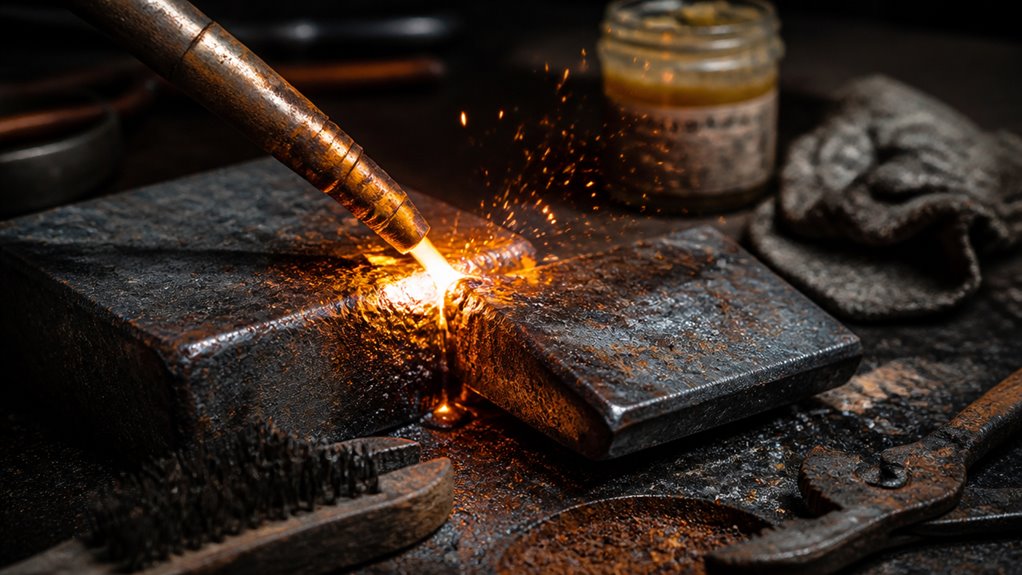
You can join metals without a welder by using brazing, mechanical fastening, adhesive bonding, or soldering techniques.
Brazing offers strong, heat-resistant joints by heating base metals and feeding filler rods using capillary action.
Mechanical joints rely on rivets or bolts for durable clamping with precise hole alignment.
Adhesives work well for light-duty bonds on clean surfaces, while soldering suits low-load connections.
Each method has unique steps and benefits, which you’ll explore in detail next.
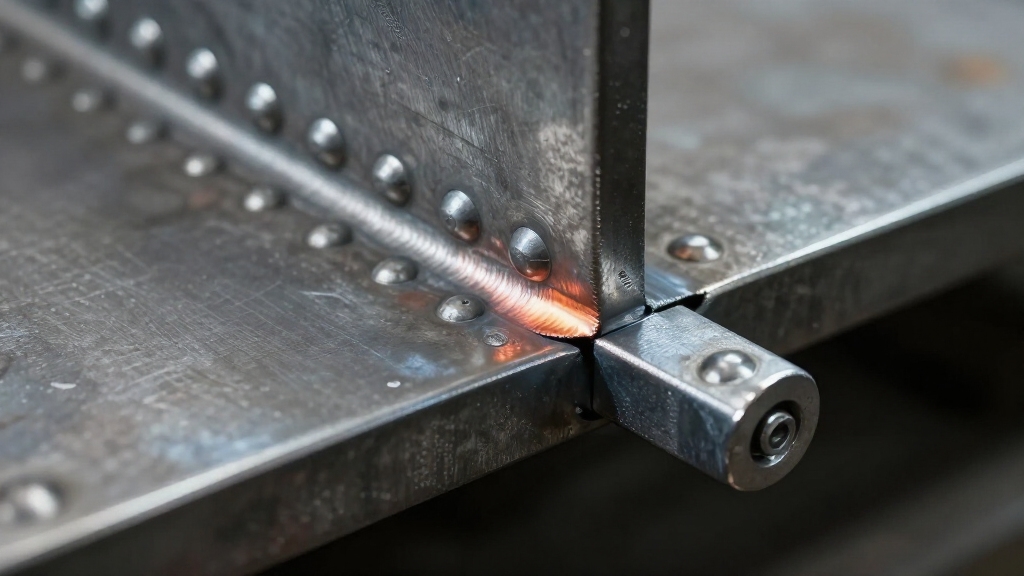
When deciding how to join metals without welding, you need to evaluate the application’s mechanical demands, material thickness, and environment.
For high-strength, load-bearing joints, brazing or mechanical fastening like riveting and bolting typically outperform soldering and adhesive bonding.
Thin materials favor brazing or soldering due to their minimal thermal distortion.
Riveting and bolting suit thicker sections or assemblies requiring disassembly and vibration resistance.
Adhesive bonding works best on clean, dry surfaces for light-duty, non-heat applications but lacks structural integrity.
Consider environmental factors: exposure to heat or moisture may degrade adhesives, while brazing requires controlled heating to prevent base metal damage.
Your choice hinges on balancing joint strength, service conditions, and repairability.
Ensure the selected method aligns with the metal types and operational stress expected.
Proper surface preparation is critical for effective adhesion and durable joints.
Choosing brazing for joining metals means you’re prioritizing strong, heat-resistant joints that preserve the base metal’s integrity, especially for thin materials or complex shapes.
Brazing ensures durable, heat-resistant joints while maintaining the strength and shape of delicate or intricate metals.
Start by thoroughly cleaning the joint area. Remove all rust, paint, oil, and scale to guarantee proper filler adhesion. Fit the parts tightly to enable capillary action.
Heat the base metals evenly with a torch, avoiding direct flame contact with the filler rod. Once the joint reaches brazing temperature, feed the filler rod into the heated seam and allow it to flow naturally through capillary action.
After sufficient filler distribution, let the joint cool undisturbed at room temperature.
Finally, inspect for uniform filler coverage and verify joint strength before use to assure a reliable, durable bond.
Using silver-based filler metals like SSF-6 ensures strong, corrosion-resistant joints without melting the base metals.
Secure metal parts effectively by employing rivets and bolts, two reliable methods for mechanical joining without welding.
To use rivets, first mark and drill aligned holes through all components, ensuring the hole diameter is about 0.1 mm larger than the rivet shaft for a tight fit. Insert the rivet so its head sits flush against the surface. Then use a riveting tool to deform the shank, creating a permanent, high-strength clamp.
Bolting requires compatible holes and hardware. Insert the bolt with washers to distribute load, then tighten the nut securely. Use lock nuts or washers if vibration is present to maintain joint integrity.
Both methods depend heavily on precise hole alignment and surface preparation to guarantee mechanical strength and durability without heat-based fusion. Proper measurement and marking techniques are essential to ensure accuracy and strength in mechanical joints.
For light-duty metal repairs, applying adhesives offers a non-thermal joining method that preserves material integrity and avoids distortion from heat.
You must make certain surfaces are clean, dry, and free of grease for peak adhesion. Selecting the correct adhesive depends on load, environmental exposure, and curing time.
Apply adhesive evenly, clamp parts firmly, and allow full curing before use. Follow safety guidelines, including adequate ventilation and gloves, to avoid chemical exposure.
Proper surface preparation, such as cleaning and roughening, is essential to create a strong mechanical interlocking bond.
| Step | Key Consideration | Safety Tip |
|---|---|---|
| Surface Prep | Remove rust and grease | Use gloves and eye protection |
| Adhesive Choice | Match to metal type | Read MSDS for hazards |
| Application | Uniform layer | Avoid skin contact |
| Assembly | Apply consistent clamp | Make certain stable setup |
| Curing | Full cure time | Ventilate area |
While adhesives provide a reliable bond for light-duty repairs without heat, soldering offers another effective method for joining metal when mechanical strength requirements are modest.
You should use soldering primarily for small, low-load connections where full structural integrity isn’t critical.
Start by thoroughly cleaning the metal surfaces to eliminate oxidation and contaminants that hinder solder flow.
Heat the joint evenly until the solder smoothly wets and fills the seam by capillary action.
Avoid overheating the base metals to prevent damage or weak joints.
After applying solder, allow the joint to cool undisturbed to ensure proper grain structure and strength.
Inspect visually for complete coverage and test only when fully cooled.
You need heat-resistant gloves to protect your hands from burns when using torches or heated tools.
Always wear safety goggles or a face shield to guard your eyes against sparks, hot metal, and debris.
Ensure proper ventilation to avoid inhaling fumes from adhesives, solder, or brazing flux.
Avoid loose clothing and secure long hair to prevent ignition.
These precautions minimize fire hazards and exposure to harmful substances during metal joining.
You can use brazing on thick steel plates, but it requires careful heating to guarantee the filler flows properly without overheating the base metal.
Soldering, however, isn’t suitable for thick plates because its lower melting filler can’t provide structural strength or penetrate deep joints.
For thick steel, brazing achieves stronger joints due to higher filler melting points and capillary action. Soldering is limited to thin or light-duty connections.
You might think adhesive bonding strength remains stable regardless of environment, but that’s not true.
Temperature fluctuations can cause adhesives to expand or contract, weakening bonds.
Moisture and humidity often degrade adhesion by interfering with surface contact or curing.
Contaminants like oil or dust reduce effectiveness too.
To guarantee strong joints, you must clean surfaces thoroughly and apply adhesives in controlled, dry conditions.
Avoid extremes in temperature or moisture.
You’ll notice a failed rivet joint if the rivet head loosens, deforms, or pulls through the metal.
Look for visible gaps between the rivet and the material, corrosion around the hole, or cracks radiating from the joint area.
If the parts shift or separate under load or vibration, the joint has lost integrity.
You might also detect excessive movement or noise indicating the rivet no longer clamps tightly.
You might picture a roaring torch flame versus a steady electric furnace.
Each heats metal for brazing differently.
Alternatives to torch heating include induction heating, which uses electromagnetic fields to quickly heat precise areas without open flames.
Resistance heating applies current directly through the joint, generating heat internally.
Both methods offer controlled, even heating, reducing oxidation and improving filler flow.
However, they require specialized equipment and setup compared to the portability of a handheld torch.
Just like a bridge connects two separate lands without losing strength, your choice of joining metals without welding guarantees lasting bonds through precision and technique.
Whether you opt for brazing, rivets, adhesives, or soldering, each method serves as a reliable link in your metalwork.
By understanding their technical nuances, you’ll create connections as strong and purposeful as welded seams, proving that sometimes, the best tools aren’t welders, but knowledge and skill.