Phone:
(701)814-6992
Physical address:
6296 Donnelly Plaza
Ratkeville, Bahamas.

Phone:
(701)814-6992
Physical address:
6296 Donnelly Plaza
Ratkeville, Bahamas.

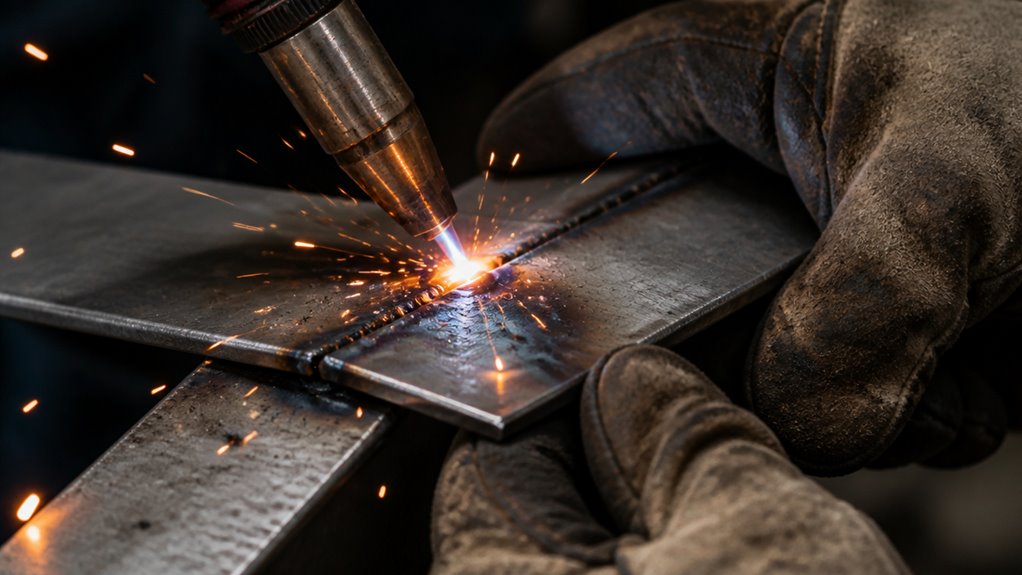
Yes, you can weld sheet metal effectively by carefully controlling heat input to prevent warping and burn-through.
Use TIG or MIG welding with appropriate wire size and shielding gas, maintaining tight fit-up and short, controlled welds like tacks and stitch welds.
Backing bars and fast travel speeds help manage heat distribution. Proper preparation and practice on scrap material improve results.
Explore techniques for choosing the best process, electrode, and heat management to enhance your thin metal welding skills.
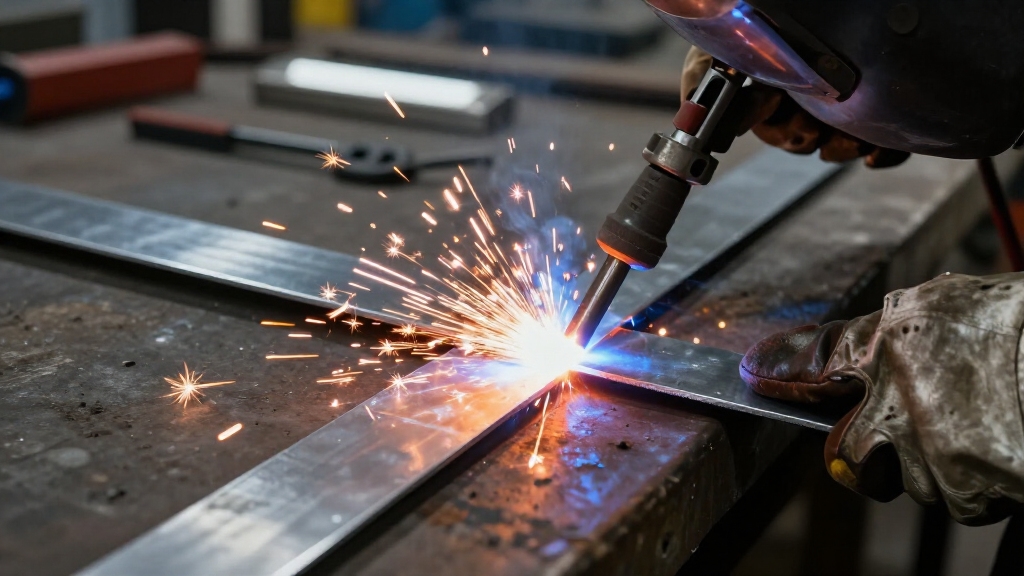
While welding sheet metal presents challenges due to its thinness, you can successfully weld it using proper techniques and equipment.
Sheet metal, typically under 6 mm thick, requires precise heat control to prevent warping and burn-through.
You’ll find MIG and TIG welding deliver the best results, with MIG preferred for speed and TIG for heat control.
Stick welding is possible but less common.
Avoid flux-cored wire, as it generates excess heat.
With skill, you can weld down to 26 gauge mild steel, though thinner gauges increase distortion risk.
Spot welding offers an alternative by joining layers with localized heat and pressure.
Ultimately, your success depends on controlling heat input, maintaining tight fit-up, and using short, controlled welds to minimize damage and maintain structural integrity.
Using backing bars or heat sinks can further help absorb excess heat and reduce the risk of burn-through during welding.
When it comes to welding sheet metal, MIG and TIG welding really shine. They offer fantastic control and impressive results, especially when you choose the right wire sizes and shielding gases. It’s all about managing heat input, which is super important to avoid warping or burn-through. So, using short welds and maintaining fast travel speeds is key.
Now, let’s dive into the best techniques, wire and gas setups, and some effective heat control strategies. These tips will help you achieve strong, precise welds on those thin metal sheets. Additionally, maintaining a proper wire feed speed tailored to the metal thickness is crucial for consistent weld quality and penetration.
Choose welding processes that offer precise heat control and minimal distortion when working with sheet metal.
TIG welding excels here, providing a narrow heat-affected zone and superior control, ideal for thin gauges.
MIG welding with a fine wire feed also works well, especially when using short welds and fast travel speeds to reduce heat buildup.
Avoid continuous beads; instead, use tack, stitch, or skip welding techniques to limit warping.
Spot welding effectively joins overlapping sheets by applying localized heat and pressure without excessive thermal input.
Stick welding is less common but can work on thicker sheet metal with care.
Always focus on controlling heat input, maintaining tight fit-up, and employing short weld durations to preserve the integrity of thin metal and prevent burn-through or distortion.
Using an AC TIG welder helps break oxide layers for cleaner, more precise welds on thin metals.
Optimize your sheet metal welding by selecting the right wire diameter and shielding gas to balance heat input and weld quality. For MIG welding, use 0.023- or 0.024-inch solid wire for thin sheets. Use 0.030-inch wire for 18-gauge and thicker.
Choose a 75% argon / 25% CO2 shielding gas mix to provide stable arc and good penetration while minimizing heat. TIG welding benefits from smaller, ceriated tungsten electrodes to focus heat precisely.
For thin sheet metal, selecting a short circuit transfer mode helps minimize heat input and distortion while reducing spatter.
Although many welding processes can join sheet metal, controlling heat input is critical to avoid warping and burn-through.
You’ll want to use short tack welds, stitch welding, and fast travel speeds to minimize heat buildup.
TIG welding offers excellent heat control with a narrow heat-affected zone. MIG welding with a small-diameter wire and argon-based gas mix balances speed and precision.
Spot welding also limits heat by applying heat locally.
| Welding Process | Heat Control Level | Best Use Case |
|---|---|---|
| TIG | High | Thin sheet, detailed work |
| MIG | Moderate | Medium thickness, faster |
| Spot Welding | Very High | Joining overlapping sheets |
| Stick | Low | Thicker, less precise |
Using pulsed TIG welding can further reduce heat input and minimize distortion when working with delicate thin gauges.
Choose your process based on thickness and required heat input control.
When working with sheet metal, understanding the strengths and limitations of MIG, TIG, and spot welding helps you select the right process for your project.
Choosing between these depends on your sheet thickness, joint design, and production volume for best results. MIG welding’s continuous wire feed and gas-shielded environment also contribute to its popularity for welding various thicknesses efficiently.
Selecting the right wire size and shielding gas is critical to achieving clean, strong MIG welds on sheet metal. For thin-gauge sheet metal, use a 0.023- or 0.024-inch solid wire to minimize heat input and reduce the risk of burn-through.
If you’re working with thicker sheet, around 18 gauge or greater, a 0.030-inch wire provides adequate penetration without excessive heat. As for shielding gas, opt for a 75% argon and 25% CO2 mix. It offers stable arc characteristics and good weld bead control on sheet metal.
Avoid flux-cored wire since it increases heat and warping risks. By matching wire diameter and gas composition to your material thickness, you’ll maintain precise heat control, ensuring weld integrity and minimal distortion. Maintaining the proper wire feed speed is essential to keep consistent amperage and penetration throughout the weld.
When you’re welding thin sheet metal, heat control is super important. You want to avoid warping and burn-through, right? That’s where TIG welding really shines. It creates a narrow heat-affected zone, which helps keep everything in check.
Now, let’s talk about tungsten electrodes. Choosing the right one is key, and many folks prefer a small ceriated type. It really helps with arc stability and focus, making your welds clean and accurate. So, with this combination, you can carefully manage heat input and maintain tight control over the weld pool. It’s all about precision!
Also, selecting the proper tungsten size based on current ensures optimal performance and electrode longevity.
Mastering heat control is essential for welding sheet metal effectively. TIG welding provides unmatched precision in this area.
You’ll benefit from TIG’s ability to deliver a focused arc that minimizes the heat-affected zone. This reduces warping and burn-through risks.
This control lets you weld thin sheets confidently without compromising strength or appearance.
Here’s how TIG welding optimizes heat control:
With TIG, you maintain tight thermal control, vital for quality sheet metal welds. The use of non-consumable tungsten electrodes in TIG welding further enhances precision and reduces contamination risks.
Choosing the right electrode dramatically influences TIG welding precision on sheet metal. You’ll want to select smaller diameter tungsten electrodes, typically 1.0 to 1.6 mm, to concentrate heat and reduce the risk of burn-through.
Ceriated tungsten is often preferred because it offers stable arc starts and excellent arc control at low amperages, critical for thin materials. Pure tungsten electrodes can cause erratic arcs, while lanthanated types may generate more heat than necessary.
Proper electrode sharpening, creating a pointed tip, helps you maintain a tight arc. This allows precise weld placement and minimizes heat-affected zones. By carefully choosing and preparing your electrode, you control heat input effectively, prevent warping, and produce cleaner, stronger welds on delicate sheet metal assemblies.
For thin aluminum sheet metal, ceriated (grey) tungsten provides superior low-current performance with reduced erosion and spitting, making it ideal for fine TIG welding work.
Because excess heat causes burn-through and warping, controlling heat input is critical in sheet metal welding.
You need to manage heat carefully to maintain metal integrity and minimize distortion.
Here’s how you can do it effectively:
Although controlling heat is crucial, proper fit-up and joint preparation play an equally important role in preventing defects when welding thin sheet metal.
You need tight, accurate fit-up to minimize gaps and reduce filler metal, which lowers the risk of burn-through. Preparing joints by removing uneven tack welds and using copper backing bars helps support the weld and dissipate heat quickly.
Measure twice, cut once. This rule helps you avoid costly rework and excessive grinding.
| Fit-Up Action | Benefit |
|---|---|
| Tight joint gaps | Reduces filler, prevents blow-through |
| Flush tack welds | Ensures even heat distribution |
| Copper backing bars | Supports weld, dissipates heat |
| Accurate cutting | Minimizes warpage, rework |
Proper fit-up and joint prep directly improve weld quality and reduce defects on thin sheet metal.
Controlling heat during sheet metal welding demands using techniques like tack, stitch, and skip welding to prevent burn-through and warping.
Effective heat control in sheet metal welding relies on tack, stitch, and skip welding techniques.
You’ll want to apply welds intermittently rather than continuously to keep temperature spikes localized.
Here’s how to manage heat effectively:
Following these steps helps you control distortion and maintain the integrity of thin sheet metal during welding.
When you weld sheet metal, having the right tools and safety gear guarantees both quality results and personal protection.
Equip yourself with a MIG or TIG welder tailored for thin-gauge metal, using fine wire (0.023–0.024 inch) or small tungsten electrodes for precise heat control.
Include copper or aluminum backing bars to dissipate heat and minimize distortion.
For fit-up, use clamps and calipers to ensure tight joints, reducing filler and blow-through risks.
Always wear a welding helmet with proper shading to protect against intense UV light.
Use flame-resistant gloves, long sleeves, and neck protection to shield exposed skin.
Keep a fire-resistant workspace and adequate ventilation to avoid hazards from fumes and sparks.
Proper tools and safety gear make certain effective, controlled welding on delicate sheet metal surfaces.
Mastering sheet metal welding requires deliberate practice with attention to heat control, joint fit-up, and weld sequencing.
To perfect your skills, focus on these critical areas:
Regularly test on scrap pieces.
Refine your travel speed and adjust amperage settings to build consistent, high-quality welds on thin sheet metal.
You can weld various metals as sheet metal besides mild steel, including aluminum, stainless steel, and copper alloys.
Aluminum requires precise heat control and often TIG welding with argon shielding to avoid warping.
Stainless steel also welds well with TIG or MIG, needing careful fit-up to prevent distortion.
Copper alloys pose challenges due to high thermal conductivity but can be welded with skilled heat management.
Always adjust settings for each metal’s unique properties.
Environmental conditions directly impact your sheet metal welding quality. Wind can blow away shielding gas, causing porosity and weak welds.
High humidity increases moisture, leading to weld contamination and spatter.
Extreme cold cools the weld too fast, risking cracks.
Heat may cause warping.
You’ll need to control airflow, use proper gas coverage, and adjust your technique accordingly to maintain consistent weld integrity under varying conditions.
Yes, you can automate sheet metal welding for mass production. Automated systems like robotic MIG or spot welders deliver consistent heat control and precise weld placement, minimizing distortion.
You’ll benefit from faster cycle times and repeatability, essential for high-volume runs. Proper programming and fixture design guarantee accurate fit-up and peak tack welding sequences.
Automation also reduces operator fatigue and improves safety by limiting direct exposure to welding arcs and fumes.
You’ll clean, grind, and inspect sheet metal assemblies after welding. You’ll remove slag and spatter to guarantee smooth surfaces.
You’ll grind weld beads flush to improve aesthetics and fitment. You’ll check for cracks or distortion to maintain structural integrity.
You’ll apply coatings or paint to prevent corrosion and enhance durability. Finally, you’ll perform dimensional checks to confirm tolerances, guaranteeing your assembly meets precise specifications and functions as intended.
Thickness variation in sheet metal forces you to adjust heat input and welding speed carefully. Thinner areas need lower heat and faster travel to prevent burn-through and warping.
Thicker sections tolerate more heat and slower speed for full penetration. You’ll also modify filler type and size accordingly.
Maintaining consistent fit-up and using intermittent welds help manage distortion across varying thicknesses. This ensures a strong, clean weld without damaging thin sections.
Welding sheet metal is like weaving a delicate tapestry. You need precision, steady hands, and the right tools.
Just as each thread must align perfectly to avoid flaws, your fit-up, welding method, and heat control guarantee a strong, clean joint.
Mastering MIG, TIG, or spot welding techniques lets you craft metal with confidence, preventing warps and defects.
With practice and proper gear, you’ll turn thin sheets into durable, flawless structures every time.