Phone:
(701)814-6992
Physical address:
6296 Donnelly Plaza
Ratkeville, Bahamas.

Phone:
(701)814-6992
Physical address:
6296 Donnelly Plaza
Ratkeville, Bahamas.

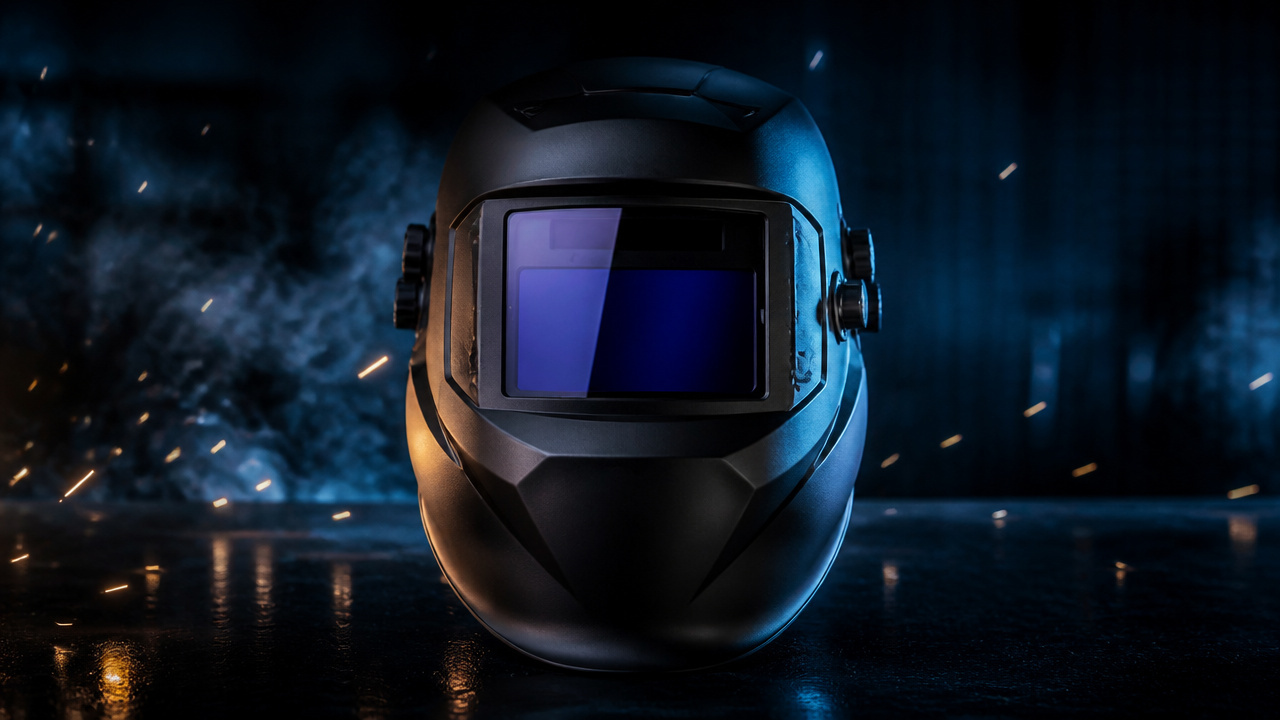
Squinting repeatedly, fumbling with awkward helmet settings, or struggling to catch fine weld details can wreck your rhythm and strain your eyes badly. Wrestling with glare and slow shade changes during intense work only adds frustration. Too many helmets feel bulky or unclear just when focus matters most.
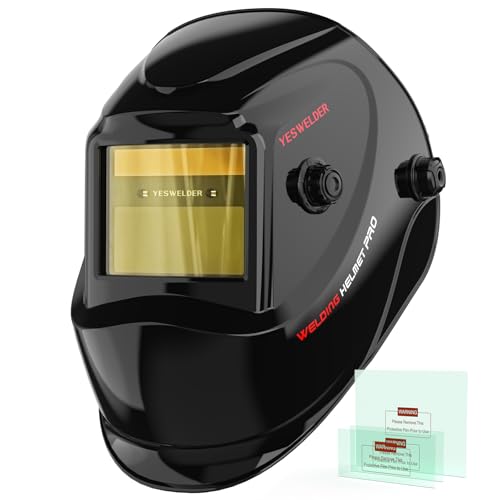
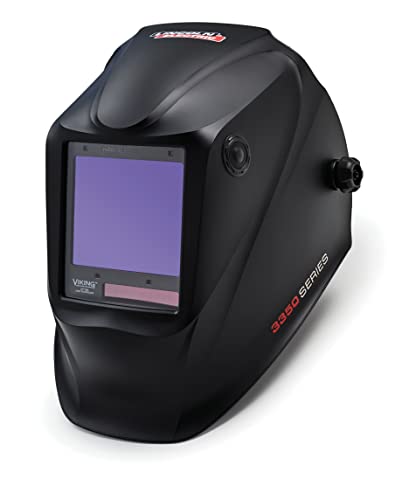
The YESWELDER Auto-Darkening Welding Helmet speeds up reaction time to a sharp 1/30000 second, cutting eye strain with true color clarity and a crisp 3.64″ x 1.67″ viewing window. The Lincoln Electric VIKING 3350 prioritizes a massive 12.5 square inch viewing area and advanced 4C technology for ultra-clear visuals and wider awareness.
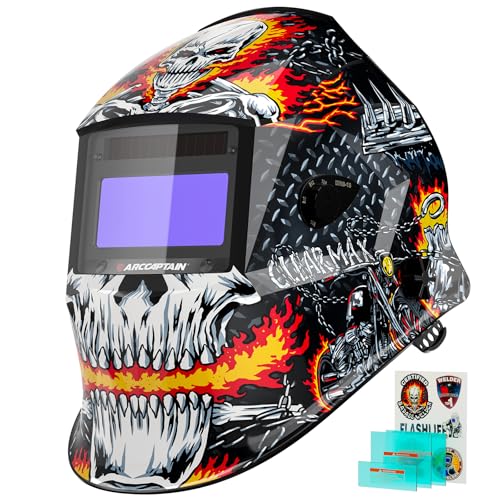
The ARCCAPTAIN helmet fills the niche for lightning-fast switching at 1/25000 second combined with a slightly larger 3.86″ x 1.69″ screen, perfect for welders wanting both speed and clarity in varied welding styles.
| Image | Name | Editor's Rating | Price |
|---|---|---|---|
|
YESWELDER Auto Darkening Welding Helmet 1/1/1/1 True Color, ...
|
|
|
|
Lincoln Electric K3034-4 VIKING 3350 Auto Darkening Welding ...
|
|
|
|
ARCCAPTAIN Welding Helmet Auto Darkening, 1/25000s Response,...
|
|
|
|
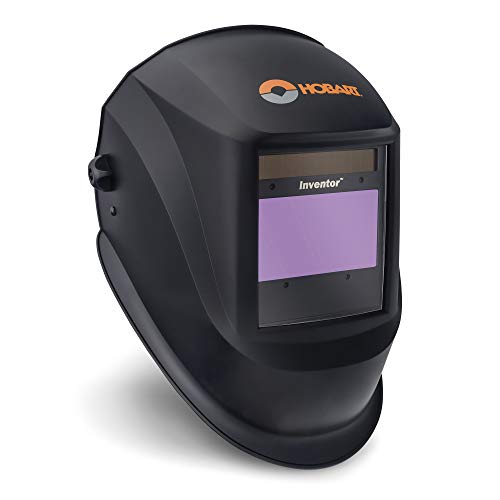
Hobart 770890 Auto-Darkening Welding Helmet, Large, Black | ...
|
|
|
|
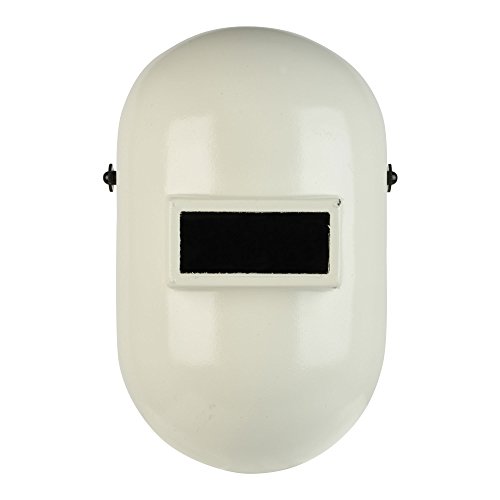
Fibre-Metal Pipeliner Fiberglass Welding Helmet (110PWE)
|
|
Maximize safety and visual clarity with helmets designed to shield your eyes while delivering sharp, true-to-life views. Explore cutting-edge features that enhance both protection and performance.
Welding environments often challenge your ability to see fine details without straining your eyes. A 3.64″ x 1.67″ viewing window with high optical clarity reduces visual fatigue by delivering a crisp and true-to-life view.
Featuring a rapid auto-darkening mechanism, the helmet reacts in 1/30000 second, adapting instantly to varying brightness and welding conditions. You can adjust sensitivity and delay to match your workflow, ensuring the lens darkens perfectly whether you’re using TIG, MIG, MMA, or performing grinding tasks.
YESWELDER incorporates a specially designed lens that blocks harmful blue light, which can cause discomfort during prolonged exposure. This eye comfort enhancement is ideal for those lengthy projects where protection goes beyond just shielding from sparks.
The robust, thickened polymer shell offers solid protection against impacts, flames, and corrosion. Adjustable pivot-style headgear stabilizes the helmet comfortably, making it suitable for extended wear without fatigue. Power comes from a solar panel backed by a replaceable battery to prolong operational life.
Meeting stringent ANSI Z87.1 and CSA Z94.3 safety standards, this helmet blends reliability with advanced eye protection technology, supporting your craft with precision and durability.
Best for: Professionals requiring adaptable shading and enhanced visual clarity for detailed welding and grinding tasks.
Pros:
Cons:
Providing a crystal-clear view while working, this helmet incorporates advanced 4C lens technology to drastically reduce color distortion and visual imperfections. The perfect 1/1/1/1 optical clarity rating means you experience remarkably sharp and consistent visuals through the auto-darkening lens, making precision welding easier to maintain.
The extra large 12.5 square inch viewing window expands your field of view, offering enhanced situational awareness and better control over your welding tasks. This is essential when you need to keep an eye on both the weld puddle and surrounding environment.
Designed for extended wear, the helmet features the X6 headgear that evenly distributes weight, minimizes pressure points, and keeps balance optimized. Such design choices contribute to all-day comfort even during long, demanding sessions.
Adjustability is another highlight, with a ratchet knob allowing you to customize the headgear tightness easily. This flexible fit accommodates hat sizes ranging from 6 1/2 to 8 seamlessly. Lincoln Electric’s attention to detail in ergonomics enhances usability without sacrificing protection.
A full package comes included with protective cover lenses, a helmet bag, and a bandana, providing convenience and readiness for various working conditions. The helmet also holds a manufacturer-backed reliability, evidencing sturdy construction and attention to performance.
Best for: Professionals or hobbyists who demand uncompromised vision clarity and comfort when tackling precision welding jobs.
Pros:
Cons:
Switching lens shades faster than most ensures your eyes never endure unnecessary exposure during high-intensity welding. The ARCCAPTAIN helmet boasts a lightning-fast response time of 1/25000 seconds with four advanced arc sensors, letting you work confidently in various welding styles like TIG, MIG, and ARC without interruption.
Every glance through its larger, crystal-clear viewing window reveals a distinct advantage. The 3.86″ by 1.69″ screen, combined with a 1/1/1/1 optical rating and sophisticated true color technology, helps you catch minute details and weld precisely. Compatibility with magnifying lenses adds another layer of customization for intricate jobs.
Designed with durability in mind, the helmet’s tough PA material withstands shocks, heat, and wear better than typical plastics. Its solar-powered system, supported by a replaceable lithium battery, extends operational time significantly, keeping the focus on your work instead of power concerns.
Despite its strength, the lightweight build and padded, adjustable headband prioritize comfort for prolonged use. The helmet’s 12-in-1 smart filter cuts through dangerous UV and IR rays automatically, delivering consistent eye protection that adjusts to shifting environments without delay.
Best for: Professionals needing reliable eye defense and quick adaptability during versatile welding tasks.
Pros:
Cons:
Working close to intense arcs demands more than just throw-on protection; it requires clear vision with reliable response to changing light. Hobart’s model features continuous UV and IR shielding that activates the moment you strike an arc, reducing waiting time and minimizing exposure risk.
The helmet’s 9.3-inch widescreen viewing area employs PureColor Lens technology, enhancing the display of welds and your surroundings in true-to-life colors. This clarity can help fine-tune your weld precision instead of settling for dull or distorted views.
Equipped with four arc sensors, the helmet offers dependable and rapid arc detection, ensuring the lens darkens exactly when it’s needed. The addition of analog controls for shade, sensitivity, and delay lets you customize the settings smoothly for various welding processes.
Switching between welding and grinding modes is seamless—eliminating the need to switch helmets and maintaining workflow momentum. Hobart’s design uses polyamide nylon for durability, while the lightweight structure boosts comfort during extended use.
The brand thoughtfully includes a protective lens kit and a lithium battery, supporting long-term use and consistent performance in demanding environments.
Best for: Professionals who need precise, quick-adapting eye protection combined with versatile control and large viewing comfort.
Pros:
Cons:
Navigating tight spaces without compromising safety is a tough balancing act many welders face. The Fibre-Metal by Honeywell helmet’s compact fiberglass shell is designed to fit where bulkier models won’t, offering enhanced maneuverability during pipeline or confined area work.
Built to endure, this helmet resists moisture and impact, making it highly durable against cracking or splitting even in challenging environments. Its smooth, deflective surface reduces snag hazards, while a self-extinguishing feature adds an important layer of protection from sparks and flames.
The pull-on closure with a constant-fit rubber headband emphasizes stability and comfort, adapting securely to both hands’ orientation. This ensures consistent coverage and less distraction as you focus on your welds.
Fibre-Metal by Honeywell has emphasized functional design without sacrificing essential safety, reflected in an expertly engineered helmet that upholds reliability in cramped settings. Its compact profile doesn’t mean corner-cutting on protective quality—moisture and impact resistance remain priorities.
Strong protection and space-saving design make the 110PWE a solid choice for welders needing reliable headgear in restricted working areas.
Best for: Professionals requiring a sturdy, moisture-resistant helmet that fits comfortably in confined spaces.
Pros:
Cons:
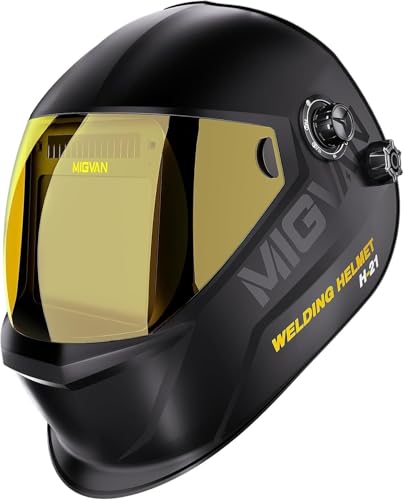
Capturing every detail while shielding your vision, this helmet features a large viewing screen enhanced with optical class clarity for a more natural weld pool view. The advanced golden lens is designed to reduce color distortion, enabling precise work across TIG, MIG, Stick, Cut, and Grind operations.
Equipped with four sensitive arc sensors, the helmet switches between light and dark states in an instant, from DIN4 up to DIN13 shades. An added outer yellow filter provides strong defense against harmful UV and IR exposure during every weld.
Combining solar power with a replaceable battery, this gear sustains performance without frequent interruptions. Its energy-efficient design supports extended work periods even in environments with varying light conditions.
Flexible shade range settings along with ergonomic headgear ensure a comfortable, customized fit. The lightweight construction and padded support minimize neck fatigue, making it easier to maintain focus over long welding sessions.
Constructed with durability for demanding settings, it upholds ANSI and CE safety criteria. Replaceable inner and outer lenses maximize versatility, ensuring high adaptability to multiple welding processes and grinding demands.
MIGVAN offers a comprehensive welding helmet solution that combines protection and clarity for professionals who require consistent visual quality and reliable safety during their craft.
Best for: Professionals and hobbyists needing enhanced visual precision and adaptable protection in varied welding environments.
Pros:
Cons:
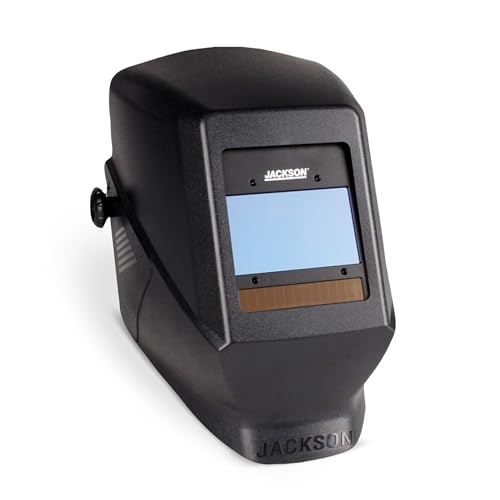
Working in tight or confined areas demands a welding helmet that won’t get in the way. Jackson Safety’s Insight model features a slim, HSL narrow shell design that fits comfortably where bulkier helmets can become a burden. The extended front lip adds a layer of neck protection without sacrificing range of motion.
Clarity during welding is crucial, and this helmet delivers with its True Color technology and a spacious viewing area of 3.94″ x 2.36″. The variable shade range from 9 to 13 lets you adjust precisely for different welding environments, while the 1/1/1/1 optical clarity rating reduces eyestrain and fatigue over long sessions.
Operating the helmet is streamlined with digital controls, featuring modes for welding, torching, and grinding, accommodating your workflow without switching gear. Weighing only 2 pounds, its lightweight construction, using PC and ABS materials, makes extended wear manageable without discomfort.
Engineered under stringent safety specs including ANSI Z87.1 and CSA Z94.3, it ensures dependable protection against harmful light and sparks. The ratchet closure provides easy adjustment and a secure fit, supporting confident use in various environments.
Best for: Professionals or hobbyists who frequently work in restricted spaces and require precise visual clarity and reliable coverage.
Pros:
Cons:
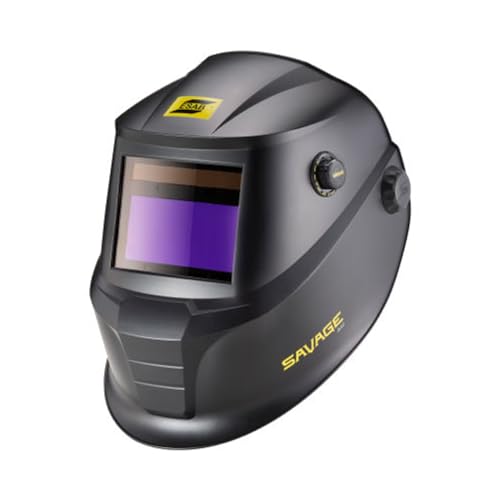
Managing eye comfort during different welding tasks often feels like balancing precision with protection. The ESAB Black Savage A40 introduces a four-arc sensor system that enhances auto-darkening speed, making those intense welds easier on your vision. Its adjustable delay control tailors how long the lens stays dark post-weld, optimizing workflow whether you’re tackling tack welds or heavy amps.
Designed to adapt, the sensitivity control provides fine-tuning especially beneficial for low amp TIG welding, sharpening your arc’s visibility without compromising safety. The viewing area spans a practical 3.93 by 1.96 inches, giving enough perspective without any unnecessary bulk.
At just over two pounds, the helmet combines durable plastic, nylon, and glass to offer a modern look with solid protection. Plus, it runs on a lithium-ion battery for consistent performance during demanding sessions. ESAB’s thoughtful engineering delivers a blend of responsiveness and durability that supports prolonged use without fatigue.
Adjustable features let you control the lens reaction according to specific worksite lighting and arc intensity, improving both comfort and precision. This helmet stands out by offering a solid balance between protective technology and practical adjustments to suit a variety of welding needs.
Best for: Professionals and serious hobbyists requiring adaptable helmet settings for varied welding intensities and precise eye comfort.
Pros:
Cons:
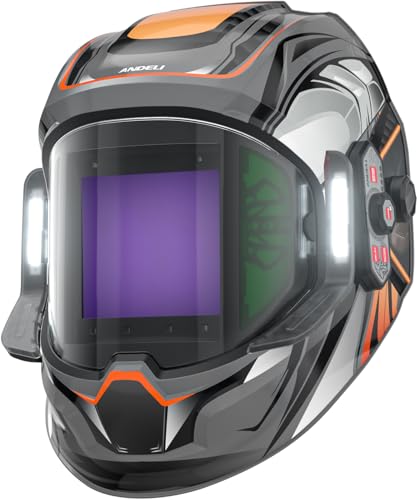
Welding in low-light environments demands more than just basic eye protection—visibility can make or break your precision. Equipped with two built-in LED lights reaching up to 400 lumens, this helmet reduces shadows to sharpen your focus without needing extra handheld gear.
Enjoy a clear view of your work with optical clarity rated 1/1/1/2 and a true color display that prevents the eyestrain common in traditional helmets. UV and infrared rays are blocked up to Shade DIN16 to protect your vision throughout every project.
Sensors in this helmet fine-tune light sensitivity to avoid reacting to sunlight or shop lighting, preventing unintended darkening while maintaining quick adjustments for welding arcs. The auto-darkening feature activates in just 1/30000 seconds thanks to six premium sensors.
Designed for extended use, the integrated 2100mAh rechargeable battery delivers long runtime, doubling typical battery life and charging quickly via Type-C. An internal display clearly shows remaining power, so you won’t face surprises mid-job.
Additional convenience comes from a hands-free motion sensor that toggles the lights with a simple wave, avoiding smudges from dirty hands. ANDELI includes both outer and inner lenses along with a portable bag, ensuring you’re ready for various welding techniques.
Best for: Welders tackling diverse projects who require precise visibility, reliable eye protection, and a battery system built to last through long shifts.
Pros:
Cons:
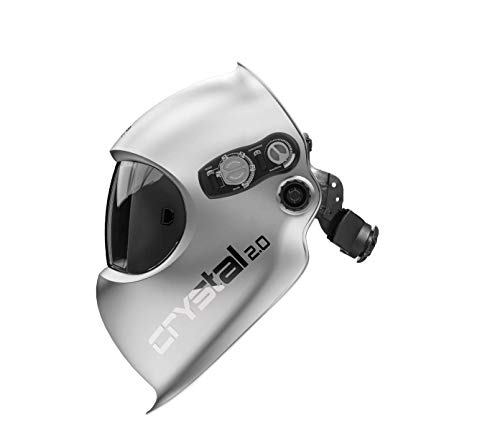
Seeing clearly before and after striking the arc can be a hidden challenge in welding. Optrel’s Crystal 2.0 features an innovative lens that stays at shade 2.0 when idle, offering you an unprecedented view of your workspace before the weld even begins. This clarity lets you prepare with precision and follow through with confidence post-weld.
Adaptive shading handles the ever-changing light intensity of welding arcs through a fully automated system that adjusts from shade 4 to 12. The autopilot sensor detects arc brightness instantly, sparing your eyes from sudden glare while focusing on the task.
Welding sessions often cause eye fatigue due to abrupt changes in lens darkness. Thanks to the twilight feature, the lens gradually lightens when you switch back to light mode, easing strain and supporting longer, more comfortable work periods.
Designed for varying environments, sensitivity adjustments enable you to customize the lens activation to ambient light—whether under bright sunlight or dim workshop lighting. The handy grind mode lets you flip to shade 2.0 quickly without removing the helmet, facilitating smoother transitions between tasks.
Weighing just under a kilogram and crafted with durable plastic, this helmet balances robust protection with comfort. Experience the refined engineering of Optrel’s Crystal 2.0 for enhanced visibility and reliable eye safety throughout demanding welding projects.
Best for: Professionals and hobbyists requiring adaptive eye protection with superior clarity and comfort during diverse welding processes.
Pros:
Cons:
| Product Name | Viewing Area | Auto-Darkening Speed | Shade Range | Material |
|---|---|---|---|---|
| YESWELDER Auto Darkening Helmet | 3.64″ x 1.67″, True Color | 1/30000 second | Shade 3/7-13 | ABS & PP |
| Lincoln Electric Viking 3350 | 12.5 sq. in. | Not specified | Not specified | Nylon |
| ARCCAPTAIN Auto Darkening | 3.86″ x 1.69″, True Color | 1/25000 second | 4/9-13 | PA (Polyamide) |
| Hobart 770890 Auto-Darkening | 9.3″ widescreen | Auto-on/off power control | Not specified | Polyamide Nylon |
| Fibre-Metal Pipeliner Fiberglass | Not specified | Passive (no auto-darkening) | Not applicable | Fiberglass |
| MIGVAN True Color Welding Helmet | Large viewing screen (size not specified) | 1/10000 second | Shade 4/5-13 | Plastic |
| Jackson Safety Insight ADF | 3.94″ x 2.36″ | Not specified | Shade 9-13 | PC + ABS |
| ESAB Black Savage A40 | 3.93″ x 1.96″ | Not specified | Not specified | Plastic, Nylon, Glass |
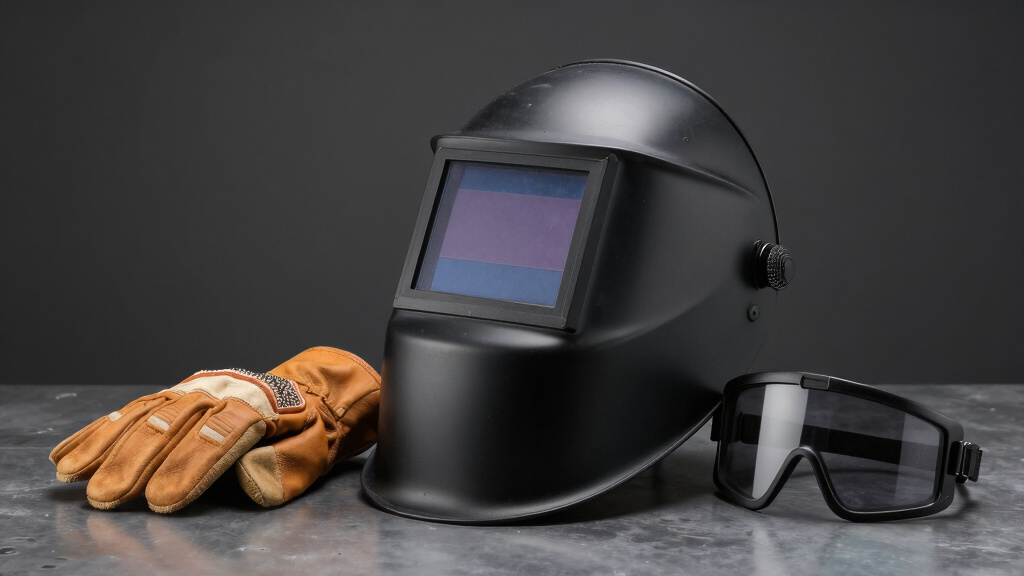
Selecting a welding helmet that truly protects your eyes while offering clear visibility can be a challenge. The right helmet balances safety features and optical clarity to reduce strain during long hours of welding.
Here are the key factors to consider when narrowing down your choice for dependable eye protection.
Optical clarity describes how accurately and clearly you see the welding environment through the helmet lens. It’s crucial because poor clarity causes eye strain and errors in weld placement. The viewing area size dictates how much you can see in one glance, affecting situational awareness.
Premium helmets like the Lincoln Electric Viking 3350 feature a 12.5 square inch viewing window with 1/1/1/1 optical clarity rating, delivering consistent, sharp visuals with minimal distortion. Smaller helmets, such as the YESWELDER model, offer a 3.64″ x 1.67″ viewing area but include True Color technology to enhance detail.
Ignoring optical clarity or choosing an undersized viewing window limits your ability to monitor weld progress and surroundings, increasing fatigue and the risk of missing defects or hazards.
Auto-darkening speed is the response time in which the helmet lens darkens upon arc ignition. A faster reaction time significantly reduces the duration your eyes are exposed to harmful bright light, preventing damage or discomfort.
The YESWELDER helmet boasts a rapid 1/30000 second auto-darkening speed, while ARCCAPTAIN features 1/25000 second. Even the MIGVAN’s 1/10000 second speed provides reliable protection. Helmets lacking fast response times leave eyes vulnerable to intense flash exposures.
Choosing a helmet with sluggish auto-darkening speed risks long-term eye strain and increases the chance of flash burns, especially during high-frequency welding or tack welds where quick transitions are common.
Shade range refers to how dark the helmet’s lens can get, measured by DIN values. It’s a crucial feature because it controls how much light reaches your eyes, affecting safety and visibility during welding. Without the right shade range, your eyes can be at serious risk or you might struggle to see your work properly.
Different helmets offer various ranges to suit multiple welding types. For instance, YESWELDER features a shade 3/7-13 range, ARCCAPTAIN covers 4/9-13, and Jackson Safety Insight offers shade 9-13. The adjustability allows you to fine-tune the lens based on the welding process, whether it’s TIG, MIG, or stick welding, ensuring optimal eye protection and clear vision.
Ignoring this factor can lead to eye strain or even damage from arc flash. Too light a shade means dangerous exposure to bright arcs, while too dark a shade can hide important weld details, impairing accuracy and safety.
The material a welding helmet is made from plays a crucial role in its overall durability and comfort. It determines how well the helmet withstands sparks, heat, and daily wear, while also affecting the weight you carry on your head during long welding sessions. Choosing a sturdy, lightweight material can help prevent neck strain and ensure lasting protection.
Common materials include fiberglass, ABS plastic, and nylon, each offering specific benefits. For example, fiberglass shells like those in Fibre-Metal helmets provide excellent impact resistance and resist moisture, making them ideal for tough environments. Meanwhile, ABS and nylon offer a great balance of durability and comfort, seen in brands like YESWELDER and Lincoln. These materials absorb shocks and resist cracks better than cheaper plastics.
Ignoring durability can have serious consequences. A helmet made from fragile or overly heavy materials may crack easily or tire you out quickly. This not only compromises safety, exposing your eyes and face to hazards, but also reduces your ability to weld precisely over time.
Arc sensors detect the bright light from the welding arc and trigger the helmet’s auto-darkening filter. The number and position of these sensors are crucial for consistent performance. A helmet with more sensors generally offers better coverage, reducing the chance of the lens not darkening properly when the arc is partially hidden.
For example, helmets like the ARCCAPTAIN and ESAB Black Savage A40 use four strategically placed sensors. This setup ensures the lens darkens quickly and reliably, even when welding at challenging angles or in tight spaces. Fewer sensors can mean missed activations if the arc’s light doesn’t reach them directly.
Your eyes can suffer serious damage if the lens fails to darken instantly. Inconsistent sensor placement or too few sensors can leave you exposed to harmful flashes of intense light, especially during intricate welds overhead or at awkward angles. Always prioritize helmets with multiple, well-positioned sensors for maximum safety and performance.
True Color technology and blue light filters are crucial for reducing eye strain and enhancing visual clarity during welding. These features adjust the lens to offer more natural colors and cut down on harsh light wavelengths that can flicker or distort the weld pool view.
For example, YESWELDER’s True Color View uses specialized filters to present a crisp, natural image, while Hobart’s PureColor Lens improves color accuracy by minimizing blue light interference. MIGVAN’s golden lens also enhances visual contrast, helping welders spot imperfections and navigate the workspace more easily.
Ignoring these features can lead to increased eye fatigue, slower detection of weld defects, and difficulty focusing over long periods. Without proper color accuracy, weld quality may suffer due to missed details and distractions from harsh light flashes.
Proper helmet fit is essential for maintaining focus and preventing discomfort during welding. Adjustable headgear helps reduce neck strain by ensuring the helmet stays securely in place. Key comfort features include adjustable tension on the headband, the ability to pivot the helmet angle, and balanced weight distribution.
Materials and design play a big role in fit. For example, Fibre-Metal uses a rubber headband that molds snugly in tight spaces, while Jackson Safety Insight models have a narrow shell to enhance mobility. These adjustments let welders customize helmets precisely to their head size and shape, which makes wearing them for long periods less tiring.
Ignoring these fit factors leads to real problems, such as headaches from pressure points, neck pain from uneven weight, and the need to constantly reposition the helmet. These distractions reduce safety and can harm weld quality, making comfort adjustments a must-have feature.
Auto-darkening helmets instantly adjust the lens shade when an arc is struck, reducing harmful light exposure to the eyes. This quick adaptation helps prevent eye strain and arc flash injuries by blocking intense brightness immediately.
For instance, helmets like the YESWELDER respond in 1/30000 second, providing near-instant protection without needing to flip the helmet up or down.
A useful tip is to regularly check the sensitivity and delay settings to ensure your helmet adjusts perfectly to your welding conditions for optimal eye safety.
A larger viewing area provides better peripheral vision and allows welders to see their work more clearly without constantly moving their head. This improves accuracy and reduces eye fatigue.
The Lincoln Electric Viking 3350 offers an extra-large 12.5 square inch viewing window, giving wider visibility that’s ideal for detailed or multi-position welding tasks.
Be cautious when choosing helmets with very small viewing windows, as they may limit situational awareness and cause strain during long work sessions.
Not all lenses offer the same level of UV and IR protection. Quality auto-darkening helmets provide continuous protection, even when the lens is in its light state, guarding against harmful radiation exposure.
The Hobart 770890 model features continuous UV and IR shielding that activates instantly upon arc ignition, reducing risks even before the lens darkens.
Always verify that your helmet meets international safety standards for UV and IR protection, regardless of auto-darkening features, to ensure eye health is not compromised.
Faster lens reaction speeds minimize the time your eyes are exposed to damaging brightness, which is critical for preventing arc flash injuries. The quicker the lens darkens, the better your eyes are protected.
The ARCCAPTAIN helmet reacts in 1/25000 second, switching shades more rapidly than many models, helping to safeguard vision during high-intensity welding.
Keep in mind that slower reaction times can increase visual fatigue and potentially cause temporary discomfort or injury, so reaction speed is a crucial factor to consider.
Helmet shell materials play a big role in how comfortable and safe the helmet feels. A lighter shell means less neck strain during long jobs, while toughness protects against impacts and sparks.
For example, Honeywell’s Fibre-Metal helmet uses a fiberglass shell. This material resists cracking and stays lightweight, perfect for tight, rough work areas.
Always pick a shell that matches your work style—balancing durability and comfort helps you weld longer without hassle or risk.
The right welding helmet bridges the gap between inadequate eye protection and enhanced safety, transforming your welding experience with clear visibility and reduced eye fatigue. Choosing one with auto-darkening technology ensures your eyes are shielded from harmful light while maintaining precision in every weld.
For detailed tasks like TIG welding, helmets with fast lens response and compact form factors, such as those from YESWELDER, are ideal. Meanwhile, welders seeking broad views or working in tight areas benefit from helmets with larger viewing windows or ergonomic designs suited to their environment.
Ensure your helmet fits properly and adjust sensitivity settings before use to prevent lag in darkening. Regularly clean and inspect your gear to maintain optimal protection and comfort over time, avoiding any potential safety risks during welding sessions.
Last update on 2026-10-23 / Affiliate links / Images from Amazon Product Advertising API
