Phone:
(701)814-6992
Physical address:
6296 Donnelly Plaza
Ratkeville, Bahamas.

Phone:
(701)814-6992
Physical address:
6296 Donnelly Plaza
Ratkeville, Bahamas.

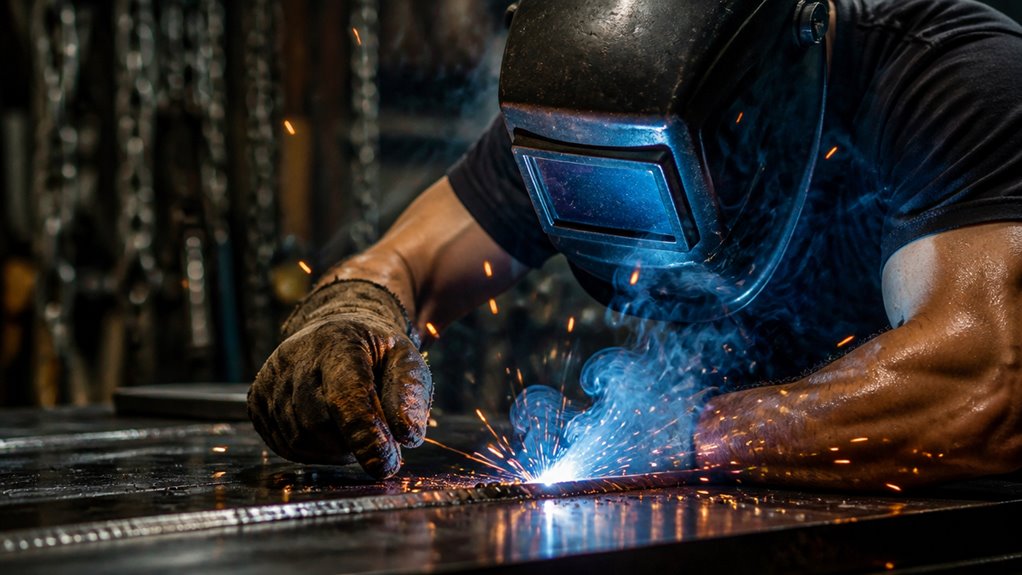
A single hand welder is both a skilled tradesperson and the compact, one-handed welding equipment they operate in tight, irregular spaces.
You’ll use precise manual techniques with lightweight, ergonomic machines, often MIG, TIG, or Stick processes, to work efficiently in confined areas or field repairs.
This role demands blueprint literacy, dexterity, and strict safety protocols because you’ll face variable environments and maintain structural standards.
Understanding these essentials sets the foundation for mastering this specialized welding approach.
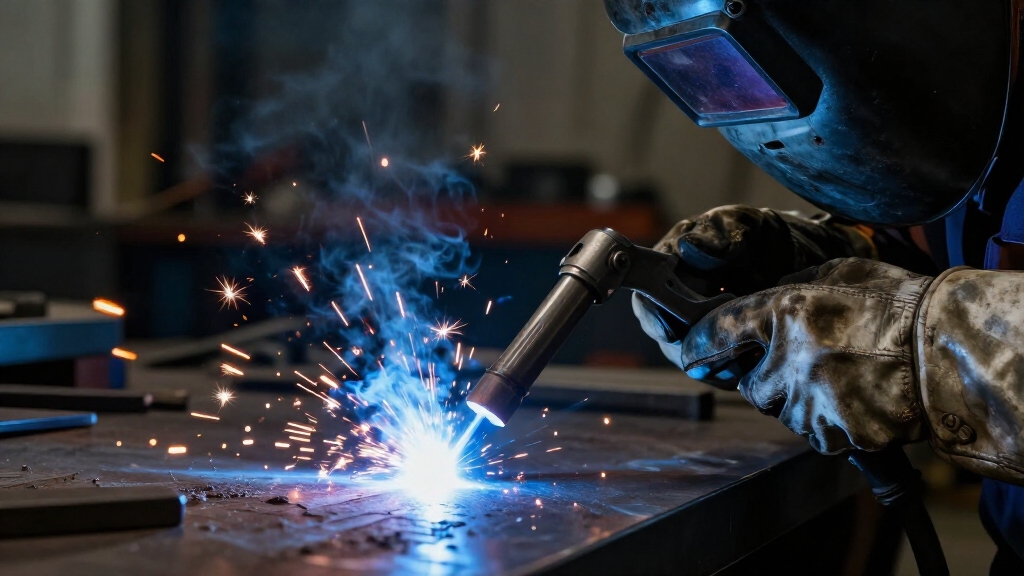
Although the term “single hand welder” can refer to both a skilled tradesperson and specialized equipment, understanding its precise meaning is essential for selecting the right approach or tool for your welding project.
The term “single hand welder” denotes both skilled workers and specialized equipment, making clarity vital for project success.
As a skilled worker, a single hand welder independently operates hand-held welding equipment to join metals per blueprints or specifications.
Alternatively, it denotes compact, one-hand-operated welding machines designed for confined or awkward spaces, emphasizing portability over industrial scale.
Knowing whether you need a person with manual dexterity and blueprint literacy or a lightweight, adjustable device affects your project’s efficiency and safety compliance.
This dual usage influences job role expectations, tool selection, and work environment adaptability, making clarity about the term crucial for effective planning and execution in welding operations.
For beginners, selecting the right welding machine and ensuring it matches the project’s material thickness and size is vital to achieving consistent quality with single hand welding devices, highlighting the importance of welding machine selection.
When you’re out there as a single hand welder, you’ll come across a few popular welding techniques. You know, things like MIG, TIG, and Stick welding. Choosing the right one really depends on a few key factors, like the type of material you’re working with, its thickness, and what you need the weld to achieve.
It’s important to keep these variables in mind. Why? Because understanding them helps ensure you get the best weld quality and work efficiently. So, whether you’re tackling a small repair or a larger project, making the right choice can make all the difference! Always remember to wear protective gloves and ensure proper safety measures when welding to prevent injuries.
Single hand welders frequently rely on a core set of welding processes tailored to their need for mobility and precision.
You’ll find that mastering these techniques secures efficient, high-quality welds in confined or complex spaces.
Here are the four popular welding techniques you should focus on:
1. MIG Welding (Metal Inert Gas)
Offers speed and ease of use with continuous wire feed, ideal for thin to medium metals.
2. TIG Welding (Tungsten Inert Gas)
Provides precise, clean welds for thin materials and critical joints, requiring fine hand control.
3. Stick Welding (Shielded Metal Arc)
Versatile and effective for outdoor or dirty surfaces, relying on electrode consumption.
4. Spot Welding
Utilized for joining thin sheets through localized heat and pressure, common in fabrication and repair.
Mastering these will optimize your performance in varied single-hand welding tasks.
Mastering popular welding techniques sets a foundation, but choosing the right process depends on several specific factors.
You must consider material type, thickness, joint configuration, and environmental conditions.
For instance, MIG welding suits thin to medium materials and offers speed, while TIG provides precision on thin metals but requires more skill.
Stick welding excels in outdoor or dirty environments due to its flux shielding.
You also need to factor in equipment portability and power availability, especially for single hand welders working in tight or remote spaces.
The welding position and access constraints influence whether a compact handheld unit or more robust machinery fits best.
Ultimately, your process choice balances weld quality, efficiency, and operational practicality tailored to the task’s technical demands.
Fine-tuning parameters such as wire feed speed and voltage can greatly improve weld quality and consistency across various applications.
You know, single hand welders are often found on construction sites where they need to combine precision with mobility. It’s pretty impressive how they handle structural metalwork in such dynamic environments.
Then there are fabrication shops, which also depend on these welders. They’re crucial for assembling metal components, using compact, hand-held equipment that allows for a lot of flexibility.
And let’s not forget about field repair tasks. Those can really put your skills to the test, as you have to adapt your welding techniques to different environments using portable tools. It’s all about being resourceful out there!
These welders often rely on portable welding machines powered by onboard generators or inverters to ensure consistent performance in remote locations.
Negotiating construction sites requires welders to adapt quickly to varied and often challenging environments. As a single hand welder, you’ll rely on handheld welding tools to perform precise metal joining tasks where mobility and dexterity matter most.
Your role often includes:
These applications demand your ability to configure equipment swiftly, ensure weld integrity, and manage hazards such as sparks and hot surfaces. Your skill in adapting handheld welding devices to complex site conditions enhances efficiency and structural reliability in construction projects. Additionally, wearing appropriate PPE is essential to protect against electric shock, fumes, and burns during welding operations.
Within fabrication shop environments, single hand welders tackle precise metal assembly tasks that demand consistent accuracy and control.
You’ll often work on components requiring exact welds per blueprints, combining spot and arc welding techniques using handheld equipment.
The controlled shop setting lets you optimize machine setup and maintain steady parameters, vital for uniform weld quality on varying metal thicknesses.
You’ll frequently inspect joints visually and with gauges to guarantee adherence to specifications.
Fabrication shops emphasize repeatability and efficiency, so you must swiftly adapt to different materials and welding positions while maintaining safety protocols.
This environment contrasts with fieldwork by offering stable power supplies and workspace organization, allowing you to focus intensively on weld integrity and dimensional tolerances critical for downstream assembly or structural reliability.
Proper preparation and workspace safety are essential to prevent delays and ensure a smooth workflow in fabrication environments.
When working in field repair settings, single hand welders face unpredictable conditions that demand adaptability and quick problem-solving.
You’ll often encounter irregular surfaces, limited workspace, and variable environmental factors that complicate welding tasks.
To succeed, you must:
These challenges require you to combine technical skill with situational awareness.
Your ability to interpret project specifications and adapt equipment configurations on-site guarantees repairs meet structural and safety standards.
In field repairs, the single hand welder’s versatility and precision are critical for effective, timely maintenance under demanding conditions.
Additionally, ensuring proper ventilation and respiratory protection is essential to mitigate hazardous fumes often encountered during welding in confined or poorly ventilated spaces.
Mastering single hand welding requires specialized tools designed for precision, portability, and efficiency.
You’ll rely on compact, lightweight welding machines typically weighing between 3.2 and 3.9 pounds. These allow one-handed operation without sacrificing control.
Adjustable current settings, ranging from 20 to 120 amps, let you tailor the power output to specific metals and thicknesses.
Essential equipment includes handheld MIG, TIG, or Stick welders equipped with ergonomic grips and intuitive controls. These features help maintain steady welds in confined spaces.
You’ll also use spot welders featuring adjustable timing and pressure to handle thin-sheet metal effectively.
Complementary gear such as durable welding helmets, gloves, and clamps guarantees safety and stability.
Together, these tools enable you to execute precise welds efficiently while maintaining mobility and compliance with safety standards.
To enhance versatility and reduce the need for multiple machines, many single hand welders now incorporate inverter technology for improved energy efficiency and precise current control.
Although welding techniques vary, core skills and qualifications remain consistent for a single hand welder. You must master precise manual welding skills and develop excellent hand-eye coordination to handle compact, hand-held equipment effectively.
Your ability to interpret blueprints and project specifications guarantees weld accuracy and compliance. Safety awareness is non-negotiable due to inherent hazards. Typically, you’ll need formal welding training and a high school diploma or equivalent.
Focus on these critical competencies:
These qualifications equip you to perform high-quality, independent welding in constrained or complex settings. Many single hand welders start with basic welding skills that can be attained within a few months through focused hands-on training and practice.
Single hand welding machines streamline your workflow by combining portability with precise control. This allows you to tackle welding tasks in confined or hard-to-reach areas with greater speed and accuracy.
Their lightweight design reduces operator fatigue, enabling longer work periods without compromising weld quality. Adjustable current settings and ergonomic grips contribute to consistent penetration and bead uniformity, minimizing rework.
You benefit from enhanced maneuverability, which is critical in complex assemblies or pipeline repairs where access is limited. These machines also support rapid setup and simplified operation, cutting downtime between tasks. Many models feature multi-process support allowing users to switch between MIG, Stick, and TIG welding methods within a single unit.
You ensure safety in confined spaces by strictly following ventilation protocols to prevent toxic fume buildup.
Wearing appropriate personal protective equipment, including respirators and flame-resistant clothing, is crucial.
You also verify that your portable welding equipment is properly insulated and grounded to avoid electrical hazards.
Constantly monitoring oxygen levels and maintaining clear communication with a safety watch outside the space are essential steps to manage risks effectively during your welding tasks.
You need to regularly inspect cables, connectors, and the welding torch for wear or damage.
Clean the machine’s cooling vents and fans to prevent overheating.
Calibrate current and voltage settings to maintain precise output.
Replace consumables like tips and nozzles timely.
Check for loose screws and ensure proper grounding.
Lubricate moving parts if applicable.
Following the manufacturer’s maintenance schedule helps sustain performance and safety during operation.
You might think single hand welders can’t handle non-metal materials, but that’s not entirely true.
While these welders primarily join metals, some advanced models or attachments enable work on specialized non-metal composites like thermoplastics.
However, success depends on the welding process and material compatibility.
You’ll need to verify the equipment’s specifications and make certain the material’s properties suit the heat and method used, as most single hand welders focus on metal applications.
You’ll often face challenges like limited maneuverability in tight spaces, which demands precise hand-eye coordination.
Managing heat and sparks safely while maintaining weld quality under awkward positions tests your skill.
Equipment weight and battery life can restrict prolonged use.
Interpreting complex blueprints accurately is vital to avoid errors.
You must also adapt to varying metal thicknesses and types, all while adhering strictly to safety protocols to prevent injury and guarantee consistent weld integrity.
It usually takes you between a few weeks to several months to train as a single hand welder, depending on your background and the welding method you focus on.
Mastering hand-eye coordination and blueprint reading often parallels your technical skill development.
Formal courses can last 3-6 months, while apprenticeships extend to years.
Your training duration hinges on the complexity of tasks and safety protocols you must confidently execute.
You might think welding with one hand sounds limiting, but ironically, it’s all about maximizing efficiency and precision.
As a single hand welder, you’re not just doing more with less; you’re mastering specialized tools and techniques that streamline complex tasks.
So, while it seems like a constraint, it actually sharpens your skills and boosts productivity in ways traditional methods can’t match.
Who knew simplicity could power such technical prowess?