Phone:
(701)814-6992
Physical address:
6296 Donnelly Plaza
Ratkeville, Bahamas.

Phone:
(701)814-6992
Physical address:
6296 Donnelly Plaza
Ratkeville, Bahamas.

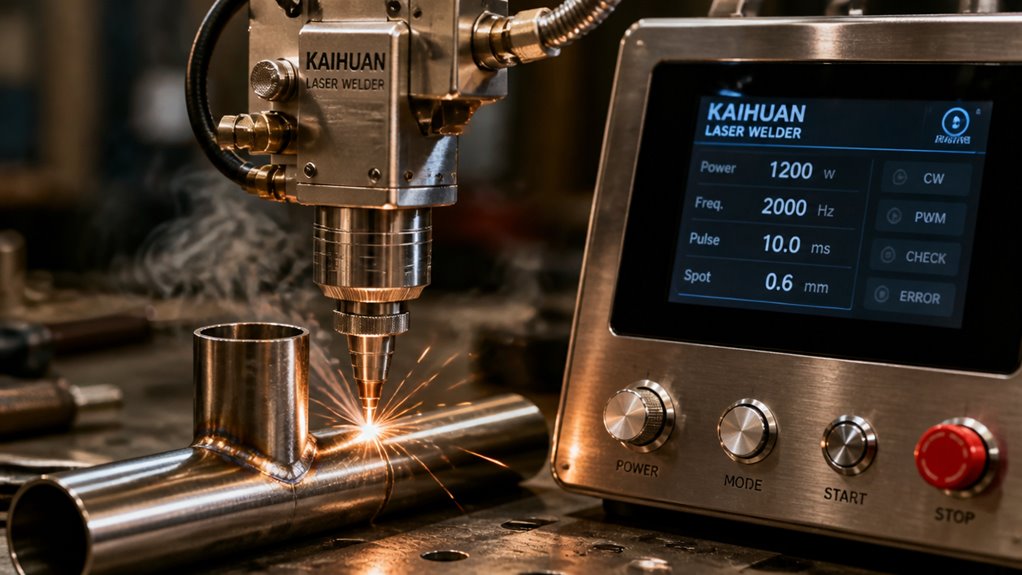
You’ll find Kaihuan laser welders offer versatile power models from 1500W to 3000W. They handle thin to heavy steel and some aluminum or copper with precise, adjustable output.
Their handheld design guarantees portability, while water or air cooling affects durability and heat management. Expect consistent welding quality with a narrow heat-affected zone and efficient integration into workflows.
Before selecting, confirm cooling type, power specs, and support options to match your fabrication needs. More details on performance and usability follow.
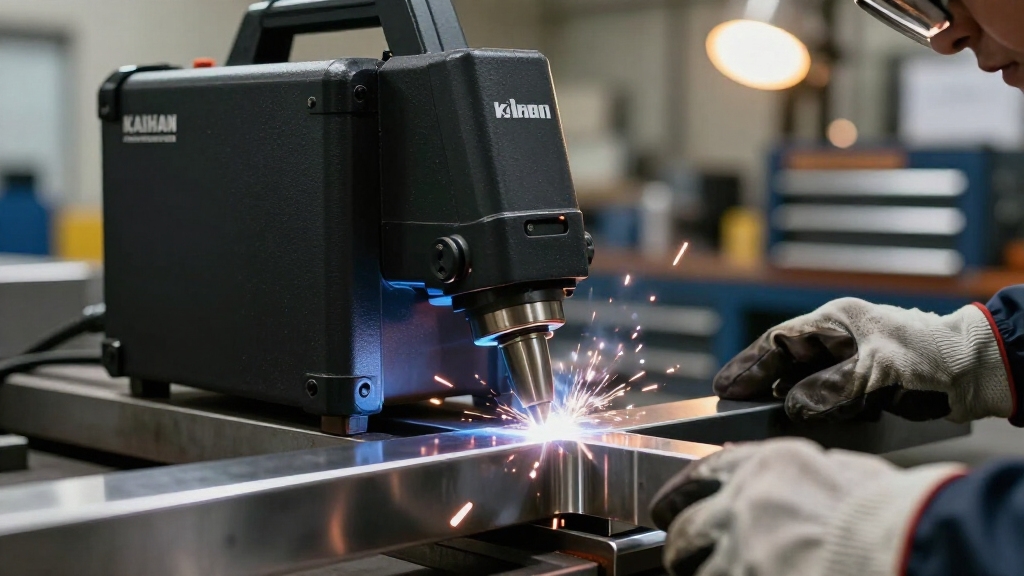
Although Kaihuan laser welders may not carry premium-brand prestige, they deliver competitive performance and versatility at a markedly lower cost. This makes them a practical choice for shops seeking to enter laser welding without a heavy upfront investment.
You’ll appreciate the handheld fiber laser design, which supports multi-material welding including stainless steel, aluminum, and copper. The 1500W model offers a welding depth of around 3 mm for steel, with adjustable power from 10% to 100%, enabling precise control.
Its cooling system, water or air depending on the model, ensures operational stability during extended use. Additionally, the portable form factor and short learning curve allow you to integrate laser welding efficiently into production workflows.
The narrow heat-affected zone produced by laser welding minimizes distortion and preserves material strength, enhancing joint quality and durability.
When selecting a Kaihuan laser welder, you’ll find distinct differences in power classes that directly impact application suitability and performance metrics.
The 1500W model suits light to medium fabrication, handling welding depths around 3 mm on stainless and carbon steel, with limited copper and aluminum capacity.
The 2000W variant extends welding speed and melt depth, offering up to 5 mm penetration, making it better for moderate industrial tasks.
The 3000W system targets heavy-duty structural steel and equipment fabrication, delivering higher power for thicker materials.
Cooling methods vary, with water and hydro cooling supporting sustained operation in higher wattage units.
You’ll appreciate that power influences portability, weight, and operational range.
Matching the welder’s specifications with your material thickness and production needs guarantees peak efficiency and weld quality.
Higher power models often utilize continuous wave mode to enable deeper penetration for thicker sections, enhancing weld integrity.
When you think about Kaihuan laser welders, you can expect some impressive performance. They can achieve welding depths of up to 3 mm on stainless steel and similar metals. However, keep in mind that when it comes to materials like copper and aluminum, the penetration is a bit shallower.
What’s really great is their multi-material compatibility. This means you can use them for a variety of applications, whether you’re working with carbon steel, aluminum, or even heavy structural steel. This versatility makes Kaihuan welders perfect for a wide range of fabrication tasks where precise and controlled welding parameters are key.
Unlike electron beam welding, Kaihuan laser welders typically do not require a vacuum environment, which simplifies operation but may affect weld precision and contamination control.
Expect Kaihuan laser welders to deliver variable welding depths depending on the model and material. The 1500W model welds stainless steel and carbon steel up to approximately 3 mm deep. Copper and aluminum penetration is around 1.5 mm.
The 2000W variant increases depth capability to 5 mm on compatible metals. The 3000W model targets structural steel, supporting heavier fabrication with greater penetration.
| Model | Material Type | Max Welding Depth (mm) |
|---|---|---|
| 1500W | Stainless Steel | 3.0 |
| 2000W | Carbon Steel | 5.0 |
| 1500W | Copper/Aluminum | 1.5 |
These depths reflect effective melting and fusion, ensuring strong joints for industrial applications. Precise focusing of the laser beam enables efficient energy concentration, directly influencing weld penetration depth and quality.
Kaihuan laser welders demonstrate strong multi-material compatibility, supporting stainless steel, carbon steel, aluminum, copper, iron, and structural steel with effective welding performance across these metals.
You can expect consistent weld quality on stainless and carbon steel at depths around 3 mm with the 1500W model. Aluminum and copper welding depths reach approximately 1.5 mm due to their higher thermal conductivity.
The adjustable laser power, ranging from 10% to 100%, allows precise control tailored to each material’s thermal characteristics. This versatility extends to the 2000W and 3000W models, which handle thicker sections and structural steel with increased melt depth and welding speed.
Additionally, the open atmosphere operation of these welders offers flexible integration and faster setup compared to vacuum-based welding methods.
Kaihuan laser welders come with a range of cooling methods, like water and air cooling, depending on the specific model you choose. This variety helps ensure optimal performance for different applications.
When it comes to build quality, these welders are designed for industrial durability. You’ll find that they typically weigh between 85 to 95 kg, which strikes a nice balance between being robust and still portable enough to move around as needed.
All of this is really important to keep in mind. Understanding the cooling systems and the sturdy build will help you assess how stable the machine will be during operation, especially for those longer tasks. Water cooling is particularly beneficial in high-amperage applications to prevent tip overheating and deformation, ensuring longer service life.
Cooling systems in these laser welders show notable variation, reflecting different design priorities and usage scenarios. You’ll find both water and air cooling methods employed across the Kaihuan lineup.
For example, the 1500W model often uses water cooling, which supports consistent thermal management during moderate welding tasks. Some listings indicate air cooling for lighter-duty or cost-sensitive applications.
The 2000W variant typically features hydrocooling, enhancing heat dissipation critical for extended industrial use. These differences impact operational stability, machine weight, and power consumption.
Water-cooled units generally weigh more but offer efficient heat removal. Air-cooled models prioritize portability yet may risk overheating under heavy loads.
Understanding these cooling variations helps you select a welder aligned with your workload intensity and maintenance preferences. Effective cooling with water-cooled hoses is essential to prevent electrode overheating and prolong component life.
Examining the build quality of these laser welders reveals a deliberate balance between durability and functional design tailored for industrial environments.
You’ll find robust chassis materials engineered to withstand operational stresses while maintaining structural integrity.
The cooling system, a critical build component, varies between models but consistently emphasizes reliability.
Water cooling predominates in the 1500W and 2000W units, employing hydrocooling for efficient thermal management.
Some listings mention air cooling, reflecting configuration differences.
The integration of a 10-meter optical fiber in the 2000W model illustrates thoughtful design for extended reach without compromising performance.
Power consumption is optimized to stay below 4.5 kW in lower-watt models, supporting sustained industrial use.
These welders benefit from precise microsecond waveform regulation to ensure consistent performance and reduce defects.
The robust build and thermal management systems of Kaihuan laser welders directly influence their weight and portability, key factors for industrial usability.
The 1500W model weighs approximately 85 kg, while the 2000W version tips the scales at around 95 kg. This reflects the integration of advanced water or hydro-cooling systems.
These cooling solutions are essential for stable operation during extended use, adding to the machine’s mass while guaranteeing thermal efficiency.
Despite their weight, Kaihuan welders maintain a handheld format, enhancing portability compared to traditional fixed systems.
You’ll appreciate the balance between durability and mobility, as the machines support fast repositioning on-site without compromising performance.
However, verify exact specs per model since cooling methods and weights vary, impacting ease of transport in your specific workflow.
It is also important to consider that startup power surges can increase the initial power demand by 30–50%, which may affect the choice of power supply during mobile operations.
Getting started with a Kaihuan laser welder is generally straightforward, especially for users familiar with welding equipment. The handheld design supports quick setup and mobility in shop environments.
The interface allows power adjustments from 10% to 100%, enabling precise control over welding parameters. You’ll find a short learning curve; basic operation is reportedly achievable within 20 minutes, making it accessible even for operators new to laser welding.
Calibration and wire feeding, ranging from 0.8 to 1.6 mm, are manageable with minimal training. However, you should verify the cooling system specifics per model beforehand, as inconsistent documentation exists.
For enhanced durability and stability during use, consider positioning the welder with center of gravity balance in mind when integrating it into a mobile rig.
Kaihuan laser welders excel in a broad range of fabrication tasks, handling materials like stainless steel, carbon steel, aluminum, copper, iron, and structural steel with efficiency.
You can rely on these welders for precision joining in automotive parts, heavy equipment manufacturing, and structural steel assemblies.
Trusted for precise joining in automotive, heavy equipment, and structural steel fabrication projects.
Their capacity to weld thin sheets (up to 3 mm in steel) and metals with varying thermal conductivity, like copper and aluminum, makes them versatile in production fabrication.
The handheld design allows you to perform spot welding, seam welding, and repair work in confined spaces or on-site environments.
The 1500W and 2000W models suit light to medium fabrication, while the 3000W system handles more demanding structural components.
This flexibility supports diverse industrial applications without compromising weld integrity.
While these laser welders offer compelling features, you should carefully evaluate cooling system consistency. Listings vary between water, air, and hydrocooling methods. This inconsistency necessitates verifying the exact model specifications before purchase.
Additionally, warranty terms are often unclear, and review reliability varies. This requires critical appraisal of seller credibility. You must confirm the exact power configuration to ensure it meets your welding depth and speed requirements.
Keep in mind the limited verified user feedback, which may affect your confidence in long-term performance.
Key buyer considerations include:
These factors are vital to avoid unexpected operational or support issues.
You won’t find consistent, detailed warranty coverage information for Kaihuan laser welders across all listings. At least one product page mentions a 1-year warranty, but terms vary and aren’t always clearly disclosed.
To make sure your purchase is protected, you should verify the exact warranty details directly with the seller or manufacturer before buying. This step helps avoid surprises and confirms coverage scope, duration, and any conditions tied to your specific model.
You can generally find replacement parts and consumables for Kaihuan laser welders, but availability varies by seller and region.
Since the brand is active across multiple marketplaces, sourcing components like optical fibers, nozzles, and wire feeders is possible.
However, you should verify compatibility with your model’s specific wattage and configuration.
Confirm supplier stock and shipping times beforehand to avoid downtime, as some listings lack detailed inventory transparency or after-sales support information.
You’ll find Kaihuan’s customer service and technical support vary by seller, with limited centralized information.
Some product pages mention a 1-year warranty, but exact terms aren’t consistently clear, so you should verify before buying.
Support responsiveness depends on the distributor rather than the brand itself.
Technical guidance is generally basic, fitting the entry-level market focus.
Expect a short learning curve but prepare for potentially limited advanced troubleshooting assistance.
You can safely operate the laser welder without prior experience, as many users report mastering basic functions within 20 minutes.
For example, a small fabrication shop quickly trained a new employee who then achieved consistent welds on stainless steel.
The handheld design and intuitive controls reduce complexity, but you must follow safety protocols and proper training.
Always verify cooling setup and power settings to prevent accidents and guarantee precise, controlled operation.
Shipping options for Kaihuan welders vary by seller and platform, typically including standard courier and freight services.
Delivery times depend on your location and chosen shipping method, often ranging from 7 to 21 business days for international orders.
Some sellers offer expedited shipping at additional cost.
You should confirm exact logistics and lead times directly with the supplier before purchase, as availability and transit durations fluctuate with order volume and regional shipping policies.
When you choose a Kaihuan laser welder, you’re opting for precision, power, and reliability.
You’ll experience consistent performance, efficient cooling, and durable build quality.
You’ll benefit from user-friendly controls and versatile application options.
However, you should weigh power needs, budget constraints, and specific project requirements carefully.
Ultimately, Kaihuan welders deliver value through balanced design, robust technology, and practical usability.
This makes them a strong contender in laser welding solutions.