Phone:
(701)814-6992
Physical address:
6296 Donnelly Plaza
Ratkeville, Bahamas.

Phone:
(701)814-6992
Physical address:
6296 Donnelly Plaza
Ratkeville, Bahamas.

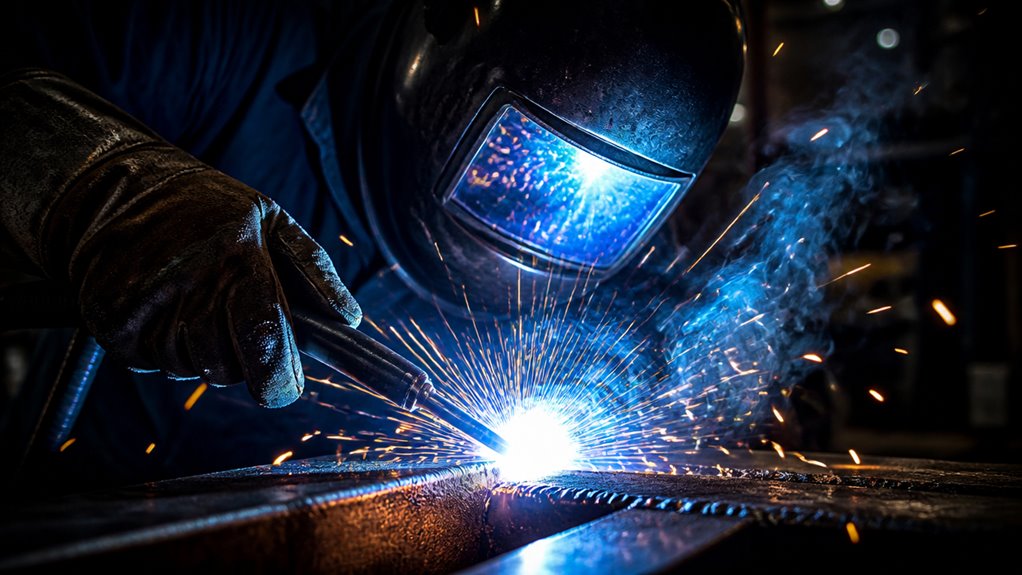
You’re facing a welding arc that can emit light intensity exceeding millions of candela per square inch.
Localized brightness rivals the sun’s surface harshness. This intense, directional light varies based on welding current, process type, and electrode composition.
Because arc luminance far surpasses everyday sources, it demands precisely matched eye protection filters to prevent immediate retinal damage.
Understanding these brightness factors and measurement units is essential if you want to grasp why safety and filter selection are critical.
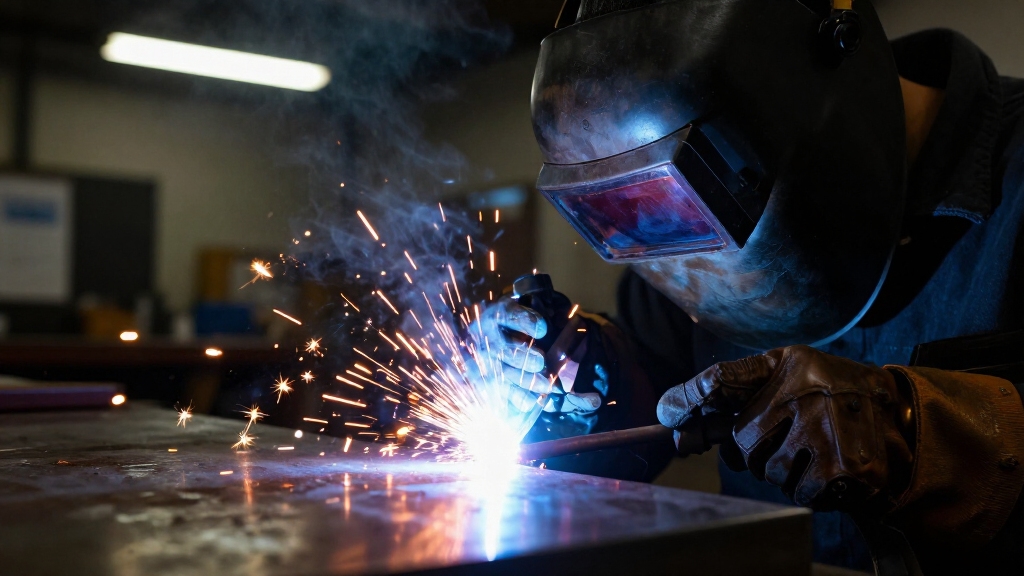
Welding arcs frequently outshine everyday lighting by orders of magnitude, producing between 10,000 and 100,000 lumens depending on the process and settings. This far surpasses typical household bulbs that range from 800 to 1,600 lumens.
Welding arcs emit 10,000 to 100,000 lumens, vastly exceeding typical household bulb brightness.
When you compare these values, you see how welding arcs deliver intensity that can overwhelm normal vision almost instantly. Unlike the diffuse light from bulbs, arc brightness is often quantified in candela or luminance, reflecting its directional intensity.
The luminous output varies with factors such as welding current, electrode type, and arc length, influencing radiance and spectral distribution. This variability means you can’t rely solely on lumen comparisons.
Instead, understanding the arc’s luminous intensity in technical units offers a clearer picture of how it dwarfs everyday lighting in sheer brightness and potential hazard.
The intensity and quality of the arc light are also affected by shielding gases, which influence the arc temperature and stability, thereby impacting the brightness and spectral characteristics.
You’ve seen how arc brightness surpasses everyday lighting by a vast margin.
But the intensity becomes even more striking when compared to the sun’s surface luminance.
Welding arcs, especially at high amperage, produce luminance values approaching those of the solar photosphere—around 10,000 to 100,000 candela per square inch.
This comparison hinges on surface brightness, not total energy output.
The arc’s small, concentrated light source intensifies perceived brightness far beyond typical welding or ambient lights.
Unlike the sun’s vast radiance spread over a large area, the welding arc’s compact plasma channel emits intensely focused radiation.
This makes it appear harsher and blinding at close range.
This extreme luminance explains why welding arcs demand rigorous eye protection.
Their concentrated brightness rivals the sun’s surface on a localized scale.
Understanding the thermal cycling effects on materials exposed to intense heat sources like welding arcs is crucial for durability and safety.
Because the brightness of an arc depends heavily on the welding process and amperage, you’ll notice significant variations in light intensity across different methods.
Arc brightness varies greatly with welding method and amperage, impacting light intensity across techniques.
The welding process dictates the electrical characteristics and plasma temperature, directly affecting luminous output. Amperage controls arc current, with higher currents producing more ionization and consequently greater brightness.
You must consider:
Understanding these parameters helps you predict and control arc brightness precisely. Additionally, the choice of shielding gases strongly influences arc stability and heat input, which can affect the brightness and quality of the weld.
Welding arc light poses a serious risk to your eyes. Why? Well, it combines an intense visible brightness with harmful ultraviolet and infrared radiation. This combination can hit your eyes hard and fast, potentially overwhelming them in no time.
You might be wondering, what happens then? The result can be retinal fatigue, burns, or even permanent damage. It’s pretty alarming, right? That’s why it’s so important to understand these hazards. By being aware, you can take steps to prevent immediate and severe eye injuries. Consistent use of certified welding helmets and UV-blocking gear is essential to prevent severe eye injuries and reduce the risk of blindness.
Frequently, welders underestimate how rapidly the intense visible light from a welding arc can overwhelm the eye’s natural defenses. The arc emits luminous intensity measured in tens of thousands of lumens, concentrated over a minuscule area, rivaling the sun’s surface brightness. This concentrated radiance can induce immediate retinal fatigue and afterimages, risking permanent damage if exposure continues unprotected.
Key technical considerations include:
Brightness varies with welding process, current, and electrode type.
Arc luminance can exceed millions of candela per square inch.
The iris can’t contract fast enough to mitigate brightness spikes.
Exposure durations safe for eyes are measured in seconds.
Visible light intensity alone demands specialized filter shades to prevent retinal injury.
You must never view an active welding arc without appropriate eye protection. Intense visible light from welding can cause photochemical retinal injury that may lead to long-term vision damage.
Although visible light from a welding arc poses immediate risks, the ultraviolet (UV) and infrared (IR) radiation emitted add layers of danger that often go unnoticed.
You need to understand that UV radiation causes photokeratitis, like a sunburn on your cornea, while IR radiation can heat and damage deeper eye tissues over time.
Both are invisible, so relying on sight alone to judge safety is ineffective.
| Radiation Type | Effects on Eyes |
|---|---|
| Ultraviolet | Corneal burns, photokeratitis |
| Infrared | Retina heating, cataract risk |
| Duration | Seconds to cause damage |
| Protection | Specialized filters needed |
You must use appropriate eye protection that blocks both UV and IR wavelengths to prevent cumulative damage. Maintaining a safe viewing distance of at least 200 centimeters along with shielding helps minimize exposure to these hazardous radiations and their indirect reflections.
Because welding arc light emits extremely intense visible radiation concentrated in a small area, your eyes can suffer immediate and severe damage without proper protection.
The arc’s brightness overwhelms the iris’s response, causing retinal fatigue, afterimages, or even burns within seconds.
Exposure to high radiance blue light particularly exacerbates injury risk.
You must understand the rapid onset and severity of damage to avoid permanent eye harm.
Retinal burns can occur in under a second of direct arc exposure.
Intense visible light surpasses your eye’s protective reflexes.
Blue light from welding arcs contributes materially to retinal damage.
UV and IR radiation compound visible light hazards.
Safe exposure duration is often measured in mere seconds.
You need appropriate filters and shields to prevent irreversible eye injury.
About 50% of welding-related eye injuries affect coworkers not actively welding, highlighting the importance of protecting everyone nearby with proper eye protection.
When you select eye protection for welding, understanding brightness measurements is pivotal to guarantee adequate shielding against intense arc light.
Selecting eye protection for welding requires grasping brightness measurements to ensure effective arc light shielding.
Welding arcs emit luminance levels comparable to the sun’s surface, measured in candela per square inch or watts per square centimeter per steradian.
These units quantify directional intensity rather than total light output, directly informing the required optical density of filters.
You need to match the filter shade to the arc’s brightness, which varies by amperage, process, and electrode type, to prevent retinal damage from visible, UV, and IR radiation.
Using improper shade numbers risks retinal fatigue or burns.
By analyzing precise brightness metrics, you can select eye protection that secures both safety and visibility.
This optimizes performance without compromising ocular health under extreme welding conditions.
Advanced helmets use auto darkening technology to instantly adjust lens shade for optimal protection based on arc brightness.
Understanding how brightness measurements guide your choice of eye protection naturally leads to examining the factors that cause welding arc brightness to vary.
You’ll find that multiple elements interact to influence the arc’s luminous intensity and spectral output. These variations directly impact safety protocols and equipment requirements.
Key factors include:
Each factor alters the arc’s radiance and spectral distribution, affecting visible brightness and harmful UV/IR emissions. Additionally, the balance between amperage and voltage plays a critical role in defining the arc’s heat input and stability, which in turn influences brightness and safety considerations.
The color of welding arc light depends on the electrode material and the base metals you’re welding.
Different metals emit distinct spectral lines when ionized. Iron produces a bluish-white arc, while aluminum tends toward a brighter, whiter light.
Alloying elements and flux coatings also affect color by introducing additional emission lines.
Imagine a knight’s shining armor reflecting sunlight. That’s how welding arc brightness impacts your surrounding equipment.
The intense light and heat can cause surface discoloration, degrade plastics, and damage sensitive electronics nearby.
UV radiation may also accelerate material aging. You need to shield or distance equipment properly to prevent optical and thermal damage.
Without precautions, the arc’s concentrated radiance can compromise the operational integrity and lifespan of your tools and devices.
Yes, welding arc brightness can seriously affect your camera sensors and photography.
The intense light, often exceeding sunlight in localized intensity, can cause sensor saturation, blown highlights, and image artifacts.
Prolonged exposure risks permanent sensor damage, especially with high-amperage arcs.
To protect your equipment and capture usable images, you’ll need specialized filters, reduced exposure times, or shielding techniques designed for the arc’s extreme luminance and hazardous UV/IR radiation.
Handling welding arc brightness in confined spaces is like taming a wild flame.
You need proper ventilation to disperse intense UV and infrared radiation.
Use welding curtains and shields rated for the arc’s brightness.
Adjust amperage to minimize light output without sacrificing weld quality.
Always wear appropriate eye protection with the correct shade.
Position workpieces to avoid reflections.
Make certain no flammable materials are nearby to prevent fire hazards.
Ambient lighting directly affects how you perceive welding arc brightness.
In low-light environments, the arc appears notably more intense and glaring because your eyes adapt to darkness, increasing sensitivity.
Conversely, bright surroundings reduce perceived contrast, making the arc seem less blinding, though its actual radiant intensity remains constant.
You should adjust your eye protection and work environment accordingly.
Ambient light changes can influence visual comfort and safety during welding operations.
When you’re dealing with welding arcs, you’re looking at brightness levels that can outshine everyday lights and even rival the sun’s surface.
Understanding how amperage and process influence this intensity is vital for protecting your eyes.
Remember, ignoring proper safety gear is like playing with fire; the risks to your vision are real and severe.
Always rely on brightness measurements to choose the right protection and keep your eyes safe.